Oat rolls from the Thermomix® are right at the top of our list on baking days. Not because of the ingredients, which are straightforward. But because of something many people underestimate the first time: the 120 g of jumbo rolled oats absorb moisture from the buttermilk and yeast mixture during proving and make the dough juicier from the inside than you would ever expect just from reading the recipe.
The Thermomix® handles two things that are critical with yeast dough: it heats the liquid to exactly 37°C so the yeast activates properly, then kneads the flour, oats and buttermilk for 4 minutes on kneading mode into an even dough. We have been making these rolls at weekends for years and know exactly where things can go wrong.
Oat Rolls with the Thermomix®
Ingredients 0 / 8 ✓
- 300 g buttermilk
- 100 g butter
- 2 tsp salt
- 1 pinch sugar
- 1 cube fresh yeast
- 150 g spelt flour, type 1050
- 300 g plain flour, type 550
- 120 g jumbo rolled oats plus a little extra for sprinkling
Instructions 0 / 6
-
1
Dissolve the yeast.
Add the buttermilk, butter, salt, sugar and fresh yeast to the mixing bowl and warm for 5 min / 37°C / speed 1.
-
2
Knead the dough.
Add the flour and rolled oats and knead for 4 min / kneading mode.
-
3
Rest the dough.
Transfer the dough to a bowl, cover and leave to rise in a warm place for 1 hour.
-
4
Shape the rolls.
Turn the dough out onto a lightly floured surface, divide into 8 equal pieces and shape into rolls. Place on a baking tray lined with baking paper, cover and leave to prove for a further 30 minutes.
-
5
Preheat the oven.
Preheat the oven to 220°C top and bottom heat.
-
6
Bake the rolls.
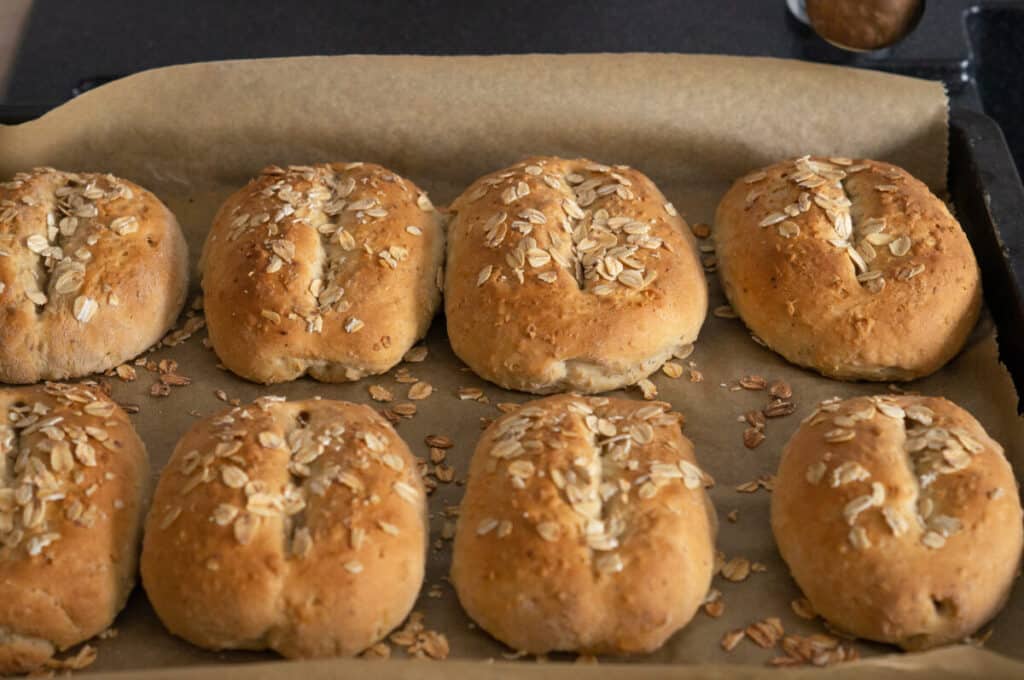
Score the rolls lengthways, brush with a little water and sprinkle with rolled oats. Bake on the middle shelf for approximately 20 minutes.
Tip: These oat rolls freeze very well and taste almost freshly baked when warmed up in the oven.
Video
Nutrition per serving
What makes the dough in these rolls special
The buttermilk is not a random choice. It makes the dough lighter than water because the natural acidity builds the gluten structure in the flour differently. The result: a crumb that stays airy and soft despite the chunky oats. If you do not have buttermilk, you can thin natural yoghurt with a little milk, but the flavour will be flatter.
The mix of spelt flour and plain flour is deliberate. The 150 g of spelt flour, type 1050, gives the roll a bit of bite and a lightly nutty flavour. The 300 g of plain flour, type 550, ensures the dough rises well and the crust turns crisp. Replacing everything with spelt flour gives a denser roll with less oven spring.
The oats soak, not just bake. Jumbo rolled oats draw moisture from the dough during the hour of proving. That gives a roll that stays moist inside, even when warmed up the next day. Fine rolled oats dissolve almost completely, so the characteristic texture disappears. We always use jumbo oats, and anyone who wants even more chew can sprinkle steel-cut oats on top.
How to get the dough right in the Thermomix®
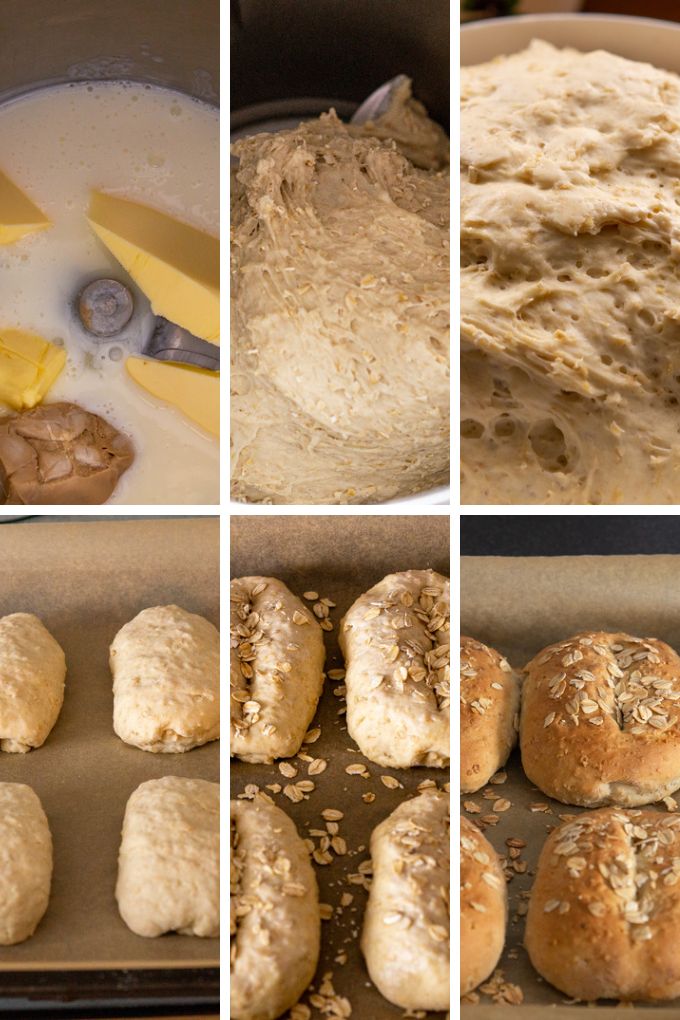
The full method with all quantities is in the recipe card below. Here are the key points that decide success or failure:
- Warm the buttermilk, butter, salt, sugar and yeast: Add all liquid and fat ingredients to the mixing bowl. Warm for 5 min / 37°C / speed 1. No hotter, or the yeast will die. 37°C is the temperature at which yeast is most active.
- Add the flour and oats: Add the spelt flour, plain flour and jumbo rolled oats to the warmed liquid. Knead for 4 min / kneading mode. The dough should pull away cleanly from the sides when the quantities are right.
- First prove: Transfer the dough to a bowl, cover and leave to rest in a warm place for 1 hour. The dough should visibly increase in size. No warm spot? Preheat the oven to 30°C, switch it off and place the bowl inside.
- Shape the rolls: Turn the dough out onto a floured surface, divide into 8 equal pieces and shape into rolls. Place on baking paper, cover and leave for a 30-minute second prove. Do not skip this step. The second prove is partly responsible for the rolls rising well in the oven.
- Score and bake: Preheat the oven to 220°C top and bottom heat. Score the rolls lengthways, brush with water and sprinkle with rolled oats. Bake on the middle shelf for approximately 20 minutes, until the crust is golden brown.
What can go wrong with oat rolls and how we fix it
Dough does not rise. Almost always caused by temperature. The liquid was too hot (above 40°C kills yeast) or too cold (below 30°C barely activates it). The Thermomix® holds exactly 37°C as long as you let the programme finish. Another common reason: the yeast was old. A fresh yeast cube should still give slightly when pressed with a finger and smell pleasantly of yeast. If you prefer to work with dried yeast: 2 sachets replace one cube of fresh yeast, and dried yeast keeps in the cupboard much longer.
Crust stays soft, no bite. The rolls were taken out of the oven too early or covered immediately after baking. Freshly baked rolls need air to cool down properly. Place them on a wire rack, never wrapped in a cloth or in a container straight from the oven. For an extra crisp crust: switch the oven off 5 minutes before the end of the baking time and leave the rolls inside with the door ajar.
Rolls doughy inside. The second prove (30 minutes on the tray) was cut short. Baking the rolls straight after shaping gives a compact, barely risen result. The second prove is not optional.
Score tears unevenly. The knife was not sharp enough or the cut too shallow. A sharp bread knife and one swift cut about 1 cm deep along the length of the roll does the job. The score lets steam escape. Without it, the roll will split in the wrong place.
Dough sticks to the mixing bowl. This happens when the flour quantity is slightly off. Simply scrape the dough out cleanly with a dough scraper after kneading. The dough tool prevents dough from running under the blade and protects the mixing knife during kneading.
Wholegrain, cheese or sweet rolls from the same dough
Herb rolls: Add rosemary or thyme to the dough, either 1 tsp dried or a small sprig of fresh, kneaded in. Goes well with soup or as a side to cheese.
Cheese rolls: Add 80 g of grated Gouda or mountain cheese just before the end of the kneading time. The rolls develop a golden cheese crust that lightly caramelises during baking. Find out more in our separate recipe for Thermomix® cheese rolls.
Fruit variation: Knead cranberries, raisins or dried apricots (roughly chopped) into the dough. Great with cream cheese or as a sweet breakfast option. Soak the cranberries and apricots briefly in warm water first so they do not stay too firm.
Wholegrain version: Replace the plain flour, type 550, entirely with wholegrain flour milled in the Thermomix®. The rolls will be denser and heavier, but also more filling. You may need to add a little extra buttermilk, as wholegrain flour absorbs more liquid.
With butter from the Thermomix®: If you want homemade butter in the dough, you can find the basic recipe on our site. Anyone who wants to leave out the butter entirely can use coconut oil as a plant-based alternative.
What you need for the baking
No special equipment needed, but a few things make the baking easier:
- The dough tool protects the mixing blade and stops dough from sticking underneath. Particularly useful with moist yeast doughs.
- A good dough scraper gets every last bit of dough out of the mixing bowl without scratching.
- A mixing bowl set with a lid is the right size for the proving phase. No cling film needed.
- A book on baking bread with yeast explains why doughs behave the way they do. Anyone who wants to understand why proving times and temperatures matter will find the background there.
- The right salt makes a difference in baking. Sea salt dissolves more evenly than coarse rock salt and distributes more consistently through the dough.
Fresh for 2 days, frozen for 3 months
Freshly baked oat rolls keep at room temperature, in a bread bag or under a cloth, for 1 to 2 days. After that they go stale. Freezing is the better option for anything not eaten on baking day.
Let the rolls cool completely, then place individually in freezer bags or in airtight containers. They keep in the freezer for 2 to 3 months and taste almost freshly baked when warmed up. Either put them in the oven at 180°C for 10 to 12 minutes, or crisp them up briefly in the toaster.
If you have no time in the morning, you can prepare the dough the evening before and leave it to prove overnight in the fridge. The next morning all you need to do is shape the rolls, give them their second prove and bake. Perfect for a Sunday breakfast. Anyone who needs something even quicker will find an alternative without a long prove in our quick breakfast rolls recipe.
How other recipes approach this
Goes well with: butter, cream cheese and jam.
You might also like: Quark rolls with the Thermomix®.
We had a look at how other Thermomix® blogs bake oat rolls. Three differences stood out. First: some use no yeast at all and rely on baking powder and herb quark, so the rolls are ready in 35 minutes but taste flatter and go stale more quickly. Second: some recipes leave the dough to rise slowly in the fridge for 12 hours, which develops more flavour but requires planning ahead. Third: many bake at 220 to 250°C without any topping. We stick with buttermilk and yeast for a moist crumb, 2 hours of proving as a sensible compromise, and sprinkle oats on the crust for texture that also makes the rolls visually recognisable as oat rolls.