Lemon sugar made in the Thermomix® pulverises the zest and sugar in a single pass. We make 500 g at a time to keep in stock, because the essential oils from the zest work their way through the sugar over the months and actually grow stronger.
Our lemon sugar contains no colourings or added flavourings. The zest provides all the essential oils that deliver the flavour. The Thermomix® grinds it finely enough to distribute evenly throughout the sugar. That makes the sugar versatile: on pancakes, in cakes, over fruit salad, or in hot drinks.
Lemon Sugar with the Thermomix®
Ingredients 0 / 2 ✓
- 50 g lemon zest organic, unwaxed, cleaned
- 500 g sugar
Instructions 0 / 2
-
1
Pulverise.
Add lemon zest and sugar to the mixing bowl and pulverise for 1 minute / speed 10.
- 50 g lemon zest
- 500 g sugar
-
2
Fill into jars.
Fill into sterilised, dry jars and use as needed.
Note: Always use unwaxed fruit and wash it thoroughly before peeling.
Tip: You can also use orange zest or a mix of lemon and orange zest.
Video
Nutrition per serving
Only the zest, not the pith
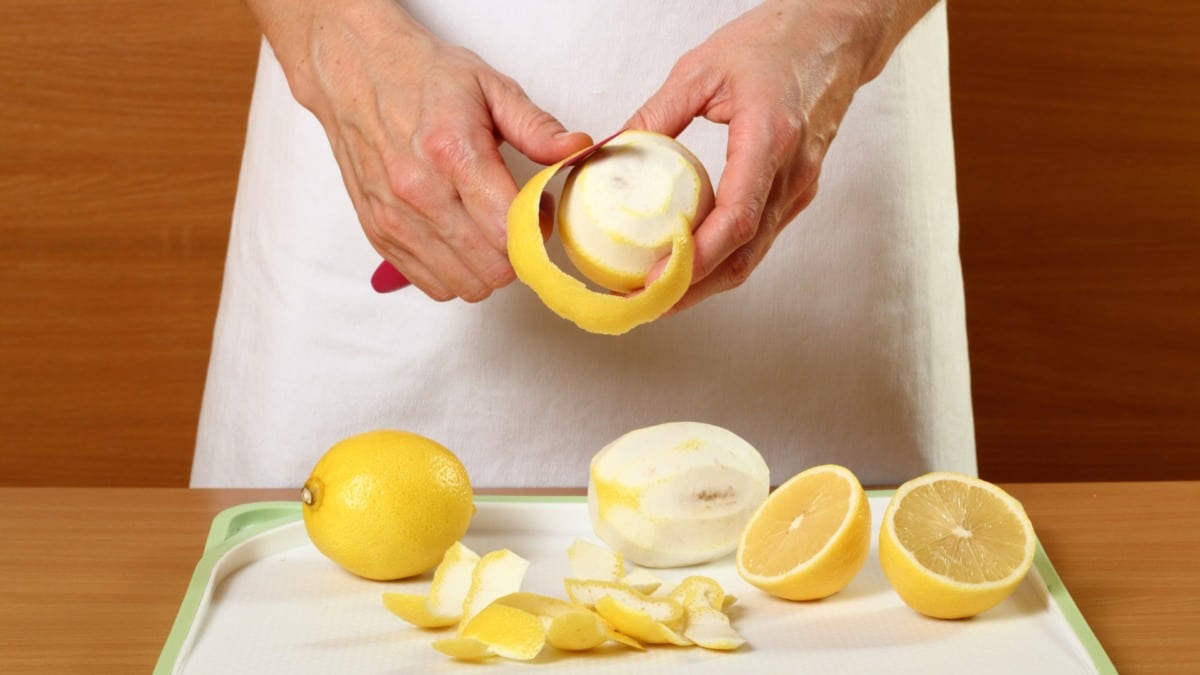
The white layer beneath the skin is bitter. So we only remove the outer, yellow layer. A vegetable peeler works best, taking thin strips. The zest must be dry before it goes into the mixing bowl. Damp zest sticks to the blades and forms clumps instead of fine powder.
Unwaxed organic lemons are essential. Standard lemons often have wax coatings or preservatives on the skin. These end up in the sugar. Even washing does not remove all residues.
1 minute at speed 10 is enough
The zest is pulverised together with the sugar, not separately. The sugar acts as an abrasive and breaks down the zest more finely than the blades could manage alone. After 1 minute at speed 10, the result is consistently fine.
Blending for longer makes no difference. The zest is already completely pulverised by then. Extra running time would only put unnecessary strain on the motor. The ratio of 50 g zest to 500 g sugar gives plenty of flavour without making the sugar damp.
Dry jars, airtight seal
The sugar must go into sterilised, completely dry jars. Moisture causes the sugar to clump. We rinse the jars with hot water, leave them to air dry, and only fill them once they are fully dry.
Stored airtight, the lemon sugar keeps for at least 6 months. The essential oils infuse the sugar and actually become stronger over time. After 2 weeks the sugar tastes noticeably more lemony than it did straight after blending.
Orange works just as well
Instead of lemons you can use oranges, or mix both together. Orange zest gives a sweeter, less sharp flavour. Lime works too, but is more intense. The ratio stays the same: 50 g zest to 500 g sugar.
For a lemon and orange blend, use 25 g of each. This gives a balanced citrus sugar that works for more recipes than pure lemon sugar.
How we use lemon sugar
The sugar works anywhere lemon and sweetness are needed together. We stir it into yoghurt, sprinkle it on pancakes, bake it into lemon muffins, or mix it into iced tea syrup. For cakes we replace 100 g of plain sugar with lemon sugar. This gives a subtle citrus note without needing extra juice or zest.
In hot drinks the lemon sugar dissolves faster than zest and releases the flavour straight away. One teaspoon in tea is enough. For cold drinks, dissolve the sugar in a little hot water first, then stir into the cold drink.
How other recipes differ
Goes well with: Lemon cake and vanilla pudding.
Many recipes on other sites use a ratio of 100 g sugar to one lemon’s zest. This produces an intense, almost sharp citrus sugar that needs to be used up quickly. We deliberately use 50 g zest to 500 g sugar, because it is milder and lasts longer. Other sources grind the damp zest directly with the sugar and then need 1 to 3 days of drying out on a plate afterwards. We dry the zest first, so there is no extra step. We also skip the double-grinding, because 1 minute at speed 10 already delivers a consistently fine result.
More basic recipes from the Thermomix®: Vanilla sugar, icing sugar, garlic salt.