A classic Christmas stollen matures for a week before the first slice is cut. Our low-carb mini stollen need exactly the same time, even though they contain neither wheat flour nor sugar. We have been making them every Advent for years and know by now that the maturing time is the real key.
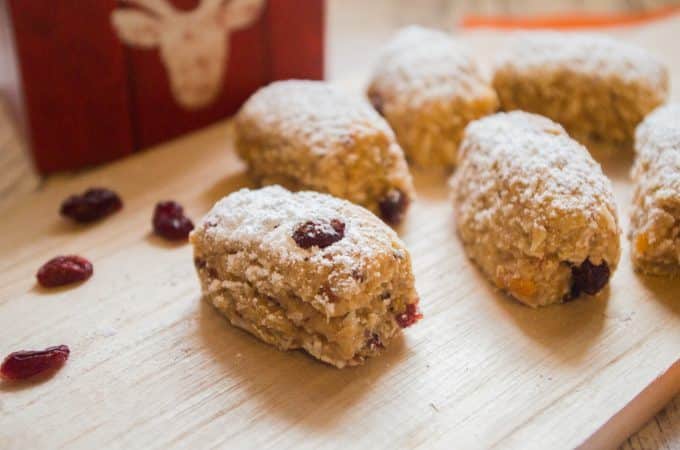
Straight out of the oven the little stollen taste fine, but flat. Only after five to seven days do the flavours come together to create the typical stollen profile. The dried fruit releases sweetness, the coriander and cinnamon draw into the quark and coconut dough, and the Cointreau spreads through. Anyone without the patience should eat something else. We suggest biscuits or our other baking ideas if the occasion is closer.
Low-Carb Mini Stollen Bites with the Thermomix®

Ingredients 0 / 16 ✓
- 50 g dried plums
- 50 g dried apricots
- 50 g dried cranberries
- 1 orange unwaxed
- 10 g Cointreau
- 1 vanilla pod
- 6 tbsp stevia sweetener
- 80 g coconut oil
- 300 g spelt flour, type 630
- 180 g low-fat quark
- 120 g desiccated coconut
- 1 tsp coriander
- 1 tsp ground cinnamon
- 1/2 sachet baking powder
- 20 g butter
- 80 g erythritol icing sugar
Instructions 0 / 6
-
1
Chop the dried fruit.
Place the plums, apricots and cranberries in the mixing bowl and chop for 4 sec / speed 5, then set aside. Grate the zest of the orange and add it with 40 g of freshly squeezed juice to the fruit. Add the Cointreau, mix everything together and leave to soak for 1 to 2 hours.
-
2
Knead the dough.
Slit the vanilla pod lengthways and add the seeds with the stevia and coconut oil to the mixing bowl, then mix for 20 sec / speed 4. Add the flour, quark, desiccated coconut, coriander, cinnamon, baking powder and the soaked fruit and knead for 2 min / kneading mode.
-
3
Prepare the baking tray and work surface.
Line a baking tray with baking paper and dust the work surface with flour.
-
4
Shape, chill and bake the stollen.
Roll the dough out to approx. 2 cm thick, cut into 2 x 3 cm rectangles, shape into mini stollen, place on the baking tray and chill for 1 hour. Preheat the oven to 170°C top and bottom heat (fan 155°C, gas mark 3) and bake the stollen for 10 to 15 minutes until lightly golden.
-
5
Rinse the mixing bowl.
Meanwhile, rinse the mixing bowl.
-
6
Coat the stollen in sugar.
Place the butter in the mixing bowl and melt for 3 min / 50°C / speed 1. Brush the baked mini stollen with the butter and roll in the icing sugar.
Tip: Decorate the stollen with chopped dried fruit.
Video
Nutrition per serving
Why the maturing time is non-negotiable
In a classic Christmas stollen, butter carries the marzipan and spices gradually into the dough. In our low-carb version, coconut oil takes on that role. The 80 g of coconut oil in the crumb stays firm while the stollen are stored somewhere cool, slowly transporting flavour. At the same time, the squeezed orange juice and Cointreau draw out from the dried fruit into the surrounding dough. One hour is not enough for this. After a week the same effect is achieved as with a full-size stollen.
In practice this means: we bake on the first Advent weekend and start eating from the second. The little stollen sit in an airtight tin with baking paper between the layers, somewhere dark and cool. Not in the fridge, because the coconut oil becomes too firm there. A pantry or an unheated hallway is ideal.
The ingredients and why they were chosen
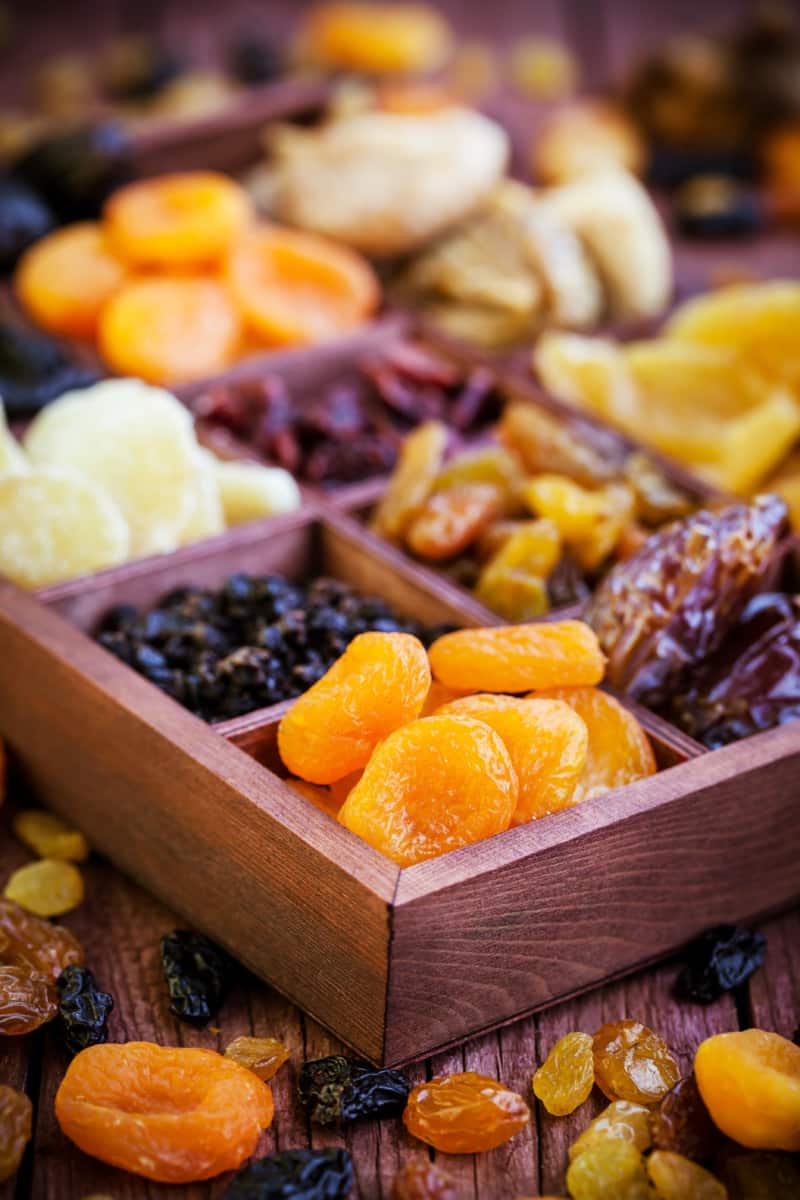
The quantities may look unusual, but each one has a reason. 50 g plums, 50 g apricots and 50 g cranberries give a total of 150 g dried fruit. That is the upper limit the dough can hold together without crumbling when cut. More fruit and the stollen will crack during baking.
300 g spelt flour type 630 with 180 g low-fat quark and 120 g desiccated coconut give the ratio that turns a quark and oil dough into a stollen crumb. The quark adds moisture without yeast, and the desiccated coconut is our flour reduction. It binds liquid and tastes almost like marzipan after the stollen have matured for a week. The 80 g of coconut oil replaces the butter that a classic stollen would have inside and out. 6 tbsp of stevia sweetener and 80 g of erythritol icing sugar for rolling together provide the sweetness of an average stollen without any refined sugar.
The teaspoon of coriander seeds is the detail that often gets overlooked. A genuine stollen spice mix always contains coriander. Without it every stollen tastes like a cinnamon cake. With it the bake has the scent we associate with Advent. Please grind whole coriander rather than buying it ready ground, as the loss of aroma with the powder form is considerable.
What matters in the mixing bowl
The dried fruit is chopped for 4 seconds at speed 5, no longer. Going to speed 7 or higher produces a paste rather than rough pieces. Stollen lives on the bite into a chunk of dried fruit, not a smooth fruit puree. After chopping, the fruit comes out of the mixing bowl and soaks with the orange zest, 40 g orange juice and 10 g Cointreau for one to two hours. This intermediate step matters, otherwise the fruit absorbs nothing.
We knead the dough for 2 minutes on kneading mode. Before that, mix the vanilla seeds with the stevia and coconut oil for 20 seconds at speed 4 so the vanilla distributes evenly and does not clump. Then add the flour, quark, desiccated coconut, coriander, cinnamon, baking powder and the soaked fruit. The dough is noticeably softer than a classic stollen dough. It sticks slightly, so flour the work surface well.
Size matters when shaping
We roll the dough out to 2 cm thick and cut 2 x 3 cm rectangles. Larger and the stollen will not bake through in the centre; smaller and the outer edges will burn. From the rectangles we shape small stollen with the typical lengthways fold. One hour in the fridge is essential, because the coconut oil must firm up again. Without this step the stollen will spread flat during baking.
At 170°C top and bottom heat the stollen bake for 10 to 15 minutes. We check with a wooden skewer; the result should be lightly golden, not brown. If the outside gets too dark, the stollen will have a bitter aftertaste. Better to take them out a minute early than a minute late.
Rolling in erythritol works differently from icing sugar
The classic stollen goes warm into melted butter, then into icing sugar, and then receives another dusting of icing sugar once cooled. With erythritol icing sugar the process is similar, but with one difference: erythritol crystallises on the surface and feels slightly rough after cooling, almost like snow. That is intentional. The 20 g of butter are melted for 3 minutes at 50°C at speed 1, then we brush the still-warm stollen with it. Straight into the erythritol icing sugar and roll well. After an hour, roll again, because the first coat has partly soaked in.
What can go wrong and how we avoid it
If the dough is too sticky to roll out, it has always been down to the quark for us. Low-fat quark varies considerably in water content depending on the brand. With very wet varieties, add 10 g extra flour or drain the quark through a sieve for half an hour before adding it to the mixing bowl.
If the stollen still taste flat after a week, the storage was usually too cold. In the fridge at 5°C the flavour development runs noticeably slower than at 12 to 15°C in a pantry. Next year, leave them to mature in a cool hallway.
If the stollen fall apart, the dough was too warm when shaping. We put the finished dough in the freezer for ten minutes if the kitchen is above 22°C. After that the little stollen can be rolled neatly.
Variations we have tested
With a marzipan centre. Anyone who does not want to miss the classic stollen marzipan core can press 3 g of raw marzipan into each stollen. Reduce the dried fruit to 100 g in that case, otherwise there is too much sweetness.
With flaked almonds instead of desiccated coconut. This gives a more classic flavour, though it is no longer a strict low-carb approach, more of a lighter version. Toast the flaked almonds briefly first, otherwise the flavour is flat.
With rumtopf instead of Cointreau. Anyone with their own rumtopf can use 10 g of it. The preserved fruit in it replaces some of our dried fruit. The flavour of the stollen becomes darker and deeper.
Our favourite drink alongside
A glass of advocaat from the Thermomix® pairs beautifully with the mini stollen. Anyone who prefers something lighter can try our mulled wine punch or a hot spiced punch from our drinks collection. With afternoon coffee these have become the one Advent bake in our house that tastes even better two weeks after baking than on the first day.
1 week to mature, then 4 weeks in a cool place
In an airtight tin the mini stollen keep for three to four weeks. We have baked them as early as four weeks before Christmas and they only improve. Freezing also works. Freeze the stollen without the erythritol coating, wrap each one individually in baking paper, and carry out the rolling step after defrosting. Otherwise the erythritol layer dissolves during defrosting.
At 105 kcal per piece these bites fit easily into a mindful Advent season. Three pieces are the equivalent of a small slice of classic stollen, without the insulin spike. That is exactly what the mini stollen are for: eating consciously, in small portions, without the numbers getting out of hand.
How other recipes approach it
Also goes well with: mulled wine, coffee and icing sugar.
Also worth a look: Liquorice Caramel Biscuits with the Thermomix®.
Many low-carb stollen recipes use defatted almond flour combined with coconut flour, a mix of xylitol and erythritol for sweetness, and small marzipan cubes in the dough. We take a different approach: quark, desiccated coconut and coconut oil instead of marzipan and almond flour. This skips the marzipan step and makes the crumb moister. Instead of raisins we use plums, apricots and cranberries, because raisins contain more sugar per gram. Other recipes shape one large stollen in a loaf tin and slice it after a night in the fridge. We bake mini stollen directly and give them the full week to mature, because coconut oil needs longer than butter to distribute flavour. For rolling, everyone uses ground erythritol as an icing sugar substitute, and on that point we agree with the broader Thermomix® community.
Find more Advent recipes with the Thermomix® in our baking recipe collection and in the Thermomix® recipe overview.