Waldorf Salad with the Thermomix® only works with 5 seconds at speed 5. Any longer and the pointed cabbage turns mushy; any shorter and the carrots stay too coarse. That narrow window is the difference between a crisp salad and a puree.
We have been making Waldorf salad for barbecue parties and cold buffets for years. The combination of crunchy vegetables, a nutty bite and a creamy dressing makes it a firm favourite. The Thermomix® chops the carrots, pointed cabbage and walnuts evenly in a single step, without crushing individual ingredients or leaving oversized pieces.
Waldorf Salad with the Thermomix®

Ingredients 0 / 13 ✓
- 100 g carrot
- 200 g pointed cabbage
- 50 g walnut halves
- 100 g cooked ham
- 100 g pickled celery drained
- 30 g raisins
- 100 g full-fat cream cheese
- 150 g crème fraîche
- 2 tbsp white balsamic vinegar
- 1 1/2 tsp salt
- 1/2 tsp white pepper
- 1/4 tsp sugar
- 2 tsp mixed herbs frozen
Instructions 0 / 4
-
1
Prepare the vegetables.
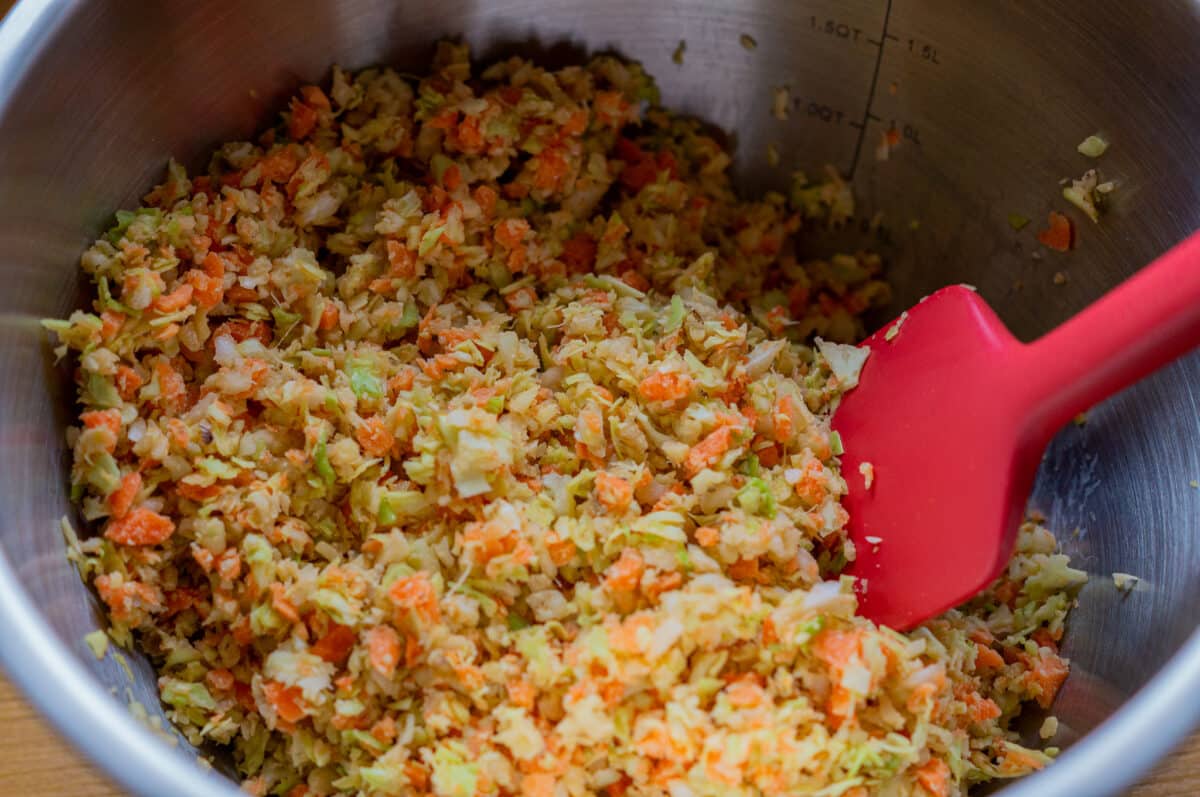
Peel the carrots, cut into pieces and place in the mixing bowl. Wash the pointed cabbage, cut into pieces and add to the mixing bowl together with the walnuts. Chop for 5 seconds / speed 5 and transfer to a salad bowl.
-
2
Slice the ham.
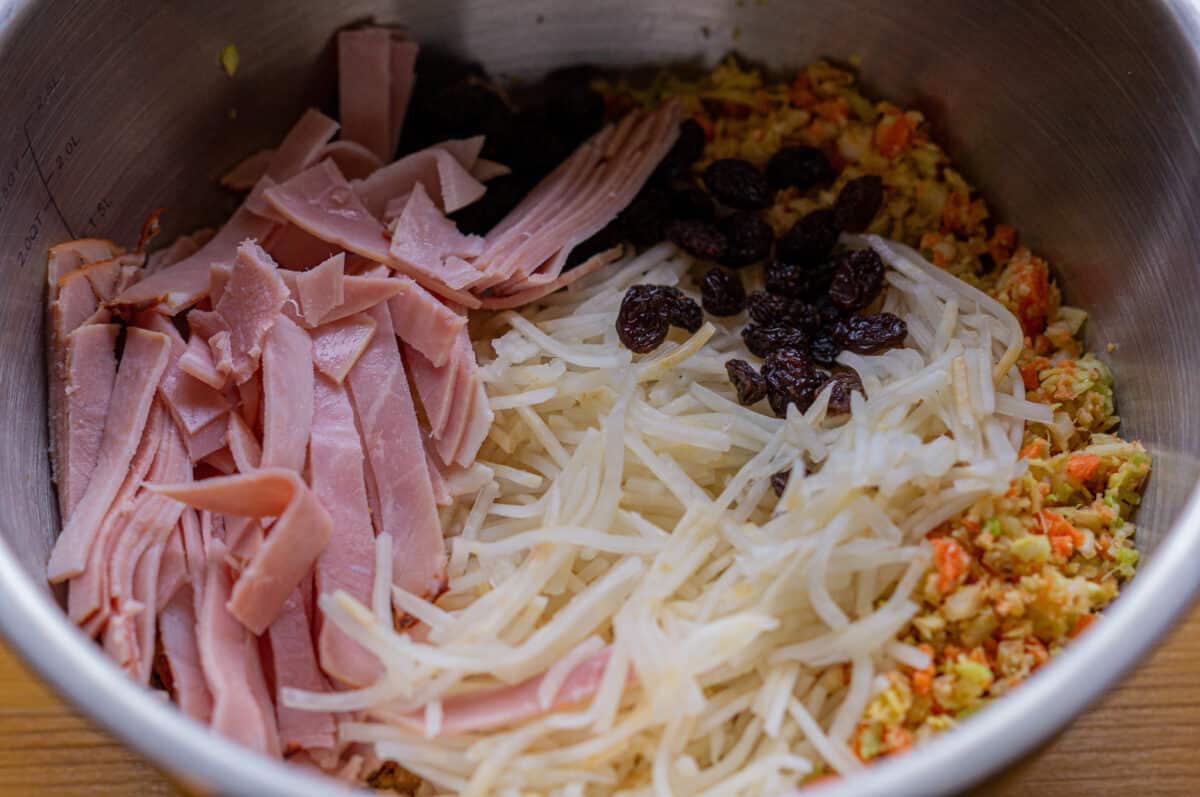
Slice the cooked ham, drain the pickled celery and add both to the salad along with the raisins.
-
3
Mix the dressing.
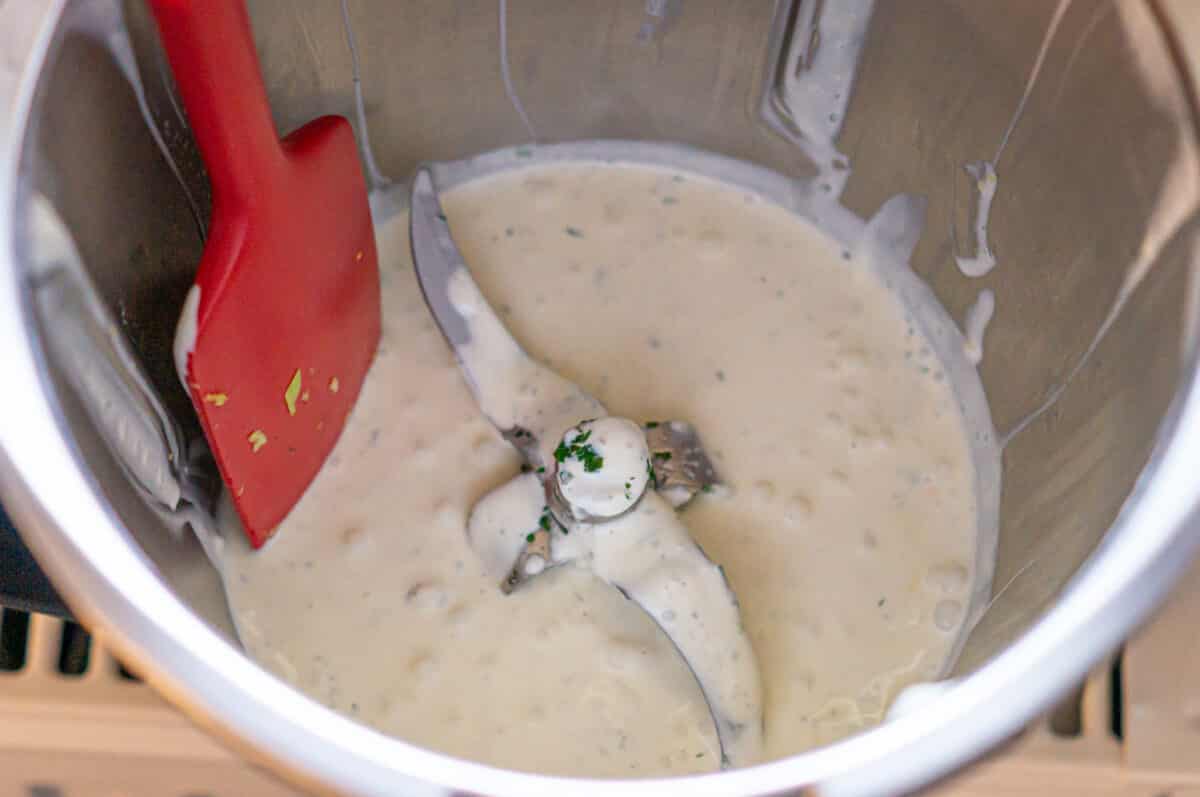
Place all dressing ingredients in the mixing bowl and mix for 15 seconds / speed 4. Pour the dressing over the salad, fold in and leave to marinate for 1 hour.
-
4
Serve.
Before serving, taste the salad again and season further if needed.
Tip: You can also add a washed, quartered, cored apple in step 1 together with the other ingredients to make your salad even fruitier.
Nutrition per serving
Why 5 seconds is the critical threshold
Pointed cabbage has significantly more water content than carrots. At 6 or 7 seconds on speed 5 the cell walls burst, the cabbage releases liquid and goes limp. The carrots, however, are still too coarse. At 4 seconds the carrot pieces are too large and uneven, while the cabbage is perfect. 5 seconds hits exactly the middle point where both vegetables reach the right size and the cabbage still has bite.
The walnuts are roughly chopped in the same pass. They should not become too fine, otherwise the nutty bite is lost. Speed 5 leaves them in visible pieces while the vegetables are chopped evenly.
Jarred celery, not fresh
We use pickled celery from a jar. Fresh celery sticks are stringy and would fray rather than cut in the Thermomix®. The pickled celery is softer but still has enough structure. It also brings a subtle acidity that rounds out the dressing. Drain it thoroughly before adding, otherwise the dressing will become watery.
Cream cheese dressing instead of mayonnaise
The dressing is made from full-fat cream cheese, crème fraîche and white balsamic vinegar. No yoghurt, no mayonnaise. The cream cheese keeps the dressing stable and creamy without making it too heavy. The crème fraîche adds extra creaminess and a lightly tangy flavour. White balsamic vinegar instead of lemon juice because it is milder and does not make the salad too sharp.
Speed 4 for 15 seconds blends the dressing evenly without incorporating air bubbles. At speed 5 or higher the dressing becomes too loose and separates later. At speed 3 lumps of cream cheese remain.
One hour in the fridge is essential
The salad must rest in the fridge for at least one hour. During this time the dressing soaks into the vegetables, the flavours come together and the salad becomes much creamier overall. Straight after mixing the dressing tastes too dominant and the vegetables seem dry. After an hour the flavour is well balanced.
Taste again before serving. Pointed cabbage draws out salt, so it often needs a little extra seasoning. If you make the salad the day before, it gets even better. Do not leave it for longer than 24 hours though, otherwise the vegetables become too soft.
Apple makes the salad fruitier
A washed, quartered, cored apple can be chopped in step 1 together with the carrots and pointed cabbage. The apple adds fruitiness and a gentle acidity. Important: prepare the apple just before chopping, otherwise it will brown. We usually use a tart apple such as Elstar or Boskoop, as it complements the dressing better than a sweet variety.
Without apple the salad is more savoury and cabbage-forward. With apple it becomes lighter and fresher. Both work well; it comes down to personal taste.