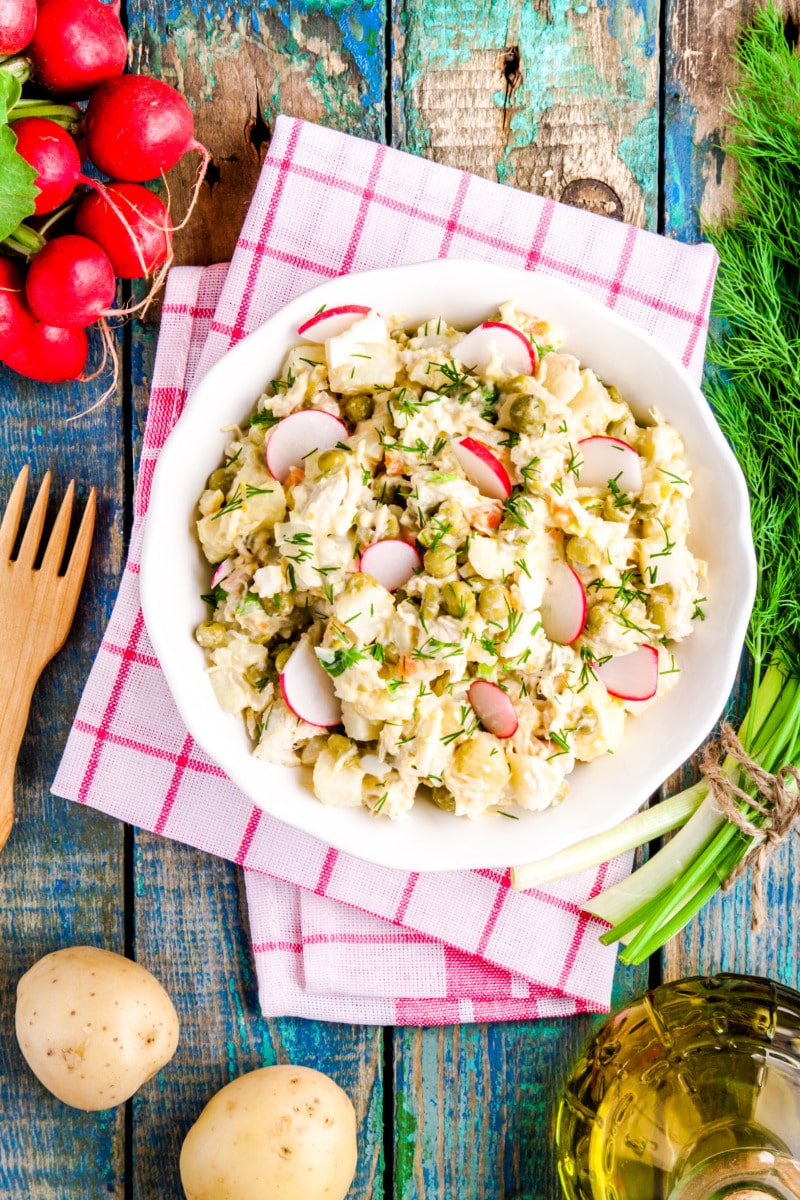
Classic potato salad from the Thermomix® has been our go-to at barbecues for years. We blend the radishes directly into the dressing, which turns the yoghurt marinade a pale pink and gives the salad its characteristic heat without any extra chopping.
We prefer to make this salad the evening before and leave it to rest overnight. The dressing soaks into the potato cubes and the radish heat spreads more evenly. Made and served straight away, the salad tastes flat and the individual components feel separate.
Classic Potato Salad with Radishes and Egg, Thermomix®

Ingredients 0 / 11 ✓
- 1000 g potatoes
- 4 eggs
- 200 g peas frozen
- 500 g vegetable stock
- 1/2 bunch chives
- 7 radishes
- 200 g natural yoghurt (3.5% fat)
- 20 g apple cider vinegar
- 20 g olive oil
- 10 g medium-hot mustard
- some freshly ground pepper
Instructions 0 / 6
-
1
Prepare the potatoes and eggs.
Wash, peel and dice the potatoes and place them in the steamer basket. Wash the eggs and place them in the Varoma. Leave the peas to thaw.
-
2
Cook the potatoes and eggs.
Add the vegetable stock to the mixing bowl, hang in the steamer basket and place the Varoma on top, then cook for 25 min / Varoma / speed 2.
-
3
Leave the ingredients to cool.
Set the Varoma aside, remove the steamer basket and empty the mixing bowl. Leave the eggs and potatoes to cool.
-
4
Chop the chives.
Meanwhile, wash the chives, shake dry and cut into rings.
-
5
Blend the dressing.
Wash the radishes and add them to the mixing bowl together with the yoghurt, vinegar, oil and mustard, then chop for 3 sec / speed 5.
-
6
Toss the salad and serve.
Transfer the potatoes to a bowl. Peel the eggs, chop them and add them to the bowl. Spoon the dressing over the top, scatter with peas, chives and pepper, toss well and serve.
Tip: You can swap the chives for fresh dill!
You can make the potato salad the day before and leave it to rest overnight, covered, in the fridge.
Video
Nutrition per serving
Why radishes go in the dressing, not on top
Most people slice radishes and scatter them over the finished salad. We blend them at speed 5 with the yoghurt base. There are three reasons for this:
- Colour: The pink from the radishes tints the entire marinade a light rose. The salad looks less plain and you can tell straight away that radishes are in there.
- Heat: Chopping bursts the mustard-oil cells of the radishes. The heat spreads through the yoghurt so every bite tastes of radish, not just the spots where you can see a piece.
- Texture: Instead of large, crunchy slices you get small, soft pieces. The radishes give the dressing body without you biting into hard chunks.
3 seconds at speed 5 is exactly right. Shorter and the radishes stay too coarse, longer and the dressing becomes too watery from the liquid released by the radishes.
Potato variety and dice size
We use waxy potatoes and dice them to about 1.5 cm. Floury varieties fall apart too quickly when steam-cooked in the Varoma and the salad turns mushy. Dice that are too small (under 1 cm) absorb too much dressing and go soft, while dice that are too large (over 2 cm) stay firm in the middle after 25 minutes.
The eggs cook at the same time in the Varoma above. After 25 minutes they are hard-boiled and the potatoes are done. Cooking longer is not worthwhile because the potatoes dry out at the edges and the yolk turns green.
Cooling is essential, not optional
We leave the potatoes and eggs to cool completely before adding the dressing. Warm potatoes absorb a yoghurt dressing too quickly and the salad turns dry and needs topping up. Cold potatoes hold their shape and the dressing stays on the surface where it belongs.
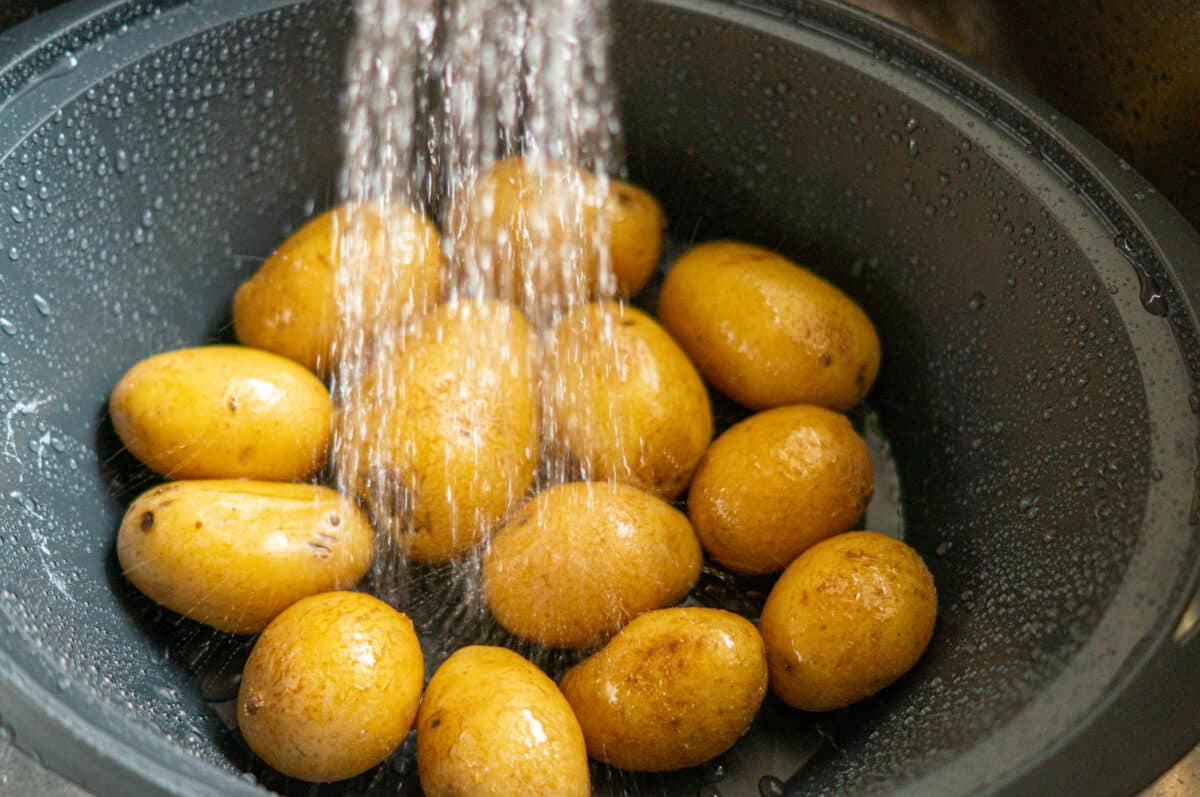
To speed things up, tip the potatoes straight from the steamer basket onto a baking tray and spread them out. In the fridge they will cool down in 20 minutes instead of 40.
Peas and chives go in at the very end
We scatter the frozen peas and chive rings over the finished salad only at the very end. Both lose their colour when exposed to acid for too long. If you mix them straight into the dressing and leave the salad overnight, the peas turn grey-green and the chives go brown.
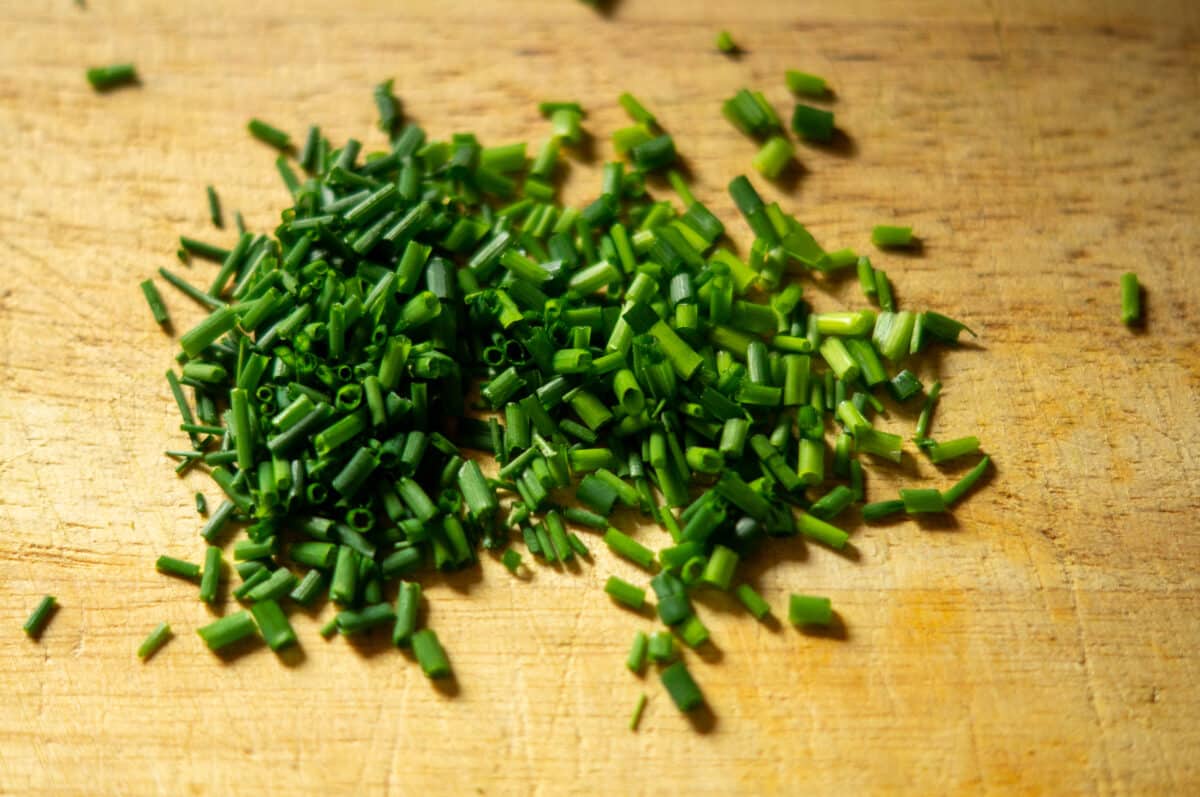
The peas need to be thawed, otherwise they cool the salad down too much. Simply take them out of the freezer 30 minutes beforehand and leave them to thaw at room temperature.
Dill instead of chives works differently
The notes suggest dill as an alternative. That works, but dill is more dominant. If you use dill, reduce the quantity to a third (about 5 g instead of 15 g). Otherwise the dill flavour overpowers the radish heat and the salad tastes only of cucumber salad.
Dill suits a classic mayo-based potato salad better. With a yoghurt base, chives remain the better choice as they are milder and let the other flavours come through.
Rest overnight or eat straight away
You can serve the salad straight after mixing, but it tastes noticeably better after at least 4 hours in the fridge. The potatoes absorb the yoghurt marinade, the radish heat spreads throughout and the mustard develops its flavour. Freshly dressed the salad tastes of individual ingredients, after resting it tastes like a rounded whole.
Covered in the fridge the salad keeps for 2 days. Any longer and it goes watery as the radishes and peas release liquid. Freezing does not work as the yoghurt dressing splits when thawed.
More classic salads
Goes well with: Schnitzel.
If you enjoy this potato salad, try our Coleslaw with the Thermomix®, pasta salad with mayo or cucumber salad. All three are classic barbecue sides that are quicker and simpler made with the Thermomix®.