Sweet yeast dough made in the Thermomix® is the base for almost every enriched bake we make. With 500 g flour, 100 g butter and a precise 37°C for the yeast, we have a smooth dough ready in 5 minutes of kneading that rises reliably every time.
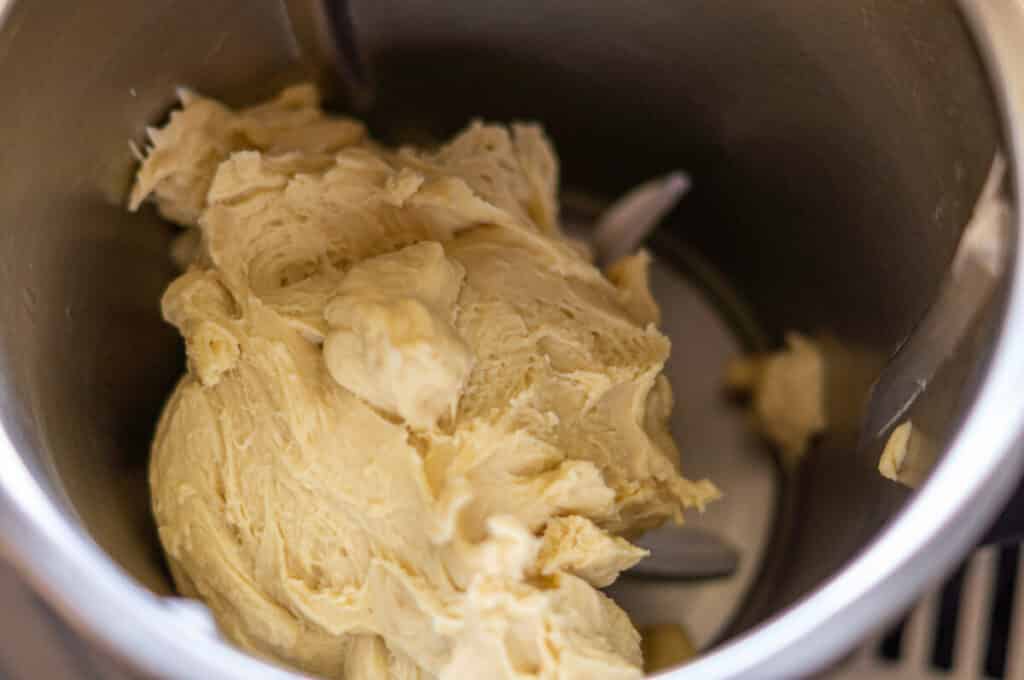
The biggest advantage over kneading by hand: the Thermomix® warms the milk to exactly 37°C, the ideal temperature for yeast. This is where most yeast doughs go wrong, because above about 40°C the yeast cells die and the dough will not rise. With the temperature shown on the display, there is no guessing involved. We use this same dough to make cinnamon rolls, plaited loaf or milk rolls.
Sweet Yeast Dough with the Thermomix® Basic Recipe

Ingredients 0 / 7 ✓
- 1 cube fresh yeast
- 200 g milk
- 90 g sugar
- 100 g butter
- 500 g flour, type 550
- 1 egg
- 1 pinch salt
Instructions 0 / 4
-
1
Milk and yeast.
Crumble yeast into the mixing bowl. Add milk and sugar and warm for 1 minute / 37°C / speed 1.
-
2
Knead the dough.
Add butter in pieces, flour, egg and salt to the mixing bowl and knead for 4 minutes / kneading mode until a smooth dough forms.
-
3
Rest.
Transfer dough to a bowl, cover with a damp kitchen towel and leave to rise in a warm place for 1 hour, until the volume has doubled.
-
4
Shape and use.
Continue to shape and use the dough according to your chosen recipe.
Tip: Yeast likes a little warmth, which is why the first step gently heats the yeast with milk and sugar.
Video
Nutrition per serving
Why this yeast dough in the Thermomix® works every time
Three things make the difference, and all three are something the Thermomix® does better than the hand.
- Exact yeast temperature: In the first step we warm 1 cube of yeast with 200 g milk and 90 g sugar for 1 minute at 37°C / speed 1. These 37°C are the sweet spot for yeast. By hand you estimate the milk temperature and often go too high.
- Even kneading: 4 minutes in kneading mode builds a stable gluten network. These gluten strands hold the fermentation gases and make the dough elastic. By hand you need a good 10 minutes and rarely get the same consistency.
- 100 g butter for a moist crumb: Many basic recipes from the Thermomix® community leave out the fat entirely. Our dough gets 100 g butter, which makes it noticeably more moist, prevents tearing during shaping and keeps it soft the next day.
The seven ingredients for sweet yeast dough in the Thermomix®
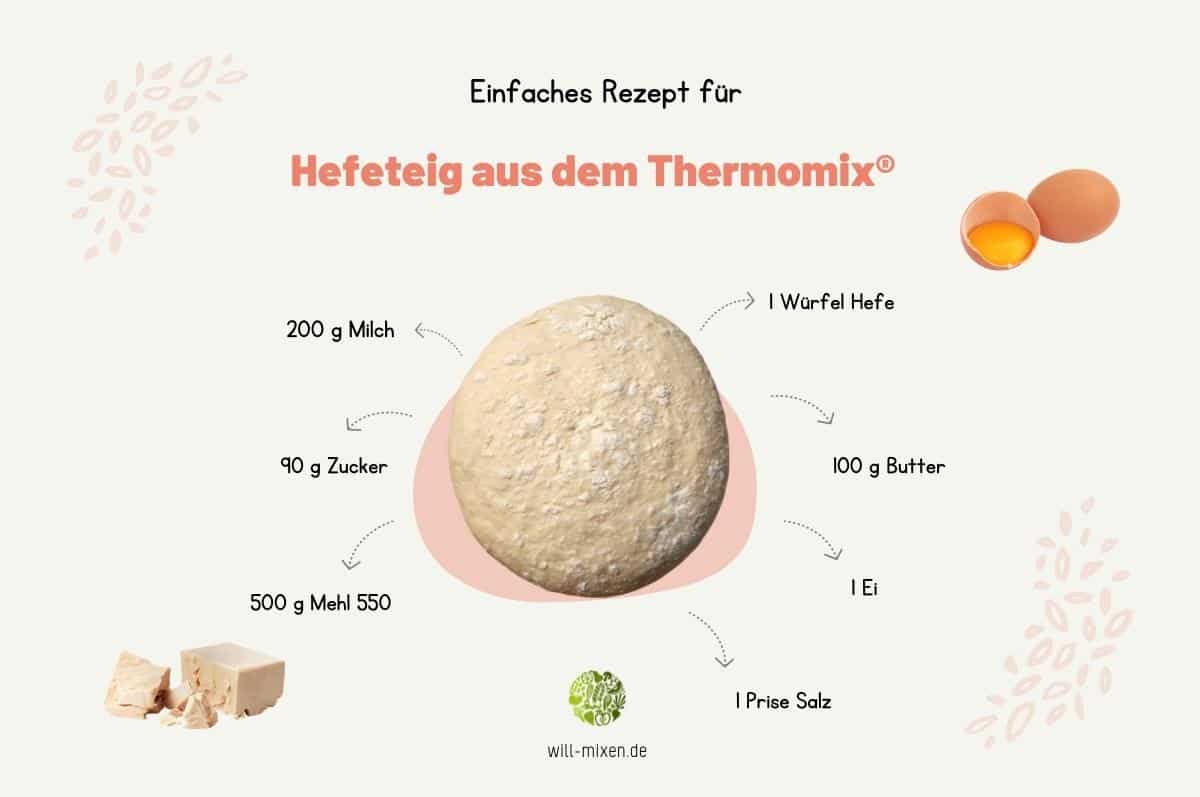
That is all you need: 1 cube of fresh yeast, 200 g milk, 90 g sugar, 100 g butter, 500 g flour type 550, 1 egg and 1 pinch of salt. This makes around 12 pieces with approximately 256 calories each.
- Milk: 200 g keeps the dough soft. Slightly less milk than many other recipes, which means the dough is firmer and easier to shape. Plant-based milk works just as well.
- Sugar: 90 g provides sweetness and also feeds the yeast. Brown sugar or coconut blossom sugar work too and give a slightly maltier flavour.
- Butter: 100 g for a moist, soft crumb. Room temperature and cut into pieces is best, so it distributes evenly during kneading.
- Egg: 1 egg gives structure and a lovely golden colour. For a vegan version, replace it with 60 g apple sauce.
- Flour: 500 g type 550 is our choice. Type 550 has more gluten protein than type 405 and gives the yeast dough more structure. Type 405 works too but produces a slightly softer dough.
- Salt: 1 pinch enhances the flavour. Important: never add salt directly onto the yeast, as it inhibits it. That is why salt goes in during the second step with the flour.
- Yeast: 1 cube of fresh yeast. You can also use dried yeast: 2 sachets are equivalent to one cube of fresh yeast.
How to make the yeast dough in two Thermomix® steps
First we crumble the yeast into the mixing bowl, add 200 g milk and 90 g sugar and warm everything for 1 minute at 37°C / speed 1. This step activates the yeast before the flour is added. Then we add 100 g butter in pieces, 500 g flour, the egg and a pinch of salt and knead for 4 minutes in kneading mode until a smooth dough forms.
The dough then goes into a bowl and rises covered in a warm place for about 1 hour, until the volume has doubled. We cover it with a damp kitchen towel, a lid or cling film. A damp cloth prevents the top of the dough from forming a hard crust.
The three most common mistakes with yeast dough
The milk is too hot
Warming milk in the microwave and adding it to the yeast by guesswork often kills the yeast. Above 40°C the yeast cells die and the dough stays flat. Our solution: In the Thermomix®, warm the milk together with the yeast to exactly 37°C / speed 1. The display shows the temperature, so nothing can go wrong.
The dough does not rise
Most often it comes down to a draught, a room that is too cold, or the salt having touched the yeast directly. Our solution: Always add salt with the flour, never onto the yeast. Leave the dough to rise in a draught-free warm spot with the window closed. A full hour of patience is part of the process.
The dough is too sticky or too stiff
If the dough sticks, it needs more flour. If it crumbles, it needs more liquid. Our solution: For a sticky dough, add flour a spoonful at a time and knead briefly. For a stiff dough, add 1 tablespoon of lukewarm milk. Different flour types absorb varying amounts of liquid, so a little judgement goes a long way.
Variations on the basic yeast dough
We adapt the basic dough depending on what we are baking. A few variations we make often:
- Chocolate yeast dough: Fold in 50 g chocolate chips briefly on speed 2 after kneading for a chocolatey dough for buns.
- Citrus variation: Replace part of the milk with the juice and zest of an orange for a fresh dough, ideal for Easter plaits.
- Honey instead of sugar: 70 g honey replaces the 90 g sugar and gives a subtle malty note. Reduce the milk by 20 g as honey is liquid.
- Quark yeast dough: Replace 50 g of the butter with 50 g quark for a lighter dough with slightly fewer calories.
- Apple and cinnamon: Work in small apple cubes and 1 tsp cinnamon after the first rise for an autumnal dough.
What we bake with this yeast dough
This sweet yeast dough is the foundation for our favourite baking recipes. For moist cinnamon rolls we roll out the dough, spread it with cinnamon sugar and cut it into slices. For a classic Thermomix® plaited loaf we divide the dough into three strands and braid it. In summer it becomes a plum tray bake with fresh plums.
Preparing and storing yeast dough
Sweet yeast dough made in the Thermomix® is great for making ahead. Knead a larger batch, divide it into portions and store covered in the fridge. It will keep for 2 to 3 days and continues to rise slowly, which actually gives it more flavour. Before using, leave it to come back to room temperature for 30 minutes.
Freezing works well too. Freeze the fully risen dough in portions and it will keep for around 3 months. To thaw, leave it in the fridge overnight and then let it rest briefly at room temperature before rolling out.
Frequently asked questions about sweet yeast dough
What temperature does the yeast need?
Exactly 37°C. At this temperature the yeast works optimally. Above about 40°C the yeast cells die. In the Thermomix® we therefore warm milk, yeast and sugar for 1 minute at 37°C / speed 1.
Can I use dried yeast instead of fresh yeast?
Yes. 2 sachets of dried yeast are equivalent to 1 cube of fresh yeast for 500 g flour. Add the dried yeast directly with the milk: no need to dissolve it beforehand.
Which flour is best for yeast dough?
We use type 550 because it has more gluten protein and gives the dough more structure. Type 405 works too but produces a slightly softer dough. For a more rustic bake you can replace up to 100 g with wholemeal flour.
How long does the yeast dough need to rise?
About 1 hour in a warm place, until the volume has doubled. In the fridge it takes considerably longer, but the flavour becomes more intense. Patience pays off: a dough that has not risen long enough will stay dense.
Why is my yeast dough not rising?
The most common reasons: the milk was too hot and killed the yeast, the salt made direct contact with the yeast, or the proving spot was too cold and draughty. At 37°C, salt added with the flour and a draught-free warm place, it works reliably every time.
Does the recipe work with TM31, TM5 and TM6?
Yes, identically on all models. 1 minute / 37°C / speed 1 for warming and 4 minutes in kneading mode work the same on TM31, TM5 and TM6.