Icing glaze with the Thermomix® needs just two ingredients and five minutes: grind 200 g sugar into icing sugar (20 sec / speed 10), then stir in 30 g liquid (20 sec / speed 3). The result is a medium-thick glaze that runs slowly and sets firm. The liquid you choose determines the character: water gives a classic clear glaze, lemon juice makes it fresh and sharp, red wine adds depth to dark cakes, and cherry juice turns it a pretty pink.
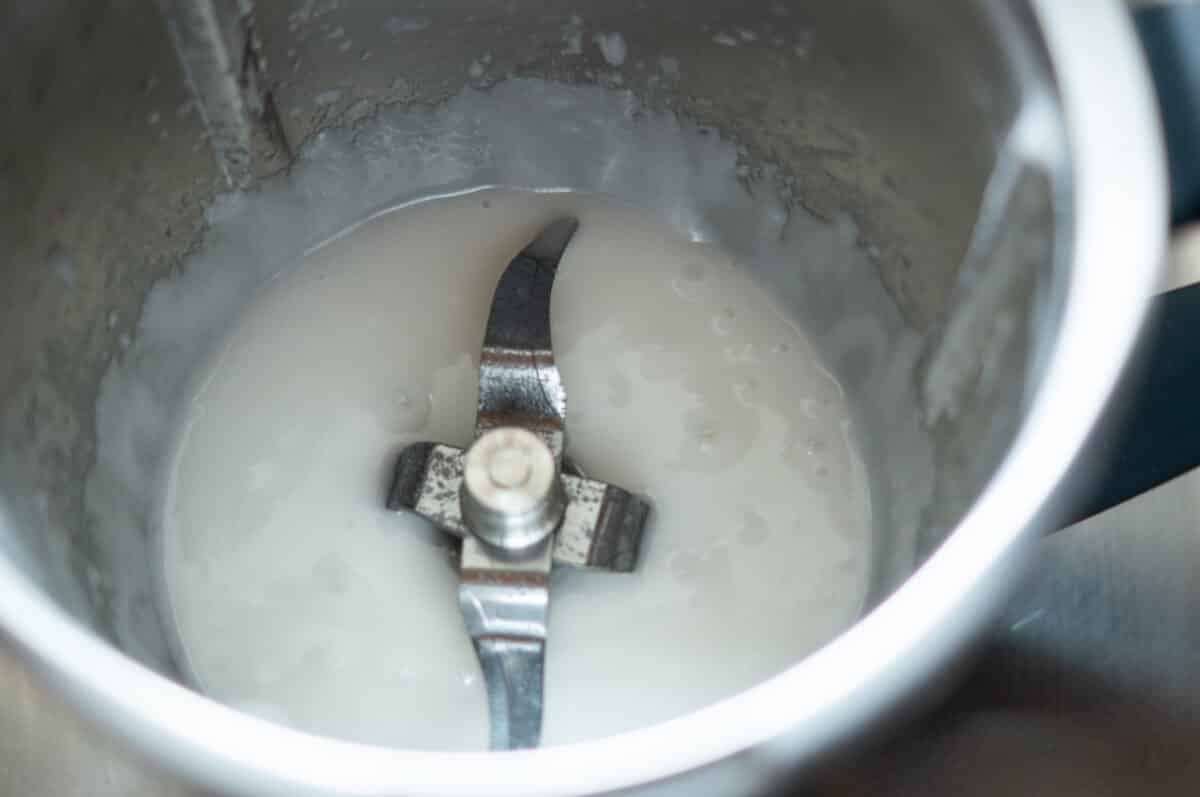
We use this basic recipe for sheet cakes, Bundt cakes and biscuits. It is one of the most honest recipes there is: two ingredients, no heating, no difference between models. The Thermomix® takes over exactly the step that most often goes wrong by hand, which is grinding the sugar into genuinely fine icing sugar.
Icing Glaze with the Thermomix®
Ingredients 0 / 2 ✓
- 200 g sugar
- 30 g water
Instructions 0 / 3
-
1
Pulverise the sugar.
Place the sugar in the mixing bowl and pulverise for 20 sec / speed 10.
-
2
Stir in the water.
Add the water to the mixing bowl and mix for 20 sec / speed 3.
-
3
Use the icing straight away.
Use immediately as needed.
Tip: Instead of water, you can use 30 g lemon juice, red wine, cherry juice or a similar liquid.
Nutrition per serving
Why freshly ground icing sugar makes a smoother glaze
The Thermomix® grinds the sugar into fine icing sugar in 20 seconds at speed 10. That is the decisive step. Shop-bought icing sugar often has slight lumps or contains starch as an anti-caking agent, and both can make the glaze cloudy or uneven. Freshly ground sugar dissolves more cleanly and gives a smoother finish. After that, speed 3 for 20 seconds is enough to work in the 30 g of liquid. Nothing more is needed.
Anyone who wants to make icing sugar separately in advance and store it can find our guide on making icing sugar in the Thermomix®. For the glaze itself, it is worth doing both in one bowl, because the still-warm mixing bowl helps the sugar dissolve.
The right consistency: 200 g sugar to 30 g liquid
The recipe card uses 30 g liquid to 200 g sugar. This gives a medium-thick glaze that runs slowly over the cake and then sets firm. This ratio is our standard for a sheet cake or Bundt cake. If you want a thicker, more opaque glaze, use only 25 g liquid. If you need a thinner coating for biscuits, increase to 35 g.
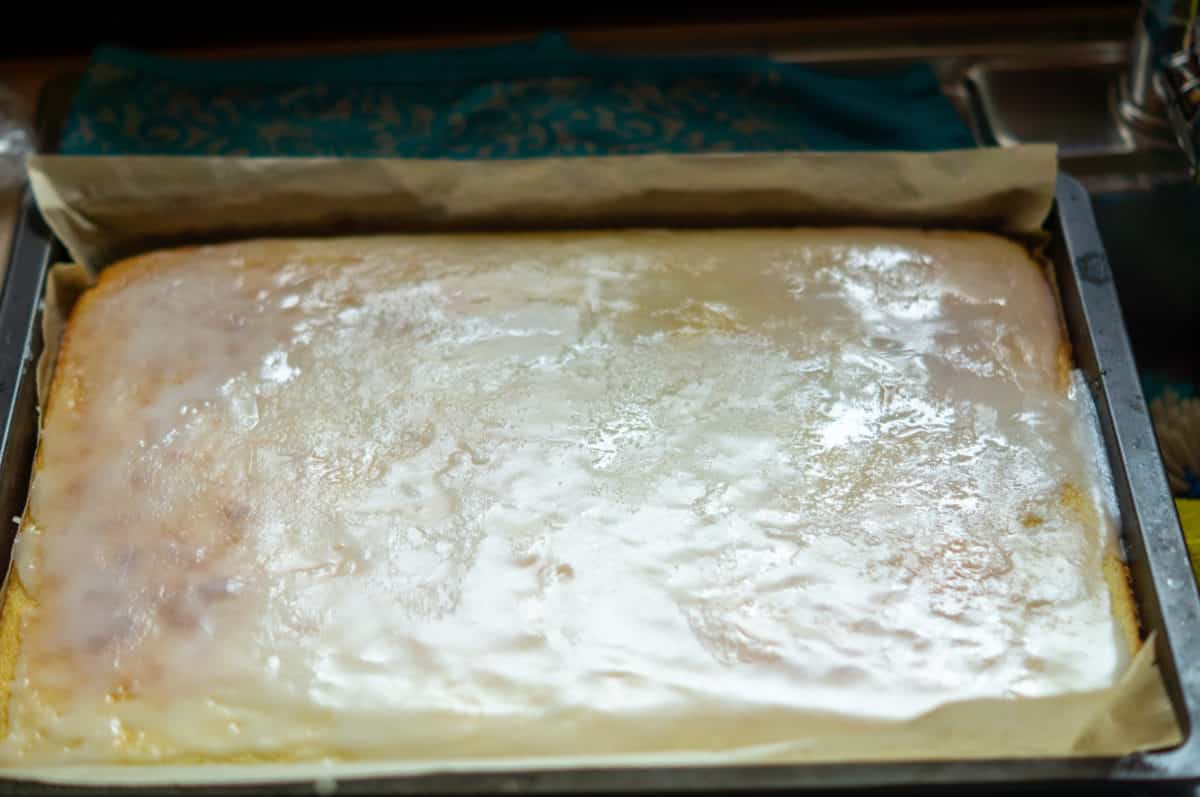
Adjusting is straightforward: if the glaze is too thick, add a little more liquid a spoonful at a time and stir briefly at speed 2. If it has become too thin, spoon in a little more icing sugar directly from the still-warm mixing bowl. Both corrections are easy to make. We always use the glaze straight away, as it sets quickly on contact with air. Spread over a still-warm cake it flows more evenly and gives a more even finish.
Common pitfalls that cost you shine and hold
The glaze stays matt instead of shiny
A dull, flat surface is almost always caused by over-mixing. The longer the glaze is moved, the more air gets in and the duller it becomes. Our fix: after adding the liquid, mix for exactly 20 seconds at speed 3 and no longer. A few drops of lemon juice in the water also keep the glaze bright and prevent it from yellowing as it dries.
The glaze does not set
If the glaze is still sticky after several hours, it was either mixed too thin or the air in the room is too humid. Our fix: spoon in more icing sugar until the glaze falls in thick ribbons from the spoon, then leave the cake uncovered in a dry room. A running fan or a dehumidifier speeds up drying noticeably. A thicker glaze always dries faster than a thin one.
The glaze runs and turns transparent
A glaze that is too liquid runs off the cake, pools at the edges and dries unevenly and transparent. Our fix: start slightly on the thick side and thin it out drop by drop rather than the other way round. The right consistency falls from the spoon in a thick ribbon and disappears back into the mass only after two to three seconds.
Four liquids, four characters: water, lemon, red wine, cherry juice
The biggest variable is the liquid. All four options use the same 30 g to 200 g sugar, and they differ only in flavour and colour:
Water: the classic, clear and neutral glaze. Goes with everything and lets the cake speak for itself.
Lemon juice: fresh and slightly sharp, it balances sweet batters. It also keeps the glaze beautifully bright. Our standard for lemon and sponge cakes.
Red wine: brings a deep colour and a pleasantly bitter edge, ideal on chocolate and spiced cakes. The colour deepens slightly after drying.
Cherry juice: turns the glaze a vivid pink and adds a fruity note, great for pale biscuits. A splash of beetroot juice also works for a natural pink.
Important when using coloured juices or food colouring: the liquid always counts towards the 30 g, it does not go on top of it. Otherwise the glaze will be too thin.
Applied warm or cold: what the difference means in practice
Timing determines the result. Applied to a still-warm cake, the glaze soaks in slightly, bonds with the surface and makes the bake moister. This is our preferred approach for sheet cakes and sponge cakes.
On a fully cooled cake, the glaze sits on top as a thick, opaque layer and dries into a clear, firm coating. This is the right choice for biscuits or when you want a smooth, white finish. In both cases the rule is the same: spread immediately after mixing, because the glaze sets faster in the bowl than on the bake.
Which cakes and biscuits work best with this glaze
Which recipes go well with this basic glaze? A red wine cake made in the Thermomix® pairs perfectly with the red wine version for a coordinated finish. For colourful Christmas butter biscuits, use the cherry juice glaze for a vivid pink, or the lemon juice glaze if you want to keep the biscuits pale.
The lemon juice glaze works brilliantly on our classic moist lemon traybake. Anyone looking for a simple white coating for a marble cake or a classic sponge will be best served by the water version.
How long the icing glaze keeps and how long it takes to dry
Once mixed, the glaze should be used immediately, as it sets in the bowl within a few minutes. On the cake, a medium-thick glaze needs between 30 minutes and several hours to dry completely, depending on the humidity of the room. Overnight it is guaranteed to be firm.
A finished glazed cake keeps just as long as the cake itself, and the glaze barely changes in that time. We would not recommend storing any leftover unmixed glaze, as it hardens in the bowl. With just two ingredients and five minutes of effort, it is far better to mix a fresh batch than to try to save what is left.
Also pairs well with: Lebkuchen, cinnamon stars and spritz biscuits.