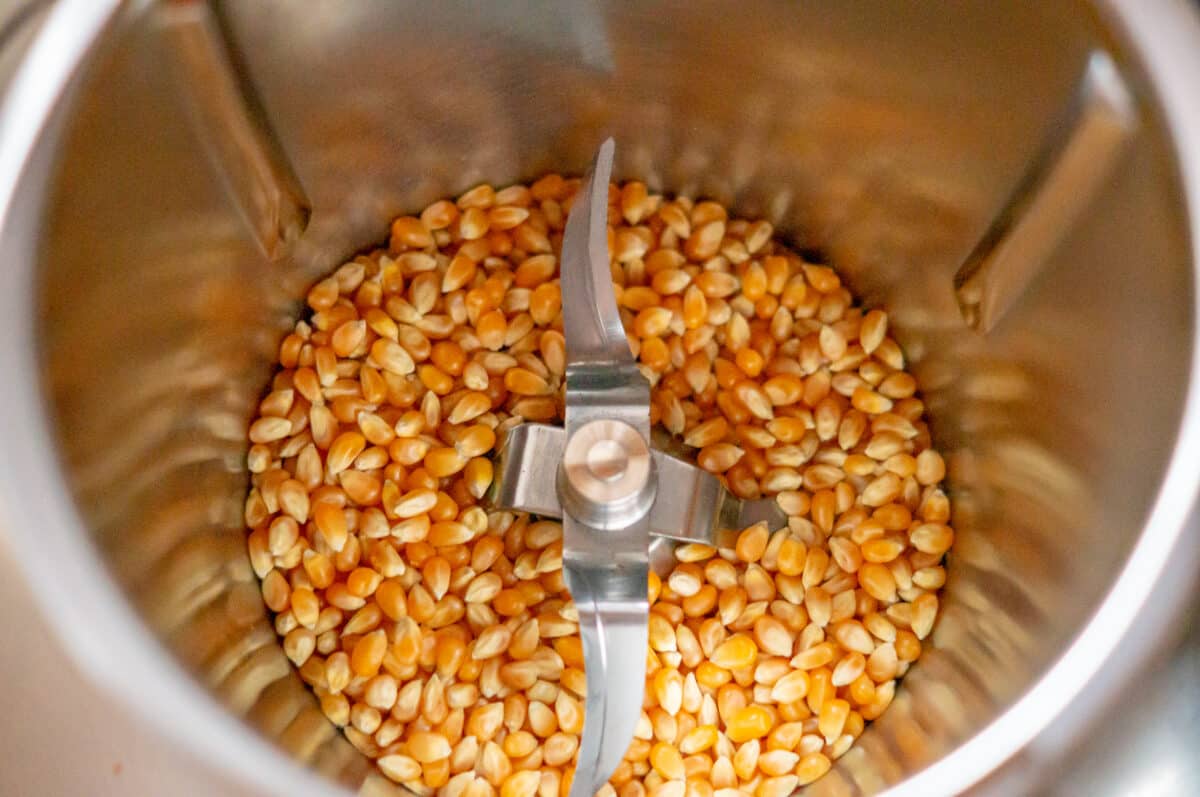
We grind maize in the Thermomix® into fine maize flour in two minutes. The quick method: 200 g dried maize kernels into a dry mixing bowl, then 2 minutes at speed 10 for fine flour (cornbread, pancakes, bread) or 1 minute at speed 10 for coarse polenta grit. We never put more than 200 g per batch, otherwise the heat builds up and the maize sticks together.
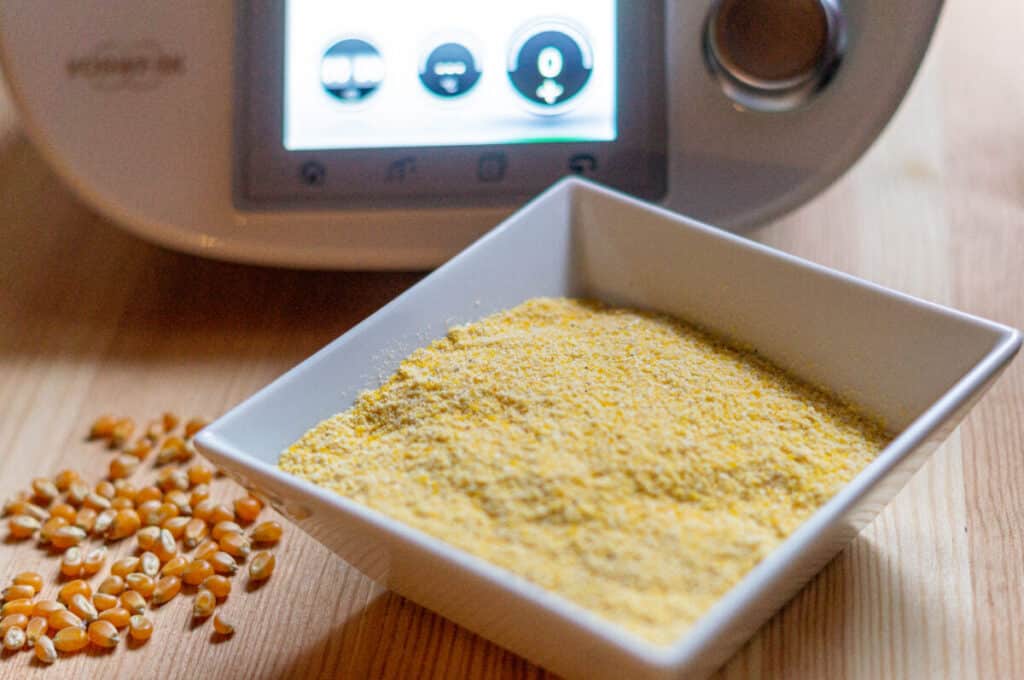
Freshly ground maize tastes noticeably more intense than the pre-packaged bag from the supermarket, because the maize oil in the kernel is only released during grinding and has not yet oxidised. We always grind it as needed and keep only whole kernels in stock. Anyone planning polenta, tortillas or maize pancakes needs a different grind for each. We control exactly that through the grinding time, and that is what the next section covers.
Grinding Maize in the Thermomix®
Ingredients 0 / 1 ✓
- 200 g dried maize kernels
Instructions 0 / 2
-
1
Grind the maize.
Add maize kernels to the mixing bowl and grind for 1 minute / speed 10.
-
2
Decant the maize.
Use the ground maize straight away or transfer to an airtight container for storage.
Tip: If you want to grind larger quantities of maize kernels in the Thermomix®, we recommend splitting the process into several batches. Please add no more than 200 g of maize per grinding run to the mixing bowl.
Nutrition per serving
Controlling the grind: fine maize flour, polenta grit or maize flakes
The Thermomix® produces three textures from one and the same ingredient, purely through the time at speed 10. That is the advantage over bought maize flour: we determine the grind ourselves rather than taking whatever is on the shelf. Our values for 200 g maize kernels in a dry mixing bowl:
- 2 minutes at speed 10: fine maize flour. For cornbread, maize pancakes, maize bread or as a 20 per cent addition to wheat bread dough.
- 1 minute at speed 10: coarse polenta grit. The kernel remains noticeable and cooks up with a bit of bite. This is also the setting used in our recipe card below.
- 30 seconds at speed 10: coarse maize flakes. For bread with texture or as a crunchy topping on the crust.
The order matters: grind briefly first, check the consistency, then add more time if needed. Going too fine cannot be undone, whereas grinding coarser again takes just 15 seconds. For the variety, we use dried yellow polenta maize from a health food shop or organic store, around 3 to 5 euros per kilo. Organic is worth it because conventional maize is frequently genetically modified. Tinned maize kernels are not suitable: they are too moist and clump together immediately.
These common mistakes will cost you good maize flour
A damp or greasy mixing bowl
Residual moisture or fat from the last dish causes the flour to clump immediately. Instead of fine powder, you end up with sticky lumps that cannot be separated again. Our solution: wipe the mixing bowl dry beforehand, do not just rinse it. If it has just been rinsed, run it empty for 1 minute at speed 1 and the remaining moisture will evaporate.
Too large a quantity at once
Over 200 g per batch causes the motor to run hot, the heat gelatinises the maize starch and the flour becomes sticky around the blade. Our solution: a maximum of 200 g per run, grind larger quantities in stages. Between batches we let the mixing bowl cool for around 5 minutes so the next load starts again at a low temperature.
Dust coming out of the mixing bowl
Fine maize flour is light, and when the speed ramps up it swirls out as fine dust through the lid gap. Our solution: lay a tea towel over the Thermomix® or tuck a sheet of kitchen paper between the mixing bowl and the lid. That catches the dust and keeps the kitchen clean. It will still be loud: that is par for the course at speed 10.
Home-ground maize will not make tortillas
This is the most honest point, and one many guides leave out. For authentic Mexican tortillas, home-ground maize flour is not enough. Our solution: you need nixtamalised masa harina, meaning maize that has been soaked in limewater beforehand. That changes the structure and flavour so the dough becomes pliable. Masa harina is available from Mexican or Asian food shops. Our maize flour is excellent for polenta, cornbread and maize bread, just not for traditional tortillas.
What you can make with your fresh maize flour
Depending on the grind, different directions open up. With the coarse polenta grit (1 minute at speed 10) we cook creamy polenta directly in the mixing bowl. The fine flour (2 minutes at speed 10) goes into maize pancakes, American-style cornbread or as a 20 per cent portion of a wheat bread dough, giving it a golden colour and a nutty maize flavour.
- Creamy polenta as a side dish: bring 100 g polenta grit, 400 g water, 400 g milk and 1 tsp salt to the boil for 6 minutes at 100°C / speed 1, then stir in the grit and cook for 1 minute at 100°C / speed 1. Leave to swell for 20 minutes at 60°C / speed 1 without the measuring cup. Finally stir in 50 g grated Parmesan and a little butter in reverse direction.
- Firm polenta slices: spread the same polenta hot into a tin, leave to cool, cut into pieces and fry in a pan until golden brown.
- Maize pancakes: mix fine maize flour with flour, egg and milk into a batter, served savoury with sweetcorn and spring onion or sweet with maple syrup.
- Gluten-free baking: maize is naturally gluten-free. If you have coeliac disease, use certified gluten-free maize kernels to avoid cross-contamination.
Anyone who wants to grind more in the direction of wholemeal can find our basic guide to wholemeal flour with the Thermomix®. And if you want to know which speed is meant for what, read our overview of the speeds and settings of the Thermomix®.
Keeping your maize flour fresh and full of flavour
We fill freshly ground maize flour straight into a clean screw-top jar and store it in a dark place. It keeps for 4 to 6 months; after that the flavour fades and the maize oil starts to oxidise. That is precisely why it pays to keep whole kernels in stock: unground maize kernels last 2 to 3 years in their husks.
Our approach is simple: we buy a larger bag of kernels but only grind the quantity we need at any given time. That takes two minutes extra and tastes noticeably better than flour that has been sitting open in the cupboard for weeks. If you do grind more at once, freeze the rest in portions and the flavour will keep longest that way.