Steaming salmon in the Varoma® is the gentlest way to keep a fillet moist in the Thermomix®. In short: marinate 600 g of salmon fillet for one hour in olive oil, soy sauce and sugar, pour 500 g of water into the mixing bowl, place the fillet on the Varoma® tray lined with baking paper, and cook for 25 minutes at Varoma / speed 1. Salt only after cooking. That is the whole technique; everything else is fine-tuning.
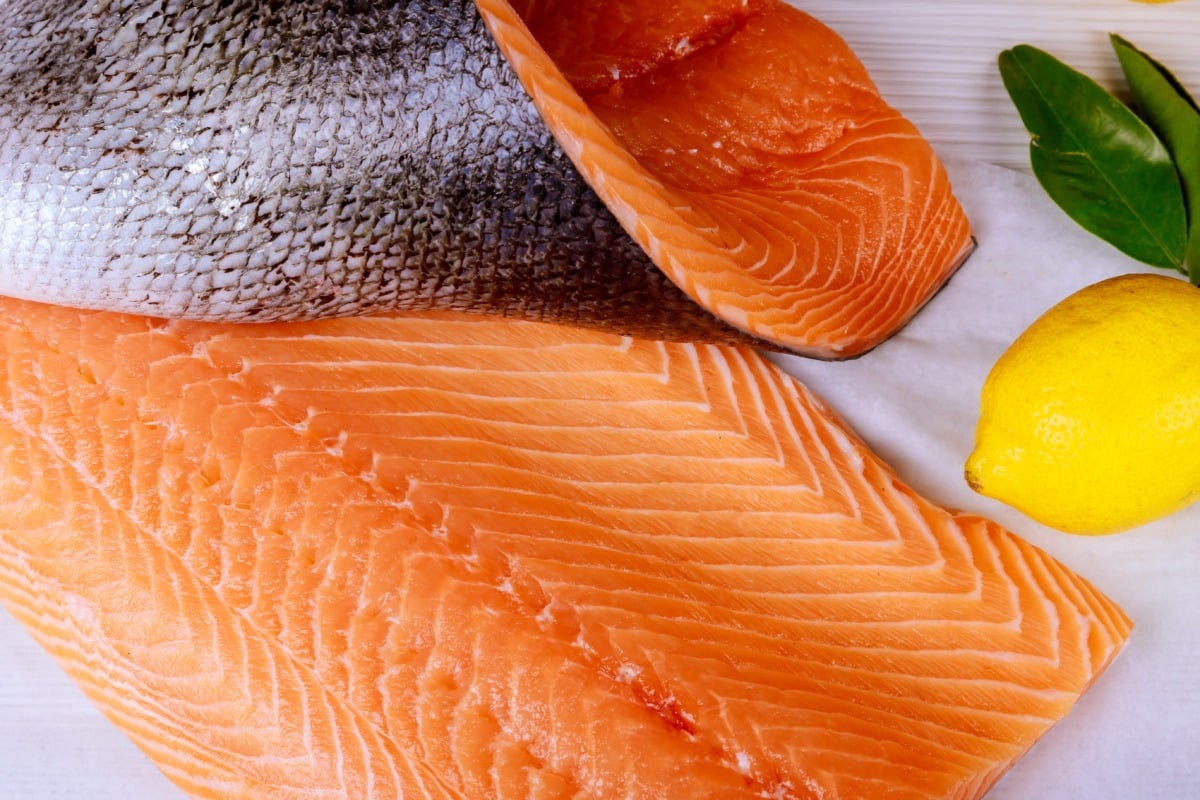
We have been making salmon in the Varoma® at least twice a month for years, because no pot burns and no fat spatters. The steam cooks the fillet evenly on all sides, unlike a frying pan where the underside is already firm while the centre is still raw. This is exactly where the Thermomix® makes the difference: while the salmon cooks up in the Varoma®, the water below in the mixing bowl can cook the rice or potatoes at the same time.
Steamed Salmon with the Thermomix® Varoma®

Ingredients 0 / 7 ✓
- 600 g salmon fillet skin on
- 1 tbsp olive oil
- 1 tbsp soy sauce
- 1 tsp sugar
- 500 g water
- some salt
- some freshly ground pepper
Instructions 0 / 5
-
1
Place the salmon fillet in a sealable container.
-
2
Mix the oil, soy sauce and sugar together and brush over the salmon. Seal the container and refrigerate for one hour.
-
3
Place the salmon in the Varoma.
Meanwhile, line the Varoma® tray with baking paper, making sure the steam slits remain uncovered.
-
4
Steam the salmon.
Pour the water into the mixing bowl. Place the salmon fillet on the Varoma® tray, set the Varoma® in position and cook for 25 min / Varoma / speed 1.
-
5
Season the salmon with salt and pepper and serve.
Tip: If you are short on time, you can marinate the salmon wrapped in foil and then steam it straight away.
Video
Nutrition per serving
What really keeps the salmon moist in the Varoma®
Four factors decide the result. First, cooking time based on fillet thickness: 18 minutes at Varoma for thin pieces under 2 cm, 25 minutes for a 600 g skin-on fillet around 2.5 cm thick, 30 minutes for thick centre cuts from 3.5 cm upwards. Translucent and just set in the middle is perfect, milky white means raw, flaky and dry means overcooked. Second, the marinade: let 1 tbsp of olive oil, 1 tbsp of soy sauce and 1 tsp of sugar soak in for one hour beforehand. The sugar caramelises lightly during steaming and adds depth to the salmon. Third, salt only after cooking, otherwise osmosis draws water out of the fillet before it has even started cooking and that moisture does not come back in the steam. Fourth, cut the baking paper to fit the tray but always leave the steam slits at the upper edge uncovered, otherwise pressure builds up and the cooking time goes wrong.
Translucent or fully cooked: the core temperature decides
If you want to cook to the point, go by the core temperature at the thickest part of the fillet rather than the clock. At 52 to 56 °C the salmon is translucent and tender, still slightly see-through inside and as moist as possible. At 58 to 60 °C it is cooked through, firmer and flaky. Above 62 °C the protein fibres contract, squeeze out the cell moisture and the salmon becomes dry and stringy.
Carry-over cooking matters here: once lifted out of the hot Varoma®, the core temperature rises a further 2 to 3 °C from residual heat. We therefore take the salmon out at around 54 °C and let it rest for 2 minutes, which lands it exactly in the translucent-but-set zone. A thin meat thermometer pushed into the centre takes 5 seconds and removes all guesswork. Without a thermometer, use the fork test: if the fillet separates easily into flakes and the centre is no longer raw and glossy, it is done.
A complete meal in one go: salmon on top, side dish below
This is the one point where the Thermomix® beats a frying pan and the oven. Instead of adding 500 g of plain water to the mixing bowl, we cook the side dish there and use its steam to cook the salmon. Three tried and tested combinations from our kitchen:
- Rice in the mixing bowl, salmon on the tray: put 200 g of rice with 400 g of water and a little salt into the mixing bowl, place the salmon on the tray, and cook everything together for 25 minutes at Varoma / speed 1. Our rice cooked in the Thermomix® is done in exactly the same time.
- Potatoes in the steamer basket, salmon on the tray: pour 500 g of water into the mixing bowl, place 600 g of quartered potatoes in the steamer basket, and put the salmon on the upper tray. Boiled potatoes and fillet are ready at the same time after 25 minutes.
- Vegetables on the Varoma® tray below, salmon above: place broccoli or courgette on the lower Varoma® tray and the salmon on the tray above it. The firmer vegetables catch most of the steam and are perfectly tender after 25 minutes.
One appliance, one steam, no dirty frying pan. Many recipes overlook this parallel cooking approach, yet it is the real reason to make salmon in the Varoma® rather than the oven.
The typical pitfalls with Varoma® salmon
The salmon turns out dry and stringy
Almost always the cause is cooking too long or salting too early. Salt draws moisture out of the fillet before cooking, and that moisture does not return in the steam. Our solution: season with salt and pepper only after cooking, and with thin fillets under 2 cm, consistently reduce the time to 18 minutes.
The centre stays raw while the edges are cooked through
This happens with very thick centre cuts or when fillets are stacked on top of each other. Our solution: lay the pieces side by side on the tray without stacking, and for centre cuts from 3.5 cm upwards, extend the time to 30 minutes or slice the fillet flat beforehand.
The salmon sticks to the baking paper
Without fat the skin tends to stick to the paper. Our solution: brush the baking paper lightly with oil, or place the salmon skin side down. The fillet will then release cleanly and the skin stays on the paper.
The cooking time is off and nothing cooks through
If the steam slits around the Varoma® edge are covered by baking paper, the steam cannot circulate. Our solution: line only the base of the tray with paper and always leave the side slits uncovered. If you prefer to go paper-free, use a reusable silicone baking mat cut to size.
Four seasoning directions for Varoma® salmon
- Asian style (our standard): olive oil, soy sauce and 1 tsp of sugar, then after cooking a sprinkle of sesame seeds and spring onion.
- Herb and lemon: scatter lemon zest and chopped dill over the fillet, then squeeze a little lemon juice over it after cooking.
- Mustard and honey: mix 1 tbsp of Dijon mustard with 1 tsp of honey and brush over the fillet before cooking.
- Ginger and lime: add freshly grated ginger and lime zest to the marinade, plus 1 tsp of sesame oil for a nutty note.
We will say it honestly though: the salmon will not develop a strong crust in the steam. If you love that, sear the freshly steamed fillet skin side down in a hot pan for 1 minute. For a moist, gently cooked piece of fish, it is not necessary.
Side dishes that go well with steamed salmon
We classically serve the salmon with boiled potatoes and leaf spinach or with rice and steamed vegetables. If you want to cook vegetables alongside the fish, have a look at our Varoma® salmon with broccoli from the Thermomix®, where everything cooks in one go. For the side dish in the mixing bowl, our rice from the Thermomix® uses a 1:2 ratio. As a fresh topping for salmon bowls, our wild garlic pesto from the Thermomix® works especially well in spring.
How long the steamed salmon keeps
The salmon tastes best fresh from the Varoma®. Any leftover fillet keeps chilled for 1 to 2 days in a sealed container, though it quickly dries out when reheated. We therefore prefer to eat leftovers cold: flaked over salad, stirred into pasta with a double cream and dill sauce, or as a spread. Raw salmon can be frozen before cooking, but already thawed frozen fish should not be refrozen.
Our tip: Cod in the Thermomix®.
For a quick spread, combine 200 g of chilled steamed salmon with 200 g of cream cheese, 1 tbsp of lemon juice, dill and pepper in the mixing bowl for 15 sec / speed 5. This makes a creamy salmon mousse that keeps in the fridge for 5 days.