Broccoli soup from the Thermomix® becomes a proper meal in its own right with Gorgonzola. The cheese contributes salt, fat and umami all at once, while the double cream softens the sharpness and gives the soup body. Without this balance, the Gorgonzola tips into a dominant bitter note.
We have been making this soup at least twice a month for years. The Gorgonzola makes it creamy, salty and filling enough for a complete evening meal. 200 g of cheese to 500 g of broccoli is the ratio we settled on as optimal after many attempts.
Broccoli Soup with Gorgonzola, Thermomix®

Ingredients 0 / 9 ✓
- 1 shallot
- 10 g rapeseed oil
- 100 g potato
- 500 g broccoli florets
- 400 g vegetable stock
- 1 tsp salt
- 1/2 tsp white pepper
- 200 g Gorgonzola
- 200 g double cream
Instructions 0 / 6
-
1
Chop the shallot.
Peel the shallot, place in the mixing bowl and chop for 4 seconds / speed 6, then scrape down with the spatula.
-
2
Sweat the shallot.
Add the oil and sweat for 3 minutes / 100°C / speed 1.
-
3
Cut the potato.
Meanwhile, wash, peel and cut the potato into pieces.
-
4
Chop the vegetables.
Add the potato and broccoli and chop for 5 seconds / speed 5.
-
5
Cook the soup.
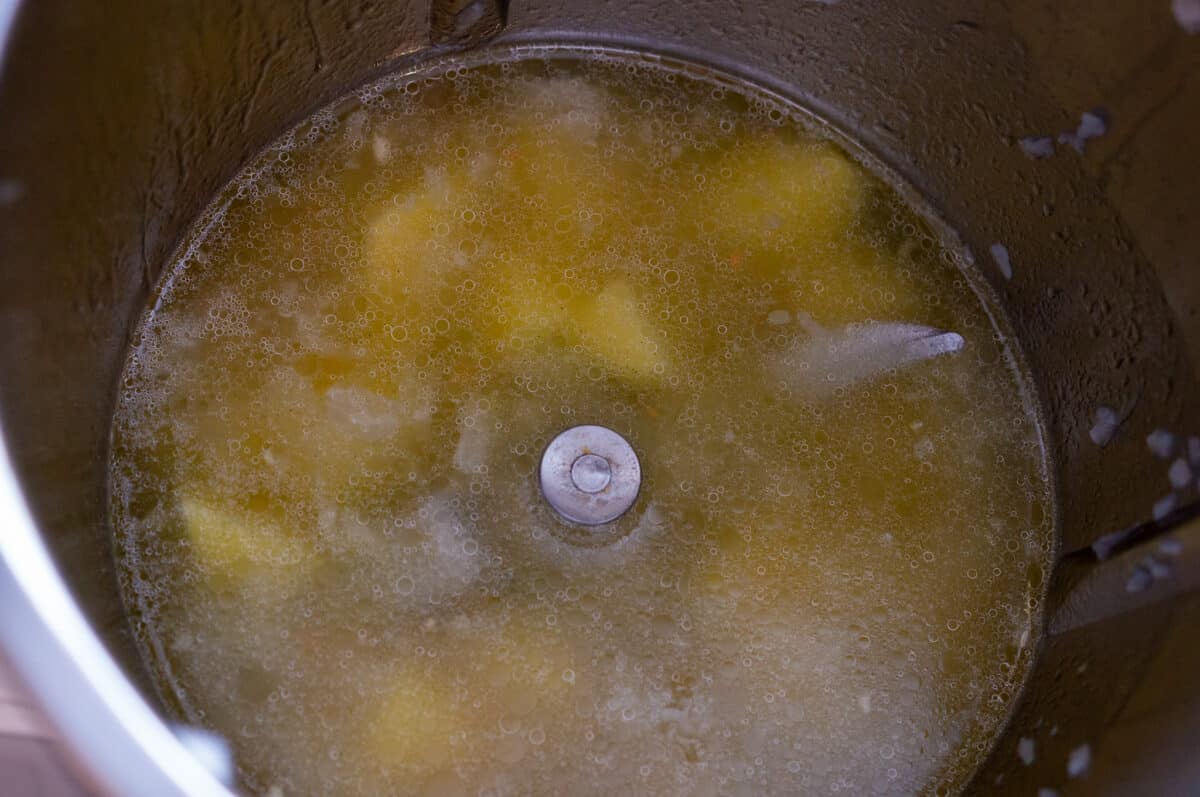
Add the vegetable stock, salt and pepper and cook for 12 minutes / 100°C / speed 1.
-
6
Blend the soup.
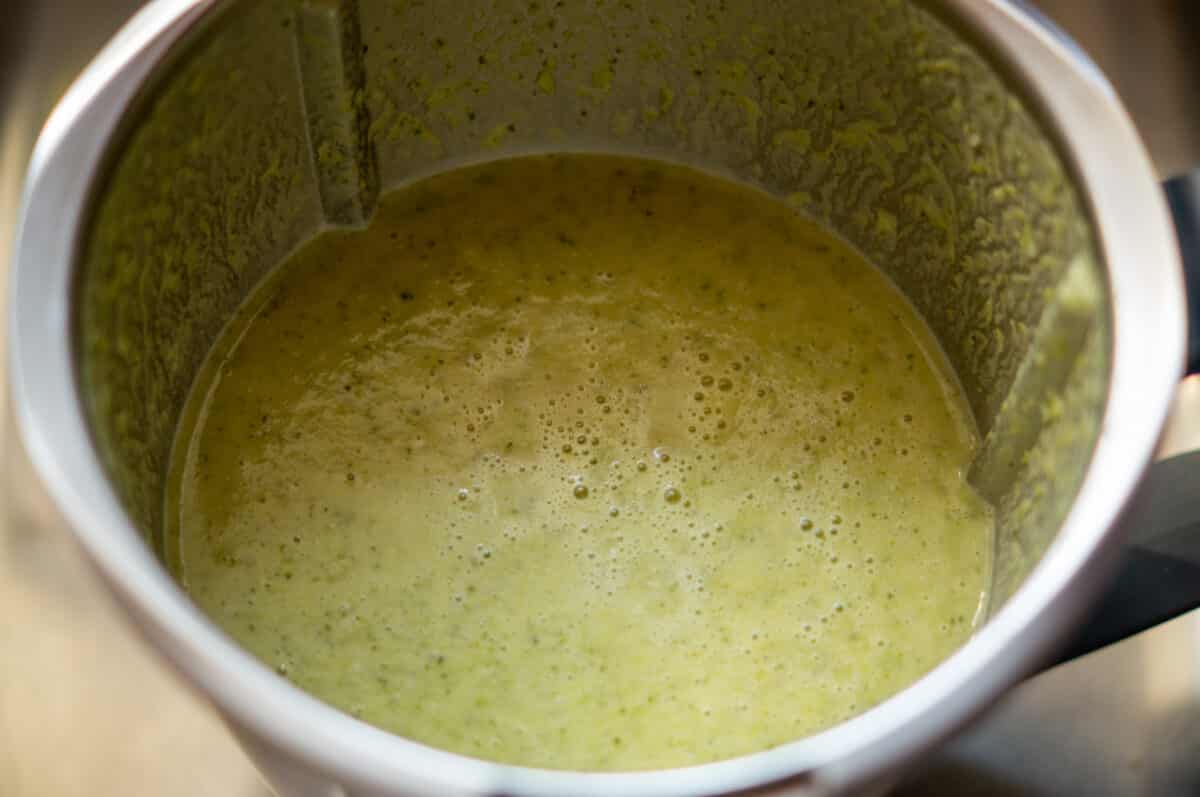
Add the Gorgonzola and double cream, blend for 20 seconds / speed 7 and serve.
Tip: Serve with Thermomix® baguette.
Video
Nutrition per serving
Why Gorgonzola carries the soup
Gorgonzola is not a topping but the ingredient that gives the soup its structure. The cheese melts completely into the hot soup when blending and forms a stable emulsion with the double cream. The result is a velvety texture with no stringy cheese or oily surface.
The mould cultures in Gorgonzola bring a mild sharpness that balances the broccoli rather than overpowering it. Mild Gorgonzola dolce works just as well as the sharper piccante, but with piccante it is better to reduce the amount to 150 g, otherwise the soup becomes too peppery.
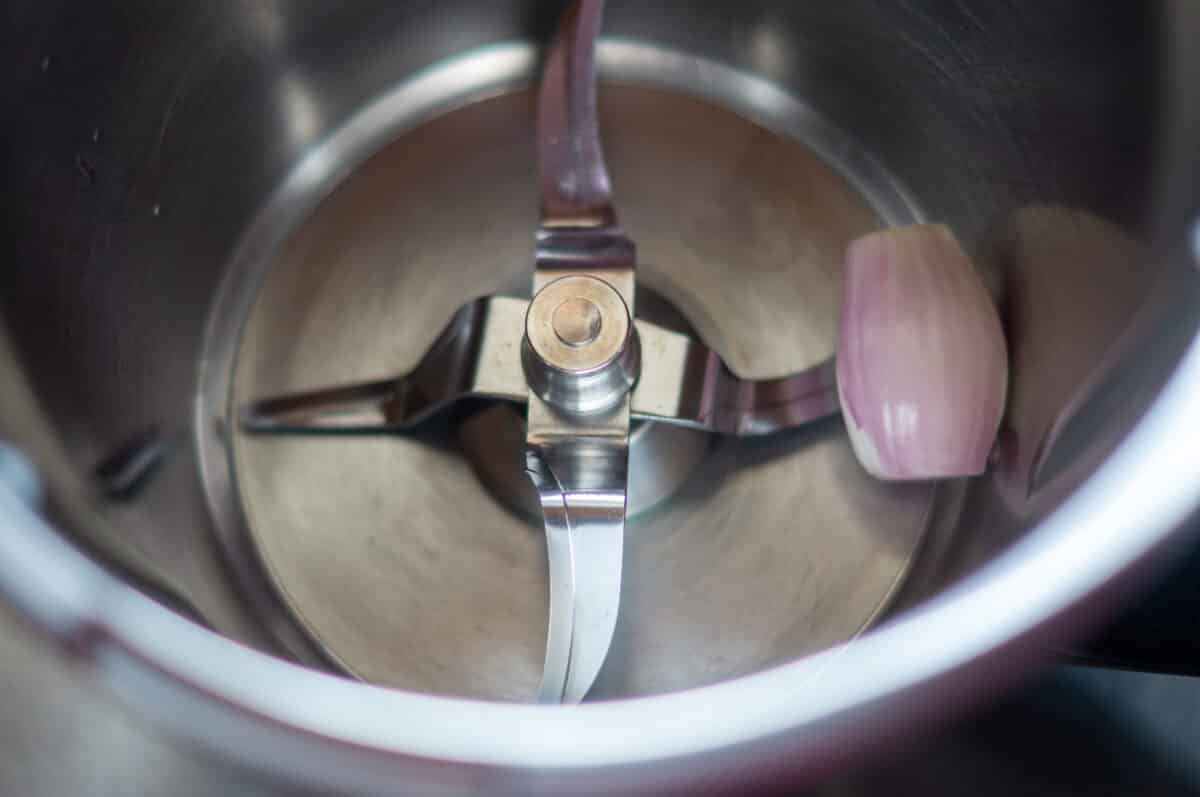
Sweat the shallot, do not fry it
The shallot is sweated at 100°C, not fried at 120°C. This is deliberate. At a higher temperature the shallot caramelises and introduces sweetness that clashes with the salty Gorgonzola. Sweating at 100°C gives the shallot time to release its sharpness without developing any roasted flavour.
3 minutes at speed 1 is enough. Once the shallot turns translucent, it is ready. Sweating for longer adds nothing, except that the oil starts to splatter.
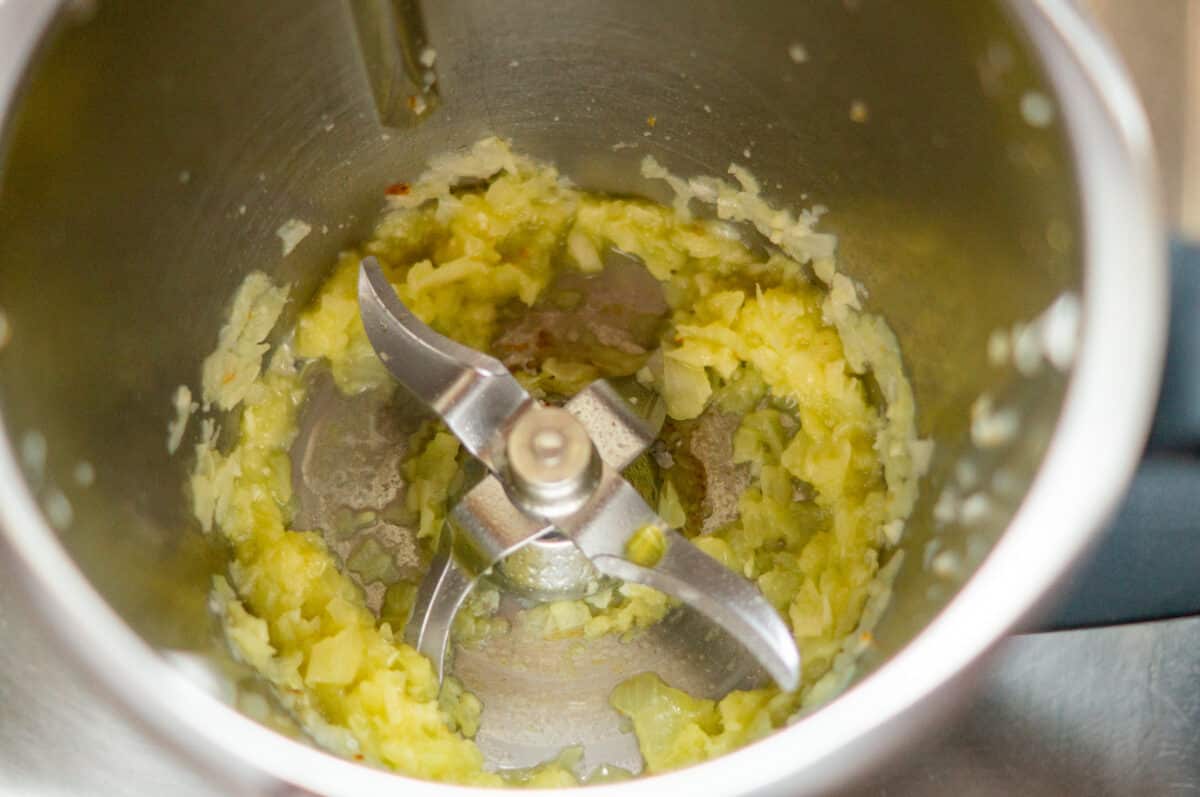
100 g potato as a thickener
The potato is not there for flavour but purely for thickening. 100 g of floury potato releases enough starch during cooking to make the soup silky without needing flour or extra cream. Waxy potatoes do not work because they release too little starch.
Leave the potato out and the soup will be thin and watery. Use more than 100 g and it becomes too thick and masks the broccoli flavour. This quantity is the compromise between binding and dominance.
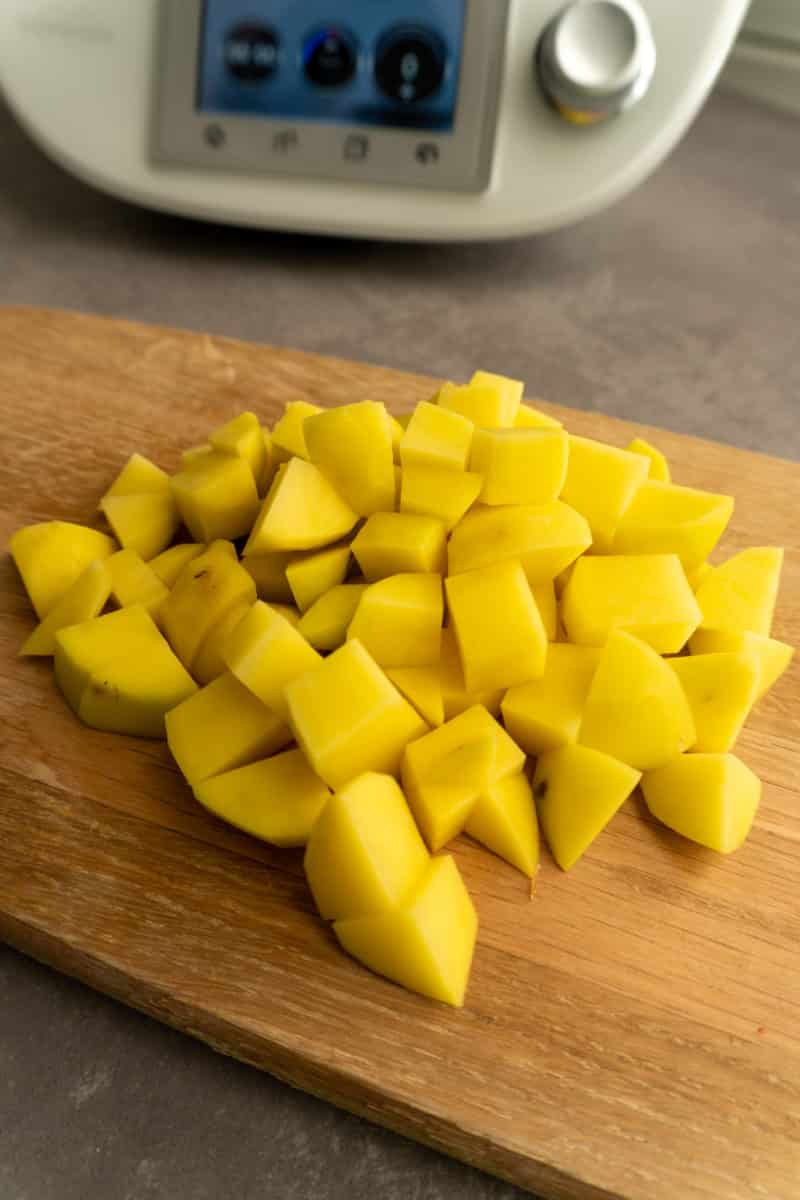
5 seconds at speed 5 for rough pieces
The potato and broccoli are only roughly chopped before cooking, not blended. 5 seconds at speed 5 produces pieces of about 1 to 2 cm. This is exactly right because the pieces soften during cooking and dissolve completely when you blend the soup at the end.
If you chop for longer, the broccoli turns to mush straight away and releases its chlorophyll too early. The soup will then turn grey-green instead of a bright green. Rough pieces stay more stable during cooking and hold their colour better.
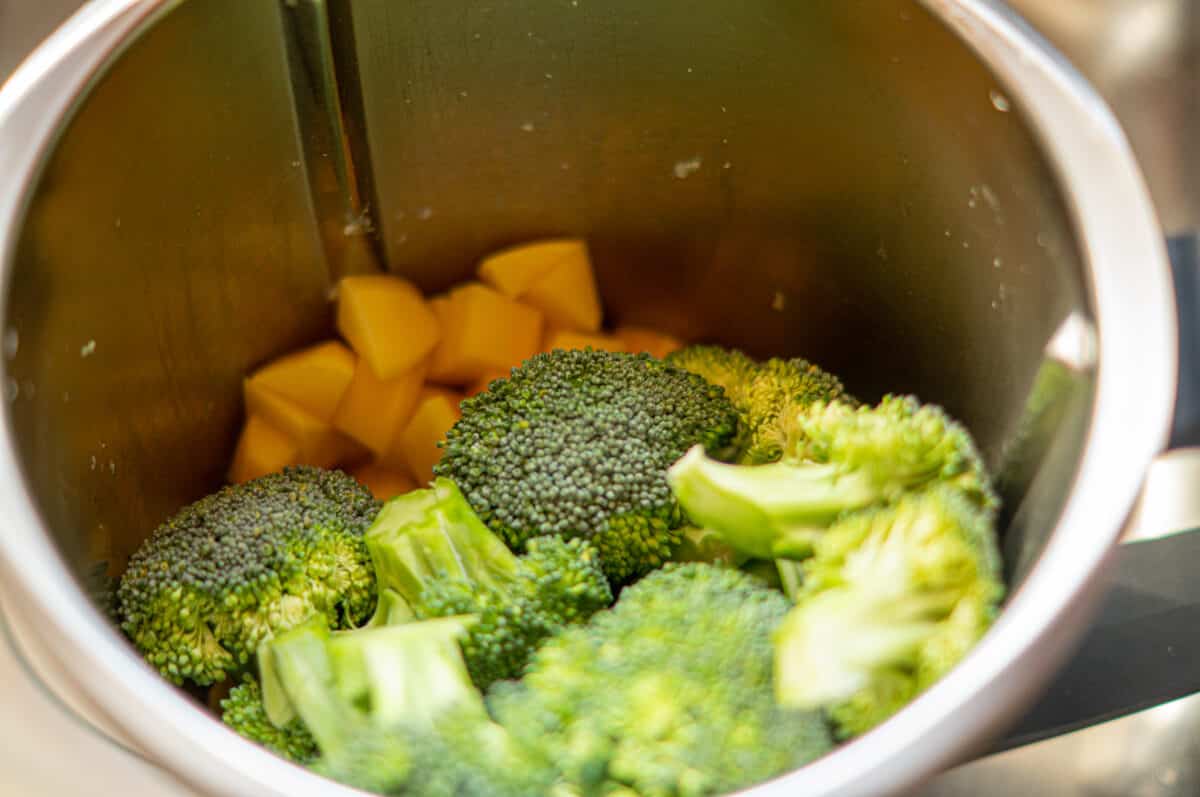
12 minutes at 100°C without Varoma
The soup cooks at exactly 100°C, not in Varoma mode. Varoma would heat the soup above 100°C and cook the broccoli for too long. After 12 minutes at 100°C the potato and broccoli are soft enough to blend, but the broccoli has not yet fallen apart.
If the potato pieces are still firm after 12 minutes, they were cut too large. Add 2 more minutes and cut the potato a little smaller next time.
Gorgonzola and cream only when blending
The Gorgonzola and double cream go into the mixing bowl only after cooking, not before. If you cook the cheese along with everything else, the fat separates from the protein and the soup becomes oily. The cream would curdle at 100°C and make the soup grainy.
20 seconds at speed 7 is enough to melt the Gorgonzola completely and blend the soup to a smooth, creamy consistency at the same time. Blending for longer does not make the soup creamier. It only heats the soup again and risks the cream curdling after all.
Even better the next day
The soup tastes more strongly of Gorgonzola the next day than it does straight after cooking. The cheese flavour intensifies in the fridge because the aromas have time to combine. If you are making this for guests, prepare it the day before.
When reheating, add 50 to 100 g of extra stock because the potato starch thickens overnight. Without thinning it down, the soup becomes too thick and sticky.
Keeps in the fridge for 3 days
The soup keeps for 3 days in a sealed container in the fridge. Not longer, as the Gorgonzola starts to turn bitter. Freezing does not work well because the cream curdles on thawing and the soup becomes grainy.
Serve with: Ciabatta and baguette.
If you want to freeze the soup, leave out the cream and stir it in only when reheating. That way the texture stays smooth.
More Thermomix® soups: potato soup, pumpkin soup, tomato soup.