A mascarpone dessert stands or falls on the fat content of the quark. 20% fat binds the 80% fat in the Mascarpone without gelatine and without any mandatory chilling time. Low-fat quark makes the cream grainy, and 40% quark works too, but costs more than simply using extra Mascarpone.
We have been layering this dessert for family gatherings for years. Strawberry season (May to July) is firmly linked to this recipe in our kitchen. What ruins most layered desserts is cream that is too runny or biscuits that go soggy. Our recipe solves both problems through precise timing and the right quark.
Mascarpone Dessert with the Thermomix®

Ingredients 0 / 8 ✓
- 100 g butter biscuits
- 50 g sugar
- 1 sachet vanilla sugar
- 250 g Mascarpone
- 250 g quark (20% fat)
- 50 g milk
- 200 g strawberries
- 20 g flaked almonds
Instructions 0 / 6
-
1
Crush the biscuits.
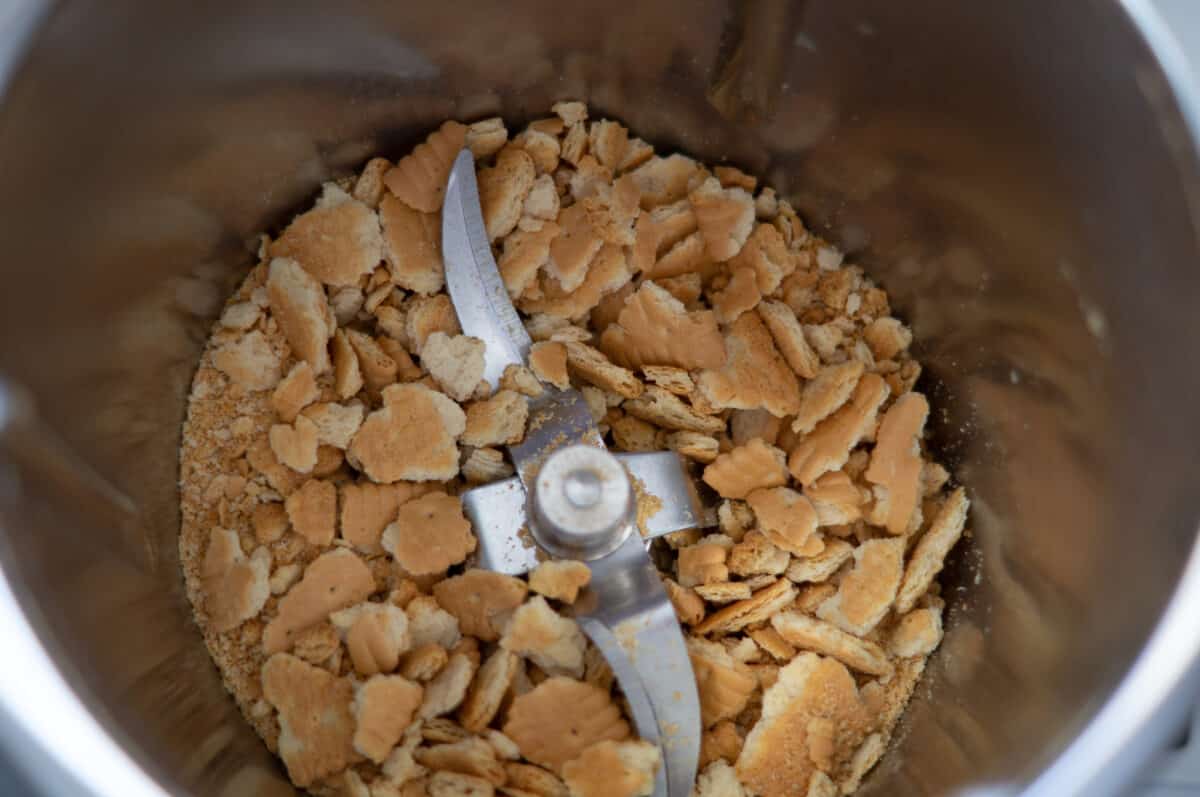
Add the butter biscuits to the mixing bowl, chop for 3 sec / speed 5 and set aside.
-
2
Pulverise the sugar.
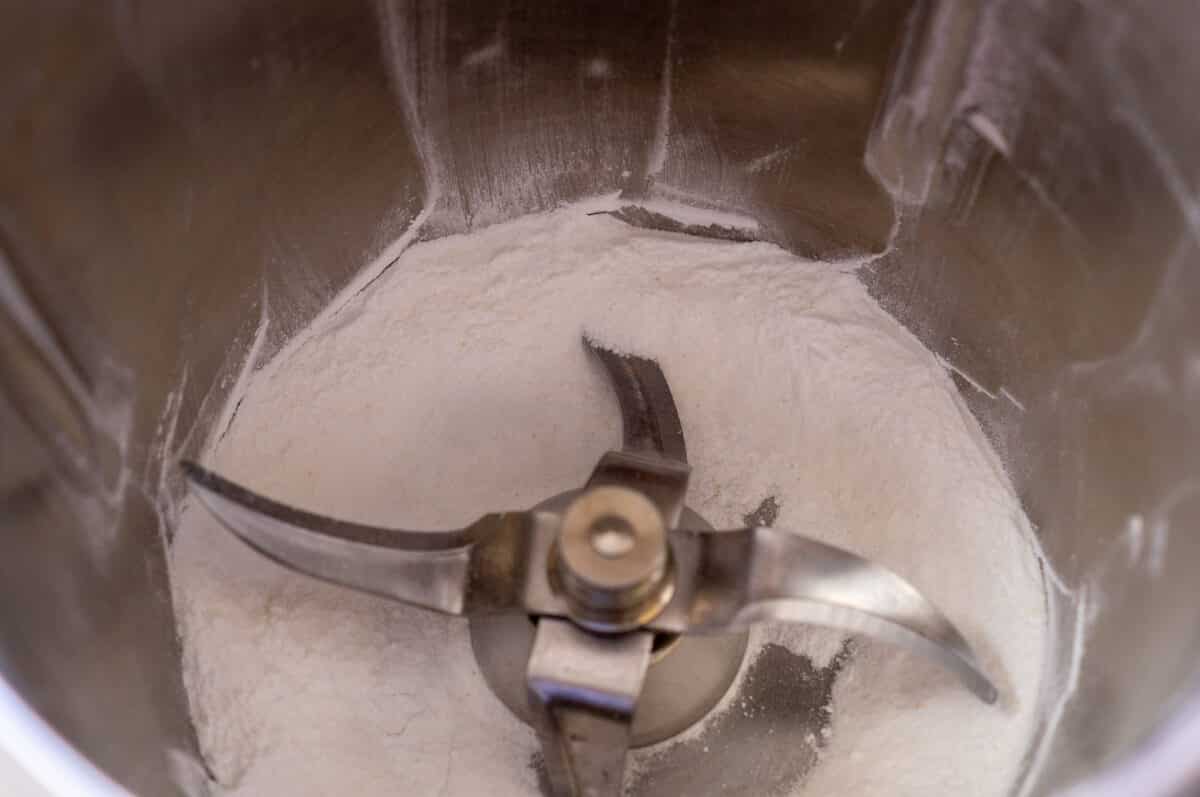
Add the sugar and vanilla sugar to the mixing bowl and pulverise for 8 sec / speed 10.
-
3
Mix the cream.
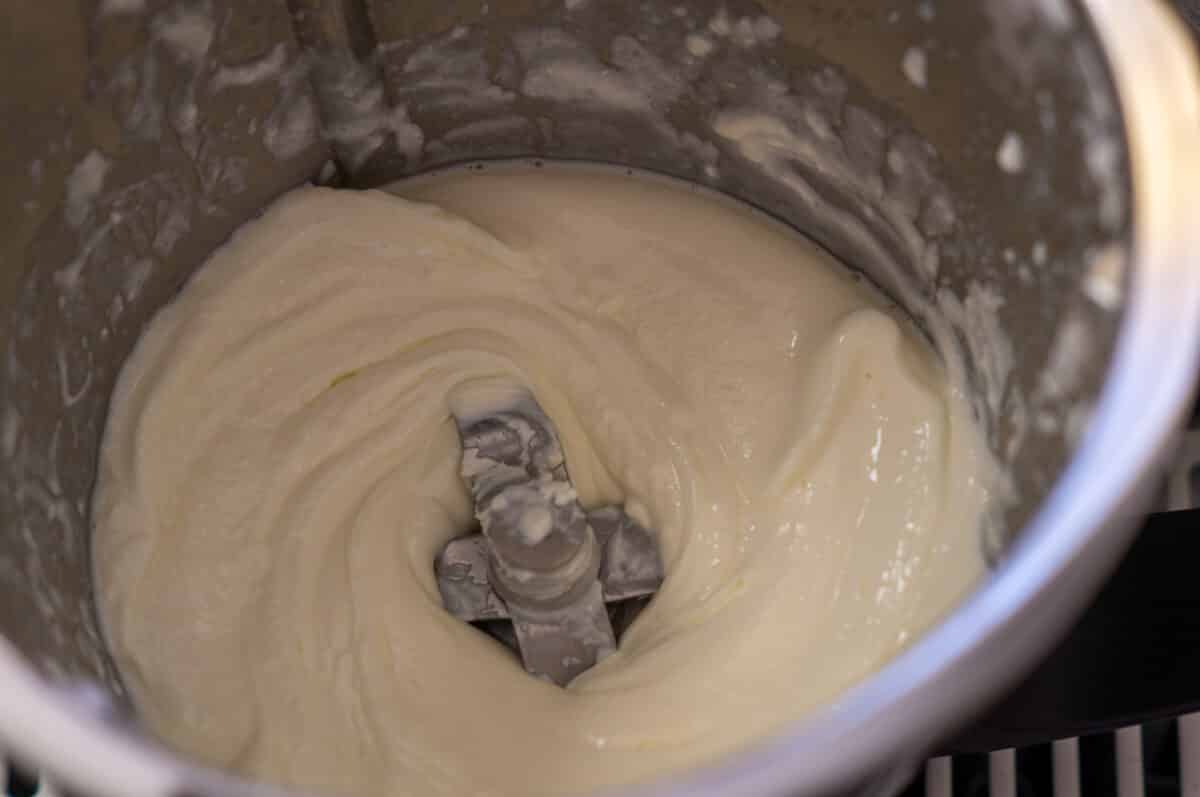
Add the Mascarpone, quark and milk and mix for 30 sec / speed 4.
-
4
Prepare the strawberries.
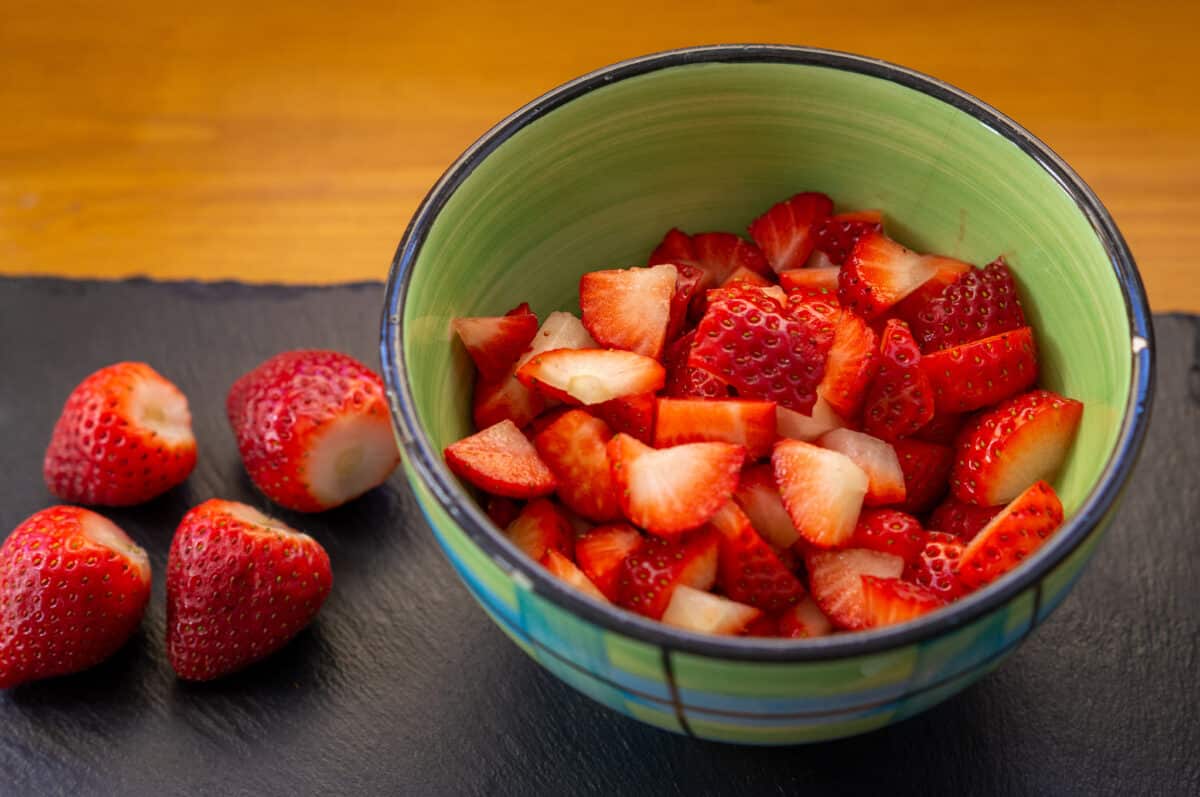
Wash and hull the strawberries, then cut all but 4 into small pieces.
-
5
Layer the ingredients.
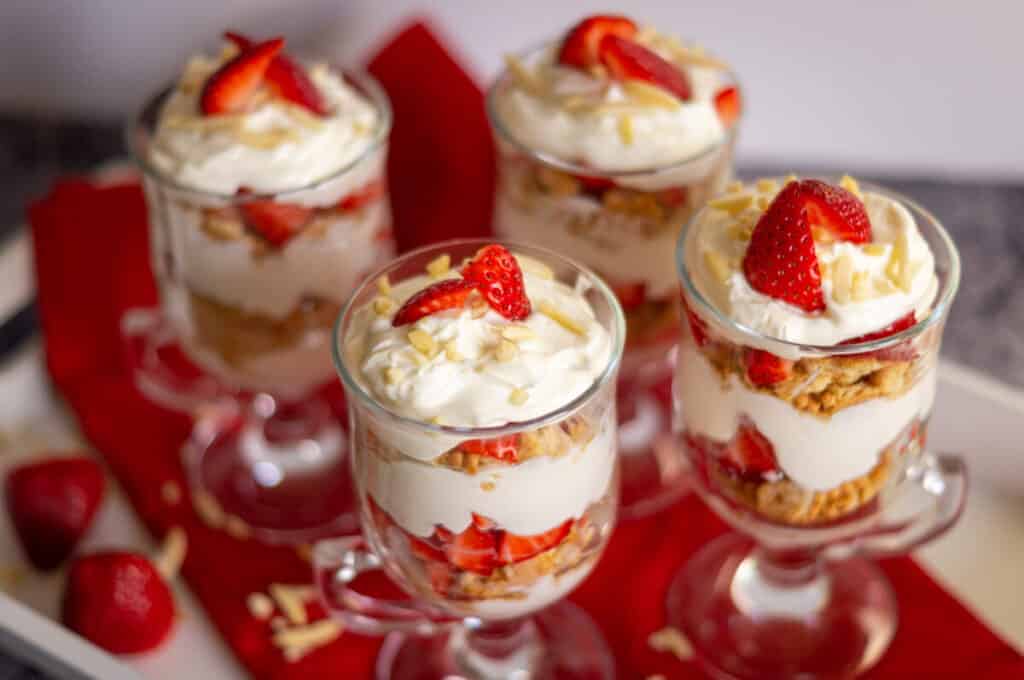
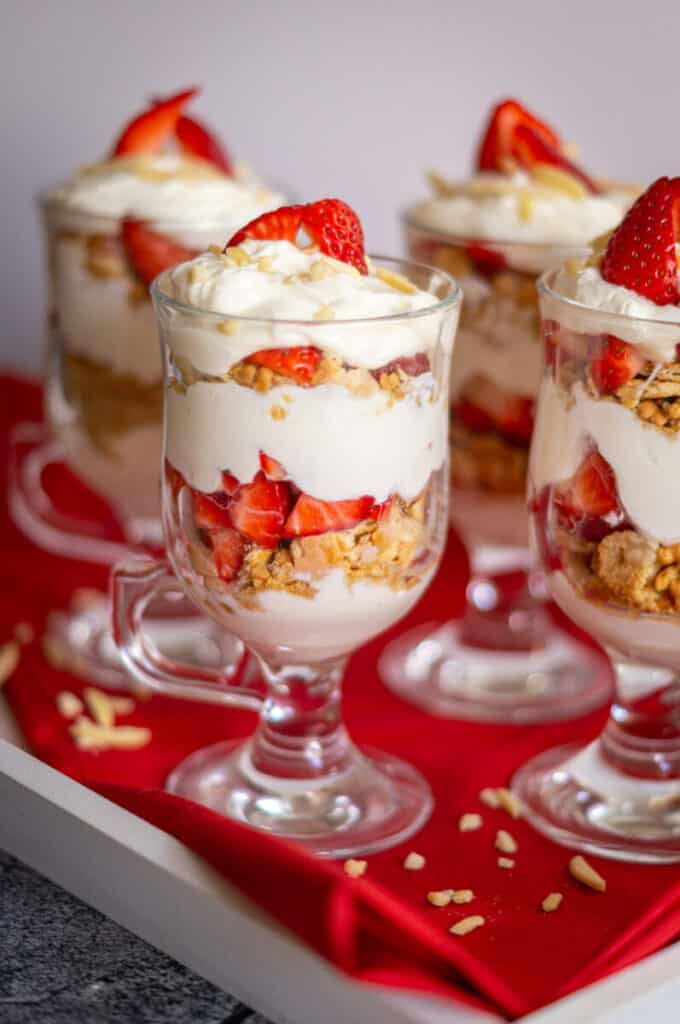
Start with a spoonful of mascarpone cream, then biscuits, then strawberries, and continue layering until the glasses are full. Finish with cream on top and garnish with whole strawberries and flaked almonds.
-
6
Chill and serve.
Keep in the fridge until ready to serve.
Tip: As an alternative to fresh strawberries, you can also use drained tinned fruit. How about tinned peaches or mandarin oranges.
Video
Nutrition per serving
Why 20% quark saves the texture
Mascarpone contains 80% fat in dry matter. On its own in a glass, this cream becomes runnier under its own weight and the layers merge. Quark with 20% fat in dry matter (roughly 4 g of fat per 100 g) binds through casein protein without needing gelatine. The 1:1 ratio from the recipe card, 250 g Mascarpone to 250 g quark, is the stability threshold. Low-fat quark (under 10% fat in dry matter) holds too much water and the cream turns grainy rather than smooth. 40% quark also works, but then you are paying for fat you could get more cheaply from extra Mascarpone.
The 50 g of milk in the recipe card is a mixing aid, not a flavour ingredient. Without it, the Mascarpone and quark mixture clumps in the Thermomix® (TM7, TM6, TM5, TM31: all models need the liquid to blend evenly at speed 4). More milk makes the cream too thin; less leaves lumps.
3 seconds at speed 5 for bite instead of mush
Butter biscuits become coarse crumbs in the Thermomix® at 3 seconds on speed 5, not powder. This is intentional. Longer blending, 5 or 6 seconds, produces dust. Dust draws moisture from the cream like a sponge and the dessert goes soggy as it chills in the fridge. Coarse crumbs keep their bite even after 2 hours in the fridge. We add the 100 g of butter biscuits to the mixing bowl, blend for 3 sec / speed 5, then remove them immediately and set aside. Do not leave them in the mixing bowl while making the cream.
The sugar is pulverised next, 8 seconds at speed 10 together with the vanilla sugar. This distributes the vanilla flavour evenly through the cream. Liquid vanilla clumps without an emulsifier, and vanilla bean paste also works (black-flecked, premium look), but the recipe is stable as written.
Layering order: cream first, cream last
The first layer is always cream. If biscuits go straight into the glass, they stick to the bottom and are hard to scoop later. Cream on the base creates a gliding layer. The last layer is also cream: it protects the strawberries from drying out in the fridge and gives a neater finish. We layer in standard dessert glasses (200 ml volume). Glasses that are too large produce thin layers (unimpressive), while those that are too small allow only 2 layers instead of 3. With 250 ml glasses the quantity is not quite enough for 4 portions with clear layers. In that case, use 8 small shot glasses (100 ml each) for a buffet.
The 20 g of flaked almonds go on top only just before serving. Adding them earlier means they absorb moisture and go soft. If you want to toast them (2 minutes in a dry pan, no fat, for a nuttier, crunchier result), add them to the dessert only after toasting. Hot almonds will melt the cream.
Swapping the strawberries without disaster
Strawberries are in season from May to July (outdoor-grown, peak in June). Outside that window, raspberries, blueberries or blackberries work as a 1:1 swap: acidic and low in water. Mango also works, but cut it firm (ripe mango falls apart in the cream). Banana goes brown through oxidation, and kiwi turns mushy because the enzyme actinidin breaks down milk proteins. Frozen berries should be thawed and drained first, otherwise they water down the cream.
The 200 g of strawberries from the recipe card are split: 4 whole ones (one per portion for garnish), the rest cut into small pieces. Pieces that are too large break through the layers when you spoon in; pieces that are too small disappear visually.
30 minutes in the fridge: optional, but better
Mascarpone and quark cream does not need chilling time to set. There is no gelatine in the recipe and no waiting required. You can serve the dessert immediately after layering. That said, 30 minutes in the fridge makes the layers more defined, the cream settles slightly, the biscuits absorb a little moisture (becoming pleasantly firm rather than dry), and the flavours come together. Longer than 24 hours is the limit: the biscuits go too soft, the strawberries release juice, and the layers blur.
The recipe card gives 15 minutes total time: that covers blending and layering, with no chilling time included. For a spontaneous dessert after dinner, that is plenty. For guests the next day, prepare it in the morning and serve at lunchtime.
More dessert ideas: Thermomix® Crème brûlée with a caramel crust, rice pudding with the Thermomix® as a warm alternative, or Thermomix® advocaat as a dessert topping.
What sets our version apart
We compared the well-known Thermomix® versions out there. One popular mascarpone coffee cream uses 500 g Mascarpone with 250 g cream and requires careful stirring at speed 3.5 under close watch, otherwise the cream splits. Another version uses 250 g Mascarpone to 500 g low-fat quark (1:2) plus white chocolate and berry puree. Both approaches work, but cream makes the dessert heavier and low-fat quark turns grainy. Our 1:1 ratio of 250 g Mascarpone to 250 g quark at 20% fat is the middle ground: creamy enough without cream, firm enough without gelatine, and no risk of splitting at speed 4 instead of 3.5. Add to that the fixed layering order with coarsely crushed butter biscuits instead of biscuit dust, and they still have bite after 2 hours in the fridge.
Also pairs well with: coffee.
Our tip: Thermomix® plum fritters.