Limoncello with the Thermomix® uses 600 g organic lemons, 1000 g vodka, 700 g sugar and 700 g water. We leave the peel to steep for 7 days and cook the syrup in 20 minutes in the mixing bowl at the same time. One batch makes around 20 glasses of 40 ml each, served ice-cold straight from the freezer.
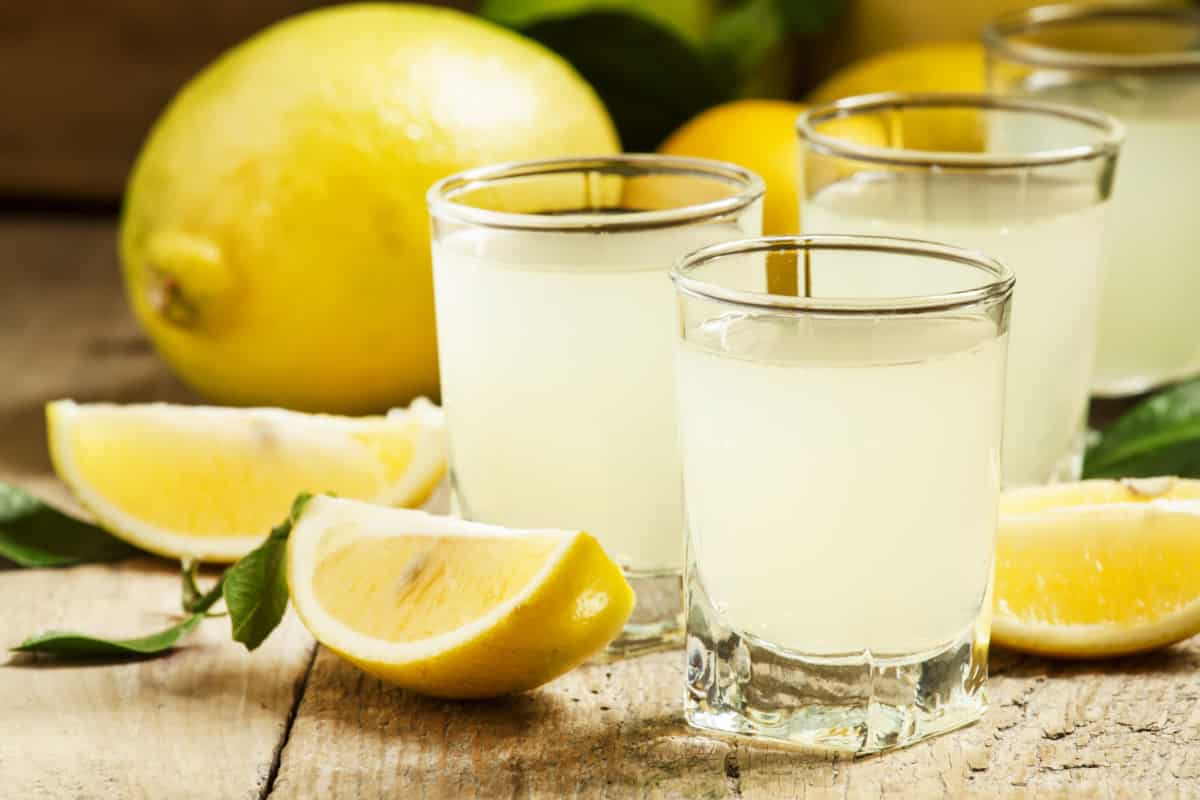
We make this liqueur every summer in larger quantities because it has proved itself as a gift and a digestif. The Thermomix® takes two steps off our hands that are otherwise fiddly: it cooks the sugar syrup perfectly clear without any bubbling, and then blends everything together in 10 seconds at the end. If you are looking for a creamy version, try our Crema di Limoncello with the Thermomix®.
Limoncello with the Thermomix®

Ingredients 0 / 4 ✓
- 600 g lemons organic, untreated
- 1000 g vodka
- 700 g sugar
- 700 g water
Instructions 0 / 3
-
1
Steep the lemon peel.
Wash the lemons thoroughly and dry them, then peel off the zest without any white pith. Place the peel in vodka, seal the jar tightly and store in a dark place for at least one week. The longer, the better!
-
2
Cook the sugar syrup.
Add sugar and water to the mixing bowl and cook for 20 min / Varoma (TM5: 120°C) / speed 1 without the measuring cup in place, then leave to cool completely.
-
3
Mix the liqueur.
Pour the vodka through a fine sieve into the mixing bowl, pressing the lemon peel firmly to extract all the flavour. Blend for 10 seconds / speed 10 and fill into sterilised bottles. Leave to cool and store in the freezer.
Video
Nutrition per serving
Only the yellow peel, never the white pith
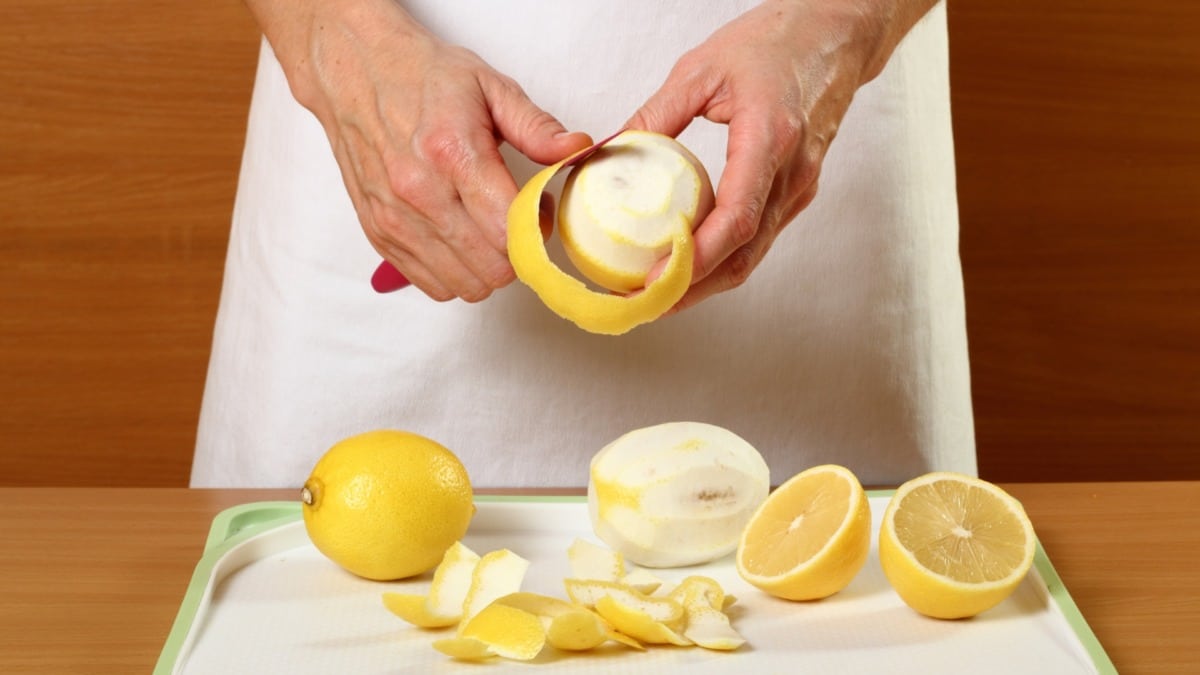
The most important step with limoncello happens before the first blending: we use only the yellow zest layer of the 600 g lemons, not the white albedo beneath it. The yellow peel holds the essential oils (mainly limonene) that carry the aroma. The white pith contains bitter compounds that migrate into the alcohol over a few days and make the liqueur flat and bitter.
In practice: wash the lemons in hot water, dry them and peel them thinly with a sharp peeler. If you can see a lot of white on the inside of the peel, it is too thick. Better to make two thin passes than one thick one. This is exactly where we differ from quick recipes that use lemon juice instead of peel: juice brings water and citric acid, clouds the liqueur and takes away the clean lemon note.
Why the syrup works perfectly in the Thermomix® while the peel steeps
The sugar syrup is the second key element. We add 700 g sugar and 700 g water to the mixing bowl and cook the mixture for 20 minutes / Varoma (TM5: 120°C) / speed 1 without the measuring cup in place, so that steam can escape. The slow speed 1 keeps the sugar moving without causing it to foam. This dissolves it completely so the syrup stays crystal clear rather than crystallising.
That is the advantage over a pot on the hob: there you have to stir and watch the temperature constantly. In the Thermomix® the syrup runs through in a controlled way while the peel is already steeping in the vodka. The only important thing is to let the syrup cool completely before combining. Hot syrup would drive off the alcohol and evaporate the aroma.
7 days of steeping is our deliberate middle ground
Recipes vary widely on steeping time: some quick versions skip it altogether, while classic Italian instructions call for 4 to 6 weeks. We deliberately settle on 7 days. During this time the vodka draws the essential oils from the peel and the mixture turns a deep yellow. That is enough for a full aroma.
We would not go beyond 14 days. After that, bitter compounds start leaching out from even the last traces of pith and the liqueur turns on the palate. The jar stays sealed, dark and at room temperature during the week. Giving it a short shake once a day distributes the oils evenly. If you are in a hurry: put the peel in the freezer for 30 minutes beforehand. This bursts the oil cells and speeds up extraction a little.
Which sugar and which alcohol belong in the liqueur
We use neutral vodka at 40% ABV as the alcohol. It carries the lemon aroma cleanly without any taste of its own. The official Cookidoo recipe from Vorwerk uses grain spirit and eleven lemons to 1000 g water. Grain spirit brings a grainy note that we do not want here. If you want something even purer, use 96% neutral spirit from a pharmacy and dilute accordingly with more water.
For the sugar, classic white caster sugar works best because it is flavour-neutral and keeps the liqueur pale. For a warmer, slightly caramelised note you can replace it with raw cane sugar. If you want something a little more unusual, try coconut blossom sugar, which brings a subtly malty sweetness. In both cases the limoncello will be slightly darker and rounder in flavour.
When the limoncello turns bitter, cloudy or too sweet
The liqueur tastes bitter
This is almost always caused by the pith: too much white on the peel or left to steep too long. Our solution: peel more thinly next time and strain after 10 to 14 days at the latest. You can rescue an already bitter batch by extending it with an extra syrup made from 100 g sugar and 100 g water.
The limoncello is cloudy
A slight cloudiness is normal and even a sign of quality, coming from the essential oils. If the liqueur turns milky and flaky, however, the syrup was still too warm when combined, or some flesh got in with it. Our solution: let the syrup cool completely and pour the vodka through a fine sieve before it goes into the mixing bowl.
The liqueur is too sweet or too sharp
Too sweet means you want more bite from the alcohol. Too sharp means you want more syrup. Our solution: our ratio of 1000 g vodka to 700 g sugar and 700 g water gives around 28% ABV in the finished liqueur. If you want it milder, add 100 g more water. If you want more edge, reduce the water by 100 g.
Crema, Orangencello and a herb variation
Several liqueurs can be made from the base recipe with small changes:
- Crema di Limoncello: Replace the 700 g water with 700 g double cream and 300 g milk. This gives a creamy, pale liqueur. The full recipe is in our Crema di Limoncello with the Thermomix®.
- Orangencello: Use 600 g organic oranges instead of lemons. It turns out sweeter and fruitier, and works well in autumn.
- Limoncello Verde: Half limes, half lemons. More tart and fresher in acidity.
- Herb Limoncello: Add 5 sage or basil leaves to the vodka while steeping. This gives a subtle green note.
How we serve the liqueur and cook with it
Neat, limoncello is a classic: ice-cold from the freezer in chilled glasses as a digestif after a meal. In summer we turn it into a limoncello spritz with prosecco, soda and a sprig of mint. Poured over a few ice cubes with tonic it becomes a long drink.
In the kitchen the liqueur is just as versatile. A splash over a scoop of lemon buttermilk ice cream with the Thermomix® turns the ice cream into an adult dessert. 50 g in place of Marsala lifts our Tiramisu with the Thermomix® into a lemony variation. And added to the soaking syrup for a lemon cake with the Thermomix® it gives real depth. If you have enjoyed making your own, our advocaat with the Thermomix® is well worth a try.
How to bottle it and how long it keeps
Before filling, sterilise the bottles: rinse them with hot water and dry them in the oven at 120°C for ten minutes. This keeps any bacteria out of the liqueur. Fill the finished limoncello through a small funnel and seal well. A nice liqueur bottle also makes it a ready-made gift.
Because of its alcohol content, limoncello does not freeze solid in the freezer. That is the best place to store it: ice-cold, clear and ready to serve straight away. In the fridge it keeps for around 2 years, at room temperature for about 1 year. The alcohol preserves it completely, though the intensity of the aroma does fade slightly over the months. Our batch makes about 20 glasses of 40 ml each.