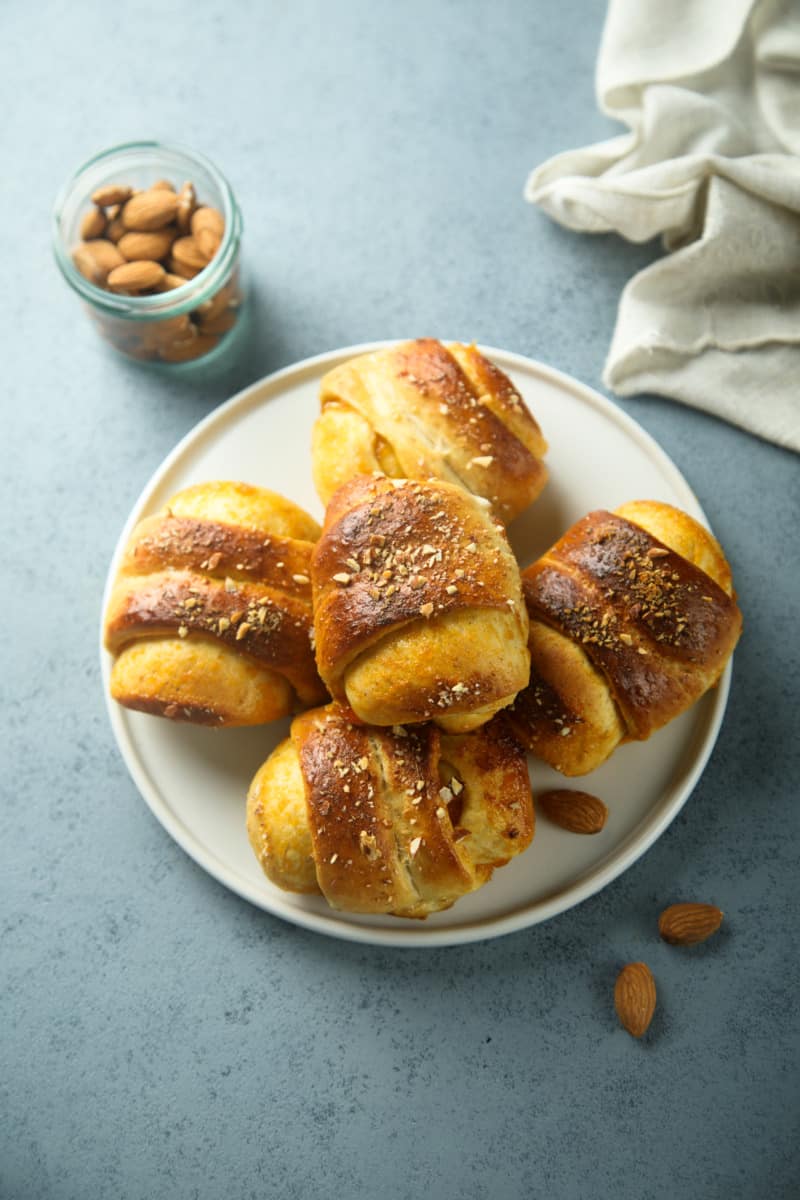
Franzbrötchen made with the Thermomix® get their distinctive shape through a simple mechanical trick with the spatula. We show you how to make this Hamburg speciality at home, with laminated dough and a cinnamon sugar filling.
Franzbrötchen are technically a laminated pastry, not a plaited loaf. The difference lies in the cold butter, which is layered between the sheets of dough in thin strips. During baking the butter melts, the layers separate and you get the characteristic flaky texture. In the Thermomix® we make the base dough with 60 g of softened butter, and a further 120 g of cold butter is worked in later.
Franzbrötchen with the Thermomix®

Ingredients 0 / 8 ✓
- 240 g milk
- 180 g sugar
- 1 cube fresh yeast
- 60 g butter softened
- 1 pinch salt
- 550 g flour, type 405
- 120 g butter well chilled
- 2 tsp cinnamon
Instructions 0 / 8
-
1
Dissolve the yeast.
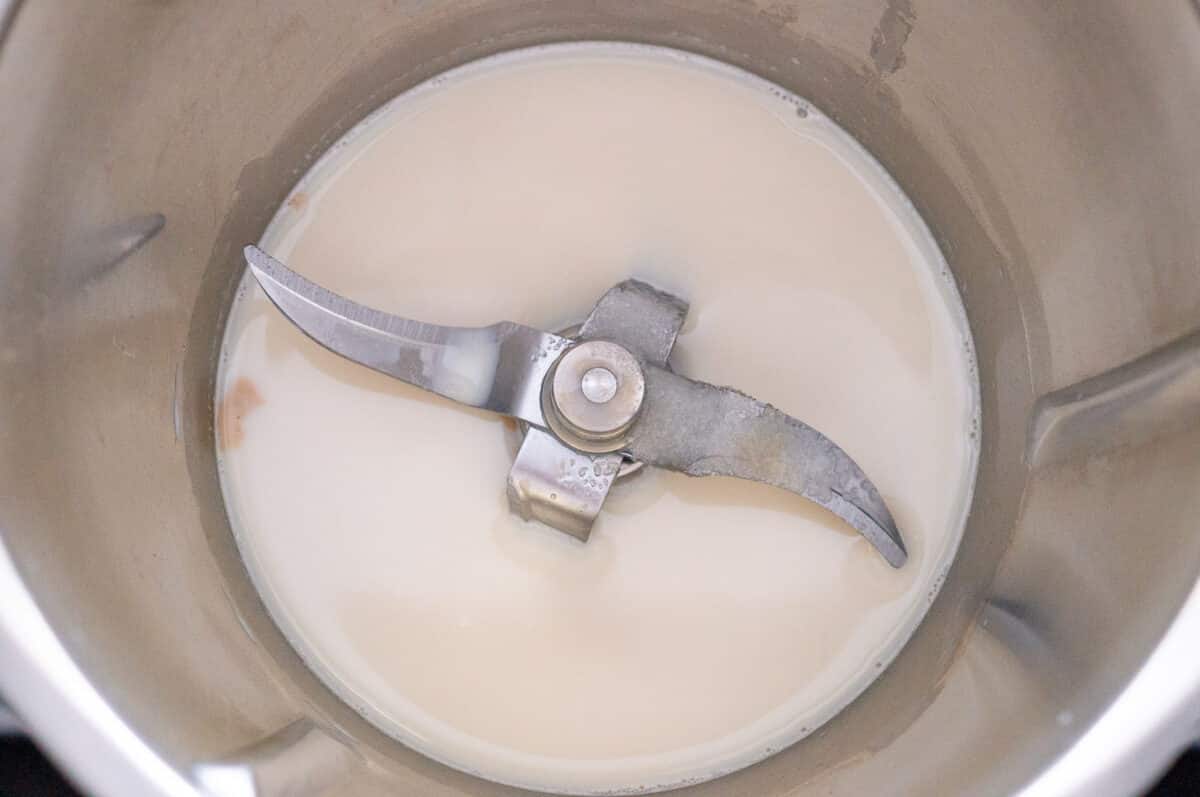
Add milk, 80 g sugar and yeast to the mixing bowl and warm for 3 minutes / 37°C / speed 2.
-
2
Knead the dough.
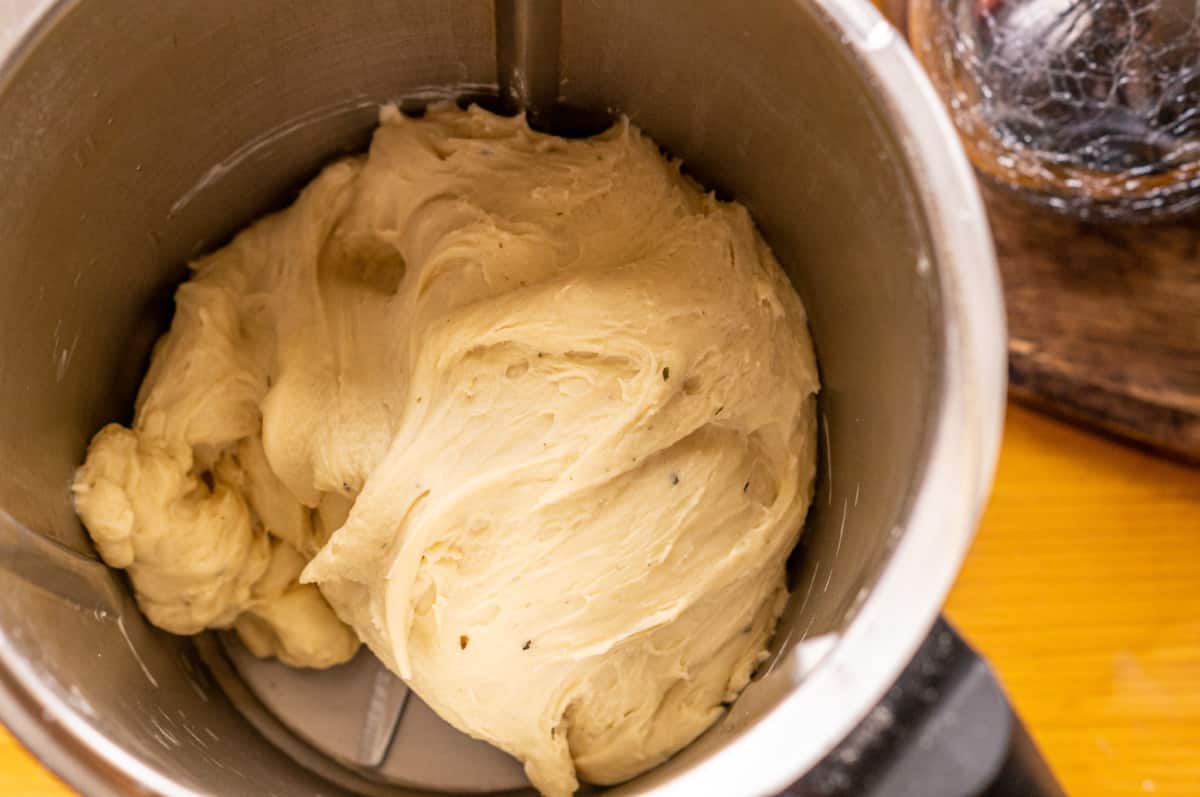
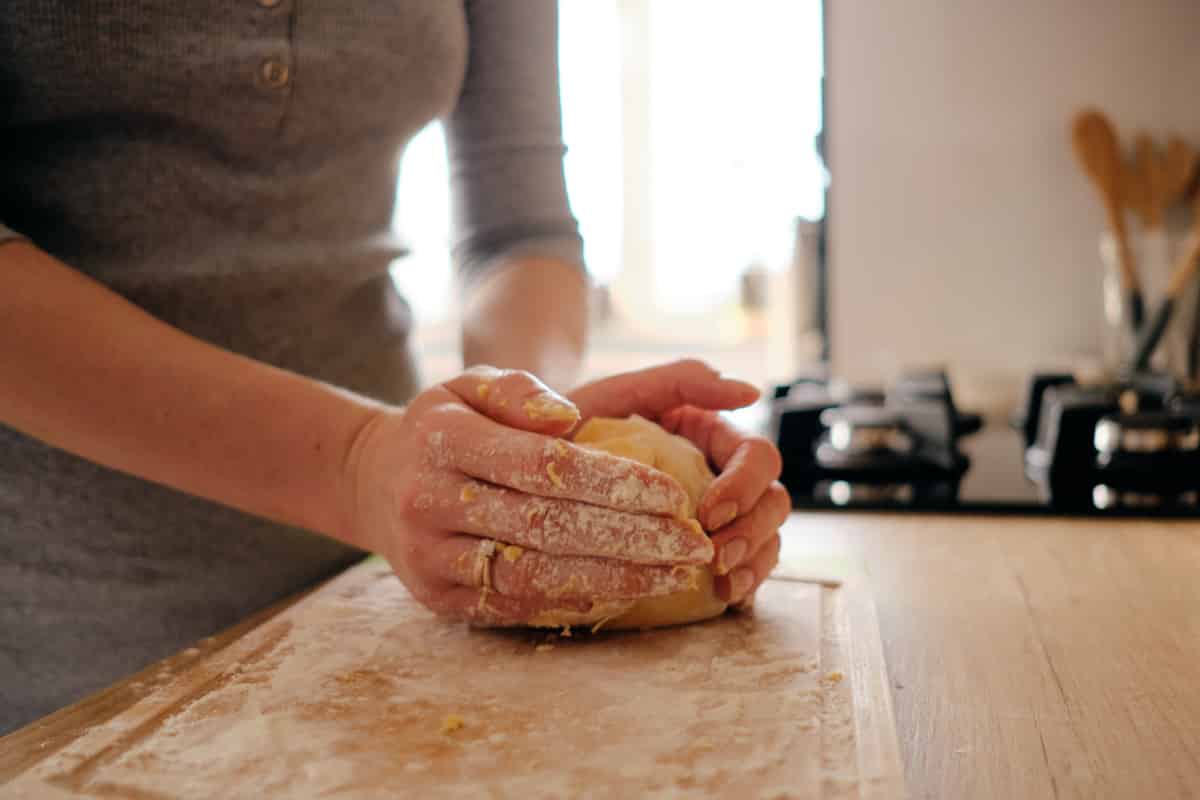
Add softened butter, salt and flour and knead for 2 minutes / kneading mode. Set the dough aside and leave to rise, covered, in a warm place for 30 minutes.
-
3
Prepare the baking trays.
Line two baking trays with baking paper.
-
4
Layer butter into the dough.
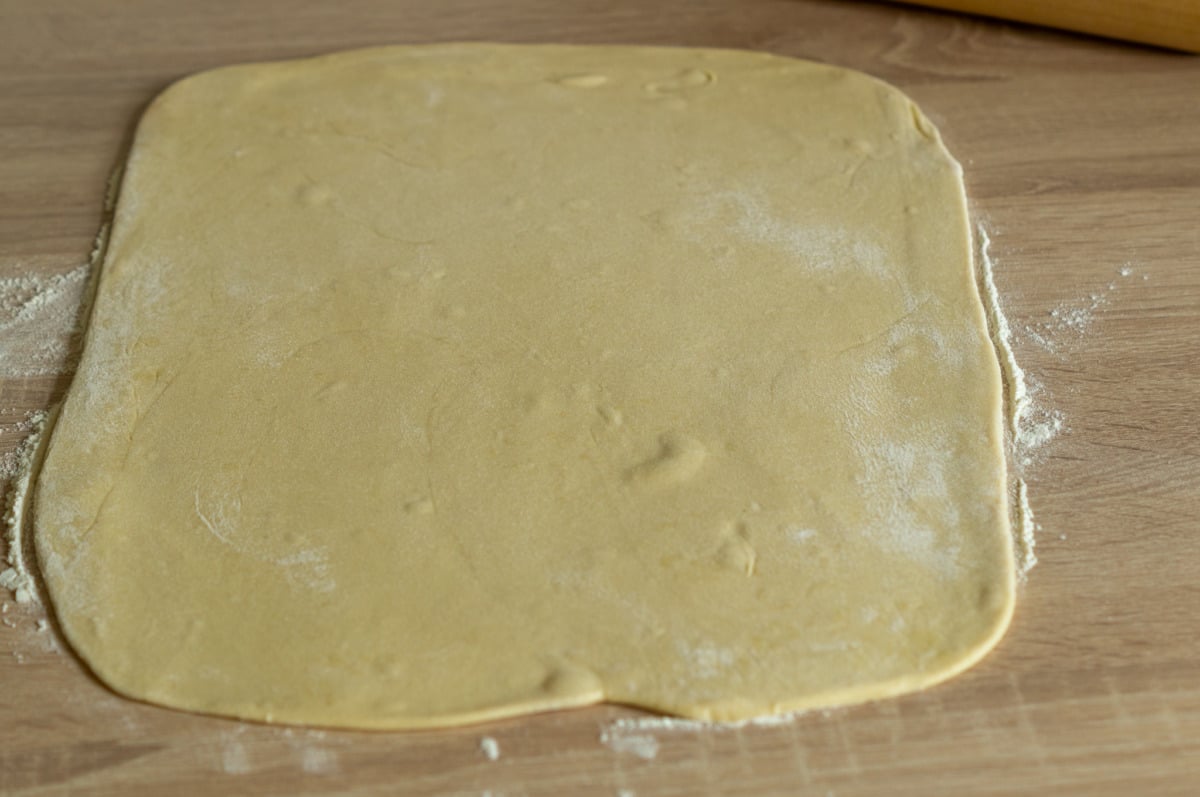
Roll the dough out into a rectangle the size of a baking tray. Cut the cold butter into thin strips and place them on one half of the dough. Fold the other half over the top and press the edges together firmly.
-
5
Fold and chill the dough.
Roll the dough sheet out again to the size of a baking tray. Fold one third into the centre, then fold the other third over the top. Wrap the dough sheet in cling film and leave to rest in the fridge for 30 minutes.
-
6
Roll up the dough.
Mix the remaining sugar with cinnamon. Roll out the dough and sprinkle one third of the cinnamon sugar over the surface. Roll the dough up from the long side.
-
7
Shape the rolls.
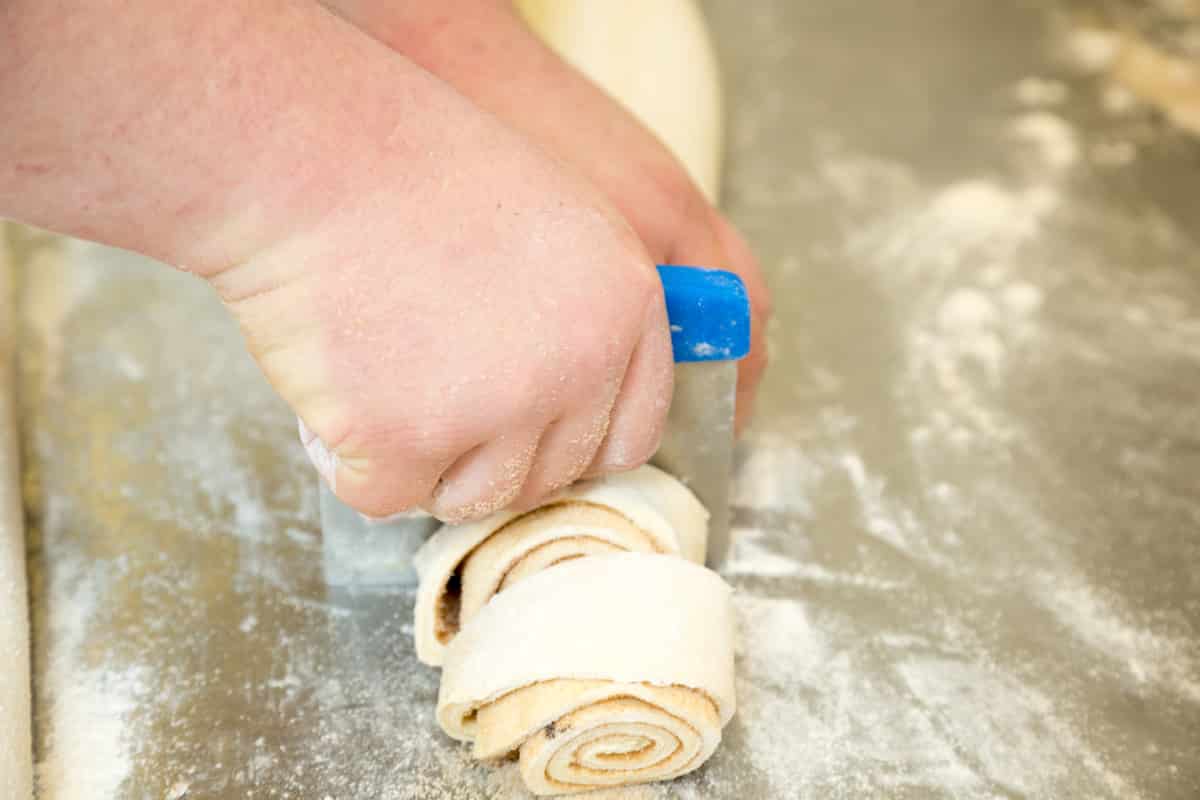
Cut the dough roll into pieces 5 cm wide. Place the pieces with enough space between them, seam side down, on the baking trays. Press the spatula into the centre of each piece and gently push the inner layers outwards.
-
8
Bake the Franzbrötchen.
Sprinkle the Franzbrötchen with the remaining cinnamon sugar. Place one baking tray at a time on the middle shelf in a cold oven and bake at 200°C top and bottom heat for 18 to 20 minutes.
Tip: These Franzbrötchen are great at breakfast, with a coffee, and as a treat for the kids at break time.
Sprinkle chopped almonds over the Franzbrötchen before baking.
Video
Nutrition per serving
Why the spatula creates the shape
The Franzbrötchen shape does not happen by chance. Once you have cut the dough roll into pieces 5 cm wide, you press the spatula into the centre and push the inner layers outwards. This pressure opens up the spiral and forces the cinnamon sugar filling between the layers of dough. Without this step the layers stay compact on the inside, the filling sticks together and the pastry turns crisp on the outside but soft and dense in the centre. The spatula pressure lets hot air flow between the layers so each one can bake separately.
Cutting cold butter into strips
The 120 g of butter must be well chilled, straight from the fridge. We cut it into thin strips and place them on one half of the dough before folding the other half over the top. Warm butter would immediately soak into the dough and cause the layers to stick together. Cold butter stays as a separate layer between the sheets of dough and only melts during baking. That is the difference between laminated dough and a standard yeasted dough.
Why 30 minutes of chilling time
After folding, the dough needs to rest in the fridge for 30 minutes. During this time the gluten relaxes, the butter firms up again and the dough can be rolled out cleanly. Without this chilling time the dough tears when you roll it out, the butter runs out and the layers stick together. At room temperature the incorporated butter would melt before baking and the lamination would be ruined.
A cold oven
Franzbrötchen go into a cold oven, which then heats up to 200°C top and bottom heat. This gives the dough time to rise a little more before the crust sets. In a preheated oven the outside would set immediately while the inside is still raw. The baking time of 18 to 20 minutes starts from the moment you slide the tray in, not from when the target temperature is reached.
Cinnamon to sugar ratio
Of the 180 g of sugar, 80 g goes into the dough and the remaining 100 g is mixed with 2 tsp of cinnamon. You sprinkle one third of this over the rolled-out dough before rolling it up, and the remaining two thirds go on top of the Franzbrötchen after shaping. If you put all the cinnamon sugar on the dough before rolling, the filling becomes too thick and runs out during baking. Splitting it this way means there is enough flavour inside and a crisp sugar crust forms on the outside.
Spacing on the tray
The pieces of dough need plenty of space, so we place a maximum of 4 per tray. They rise further during baking and the layers pressed outwards need room to expand. Placed too close together the Franzbrötchen stick to each other and the characteristic shape is lost. The seam must face downwards, otherwise the dough unrolls in the oven.
Leftovers the next day
Franzbrötchen keep for 2 days in a tin at room temperature. The crust softens over time but they stay moist inside. Freezing works well. After thawing, reheat briefly at 150°C. The fridge dries out the dough and is not a good option.
Goes well with: Coffee, Cappuccino and Vanilla Pudding.
More breakfast ideas with the Thermomix®: Breakfast Recipes, Bread Rolls, Plaited Loaf.