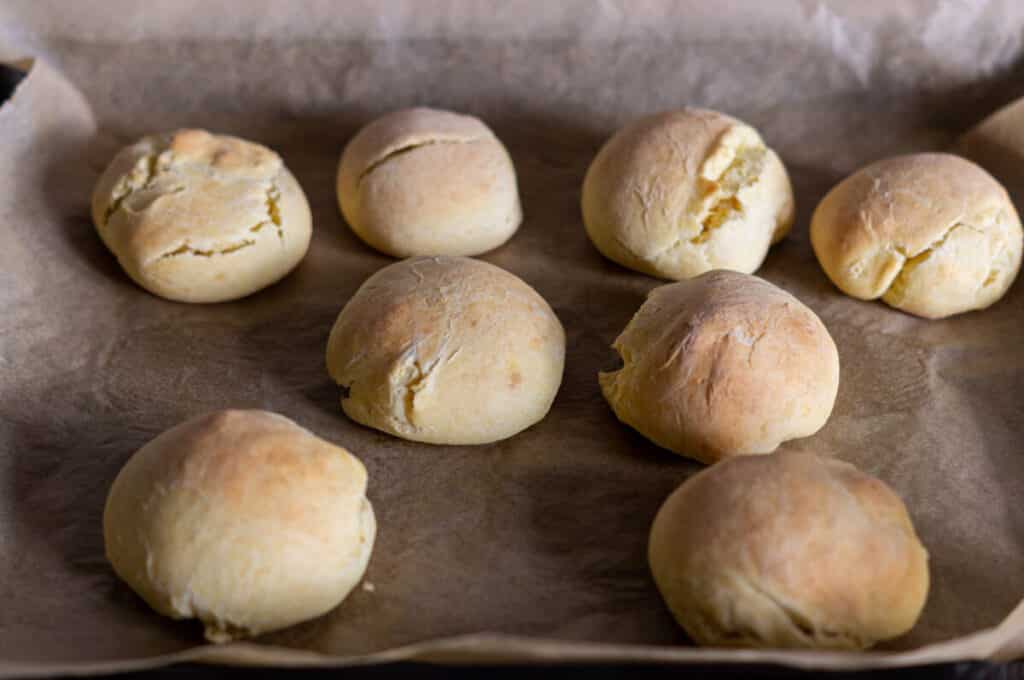
Quark rolls made with the Thermomix® are a regular at our place at weekends. We have been baking them at least twice a month for years. The trick: quark keeps the dough moist and light without needing any yeast. Kneading mode for 2 minutes, then straight into the oven. No proving time, no resting the dough, no complications.
This recipe also works when you realise at 7 in the morning that there are no rolls left. From flour in the mixing bowl to freshly baked rolls takes exactly 35 minutes.
Quark Rolls with the Thermomix®

Ingredients 0 / 6 ✓
- 50 g butter
- 2 eggs
- 250 g quark (20% fat)
- 1/2 tsp salt
- 300 g flour, type 550
- 1/2 sachet baking powder
Instructions 0 / 4
-
1
Preheat the oven.
Preheat the oven to 180°C top and bottom heat and line a baking tray with baking paper.
-
2
Knead the dough.
Add all the ingredients to the mixing bowl and knead for 2 minutes / kneading mode.
-
3
Shape the rolls.
With floured hands, shape eight rolls, place them on the baking tray and bake on the middle shelf of the oven for approx. 20 to 25 minutes.
-
4
Serve.
The rolls taste best served still slightly warm.
Tip: For a sweet version, these quark rolls go wonderfully with afternoon coffee. Add 40 g of sugar to the dough and serve with jam.
Nutrition per serving
Why quark instead of yeast
Quark provides the moisture that yeast doughs develop through hours of proving. The protein in the quark binds with the flour and gives the dough its structure. Baking powder makes the rolls rise in the oven, not before. That keeps them soft inside and firm on the outside.
With a yeast dough we need to allow at least 45 minutes of proving time, often longer. With quark rolls this step is skipped entirely. The dough goes straight from kneading onto the tray.
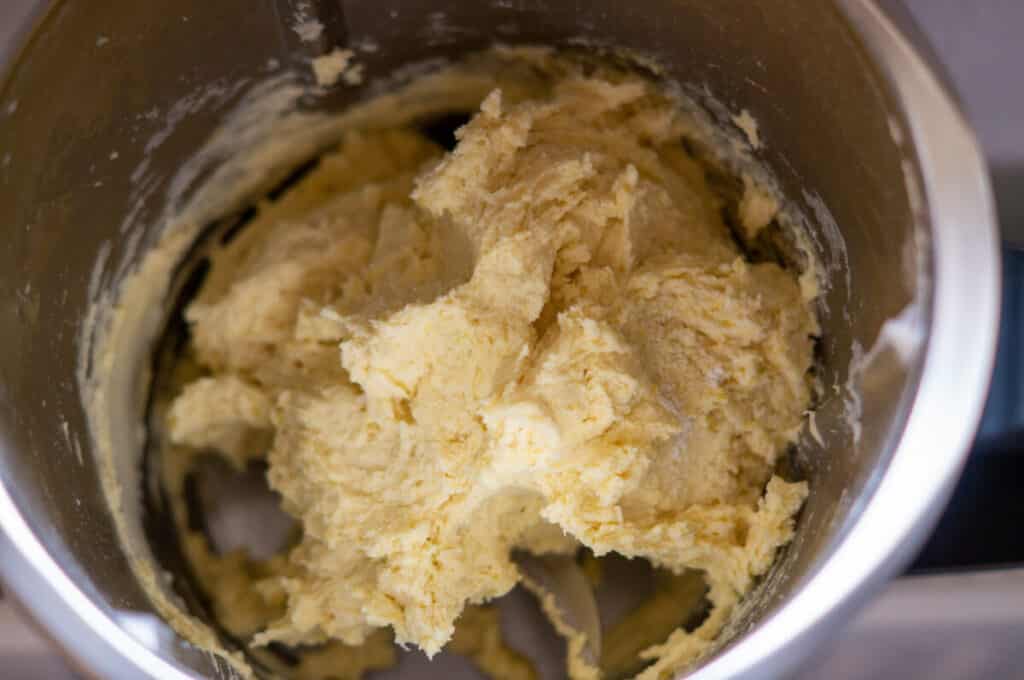
Kneading mode instead of reverse direction
Kneading mode works differently from the normal speeds. It turns more slowly but with greater pressure. The blade pushes the dough against the wall, folds it and builds up gluten. On normal speeds the dough would only be mixed, not kneaded.
2 minutes is enough. Longer does not improve the dough, it just makes it stickier. After 2 minutes the dough has exactly the right consistency: slightly sticky but easy to shape.
Type 550 versus type 405
We use type 550 instead of 405 because it has more protein. That gives the rolls a better bite. Type 405 makes softer rolls, almost like milk rolls. Type 550 makes firmer rolls that hold toppings better.
The quark offsets the higher protein content. With a plain flour and water dough, type 550 would become too dense. With quark the dough stays light.
180 degrees top and bottom heat
At 180°C top and bottom heat the rolls bake through in 20 to 25 minutes. The crust turns golden brown and the centre stays soft. At 200°C the crust gets too dark before the centre is done. At 160°C the rolls dry out.
Fan setting makes the crust harder. We always bake with top and bottom heat because it retains the moisture in the dough better.
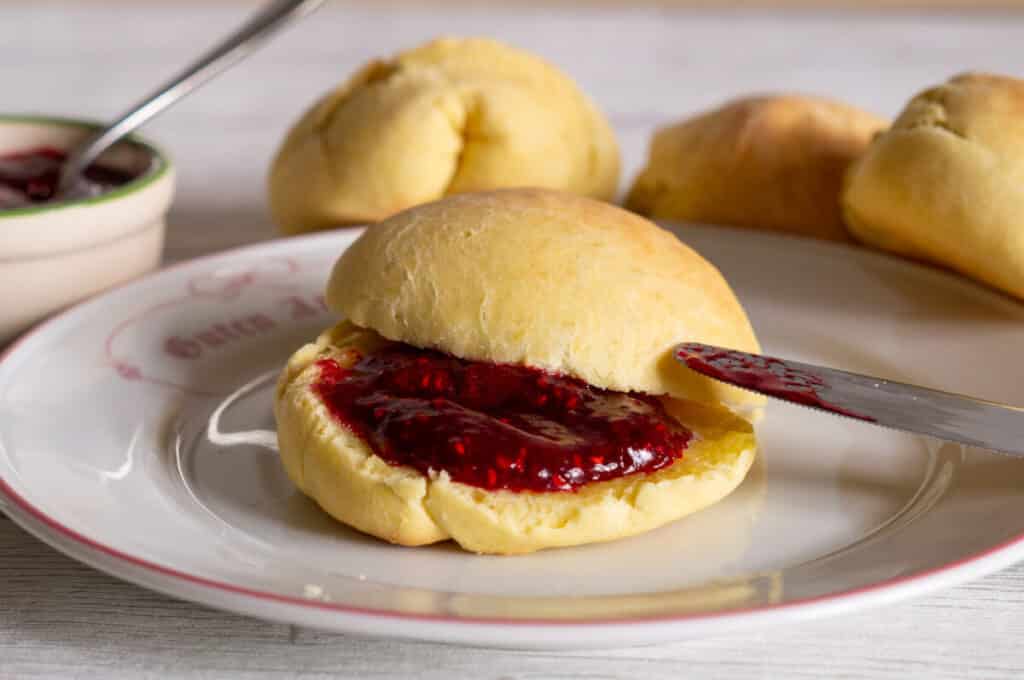
Sweet version with sugar
If you want to serve the rolls with coffee, add 40 g of sugar to the dough. That makes them sweeter but not overly so. They taste a bit like raisin rolls without the raisins.
Served with jam made in the Thermomix® they are fantastic. We love strawberry jam or apricot jam best alongside them.
Leftovers the next day
The rolls keep for 2 days at room temperature in a bread bin. After that they go dry. Freezing works well: frozen, they keep for 3 months. Reheat at 160°C for 5 minutes and they taste almost freshly baked.
They are at their best still slightly warm from the oven. The crust is crisp and the centre is soft. After 2 hours the crust softens.
Goes well with: butter, jam and honey.
Try these recipes too: Pizza Thermomix®, Thermomix® Potato Soup, Thermomix® Pumpkin Soup.