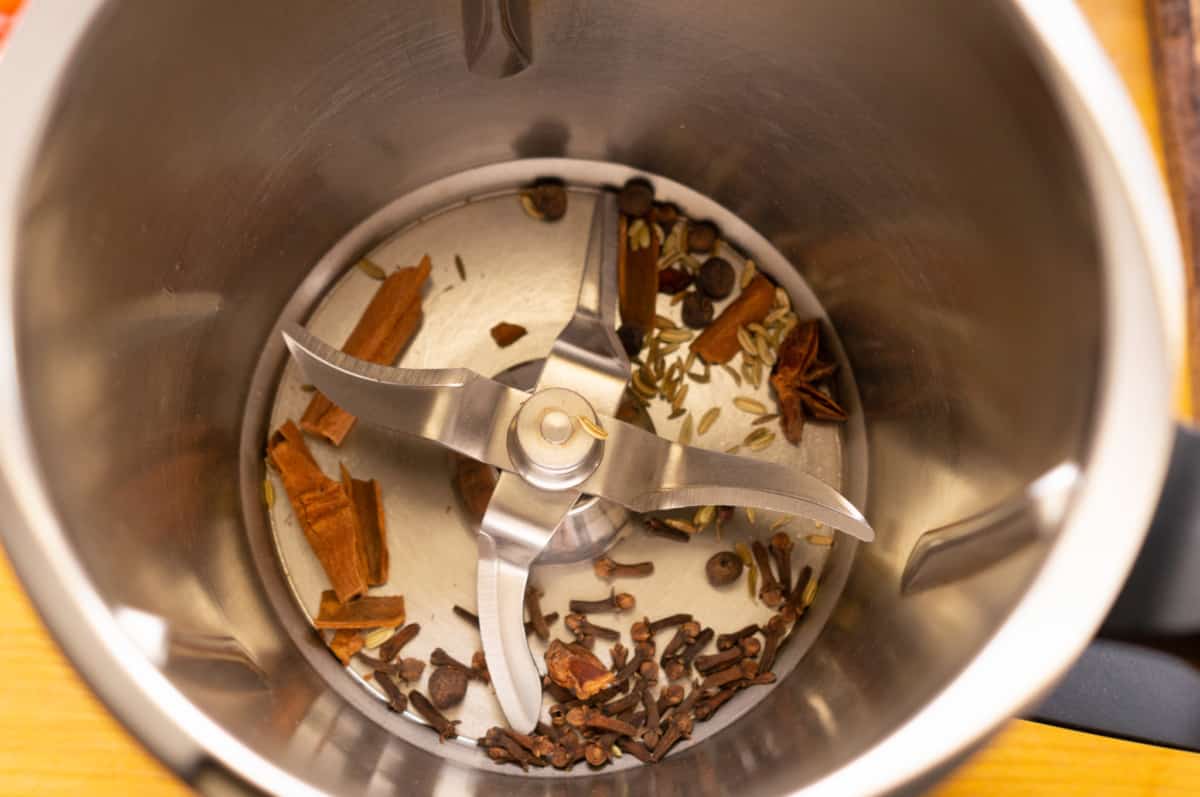
We grind our own gingerbread spice blend in the Thermomix® because shop-bought ready-mixed blends often contain fillers or tired Cassia cinnamon. Here is how to make it in under a minute: add 1 tsp fennel seeds, 2 tsp cloves, 1 cinnamon stick, 1 star anise, 1/2 tsp ground nutmeg, 1 tsp ground coriander, 8 allspice berries and 1 tsp cardamom seeds to the mixing bowl, tuck a sheet of kitchen roll between the mixing bowl and the lid, then grind for 25 seconds at speed 10. Leave to settle for 5 minutes, transfer to a jar, done.
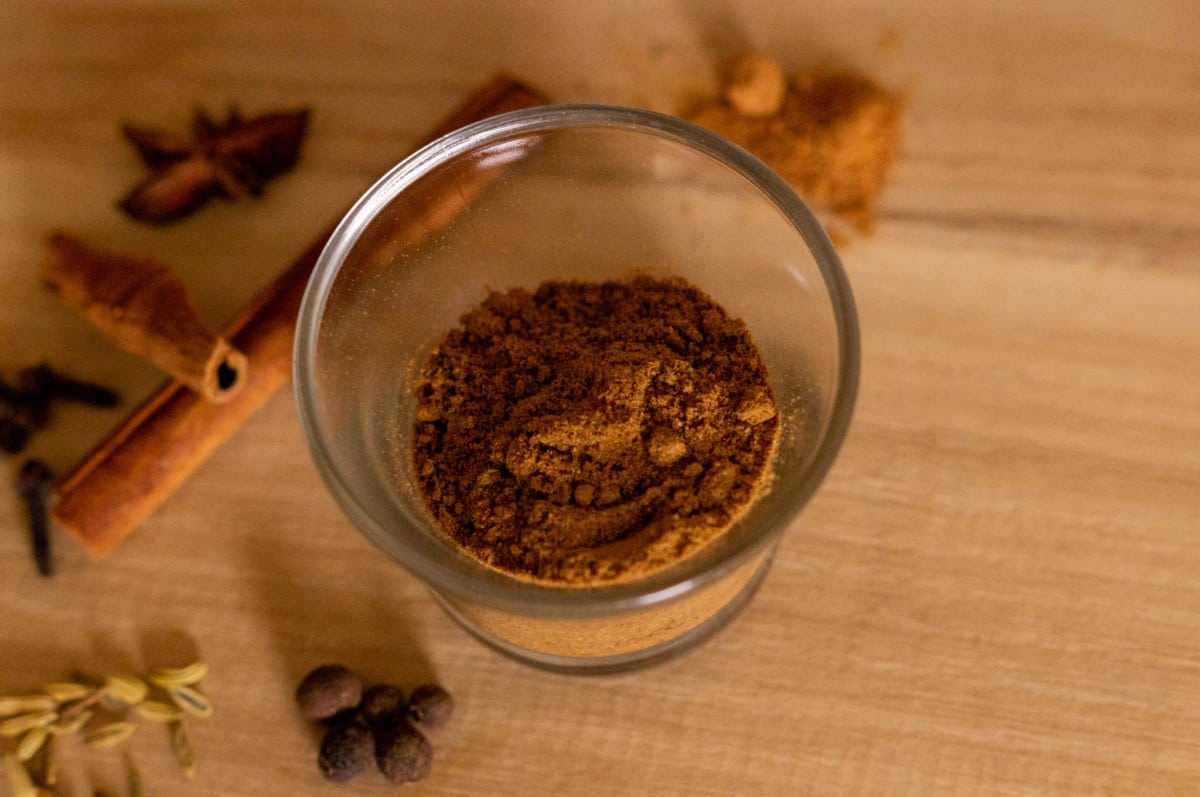
We have been making this blend fresh every year from late November for years. This single batch gives you around 6 to 7 heaped teaspoons of finished powder, enough for about three trays of gingerbread biscuits or several small jars to give as gifts. The difference from a packet is immediately obvious the moment you lift the mixing bowl lid.
Gingerbread Spice Blend, Thermomix®
Ingredients 0 / 8 ✓
- 1 tsp fennel seeds
- 2 tsp cloves
- 1 cinnamon stick
- 1 star anise
- 1/2 tsp nutmeg ground
- 1 tsp coriander ground
- 8 allspice berries
- 1 tsp cardamom seeds
Instructions 0 / 2
-
1
Add the ingredients to the Thermomix®.
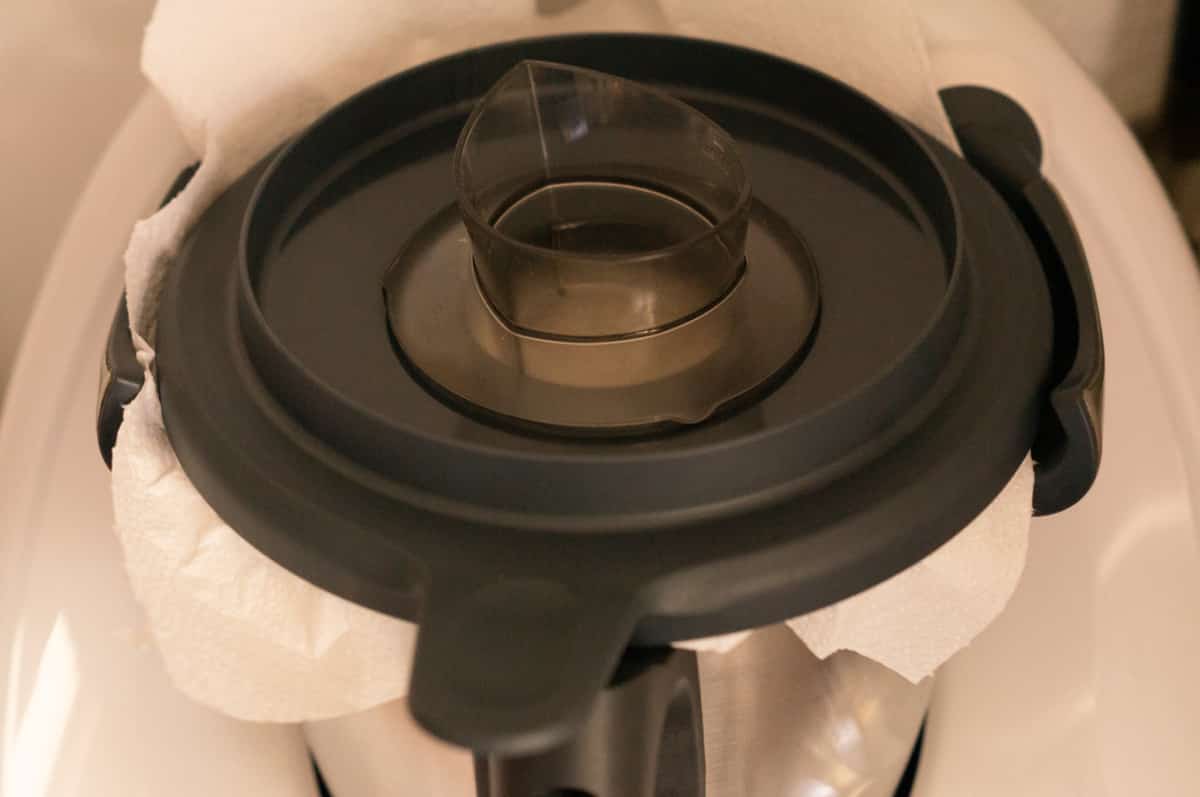
Add all the ingredients to the mixing bowl, place 1 sheet of kitchen roll on top of the mixing bowl, close the lid and grind for 25 sec / speed 10.
-
2
Pulverise the spices.
Leave to rest for 5 minutes so the spice dust can settle, then transfer to an airtight container and use as needed.
Tip: If you have whole nutmegs to hand, you can add half a nutmeg instead of the ground nutmeg.
Video
Nutrition per serving
Why eight whole spices beat a ready-ground powder
Freshly ground spices contain significantly more essential oils than pre-ground powder from a packet. Cinnamon sticks, star anise and cloves lose almost no aroma while whole, because the oils are protected inside. It is only at grinding on speed 10 that the cells break open and the full flavour profile is released. That is exactly where the Thermomix® makes a real difference: it pulverises even hard cinnamon sticks and allspice berries in 25 seconds to a fineness that a mortar and pestle could not achieve by hand in ten minutes.
Our proportions have evolved over the years: cloves and cinnamon carry the blend, star anise and fennel provide the anise-like sweetness, cardamom and allspice add depth, coriander and nutmeg round it all off. If you prefer a milder flavour, reduce the 2 tsp cloves to 1 1/2 tsp and the blend becomes less intense. A ready-made mix never gives you that control. When you make it yourself, you decide on every component.
Ceylon or Cassia: it is worth checking the label when buying cinnamon
The most important ingredient decision is the cinnamon stick. Cheap Cassia cinnamon naturally contains a high level of coumarin, a flavouring compound that can put strain on the liver and kidneys in larger amounts. The German Federal Institute for Risk Assessment therefore recommends using cinnamon in moderation. Ceylon cinnamon (also known as true cinnamon) contains only a fraction of coumarin and also tastes milder and more refined. For a spice blend we stir into almost every Christmas bake over several weeks, we deliberately choose Ceylon cinnamon sticks.
You can identify Ceylon cinnamon by the stick: it is light brown and made up of several thin layers rolled up like a cigar. Cassia sticks are darker, thicker and roll in from one side only. Once ground, the difference is no longer visible, so buy whole sticks and grind them yourself. That is the second reason why your own blend is worth making.
Three common mistakes that cost you aroma and a clean seal
The spice dust gets into the seal
Grinding at speed 10 produces fine spice dust that settles into the mixing bowl seal. The result: the next three dishes taste of cloves and cinnamon, even if you are making potato soup.
Our solution: Tuck a sheet of kitchen roll between the mixing bowl and the lid before you start. It catches the dust and keeps it away from the sealing ring. After grinding, still give the seal a quick wipe with a dry cloth.
The lid is opened too soon
If you remove the lid immediately after the 25 seconds are up, you get a cloud of spice dust in your face and lose the finest, most aromatic particles into the kitchen air.
Our solution: Wait 5 minutes before opening. During this time the dust settles inside the mixing bowl. Only then remove the lid and transfer the spice blend with the spatula. Those 5 minutes are not an arbitrary figure: they make the difference between a full yield and half of it floating away.
Star anise and cinnamon remain coarse
The tips of star anise and hard pieces of cinnamon are the toughest parts of the blend. Sometimes coarse bits remain after the first run and crunch in baked goods later on.
Our solution: After the first 25 seconds, briefly open the lid, use the spatula to scrape everything from the sides down to the bottom, and grind for a further 15 seconds at speed 10. If you want an extra-fine result, pass the powder through a fine sieve at the end. Whatever stays in the sieve goes back into the mixing bowl.
How to adjust the blend to your own taste
With whole nutmeg: Instead of 1/2 tsp ground nutmeg, add half a whole nutmeg and grind it along with everything else. The Thermomix® breaks it down easily at speed 10, and the aroma is noticeably more intense than from a powder.
With whole coriander seeds instead of ground: Use 1 tsp whole coriander seeds instead of 1 tsp ground coriander. Freshly ground, they bring a slightly citrusy note that has long since faded from a ready-ground powder.
With ginger for more warmth: Adding 1/2 tsp ground ginger makes the blend warmer and works particularly well in gingerbread and hot drinks. Many English gingerbread blends put exactly this at the centre.
A milder version for children: Reduce the cloves to 1 tsp and leave out the star anise. The blend becomes softer and less intense without losing its festive character.
How we use gingerbread spice all year round
For baking, we work with roughly 1 tsp of gingerbread spice per 250 g of flour or dough. That means it goes mostly into colourful mini gingerbread biscuits and gingerbread rusks. If you prefer it in a drink, stir half a teaspoon into our gingerbread liqueur or into hot chocolate.
A pinch also works well on candied almonds. A small amount in apple compote or porridge brings a surprising warmth to breakfast outside the festive season. That way the blend is not just a December spice but finds its way into our kitchen all year round.
How to keep the spice blend aromatic for months
Stored in an airtight container, the blend stays fully aromatic for around 6 months and remains usable for a good while after that, though slightly less intense. Brown glass jars protect best against light. Clear glass jars work too, but store them in a dark cupboard rather than on a bright windowsill. Heat and sunlight are the biggest killers of aroma.
As a gift, the spice blend works well in small 50 ml jars with a handwritten label. We usually add a recipe for colourful mini gingerbread biscuits alongside it, which makes the present complete for the Advent season. A tip from experience: write the date on the label so you know the following year whether any leftovers are still good.
Also worth a look: Foot Balm, Thermomix®.
Anyone who wants to take the same principle further with a different base will find the same method using sugar instead of pure powder in our Christmas spiced sugar.