The pancake batter is ready in the mixing bowl in 30 seconds, and then it needs to do nothing for half an hour. Sounds odd, but that is the whole trick. We have been making pancakes regularly for years, and the difference between going straight into the pan and waiting 30 minutes is so clear that we never skip the resting time any more.
With 300 g of flour, 500 g of milk and 5 eggs, we get 10 thin pancakes that stay supple and do not tear when you flip them. Below you will find four recipes: basic batter, sweet filling, rhubarb, and apple. We mix the basic batter almost on autopilot by now.
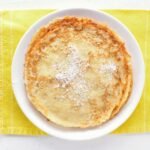
Basic Pancake Batter with the Thermomix®
Ingredients 0 / 5 ✓
- 300 g flour
- 500 g milk (3.5% fat)
- 1 pinch salt
- 5 eggs
- 30 g sugar add in step 1
Instructions 0 / 3
-
1
Mix the pancake batter in the Thermomix®.
Add flour, milk and salt to the mixing bowl and stir together for 20 seconds / speed 4.
-
2
Add the eggs.
Add the eggs and mix for 10 seconds / speed 5.
-
3
Cook the pancakes.
Heat a non-stick pan over a medium heat, pour the batter directly from the mixing bowl into the pan in batches and cook the pancakes on both sides. The ideal cooking time is reached when the pancakes are fully set but not yet dry. Allow roughly half a minute per pancake for a perfect result.
Tip: You can leave the batter in the mixing bowl with the lid on for 30 minutes to allow the flour to absorb fully. This makes the batter smooth and the pancakes lighter.
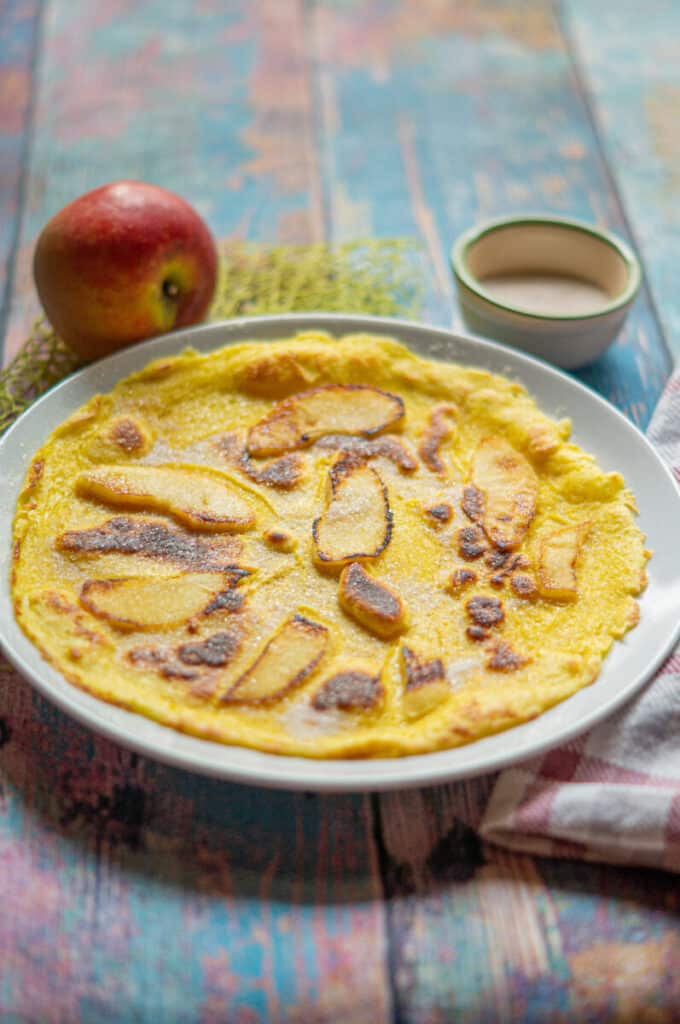
For apple pancakes, cut thin apple rings, place them in the hot pan and pour the batter on top. You will find the recipe on this page!
Video
Nutrition per serving
Why 30 minutes of resting time makes or breaks the result
Pancake batter without resting time produces tough, crumbly pancakes. With resting time it becomes smooth and thin. Thirty minutes is all that stands between the two.
The reason is flour mechanics. When flour first comes into contact with milk and eggs, it has not yet absorbed the liquid. The starch granules need time to swell. At the same time, blending develops gluten, and the gluten contracts like a rubber band. It is precisely this tense gluten that makes pancakes tough.
Thirty minutes of rest solves both problems at once. The starch absorbs the full amount of liquid and the batter becomes homogeneous. The gluten relaxes, so the pancakes turn out thin, soft and no longer tear when flipped. We simply leave the mixing bowl on the worktop and put the lid back on. No extra bowl to wash, no decanting.
The Thermomix® takes care of the part that is genuinely tedious by hand: add 300 g of flour, 500 g of milk and a pinch of salt and blend for 20 seconds at speed 4, then add 5 eggs and blend again for 10 seconds at speed 5. No lumps, no whisk acrobatics. Anyone who has tried it with cold milk and a bowl will know the little flour pockets that form at the edges. In the mixing bowl they never appear.
The ingredients and why the ratio works
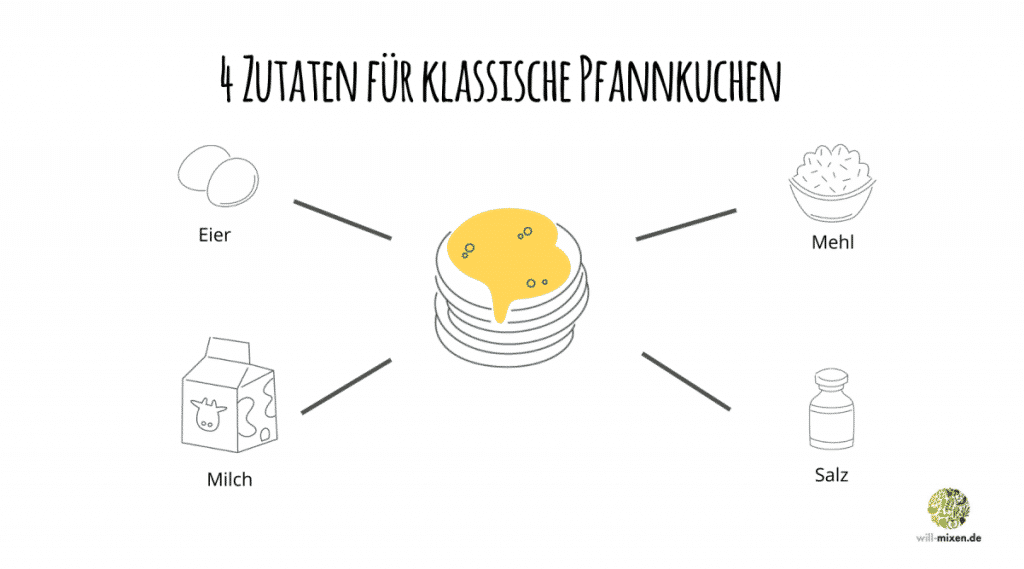
Pancakes are a 4-ingredient recipe: flour, milk, eggs, salt. Everything else is ratio. For 300 g of flour we use 500 g of milk and 5 eggs. More milk makes the batter too thin and the pancakes tear, less milk makes them thick and stodgy. Five eggs give the batter enough structure for flipping without tasting like an omelette.
For flour, we use type 405 or type 550. Wholemeal flour works too, but then add an extra 50 g of milk, otherwise the wholemeal absorbs too much. The milk can happily be at room temperature as it combines with the flour more quickly that way. Straight from the fridge is also fine since the Thermomix® evens things out during blending.
For the sweet variation, we add 30 g of sugar directly with the flour. For savoury pancakes, we leave the sugar out and fill them afterwards with cream cheese, ham, smoked salmon or spinach. The basic batter stays the same.
Where pancakes go tough or tear
Putting the batter straight into the pan after blending
This is the main reason for tough pancakes. Without 30 minutes of resting time, the flour has not absorbed the milk and the gluten is still tense. The result: rubbery rather than tender. Our fix: simply leave the mixing bowl on the worktop for 30 minutes after blending. That half hour is the most important part of the recipe.
Pancakes tearing when you flip them
If the batter falls apart when flipped, it is either lacking structure or fat. Too few eggs make the batter unstable, and without properly hot fat the pancake sticks to the base. Our fix: stick to the ratio of 300 g of flour to 5 eggs, and only grease the pan once it is hot. We use clarified butter or rapeseed oil, as both handle medium heat better than regular butter.
Pancakes turning black or patchy
Butter looks lovely in the pan but burns at medium heat. Black spots on the pancake usually come from scorched milk proteins in the butter. Our fix: we use clarified butter for flavour or neutral rapeseed oil when speed is the priority. Keep the heat at medium, there is no need to go higher.
Batter too thick or too thin
Sometimes the flour absorbs more liquid than expected, especially with wholemeal flour. Sometimes the eggs are extra large and the batter turns out too thin. Our fix: if the batter is too thick, pour in 30 g of milk and blend for 5 seconds at speed 3. If it is too thin, add 20 g of flour and treat it the same way.
Sweet with cinnamon sugar, savoury with spinach
The basic batter works in any direction, and we adapt it depending on mood and what is in the fridge.
- Classic sweet: add 30 g of sugar to the flour, then sprinkle the finished pancakes with cinnamon sugar and a squeeze of lemon. Also works with apple sauce or jam.
- Sparkling water variation: replace 100 g of the milk with sparkling mineral water and add the water only after the resting time, then blend for 5 seconds at speed 3. Makes the pancakes extra light.
- Apple in the batter: cut 2 Boskop apples into thin slices, place them in the pan and pour the batter over them. Whisk the egg whites separately to stiff peaks and fold them in at the end, otherwise the apple slices will not hold up under the batter.
- Savoury with smoked salmon: leave out the sugar, spread the finished pancakes with cream cheese, top with smoked salmon and dill, then roll up and cut into pieces.
- Spinach and cream cheese: again without sugar, spread with cream cheese, top with spinach and a little grated Parmesan, then roll up like a wrap.
- Oven pancake for a crowd: preheat the oven with a baking tray to 200 °C, grease the tray with butter, pour on the batter and bake for 10 minutes. Saves you standing over the pan when the whole family is hungry.
If the batter turns out too thick, tear the pancake apart, dust it with icing sugar and serve it with a little apple sauce. That brings us to an improvised Kaiserschmarrn, which is incidentally one of the best recipes to come from a cooking mishap.
Pancake relatives made with the Thermomix®
Once you have mastered pancakes with the Thermomix®, a few close relatives are just a recipe away. For a paper-thin variation with a French tradition, there is a recipe for crepes with the Thermomix®, noticeably thinner than our pancakes but larger. For the thick, fluffy breakfast version, buttermilk pancakes are worth making: buttermilk and baking powder make them airy rather than relying on whipped egg whites.
If any batter is left over after cooking, it goes straight into pancake soup: slice into thin strips and serve in hot broth. A classic way to use up leftovers. For something more substantial, use the batter in a mince and pancake bake, where the pancakes are layered with minced meat and topped with cheese.
1 day in the fridge, frozen for 1 month
Freshly cooked pancakes keep in an airtight container in the fridge for about 2 days. To keep them warm straight after cooking, we put them in the oven at 50 °C fan on a baking tray lined with baking paper until they are all done and the family sits down to eat.
Freezing works very well. We stack the cooled pancakes with baking paper between each layer and pack them into a freezer bag. They keep for about a month without sticking together. To reheat, place them in a non-stick pan over a medium heat, about one minute per side, until warm and pliable again. The microwave works too, but they come out a little softer.
We do not leave the raw batter in the fridge overnight. After 8 hours of chilling it loses elasticity and the pancakes turn out flatter and a little tough. Better to blend fresh, rest for 30 minutes and cook straight away.
Our four pancake recipes
We start with the basic batter. The other three recipes are the variations we make most often.
Pan, heat, knowing when to flip
We heat the non-stick pan to level 6 out of 9, so just above medium. Test: a drop of water in the pan should immediately sizzle and evaporate; then it is hot enough. Only then do we add half a teaspoon of clarified butter and spread it thinly across the base with kitchen paper. One ladle of batter in the centre, then swirl the pan immediately in circles until the batter reaches the edges. Spreading with a spoon gives you streaky pancakes. After about a minute, the edges visibly release from the pan base and the top of the batter loses its sheen. That is the moment to flip. The second side needs only 30 to 40 seconds.
More cakes and bakes made with the Thermomix® are in our cake collection.
Goes well with: apple sauce, strawberry jam and vanilla sauce.
You might also enjoy: Germany glass dessert with the Thermomix®.
Basic pancake recipe
Pancakes with sweet filling
Rhubarb pancakes
A summer recipe from rhubarb season. We serve the rhubarb pancakes with homemade buttermilk lemon ice cream, which gives a lovely sour-sweet balance.
Apple pancakes with Boskop
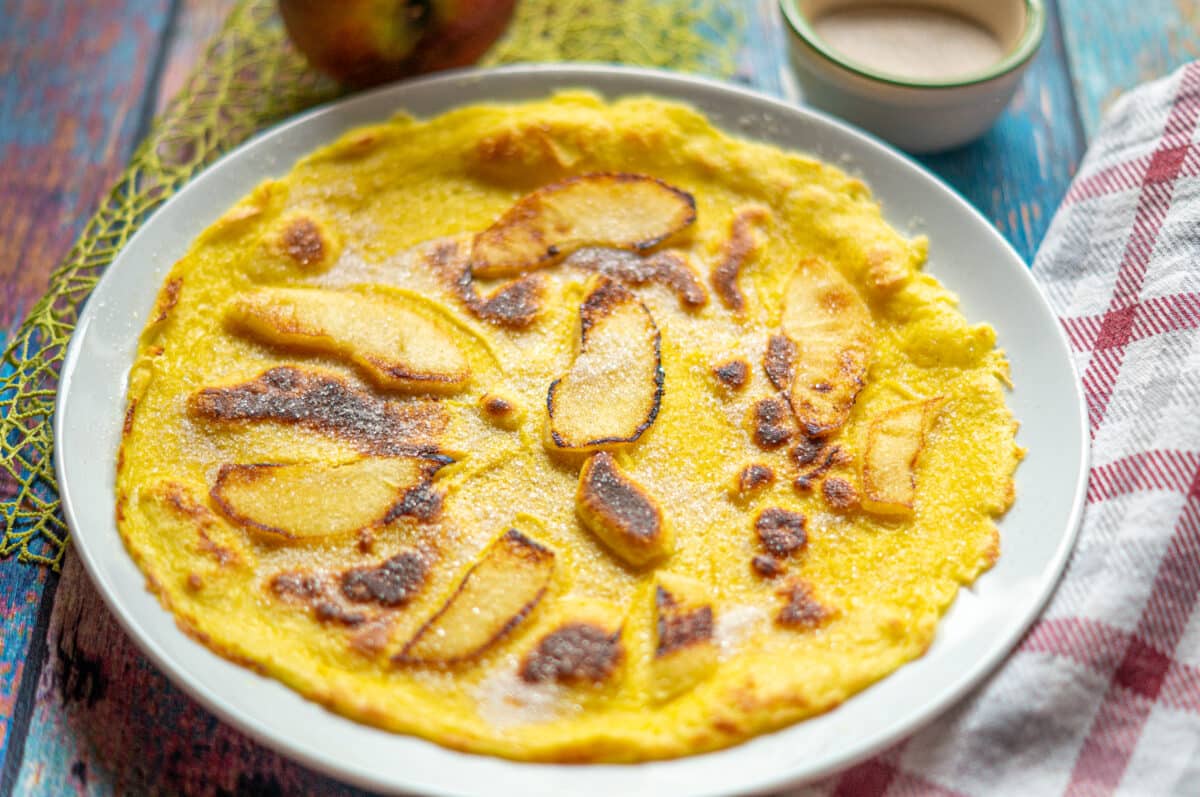
When Grandma’s apple tree drops its Boskop apples in late summer, they go straight into apple pancakes. The pancakes need to be a little thicker here, otherwise the apple slices will not hold up. The trick: whisk the egg whites separately to stiff peaks and fold them in at the end, so the batter is fluffy enough to support the amount of apple.
For more sweet ideas: our Thermomix® rice pudding is also ready in 30 minutes, and the banana caramel layer dessert takes just a few minutes and pairs well with leftover pancakes.