Crêpe batter made in the Thermomix® takes 10 minutes of mixing plus 30 minutes resting and yields 10 wafer-thin crêpes. 250 g flour plus 500 ml milk plus 4 eggs plus 40 g butter plus 1 pinch of salt. The classic French ratio is 1:2 (flour to milk). The 30-minute rest is essential: the flour absorbs the liquid, the crêpes become pliable and will not tear when you flip them.
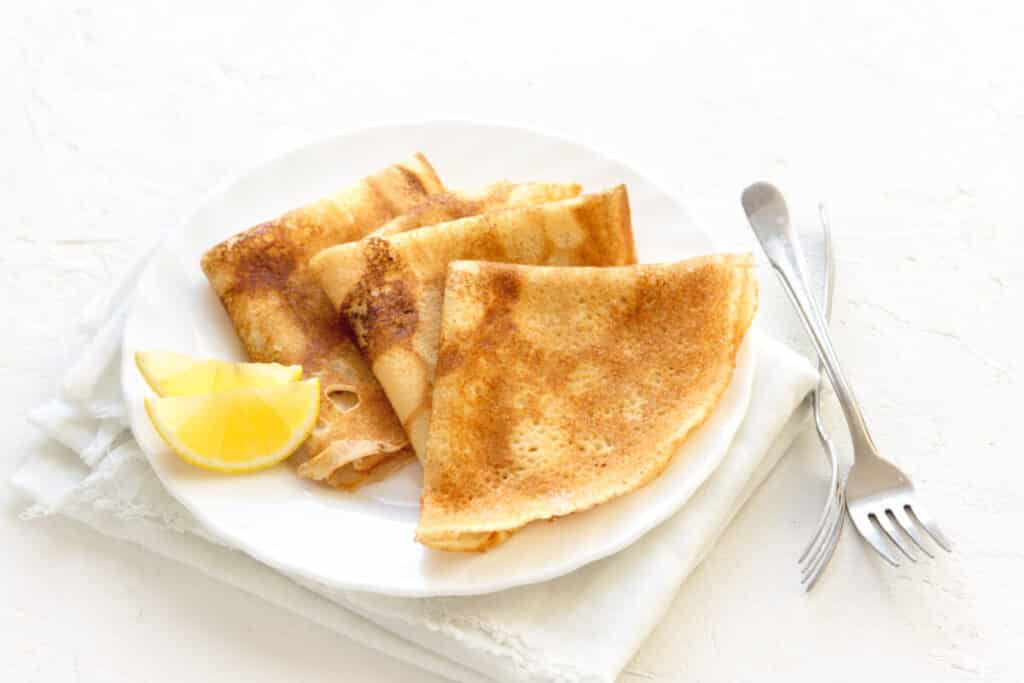
We make crêpes for breakfast (with Nutella, berries, bananas), as a dessert (with vanilla ice cream, caramel sauce) or in a savoury version (with ham, cheese, mushrooms). Compared to pancake batter, crêpe batter is thinner, more elegant and less filling.
Crêpes Batter with the Thermomix®

Ingredients 0 / 6 ✓
- 40 g butter + extra for the pan
- 500 g milk
- 200 g sparkling mineral water
- 250 g flour
- 4 eggs
- 1 pinch salt
Instructions 0 / 4
-
1
Melt the butter.
Add the butter to the mixing bowl and melt for 1.5 minutes / 80°C / speed 2.
-
2
Mix the batter.
Add the remaining ingredients to the mixing bowl and stir for 30 seconds / speed 4.
-
3
Rest the batter.
Leave the batter to rest for 30 minutes.
-
4
Cook the crêpes.
Grease the pan or crêpe maker with butter, set to medium heat and pour in enough batter to just cover the base in a thin layer. Cook for 2 to 3 minutes, flip, cook for 1 further minute, then keep warm. Continue with the remaining batter.
Tip: Prefer sweet crêpes? Add 2 tsp of sugar or vanilla sugar in step 2. 1 tsp of finely grated organic citrus zest makes them even better.
Video
Nutrition per serving
Crêpes vs. pancakes: the difference
German pancakes: thick batter (1:1 flour to milk), about 0.5 cm in the pan. Crêpes (French): thinner batter (1:2 flour to milk), just 1 to 2 mm in the pan. Crêpes need more milk and a resting period. A flat crêpe pan is ideal.
The 30-minute rest: why it matters
During resting, the flour absorbs the liquid (hydration). The gluten strands relax and the batter becomes pliable. Without resting, the crêpes tear when flipped and turn rubbery. Pro tip: rest overnight in the fridge.
Which pan: flat with a non-stick coating
A classic crêpe pan, 22 to 25 cm, with a low rim. Alternatively, any flat non-stick pan works well. The pan must be fully hot (water drop test: drops should dance across the surface).
Before the first crêpe, melt 1 tsp of butter and spread it with kitchen paper. With a non-stick pan you often need no fat at all. The residual fat is enough for the following crêpes.
Useful kit: a crêpe maker produces thinner crêpes than most pans. A pan with a low rim makes flipping easier. A batter spreader distributes the batter thinly and evenly. Professionals use a second crêpe maker for a proper station setup.
Variations: sweet, savoury, Galette de Sarrasin
Sweet crêpes: 1 tsp vanilla and 1 tbsp sugar in the batter. Classic with chocolate, Nutella, berries, bananas, caramel or ice cream.
Savoury crêpes: no sugar, with 1 tsp salt and 1 tsp herbs. Great with ham and cheese, mushrooms, spinach and Ricotta, or salmon and spinach.
Galette de Sarrasin (Breton style): 250 g buckwheat flour instead of plain flour, gluten-free, with a nutty, earthy flavour. Breton classic with ham, egg and cheese (“Complète”).
Vegan: replace the eggs with 200 g soy milk and 1 tbsp apple sauce.
Gluten-free: 250 g rice flour or maize flour plus 1 tsp xanthan gum.
What to serve with crêpes
Sweet: breakfast with berries, yoghurt and honey, dessert with ice cream, or Sunday brunch. Savoury: as a wrap alternative, or a ham and cheese main course. Classic in France for Mardi Gras (Shrove Tuesday).
Related recipes: Pancakes with the Thermomix®, Redcurrant jelly as a crêpe filling.
Crêpes keep for 2 days in the fridge, 3 months in the freezer
Once cooked, crêpes keep in the fridge for 2 days (wrapped in cling film). To reheat: 30 seconds per side in the pan. Freeze in stacks with baking paper between each crêpe for up to 3 months.
Goes well with: Nutella.