Boiling and dyeing Easter eggs are usually two separate steps. Bring water to the boil, hard-boil the eggs, leave to cool, mix the dye bath, dip the eggs, wait. With the Thermomix®, we do both in a single pass, right in the Varoma.
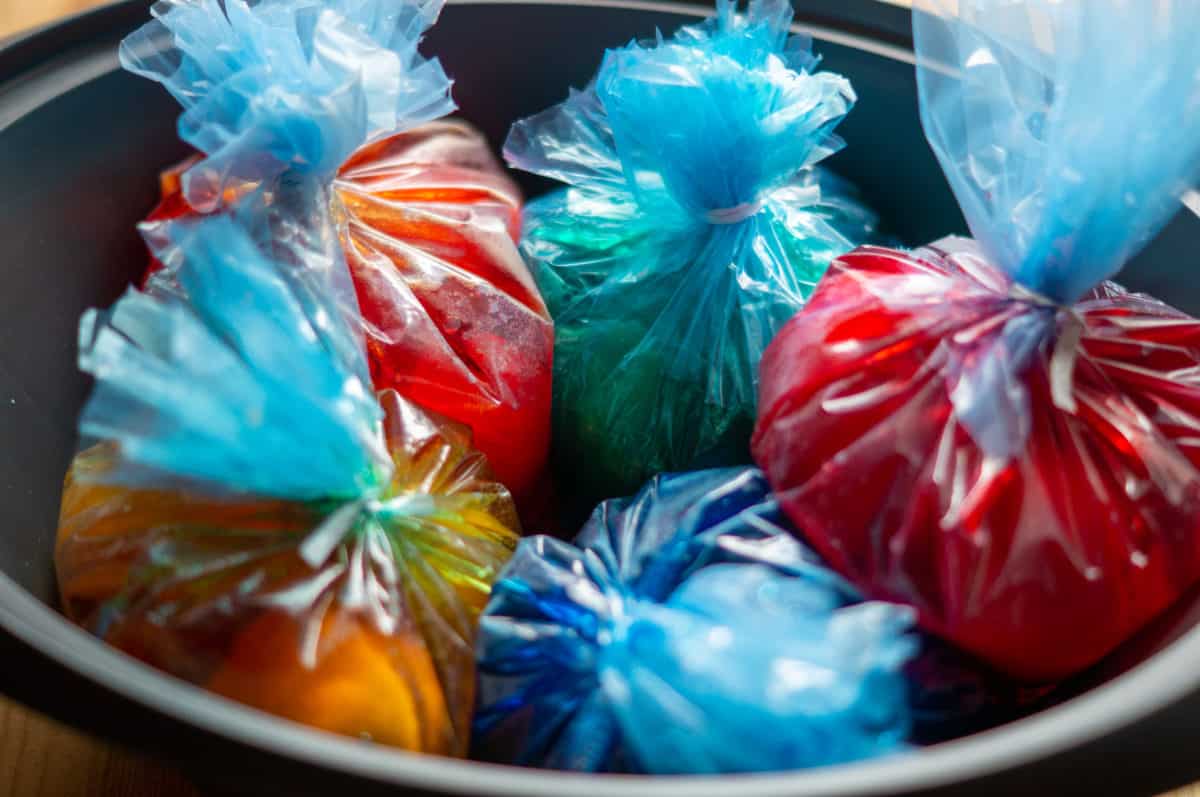
The trick is in the freezer bags: we place three eggs with 250 g of warm water, one dye tablet, and a little white vinegar into a bag, seal it as tightly as possible, and put all the bags into the Varoma at the same time. While the steam water in the mixing bowl heats up, the eggs cook in the steam and absorb the colour simultaneously. After 35 minutes at Varoma speed 1, they are done: hard-boiled and dyed, without a single extra pot.
Dyeing and Cooking Easter Eggs in the Thermomix®

Ingredients 0 / 4 ✓
- 1000 g water
- 15 eggs size M
- 1250 g water warm, for filling the freezer bags
- 5 - 10 tbsp vinegar white
Instructions 0 / 5
-
1
Add water.
Place 1000 g of water into the mixing bowl.
-
2
Pack the eggs.
Place three eggs, one dye sheet or dye tablet, 250 g of warm water, and vinegar as directed by the manufacturer into a freezer bag.
-
3
Pack all the eggs.
Seal the bags so that as little air as possible remains inside and the eggs are fully submerged in the water. Place the bags in the Varoma. Repeat with the other four colours and the remaining eggs.
-
4
Cook the eggs.
Close the Varoma, place it on the mixing bowl, and cook for 35 min / Varoma / speed 1.
-
5
Cool the eggs.
Rinse the eggs under cold water and leave to dry on a wire rack.
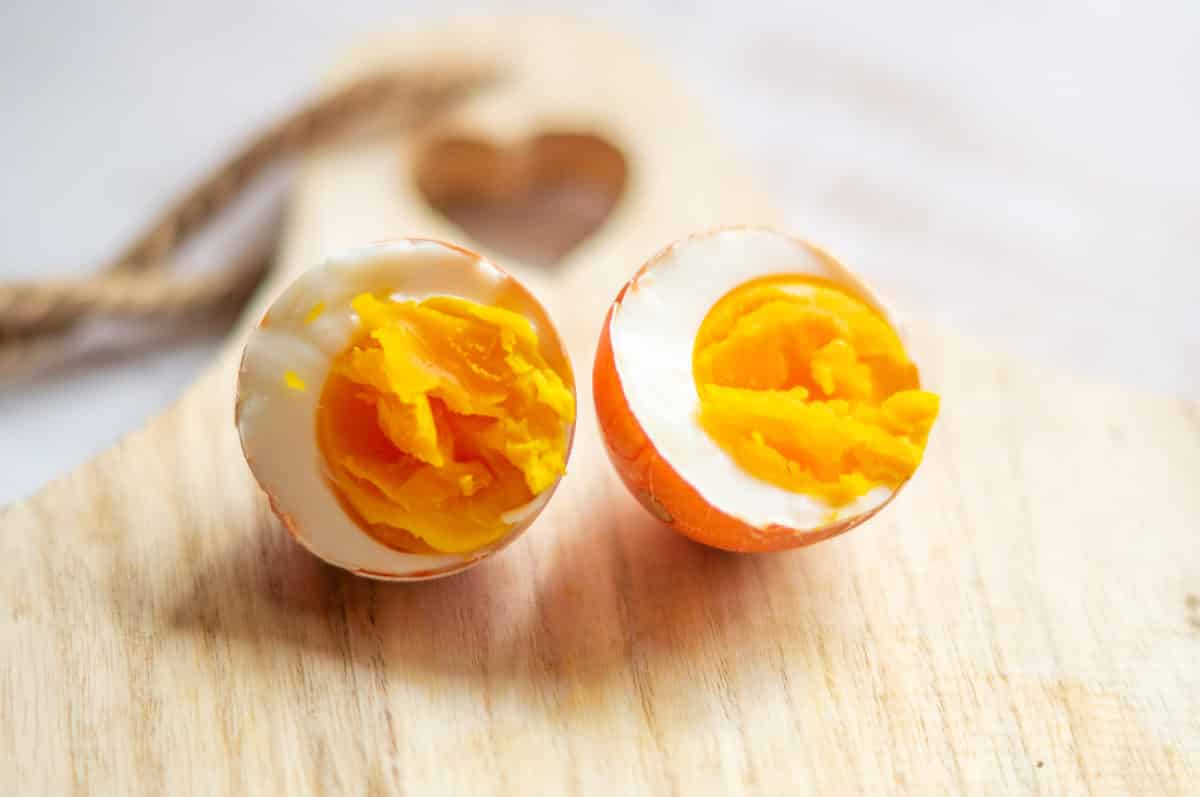
Tips: You can use white or brown eggs depending on your preference. We used two white and one brown egg per bag. You can see the colour difference in our photo, with the brown egg sitting in the middle.
You can reuse the dyeing liquid for a second round of dyeing. The colour will simply not be as intense as the first time.
Note: The cooking time for the eggs varies depending on their size, the temperature and quantity of water in the mixing bowl, and the cooking bags. To make sure the eggs have reached the firmness you want, carefully remove one egg from a bag and test it. If it is not firm enough, simply extend the cooking time by a few minutes. To be on the safe side, leave the eggs to rest in the Varoma for 10 minutes after cooking.
Video
Nutrition per serving
Why this method really works
The steam cooks, the bag dyes. The Varoma steam brings the eggs up to temperature. The heat inside the bag simultaneously activates the dye from the tablet and drives it into the eggshell. This actually works better than a classic dye bath, because the vinegar and the heat work together. We add 5 to 10 tbsp of white vinegar per bag, following the manufacturer’s instructions. More vinegar produces a more intense colour.
Five colours at once, kept completely separate. We fill five bags with three eggs each and five different colours, then place them all in the Varoma. The colours stay completely separate. No mixing, no alternating dips. This is especially relaxed with children: everyone picks their colour, the bags go into the Varoma, and after 35 minutes Easter is ready.
White eggs take on more colour than brown ones. We usually mix two white and one brown egg per bag. The brown egg gets a darker, warmer tone, while the white ones turn out bright. In our photo, the brown egg always sits in the middle. For particularly vivid colours, use only white eggs.
Three common mistakes when dyeing eggs in the Varoma
1. Too much air in the bag. If the bag is not sealed tightly and air remains inside, the eggs float to the surface and are not fully submerged in the dye water. The colour will then come out patchy. Our solution: close the bag almost completely, press out the remaining air by hand, then seal it shut. The eggs should be fully surrounded by water.
2. The water in the bag was cold instead of warm. Cold water takes too long in the Varoma to reach the right temperature. During this time the steam water in the mixing bowl boils, but the eggs warm up only slowly. Our solution: we fill the bags directly from the hot tap (approx. 40 to 50°C). This shortens the effective cooking time and the colour sets more evenly.
3. The cooking time was too short. 35 minutes at Varoma speed 1 is a good guideline for size M eggs. With size L eggs or a colder starting point, the yolk may still be slightly soft. Our solution: after 35 minutes, carefully remove one egg from a bag, tap it gently and crack it open. If the yolk is still too soft, simply cook for a further 5 minutes. Alternatively, leave the eggs to rest in the closed Varoma for 10 minutes after cooking. The residual heat is usually enough.
Tip for the Varoma lid
Tilt the Varoma lid slightly ajar during cooking. This allows excess steam to escape, reduces condensation on the bags, and prevents the colours from becoming diluted. We learnt this after a few rounds, and since then the eggs have come out with a much more even colour.
2 weeks in the fridge, cool completely before storing
Hard-boiled eggs keep in the fridge for up to two weeks. We leave them to cool completely on a wire rack before putting them in the fridge. Storing them while still warm makes the shell damp and the dye may rub off. If you dye the eggs one or two days before Easter, you will have one less thing to do on the day itself.
Easter bread, quark-oil bunnies, and advocaat as an Easter spread
If you want to fill the Easter table even further, we have more ideas. The Easter bread from the Thermomix® comes out of the oven while the eggs are cooking in the Varoma. Perfect breakfast timing. For the children, we also often make the quark-oil bunnies from the Thermomix®. They need hardly any preparation and always work reliably. Anyone with leftover eggs after the Easter egg hunt can turn them into a tasty egg salad without mayonnaise, or simply make a batch of advocaat in the Thermomix®.
You might also like: Christmas spiced sugar in the Thermomix®.