Chopping vegetables in the Thermomix® is quick once you know the right setting. Soft vegetables (courgette, mushrooms, broccoli, peppers, tomatoes) need 4 to 5 seconds at speed 4. Hard vegetables (carrots, potatoes, pumpkin, celeriac) need 8 to 10 seconds at speed 5. You can fit up to 1000 g per batch in the mixing bowl, filled to a maximum of the 1-litre mark. That is the whole rule of thumb. Everything else is fine-tuning for even pieces instead of mush.
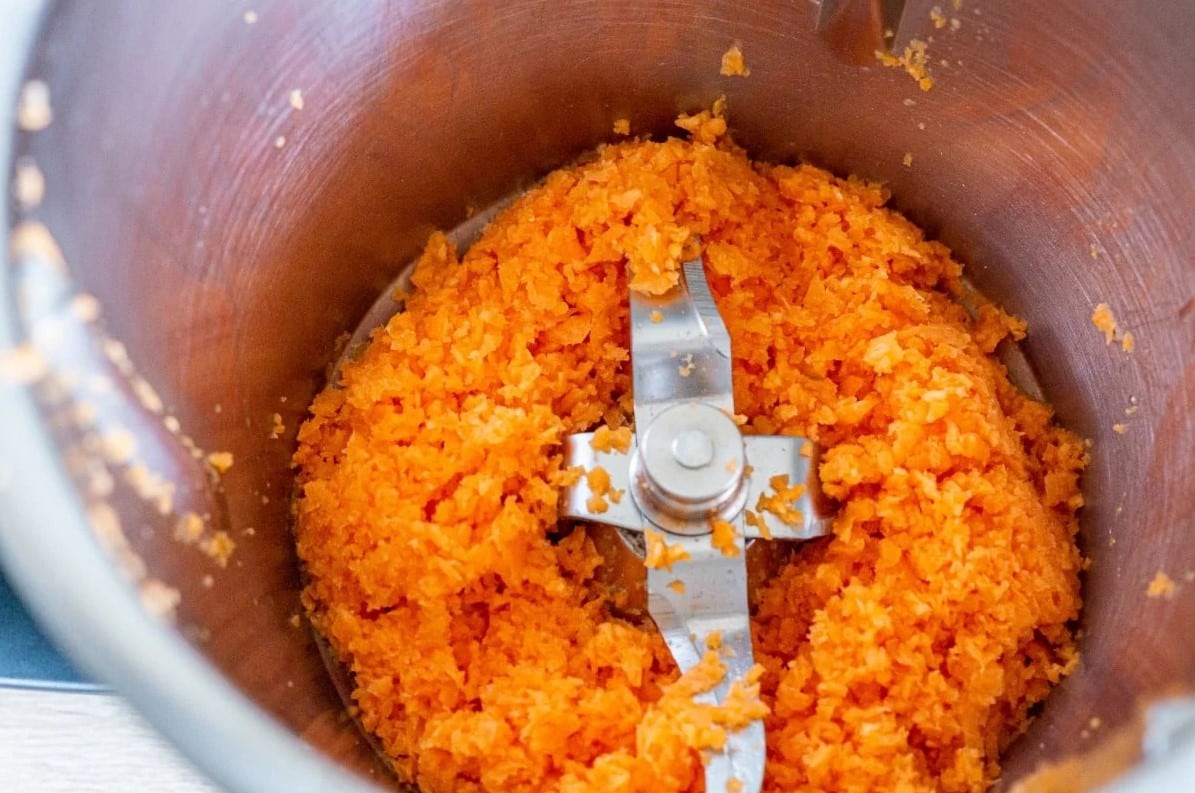
We chop vegetables in the Thermomix® almost every day, for soups, bakes, sauces or as the base for vegetable fritters. Over the years we have learned that the most common mistake is not the wrong speed but the wrong time and too many vegetables at once. That is why we work in short pulses and check the result rather than letting it run blindly for 15 seconds. We show exactly this technique here in detail, including a table for the most common vegetable types.
Finely Chopping Vegetables in the Thermomix®

Ingredients 0 / 1 ✓
- 1000 g vegetables
Instructions 0 / 3
-
1
Chop soft vegetables.
Place soft vegetables (mushrooms, courgette, broccoli) into the mixing bowl and chop for 4 to 5 seconds / speed 4.
-
2
Chop hard vegetables.
Alternatively: place hard vegetables (potatoes, pumpkin cut into pieces, radish or carrots) into the mixing bowl and chop for 8 to 10 seconds / speed 5.
-
3
Mixing vegetable types.
You can mix different types of vegetables together. We recommend combining only hard or only soft vegetables in each chopping run. For example, soft varieties such as broccoli and courgette work well together.
The result is ideal for all kinds of vegetable fritters.
Video
Nutrition per serving
Soft vegetables: 5 seconds at speed 4 is enough
Mushrooms, courgette, broccoli, tomatoes and peppers are water-rich and soft. At speed 4, 4 to 5 seconds gives a fine result. Mix for longer and you get mush instead of pieces, because the high water content simply breaks the pieces apart. It is better to run it once briefly at speed 4, open the lid, check the result and give it another 2 to 3 seconds only if needed. With very watery varieties such as tomatoes, start even shorter because they fall apart faster than courgette.
Hard vegetables: 10 seconds at speed 5
Carrots, potatoes, pumpkin (cut into pieces), radish and celeriac need more power. 8 to 10 seconds at speed 5 gives evenly fine pieces. Halve or quarter larger pieces over 3 cm beforehand so the blade catches everything evenly. Otherwise the large piece just spins on top while the rest is already finely chopped. For potato fritters, chop the potatoes at speed 5 until they are finely grated.
The timing table for the most important vegetables
So you do not need to guess, here are our values from practical experience. All figures apply equally to TM31, TM5, TM6 and TM7 because chopping does not require any heating power. When in doubt, always use the shorter time and adjust from there.
Why we chop hard and soft vegetables separately
If you put carrots and courgette into the mixing bowl together, you end up with courgette mush and half-chopped carrots. The soft varieties are done after 4 seconds, the hard ones need 10. That is why we always chop separately by firmness. Hard vegetables first, then soft. This point is rarely made clear in other guides. With mixed recipes such as vegetable stock paste, chop the hard vegetables first, transfer them to a bowl, then add the soft vegetables and blend briefly.
Quantity and batch size: a maximum of 1000 g per run
With more than 1000 g the result becomes uneven because the blade cannot reach everything. It is better to work in two batches. The vegetables should fill the mixing bowl to a maximum of the 1-litre mark. Light, bulky varieties such as broccoli florets need less weight but take up a lot of space. In that case reduce the quantity until everything sits loosely in the bowl. We never fill the bowl to the brim because a layer at the top never falls down to the blade.
The pulse technique against mush: short bursts instead of a continuous run
This is the one point where the Thermomix® beats hand-chopping when you use it correctly. Instead of setting a fixed time and walking away, we work in short pulses. First 3 to 4 seconds, then lid off, quickly push the sides down with the spatula, and only if necessary another 2 to 3 seconds. That way you decide when it is fine enough rather than leaving it to the timer. For very coarse pieces (stew vegetables), a single pulse at speed 4 is often all that is needed.

The three most common mistakes that cost you your texture
Mixed too long and everything turned to mush
The classic mistake. 10 seconds at speed 6 is enough to turn courgette into soup. Our solution: always start with the shorter time (4 seconds for soft vegetables, 8 for hard) and adjust from there. If it has already happened, no need to worry: the mush makes a quick vegetable soup or the base for a spread.
Uneven pieces from chunks that are too large
A 6 cm piece of carrot just spins on top while the rest is already finely chopped. Our solution: pre-cut everything to a maximum of 3 cm. It takes 30 seconds but saves the annoying job of sorting through uneven pieces and gives a consistent result.
Garlic and herbs turn bitter or mushy
Garlic chopped on a high speed for too long tastes bitter, and wet herbs turn green and mushy. Our solution: chop garlic for only 3 seconds at speed 7, and always pat herbs dry before chopping them briefly at speed 7 as well. Make sure the mixing bowl is dry beforehand, otherwise the herbs stick to the wet walls.
Four different cuts you can get from the mixing bowl
Coarse for stews and frying pans: a single pulse of 3 seconds at speed 4. Visible chunks remain, ideal for vegetable stir-fries or ratatouille.
Fine for sauces and soup bases: 5 seconds at speed 5. The pieces are small enough to soften quickly when sweated.
Grated for fritters and bakes: hard vegetables 8 to 10 seconds at speed 5, until a fine grated texture forms. This is exactly how we make the base for potato fritters.
Very fine for dips and pesto: 8 to 10 seconds at speed 7 to 8. Here we deliberately go close to the puree threshold without crossing it entirely.
What we use the chopped vegetables for next
Finely chopped vegetables are the base for many of our recipes. Grated potatoes become our classic potato fritters made with the Thermomix®. If you want to master speed and timing in general, our overview of Thermomix® speeds and settings covers everything you need. Finely chopped onion and garlic is also the starting point for almost every hot meal, from risotto to bolognese.
How to store pre-chopped vegetables correctly
Chopped vegetables keep for 1 to 2 days in a sealed container in the fridge, after which they lose their texture and colour. Grated potatoes turn brown quickly in contact with air, so chop them just before use or drizzle with a little lemon juice. If you are preparing in advance, freeze the vegetables in portions: raw chopped hard vegetables keep for around 3 months, while soft vegetables become slightly mushy when thawed and are then only suitable for soups or sauces. Thaw overnight in the fridge for best results.
Frequently asked questions about chopping vegetables in the Thermomix®
With the right speed, the right time and the pulse technique, chopping in the Thermomix® is done in seconds. If you want to go deeper, read our overview of Thermomix® speeds and settings and try the technique straight away with our potato fritters.