Brioche in the Thermomix® works thanks to cold butter and patience in the fridge. We knead the dough with 130 g of cold butter on kneading mode for 4 minutes, then it rests chilled for at least 4 hours. This makes it shapeable rather than sticky and gives the brioche its buttery layering.
Brioche is a French enriched yeasted bake with an unusually high proportion of butter: 130 g to 320 g of flour. This gives a rich, almost flaky dough. The Thermomix® works the cold butter in evenly without letting it melt. That matters: melted butter would make the dough greasy rather than layered.
French Brioche with the Thermomix®

Ingredients 0 / 8 ✓
- 1/2 cube fresh yeast
- 2 sachets vanilla sugar
- 120 g milk + extra for brushing
- 130 g butter cold
- 320 g flour + extra for dusting
- 1 egg
- 2 egg yolks
- 1/2 tsp salt
Instructions 0 / 4
-
1
Warm the yeast.
Crumble the yeast into the mixing bowl. Add the vanilla sugar and milk and warm for 90 sec / 37°C / speed 2.
-
2
Knead the brioche dough.
Cut the butter into pieces and add to the mixing bowl together with the flour, egg, egg yolks and salt. Knead for 4 min / kneading mode. Dust the still-sticky dough with flour, transfer to a bowl, cover and leave to rest in the fridge for at least 4 hours or overnight.
-
3
Shape the brioche.
Line a muffin tin with paper cases. Shape two-thirds of the dough into 12 balls and place them in the paper cases. Press a small indent into each ball with your fingers. Shape the remaining dough into 12 smaller balls, place one on top of each large ball, then cover and leave to prove for 30 minutes.
-
4
Bake.
Preheat the oven to 220°C (fan 200°C, gas mark 4-5). Brush the dough pieces lightly with milk and bake on the middle shelf for 15 to 20 minutes.
Tip: Brioche tastes best while still warm, with jam, chocolate spread or a little melted butter.
Video
Nutrition per serving
Why cold butter and a long chill in the fridge
We cut the butter cold into pieces and knead it for 4 minutes on kneading mode. The kneading mode works slowly and evenly, so the butter stays cold and is incorporated without melting. After kneading, the dough is still sticky. That is normal given the amount of butter.
The dough rests in the fridge for at least 4 hours. The cold firms the butter back up completely. At the same time, the yeast continues to work slowly. After 4 hours the dough is shapeable rather than sticky, rolls into balls easily, and holds its shape during baking.
Overnight works even better, up to 12 hours. The dough develops more flavour and the butter layers become more even. Do not go beyond 12 hours, or the yeast will over-prove.
The two-ball shape with an indent
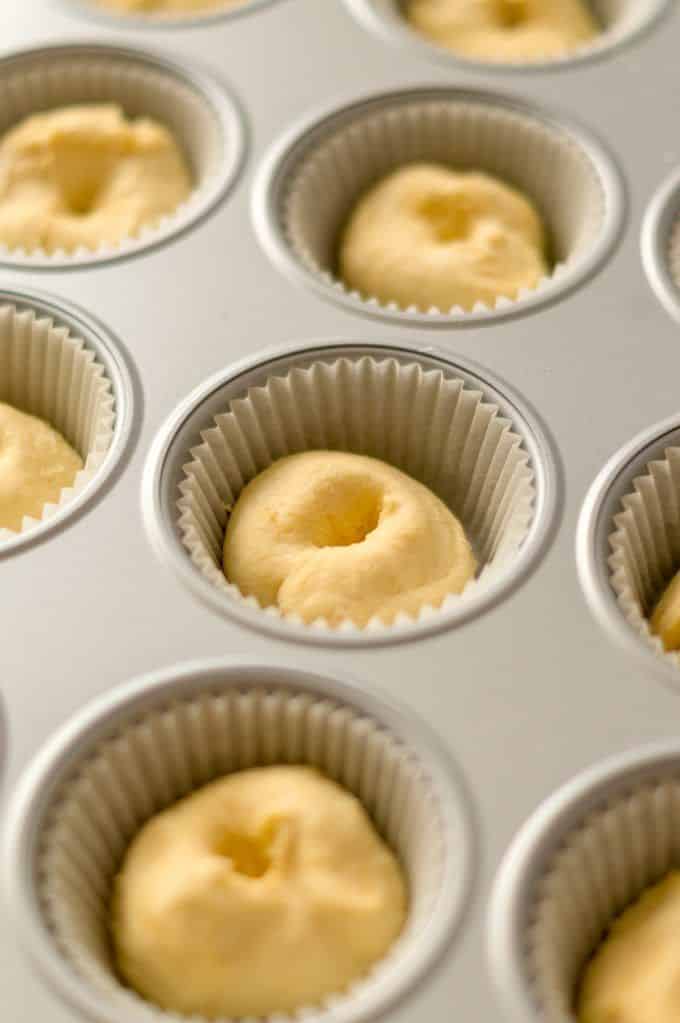
Traditional brioche has a small ball sitting on top of a larger one. We shape two-thirds of the dough into 12 large balls, press an indent into each with our fingers, then place 12 small balls made from the remaining dough on top. The indent stops the top ball sliding off to one side during baking.
After shaping, cover the brioche and leave them to prove at room temperature for 30 minutes. They will visibly grow and the surface will become smooth. Brioche baked straight after shaping will be compact rather than light and airy.
For the classic fluted shape you need special brioche moulds. A muffin tin lined with paper cases works just as well: the brioche will be round rather than fluted, but the dough is the same.
Baking at 220°C
Before baking, brush lightly with milk. This gives the glaze. Too much milk makes the surface patchy; too little leaves the brioche looking matt.
220°C top and bottom heat (200°C fan) for 15 to 20 minutes. The brioche are ready when the tops are golden brown. Under-baked brioche will be doughy inside; over-baked ones will be dry rather than buttery.
Remove from the tin immediately after baking. Otherwise the butter will make the bases go soggy.
Storing and refreshing
Brioche keep in an airtight tin at room temperature for 2 to 3 days. The butter keeps them fresher than ordinary yeasted bakes. After a day, warm them briefly in the oven: 5 minutes at 180°C is enough.
They freeze well too. After thawing, warm in the oven for 5 minutes at 180°C and they will taste freshly baked.
Goes well with: butter and Nutella.
Also worth trying: Baked Apple Pull-Apart Bread with the Thermomix® and crunchy nut praline.
Brioche is breakfast baking at its best. We serve them warm with butter and jam made in the Thermomix®, with cheese, or with one of our spreads. For more French baking, try our Macarons with the Thermomix®.
More Thermomix® baking recipes: Braided Yeast Loaf, Flatbread, Quark and Oil Bunnies.