Homemade marzipan from the Thermomix® needs exactly five ingredients and ten minutes. What most recipes skip over: bitter almond oil is the real flavour switch. Without it, the mixture tastes like almond paste. With 10 drops, it becomes proper marzipan.
We make this basic recipe whenever we run out and do not want to make a special shopping trip. Blanched almonds, icing sugar and Amaretto are usually already in the baking cupboard. You can also make icing sugar with the Thermomix® in a matter of seconds.
Homemade Marzipan, Thermomix®

Ingredients 0 / 5 ✓
- 200 g blanched almonds
- 200 g icing sugar
- 20 g Amaretto
- 10 g water
- 10 drops bitter almond oil
Instructions 0 / 3
-
1
Grind the almonds.
Place the almonds in the mixing bowl and grind for 8 sec / speed 10.
-
2
Knead all ingredients.
Add the remaining ingredients and knead for 3 min / kneading mode.
-
3
Chill the marzipan.
Knead the marzipan briefly by hand until the mixture is smooth and pliable. Wrap in cling film and leave to firm up in the fridge.
Tip: If you prefer to avoid alcohol, you can replace the Amaretto with the same amount of water.
Video
Nutrition per serving
What makes the difference when grinding marzipan
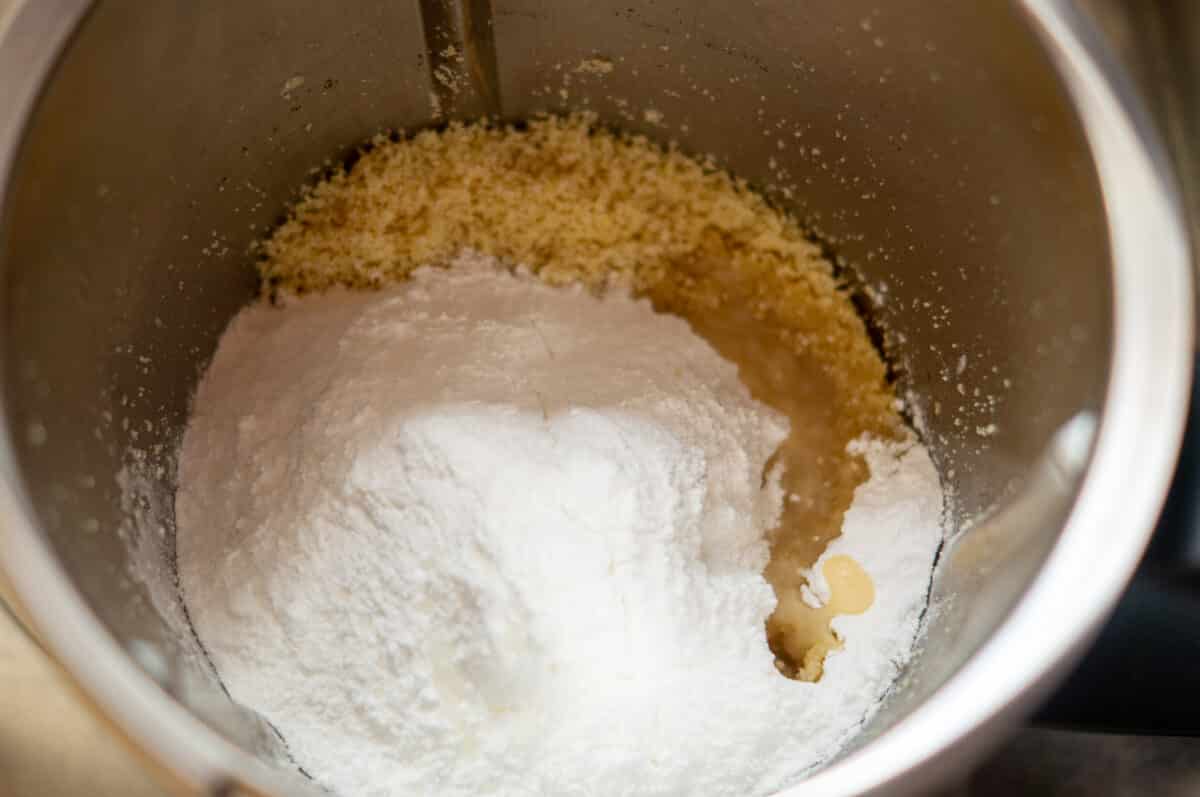
The almonds go into the mixing bowl first. 8 seconds at speed 10 is enough to produce a fine, dry meal. Then add all the remaining ingredients at once: icing sugar (200 g), Amaretto (20 g), water (10 g) and the 10 drops of bitter almond oil. Then 3 minutes on kneading mode.
Important: do not grind the almonds for longer than 8 seconds. From about 10 to 12 seconds onwards, the Thermomix® starts releasing the natural almond oil and the mixture turns oily rather than dry. The goal is fine almond flour, not almond butter.
Why blanched almonds are essential
The brown skin of the almond gives marzipan a slightly bitter note and a gritty texture. For classic marzipan you need blanched almonds, that is, almonds without their skin. You can do this yourself: blanching almonds with the Thermomix® takes just a few minutes, a quick blanch and the skin slips straight off.
When the mixture does not come together
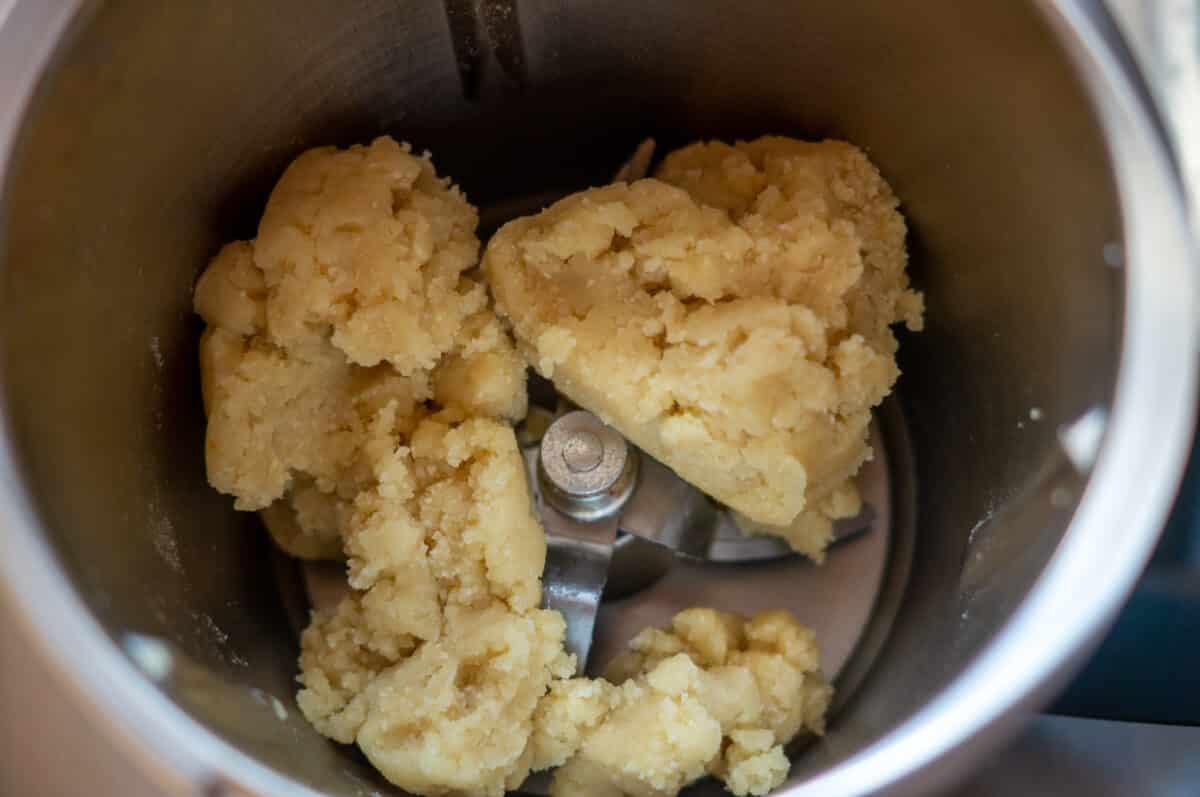
After kneading mode the marzipan mixture often still looks a little crumbly. That is normal. Take it out of the mixing bowl and knead it briefly by hand until it becomes smooth. Warmth and pressure are usually enough. Only if it simply will not bind do you add a splash more Amaretto or a few drops of water.
The marzipan usually becomes too oily when it has been ground for too long at speed 10. In that case, pressing the mixture briefly on a clean kitchen towel helps to remove the excess oil.
Four variations in one post
We have developed the basic mixture in four directions. Each one also takes only a few minutes in the Thermomix®.
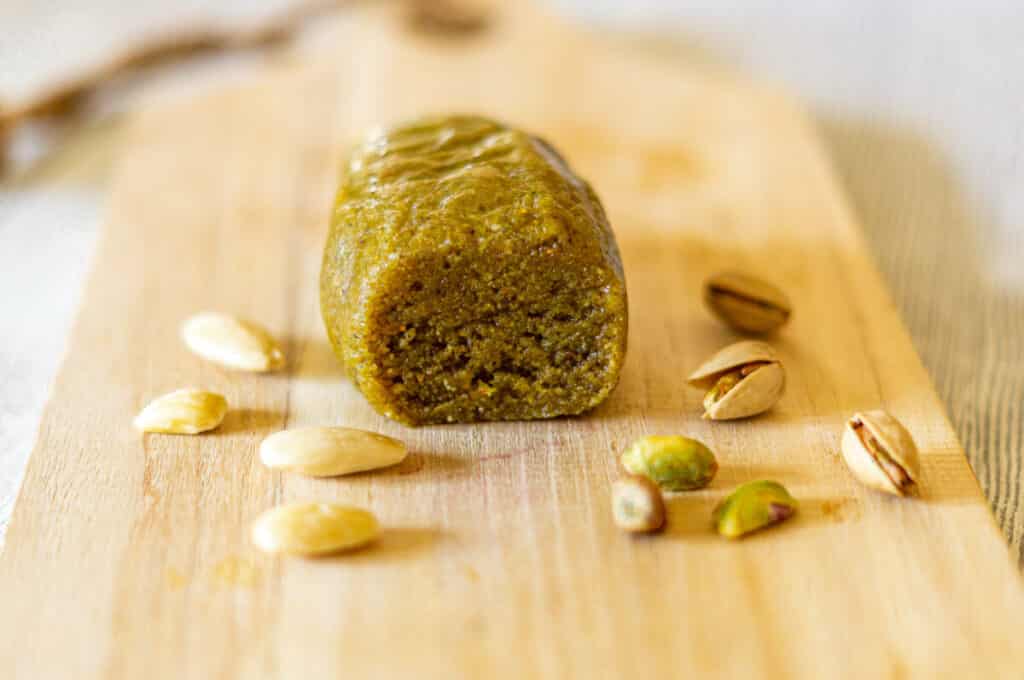
- Pistachio marzipan (250 g): 100 g blanched almonds, 50 g unsalted pistachios, 75 g sugar, 15 g water, 5 drops bitter almond flavouring. Use the pistachios unblanched: the colour and texture are better.
- Coconut marzipan (250 g): 150 g almonds, 50 g desiccated coconut, 60 g sugar, 35 g water, 5 drops bitter almond flavouring. Variation: swap the water for rose water.
- Honey marzipan (150 g): 120 g almonds, 40 g honey instead of sugar, 10 g water, 5 drops bitter almond flavouring. Colour with food colouring before shaping if you like.
- Low carb marzipan (220 g): 200 g almonds, 200 g erythritol (pulverise first: 10 sec / speed 10), 20 g water, 5 drops bitter almond oil. Shaped into balls and coated in sugar-free chocolate: ready-made low carb truffles.
What you can do with it
Homemade marzipan is a semi-finished product. It only gets really interesting once you know how to use it further. We make it into marzipan liqueur with the Thermomix®, for example, which we put together every Advent. For stollen, biscuits or marzipan potatoes you can use the basic mixture directly. Wrapped in cling film it keeps in the fridge for up to 2 weeks. Frozen in portions it will last several months.
Also goes well with: Stollen, chocolate and waffles.
Also worth a look: grinding corn with the Thermomix®.