These shortbread biscuits work on three levels: a crumbly shortcrust core that dissolves at the first bite, a dusting of icing sugar applied while still warm so it melts into a thin crust, and the vanilla flavour holding everything together. All three need to be right. The Thermomix® handles the sugar pulverising and dough kneading in under five minutes. The rest is about timing.
Melt-in-the-Mouth Shortbread Biscuits with the Thermomix®

Ingredients 0 / 6 ✓
- 160 g sugar
- 2 sachet vanilla sugar
- 150 g flour
- 100 g cornflour
- 130 g butter softened
- 2 egg yolks
Instructions 0 / 4
-
1
Pulverise the sugar.
Add the sugar and vanilla sugar to the mixing bowl and pulverise for 10 seconds / speed 10. Set aside 100 g of the icing sugar.
-
2
Knead the dough.
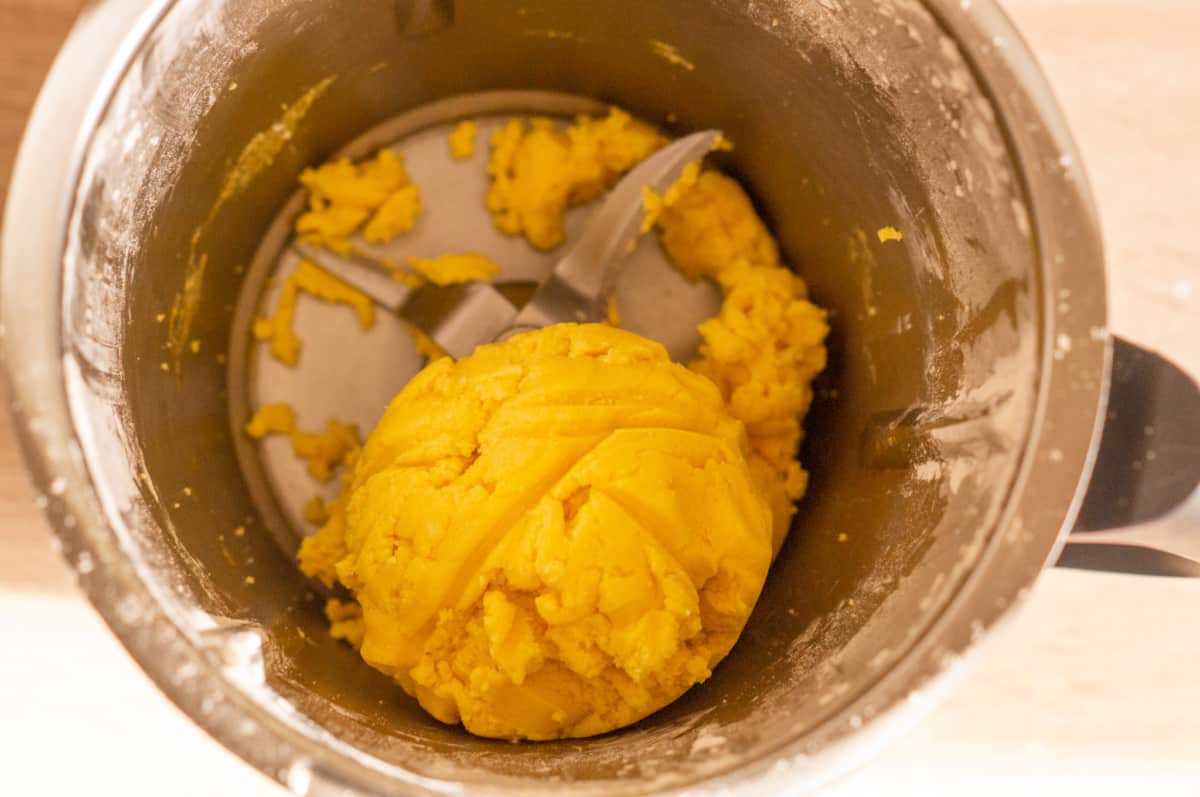
Add the flour, cornflour, butter and egg yolks and knead for 2 minutes / kneading mode. Push the mixture down with the spatula and knead for a further 2 minutes / kneading mode.
-
3
Shape the dough.
Preheat the oven to 180 °C fan and line a baking tray with baking paper. Divide the dough into 3 pieces and roll each into a log about 2 cm thick. Cut into pieces about 1 cm wide and place on the prepared baking tray.
-
4
Bake the biscuits.
Bake the biscuits for approximately 10 to 12 minutes until pale golden. Dust with the reserved icing sugar while still warm and leave to cool.
Tip: To keep them properly crumbly, make sure the biscuits do not bake too dark.
Video
Nutrition per serving
Why cornflour and not more plain flour
The key difference from ordinary butter biscuits lies in the starch. Cornflour interrupts the gluten structure in the dough: the biscuit stays shorter and more crumbly because long protein strands cannot form. With plain flour alone you get a firm biscuit. With the right amount of starch, a piece dissolves at the first bite. That is not by chance. It is the logic behind the recipe.
What cannot be swapped out: the egg yolk. Only the yolk, not a whole egg. The white contains water and protein that sets firm during baking. That is precisely the opposite of what is needed here. Maize starch and potato starch both work equally well. The difference is minimal.
The icing sugar moment
Dusting immediately after baking is not a decorating tip. It is technically essential. A hot surface plus icing sugar produces a thin melt-layer that sets as the biscuits cool. Wait too long and the sugar dusts straight off again because there is nothing left to melt into. The recipe card says: dust while still warm. That means within three to four minutes of taking them out of the oven.
We use the icing sugar the Thermomix® ground in step 1 from the regular sugar that we set aside. Ten seconds at speed 10 is enough to turn ordinary sugar into fine icing sugar, giving you enough for the dough and the dusting afterwards. If you are not yet confident with kneading in the Thermomix®: we explain kneading mode in detail in a separate guide.
When are they done
These biscuits should come out of the oven pale golden, not golden brown. The edges should have barely any colour. That sounds forgiving, but the window is narrow. One minute too long and the texture shifts from crumbly to hard, because the starch forms a different structure when exposed to too much heat. At 180 °C fan, most ovens need 10 to 12 minutes. From minute 10 onwards, check every 60 seconds.
The biscuits firm up a little more as they cool. Eating them straight from the oven gives a misleadingly soft result. After about 15 minutes of cooling you can see how they have really turned out.

Softened butter, storage and other notes
The butter must be at room temperature. Cold butter does not fully combine with the flour and cornflour mixture, and the dough tears when you shape it. If you forgot to take the butter out: warm it for five to eight seconds at speed 3 in the Thermomix®, no longer. Melted butter makes the dough sticky.
Stored in an airtight tin, these biscuits keep for two to three weeks. Do not store them alongside gingerbread or cinnamon stars, as they absorb other flavours. Undused biscuits can be frozen. Dust with icing sugar after defrosting. As a gift at Christmas, they go well with a Snowpunch made in the Thermomix®, which is just as quick to prepare.
How other recipes do it differently
Goes well with: Gingerbread, Vanilla Crescents and Spritz Biscuits.
Most recipes for these shortbread biscuits use a classic shortcrust dough with butter, egg and plain flour, plus two hours of resting time in the fridge. They are usually baked at 180 degrees for around 12 minutes, often with the note that the line between pale golden and too dark is only one to two minutes. For decoration, icing sugar or a thin chocolate glaze is common, with flaked almonds less so. Most recipes give a shelf life of three to four weeks in a tin. Our tip about adding an apple piece to keep them soft rarely appears elsewhere.