We bake this pear and almond cake on two tracks at once: the Thermomix® makes the pear puree while the dough waits in the fridge. That is not a time-saving trick, it is a necessity. Warm crumble dough sticks; cold crumble dough stays crumbly.
We have been baking this cake for family gatherings for years. What sets it apart from other pear cakes is the puree: 8 minutes at Varoma and speed 1 cooks the pears soft enough that blending up to speed 5 gives a truly smooth result. Raw pear wedges alone stay dry, and pure puree turns mushy. This recipe combines both.
Pear and Almond Tray Bake with Rum Crumble, Thermomix®

Ingredients 0 / 8 ✓
- 100 g blanched almonds
- 1600 g pears
- 300 g butter
- 300 g sugar
- 350 g flour
- 1 egg
- 1 tsp baking powder
- 4 drops rum flavouring
Instructions 0 / 13
-
1
Grind the almonds.
Place the almonds in the mixing bowl and grind for 8 sec / speed 10, then set aside.
-
2
Prepare the pears.
Set one pear aside. Quarter, peel and core the remaining pears.
-
3
Mix the crumble.
Cut 280 g butter into pieces and add to the mixing bowl together with 280 g sugar, flour, egg and baking powder. Mix for 20 sec / speed 4.5 to form a crumble.
-
4
Chill the crumble.
Set aside 1/3 of the crumble and refrigerate.
-
5
Knead the dough.
Add 20 g butter to the remaining crumble and knead for 1 min / kneading mode. Transfer to a bowl and refrigerate.
-
6
Cook the pears.
Place 600 g pears and 20 g sugar in the mixing bowl and cook for 8 min / Varoma / speed 1, then blend up to speed 5.
-
7
Preheat the oven. Preheat the oven to 170°C fan.
-
8
Roll out the dough.
Roll the dough out directly onto baking paper and slide onto a baking tray.
-
9
Cover with almonds and pear puree.
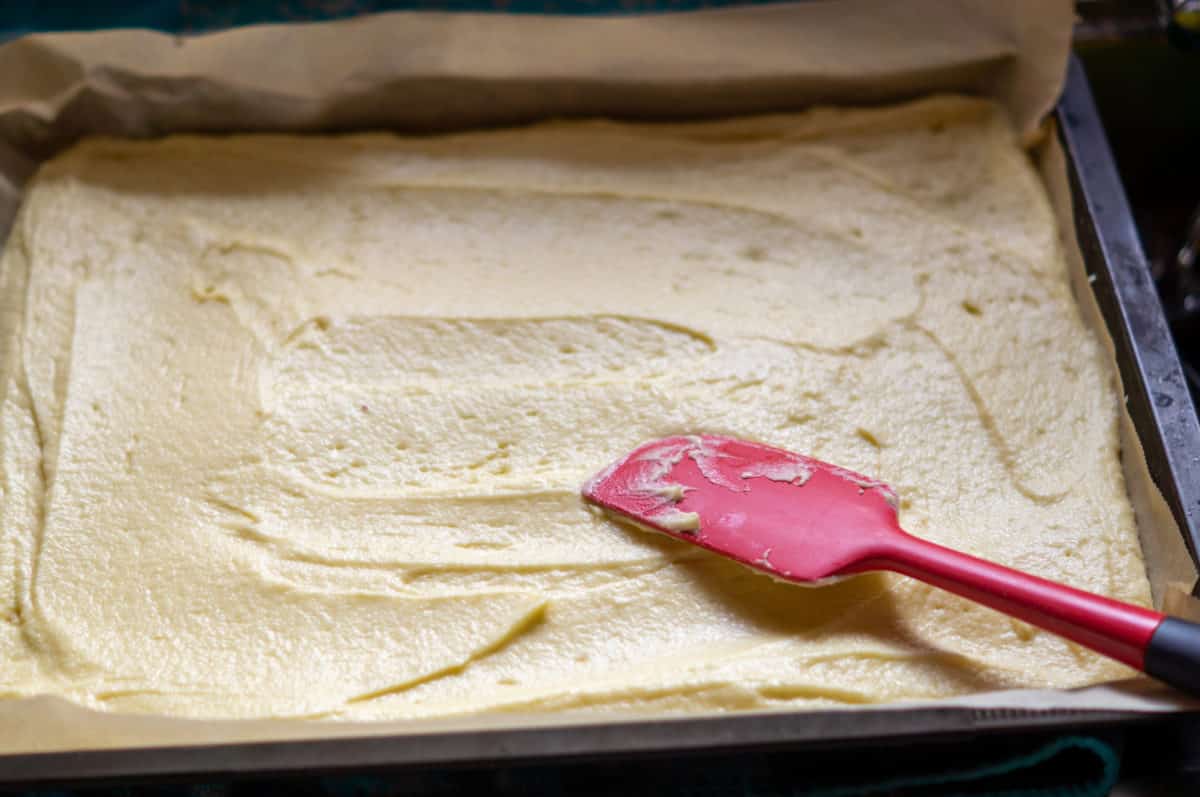
Scatter the almonds over the dough and spread the pear puree on top.
-
10
Add the pear slices.
Cut the remaining pears into wedges and arrange on the pear puree.
-
11
Top with crumble.
Mix the crumble with the rum flavouring and scatter over the pears.
-
12
Bake.
Bake on the middle shelf of the oven for 35 to 40 minutes.
-
13
Serve.
Wash and dry the reserved pear, cut into wedges and use to garnish the pear cake.
Nutrition per serving
Why the crumble and dough need to chill separately
The Thermomix® mixes the crumble at speed 4.5 in 20 seconds. The problem is the butter: at room temperature the dough becomes sticky and the crumble clumps together in the oven. We divide the crumble straight after mixing: 1/3 goes into the fridge for the topping, and the remaining 2/3 is combined with 20 g of extra butter to form a workable dough.
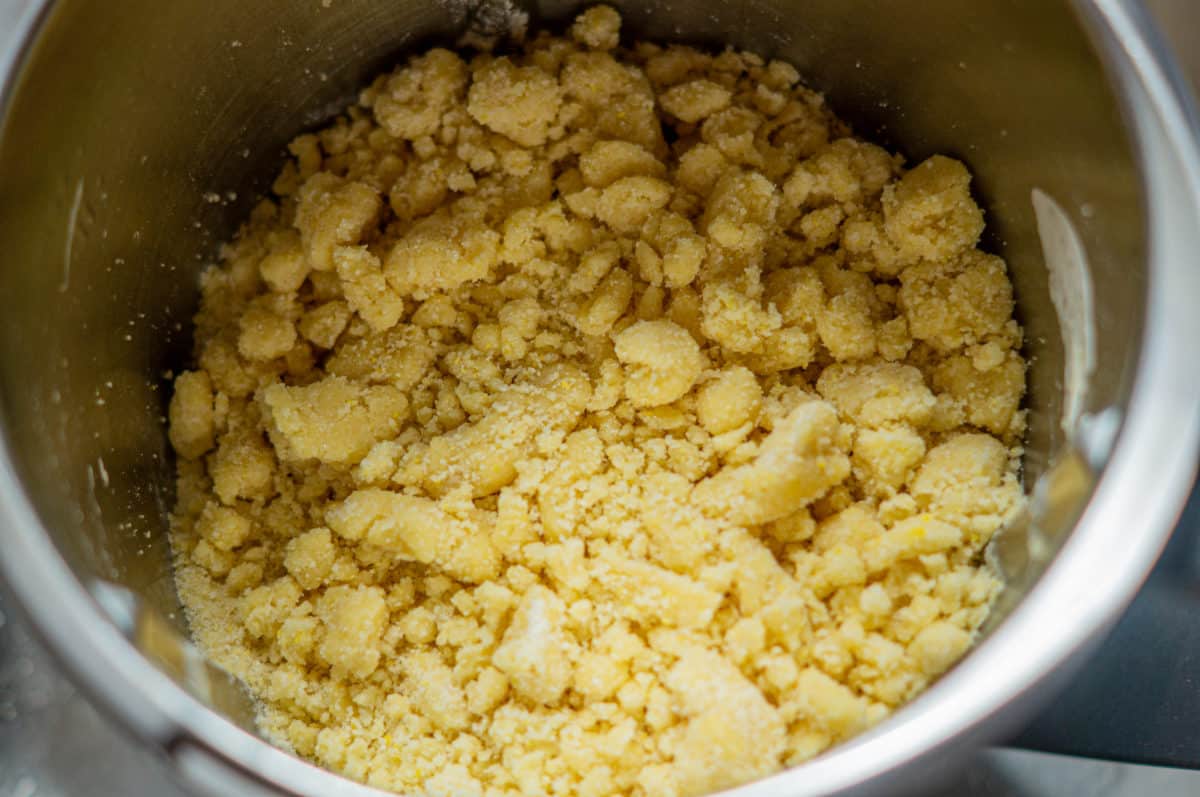
The 1 minute of kneading mode is just enough for the dough to hold together. Kneading longer develops the gluten too much and the base turns tough instead of short. Both portions must be cold before you continue, otherwise the dough tears when you roll it out and the crumble melts into a solid crust in the oven instead of staying loose.
Pear puree as a moisture layer
600 g of pears are cooked with 20 g of sugar for 8 minutes at Varoma and speed 1, then blended up to speed 5. The puree must be completely smooth with no lumps. If pieces remain, the liquid cooks out in the oven and the base turns soggy instead of crisp.
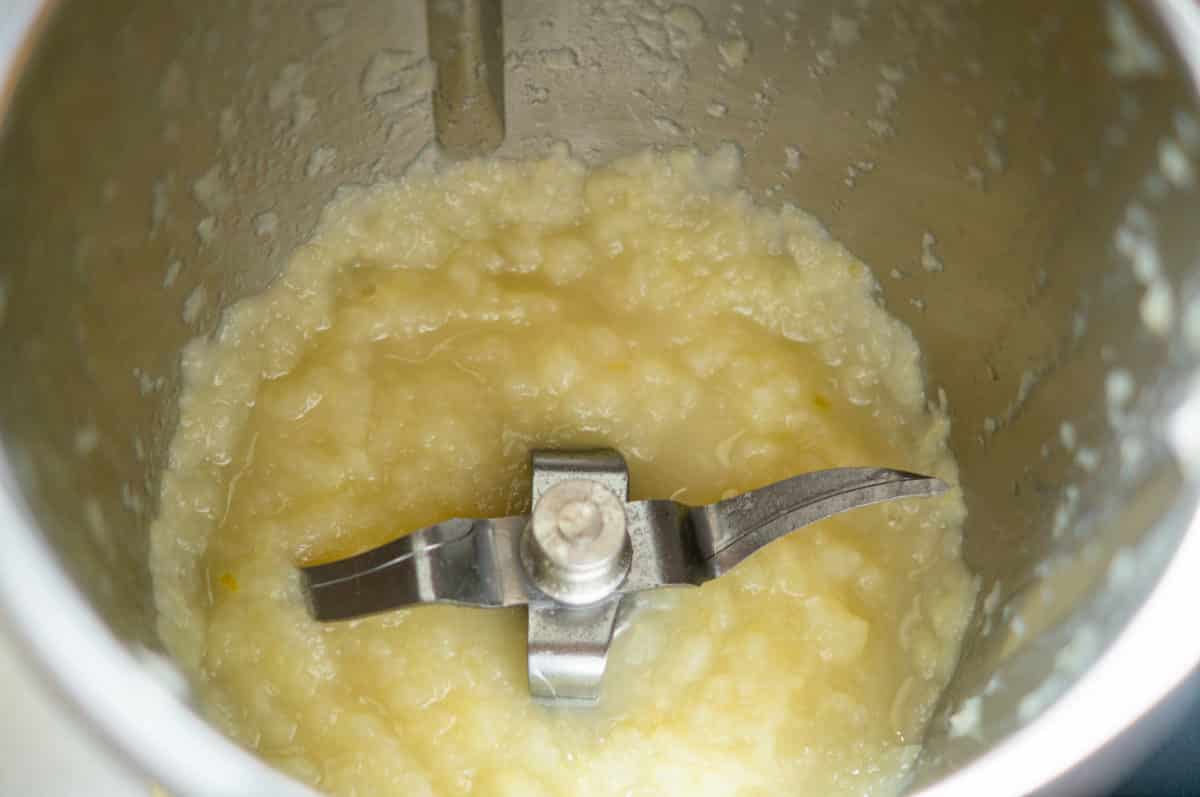
The 100 g of ground almonds go directly onto the rolled-out dough before you spread the puree. They absorb moisture and stop the base from going soggy. Without this layer the base turns soft no matter how long you bake it.
Fresh pear wedges on top
The remaining 1000 g of pears are cut raw into wedges and placed on the puree. They cook through in the oven but stay firm to the bite. That is the contrast: soft puree as a base, firm wedges for texture. If you blended all the pears into puree, you would lose the bite. If you left all of them raw, the cake would be dry.
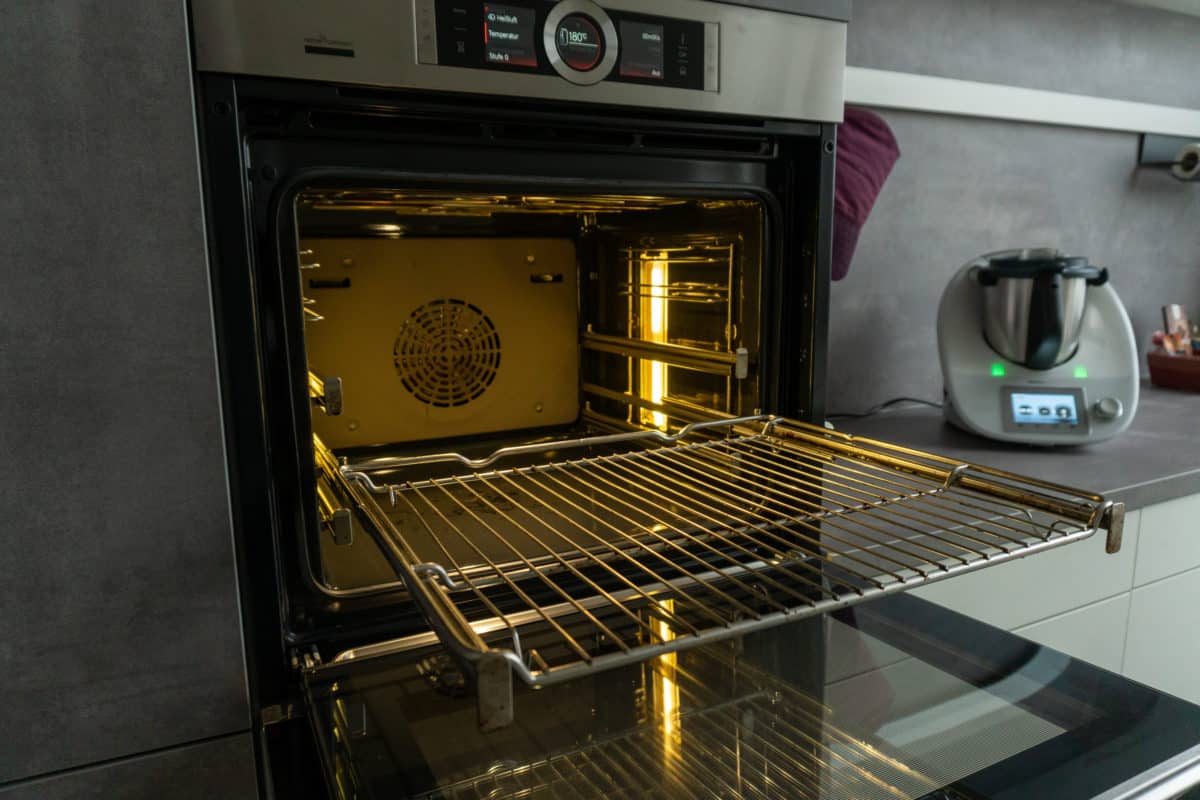
170°C fan is the right setting: lower and it takes too long with the crumble never browning, higher and the edges burn before the centre is done. 35 to 40 minutes of baking time are needed. Check with a wooden skewer in the centre to make sure no dough clings to it.
Getting the rum flavouring right
4 drops of rum flavouring are enough for the entire topping. More becomes dominantly bitter, and less is barely noticeable. The flavouring is mixed directly into the cold crumble, not into the dough, so it stays concentrated in the top crust.
We use flavouring rather than real rum because the alcohol evaporates in the oven and leaves only bitter notes behind. The flavouring stays stable under heat.
Roll the dough directly on baking paper
Roll the dough directly on the baking paper it will bake on. If you try to transfer a rolled-out crumble dough, it tears, as it has very little elasticity. Simply slide the paper with the dough onto the tray.
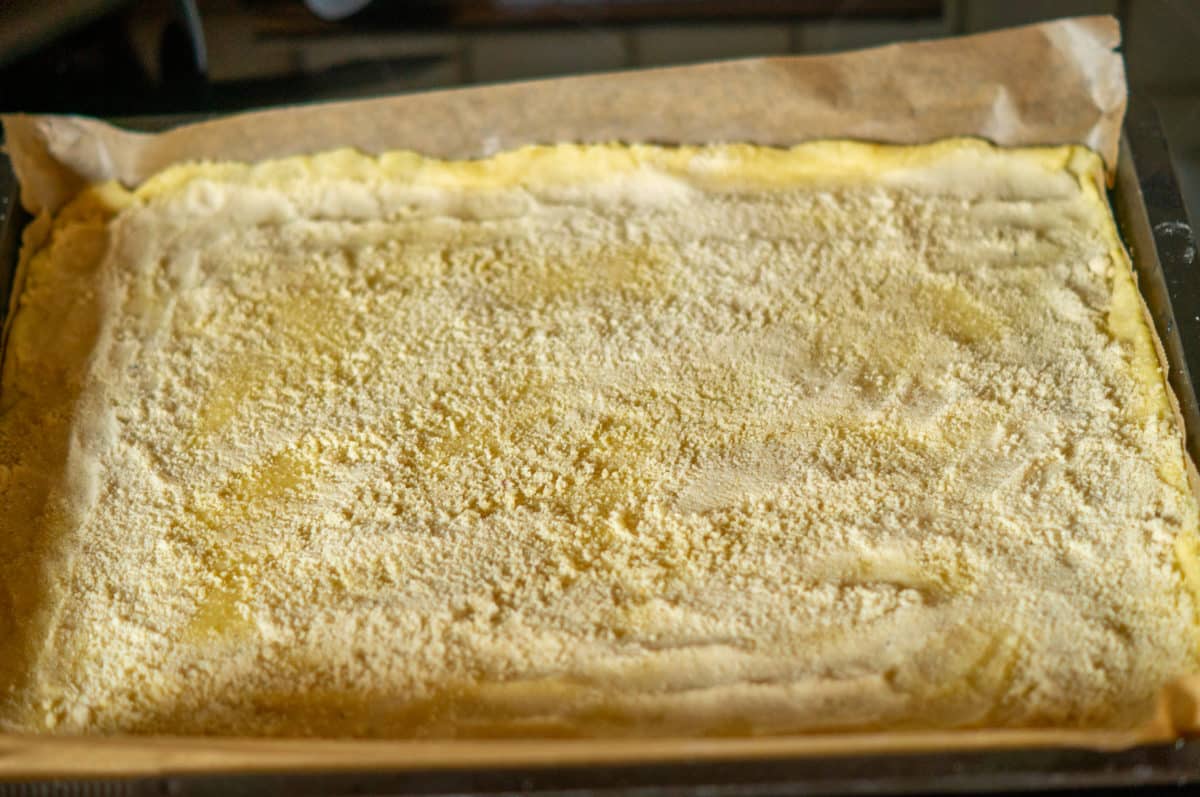
If the dough sticks to the rolling pin, place a sheet of cling film between the dough and the pin. The dough must be an even thickness throughout, otherwise thin spots burn while thick spots are still raw.
Serving and storing
A fresh pear cut into wedges as decoration gives a visual contrast to the browned surface. The cake is best eaten just warm, when the crumble is still slightly crisp and the puree is no longer piping hot. It keeps in the fridge for 3 days, though the crumble will soften. Freezing works well. Thaw at room temperature rather than in the microwave.
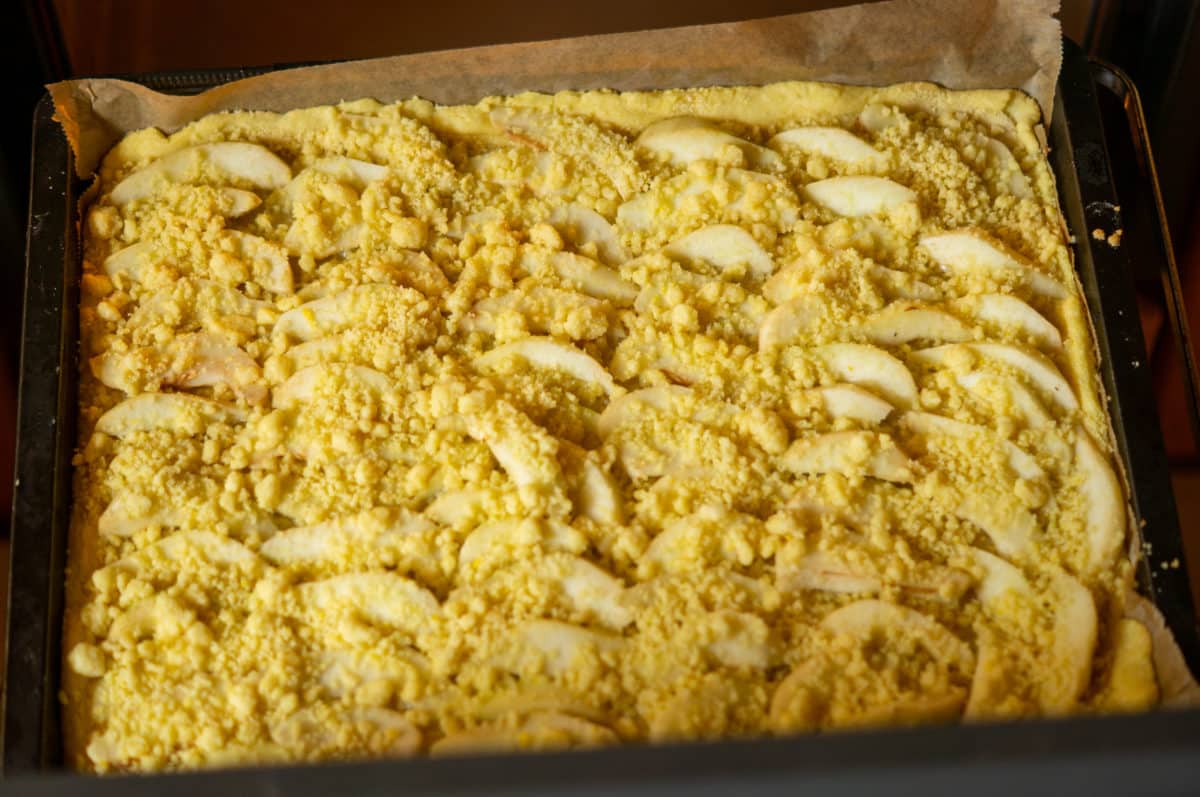
Goes well with: vanilla ice cream and vanilla sauce.
Also worth trying: Donauwelle Thermomix®.
More Thermomix® tray bakes: Zwetschgendatschi, blueberry crumble cake, cheesecake with rhubarb and crumble.