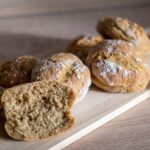
Potato rolls made with the Thermomix® have one detail that many people overlook: the potatoes are blended WITH the buttermilk BEFORE the yeast is added. That is not a coincidence. The acidity of the buttermilk needs the potato starch as a buffer. Without it, the acid attacks the yeast and the dough does not rise properly.
We have been baking potato rolls regularly for years. The long 6-hour rise makes them soft and moist inside and gives them a crust that quick-rise rolls never achieve. If you leave the dough to rise overnight in the fridge, even more flavour develops.
Potato Rolls with the Thermomix®
Ingredients 0 / 9 ✓
- 250 g waxy potatoes cooked
- 100 g buttermilk
- 10 g yeast fresh
- 1 tsp salt heaped
- 1 tbsp olive oil
- 200 g wheat flour type 550
- 150 g rye flour type 1150
- water
- wheat flour type 550
Instructions 0 / 5
-
1
Chop the potatoes.
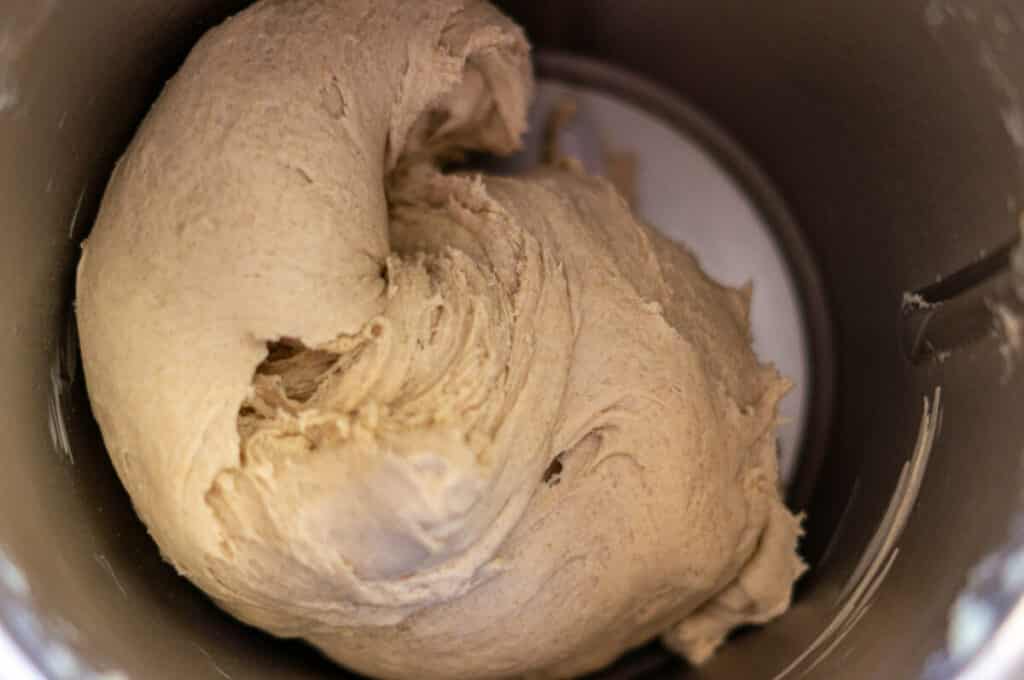
Peel and cut the potatoes into pieces, add to the mixing bowl with the buttermilk, blend for 10 sec / speed 8 and scrape down with the spatula.
-
2
Warm the yeast.
Add the yeast and salt and warm for 6 min / 37°C / speed 1.
-
3
Knead the dough.
Add the olive oil and flour and knead for 5 min / kneading mode. Transfer the dough to a bowl, cover with a damp cloth and leave to rise in a warm place for 6 hours. (Alternatively, leave overnight in the fridge.)
-
4
Shape the rolls.
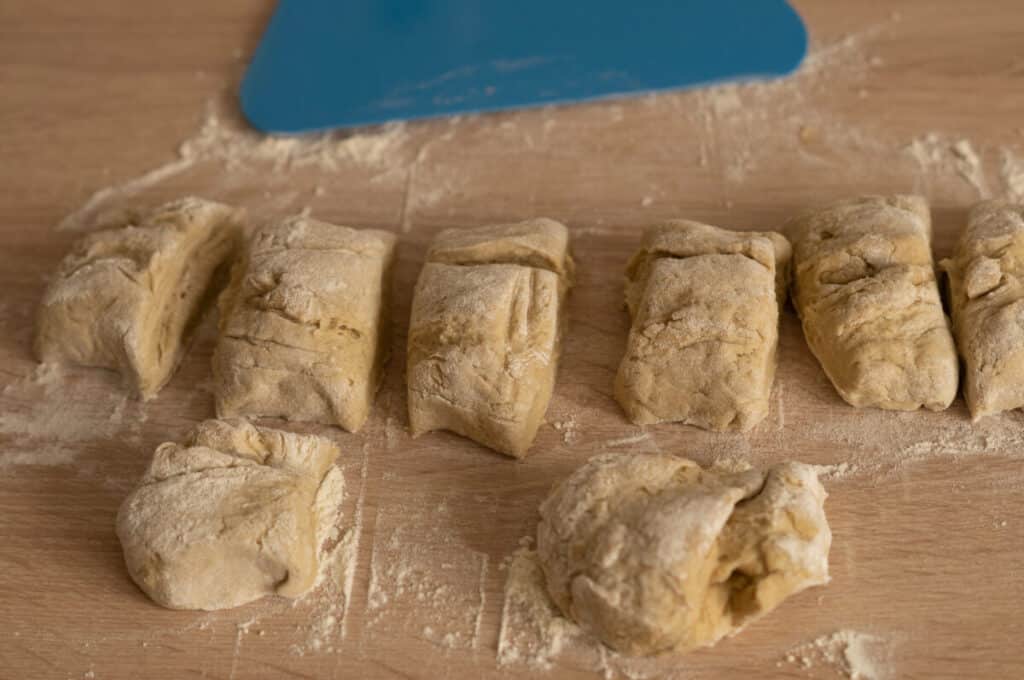
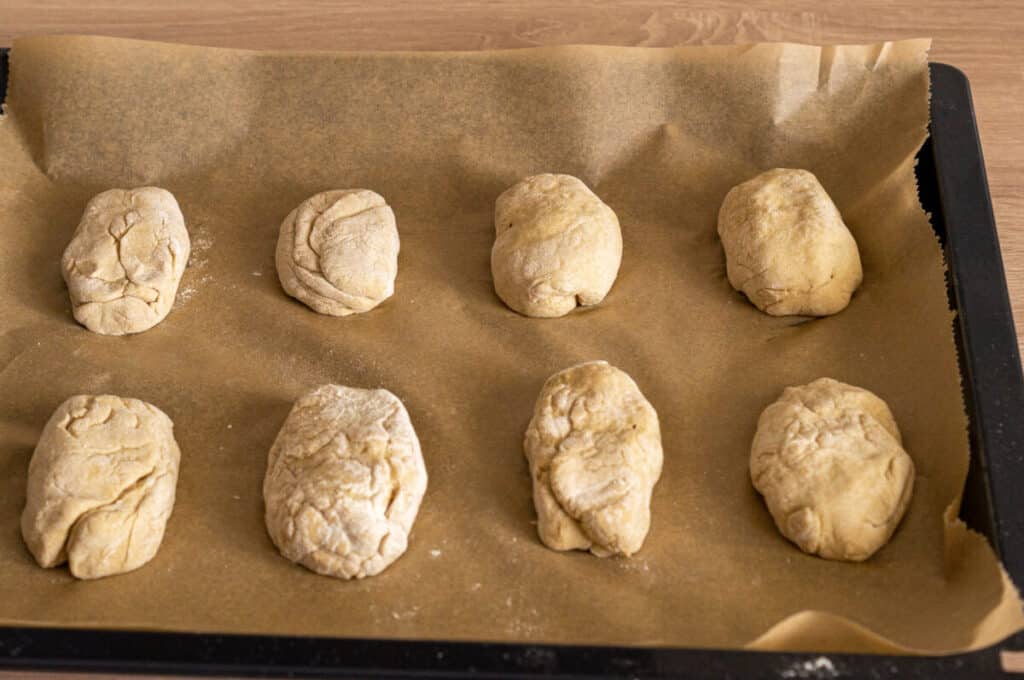
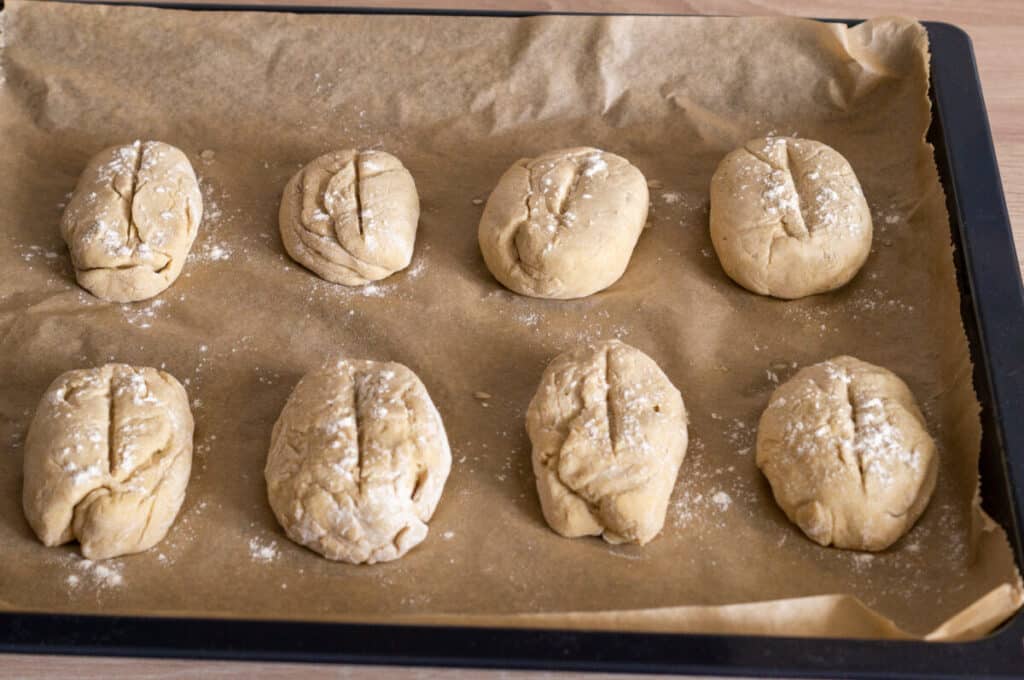
Line a baking tray with baking paper. Turn the dough out onto a lightly floured surface, divide into 8 portions, shape into rolls, place on the baking tray and leave to prove, covered, in a warm place for a further 30 minutes.
-
5
Bake.
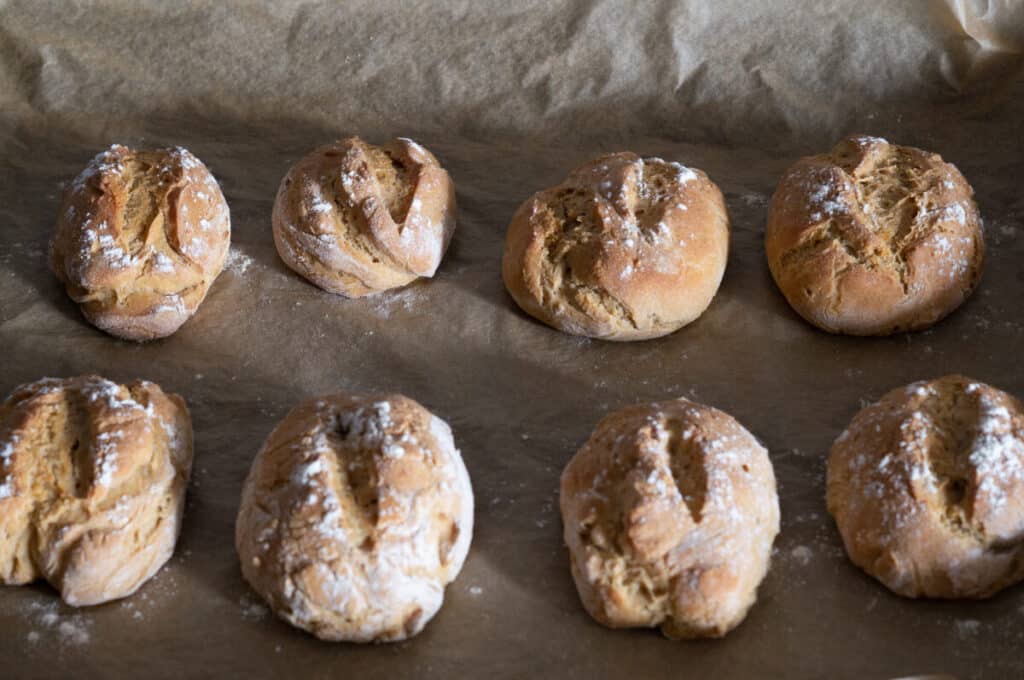
Preheat the oven to 240°C top and bottom heat and place a heatproof dish of water on the oven floor. Score the rolls lengthways, brush with a little water, dust with flour and bake on the middle shelf for 10 minutes. Reduce the heat to 180°C and bake for a further 15 minutes.
Tip: These potato rolls taste great with crispy fried onions. Simply add 40 g of them in step 3 to the mixing bowl.
Nutrition per serving
Why waxy potatoes and not floury
Waxy potatoes hold their structure better when blended. Floury potatoes become too smooth and absorb too much water. That makes the dough sticky and difficult to shape. The 250 g of cooked potatoes provide just enough moisture for the 350 g of flour without the dough sticking to your hands.
Buttermilk and potato mix first, then yeast
The order in step 1 is critical. The potatoes and buttermilk are blended for 10 seconds at speed 8. Buttermilk has a pH of 4.5 and would directly inhibit fresh yeast. The potato starch partially neutralises the acidity. Only then do the yeast and salt go into the mixing bowl and are warmed for 6 minutes at 37°C. This temperature activates the yeast without killing it.
Wheat flour 550 plus rye flour 1150
The flour blend of 200 g wheat flour type 550 and 150 g rye flour type 1150 gives the rolls both structure and flavour. Wheat flour alone makes them too soft, rye flour alone makes them too dense. The rye flour keeps the moisture from the potatoes in the dough for longer. On the second day the rolls are still moist, while rolls made with wheat flour alone turn dry.
6 hours warm or overnight in the cold
After kneading, the dough needs 6 hours to rise in a warm place. Alternatively, leave it overnight in the fridge. The cold method develops more aroma because the yeast works more slowly and produces flavour compounds in the process. Whichever method you choose, the dough must at least double in size before you continue shaping it.
Shape, do not roll
The 8 pieces of dough are shaped by hand, not simply rolled. To shape a roll, place a piece of dough on the floured work surface, cup your hand over it like a dome and use circular movements to build up tension. The underside clings lightly to the surface while the top becomes taut. This gives the rolls their round shape and ensures they rise evenly during baking.
240°C to start, then down to 180°C
The oven is preheated to 240°C. The high starting temperature gives the rolls their oven spring and their crust. The dish of water on the oven floor creates steam. The steam keeps the surface elastic so the rolls can expand before the crust sets hard. After 10 minutes, the heat is reduced to 180°C. A further 15 minutes of baking cooks the rolls through without them becoming too dark.
Freezing and reheating
Potato rolls freeze well. After baking, leave them to cool completely, then freeze in freezer bags. To reheat, place them straight from the freezer into an oven preheated to 180°C and bake for 8 to 10 minutes. They taste almost as good as freshly baked.
Crispy fried onions as a variation
Add 40 g of crispy fried onions in step 3 to the dough before leaving it to rise. The fried onions give the rolls a savoury note. They go particularly well with grilled meat or as a side with soups.
If you are looking for more roll recipes: Our quick breakfast rolls need no rising time, our quick yoghurt rolls are ready in 30 minutes, and our low-carb rolls without flour suit a low-carbohydrate diet. Our potato bread uses the same potato and buttermilk base.
How other recipes approach potato rolls
Other Thermomix® recipes take a different approach to potato rolls. Some use 500 g wheat flour type 550 with no rye and bake at 175°C for 25 to 30 minutes. That gives lighter, softer rolls. Others steam the potatoes in the Varoma for 30 minutes, combine wholemeal wheat flour with type 405 and bake at 230°C with a bowl of water for extra steam. Some versions add chia seeds as a topping. Our recipe combines the best of these approaches: rye flour 1150 for moisture on the second day, waxy potatoes instead of steamed potatoes for a stable dough structure, and a 6-hour rise for flavour development. If you like, scatter sesame seeds, sunflower seeds or pumpkin seeds over the dampened rolls before baking.
Goes well with: butter, cream cheese and jam.