Yoghurt rolls work without yeast because baking powder takes over as the raising agent and the acidity in the yoghurt speeds up the reaction. Five minutes on kneading mode, then straight into the oven. We have been making these rolls for years whenever there is no time in the morning for a proving stage.
The dough is softer than a classic yeast dough, but it does not stick. That comes down to the fat content: 50 g butter plus 30 g oil for 320 g flour produces a dough that you can shape by hand without it sticking to the work surface. More fat would make the rolls greasy, less would make the dough crumbly.
Quick Yoghurt Rolls in the Thermomix®

Ingredients 0 / 14 ✓
- 1 egg
- 320 g flour, type 550
- 1 sachet baking powder
- 1 pinch sugar
- 1/2 tsp salt
- 50 g butter
- 30 g sunflower oil
- 150 g natural yoghurt (3.5% fat)
- 20 g flour
- 20 g milk
- sunflower seeds
- sesame seeds
- poppy seeds
- pumpkin seeds
Instructions 0 / 5
-
1
Preheat the oven.
Preheat the oven to 180°C top and bottom heat. Grease a baking tray with baking release spray, or line it with baking paper.
-
2
Knead the dough.
Place the egg, flour, baking powder, sugar, salt, butter, oil and yoghurt into the mixing bowl and knead for 5 minutes / kneading mode.
-
3
Knead the dough again.
Turn the dough out onto a floured work surface, knead once more by hand, and divide into 6 equal pieces using a dough scraper.
-
4
Brush the rolls with milk.
Shape the pieces into rolls, brush with milk, and bake on the middle shelf for 25 minutes.
-
5
Sprinkle the rolls with seeds.
Optionally, sprinkle the rolls with sunflower seeds, sesame seeds, poppy seeds or pumpkin seeds before baking.
Tip: Every oven bakes a little differently, so keep an eye on the rolls to make sure they do not get too dark.
Nutrition per serving
Why kneading mode is not optional
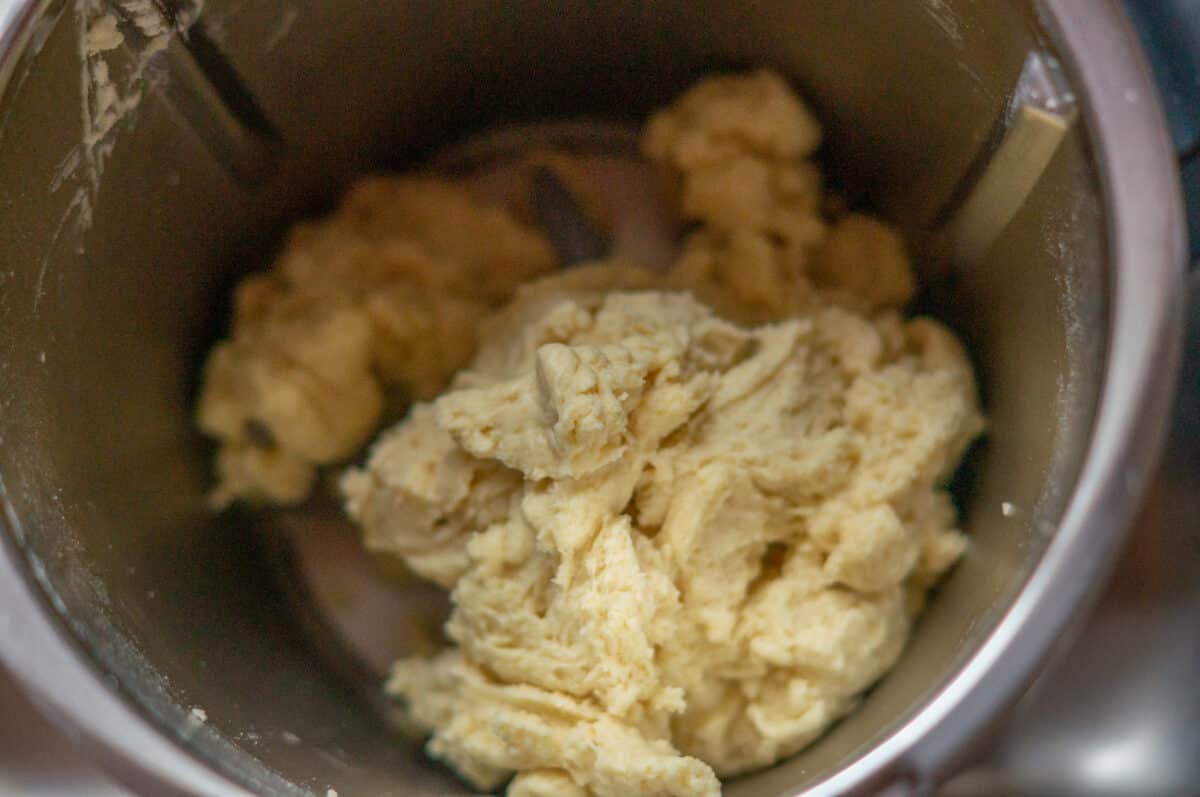
Kneading mode works slowly and without heat. That matters because baking powder reacts the moment it meets moisture. If you mixed the dough at a higher speed, the friction heat would activate the baking powder too early. The dough would rise before it reached the oven and the rolls would turn out flat.
After 5 minutes on kneading mode, turn the dough onto a floured surface and knead through once more by hand. This shapes the dough and distributes the baking powder evenly. Divide into 6 equal pieces using a dough scraper rather than a knife. The scraper cuts more cleanly and does not drag the dough.
180 degrees top and bottom heat, no fan
A fan setting would dry out the surface too quickly before the rolls are baked through inside. With top and bottom heat on the middle shelf the rolls get a golden crust and stay soft inside. 25 minutes is enough in most ovens. If your oven runs very hot, check after 20 minutes and reduce the temperature to 170 degrees if needed.
The milk on the surface caramelises lightly and gives the rolls their colour. Without milk they come out pale. Brushing with egg yolk instead of milk also works, but gives a darker and shinier crust.
Seeds only stick with milk
Sunflower seeds, sesame, poppy seeds or pumpkin seeds only cling to a moist surface. The 20 g of milk from the ingredients list is enough for all 6 rolls. Brush on a thin coat with a pastry brush, then scatter the seeds over and press down lightly. Without milk the seeds fall off during baking.
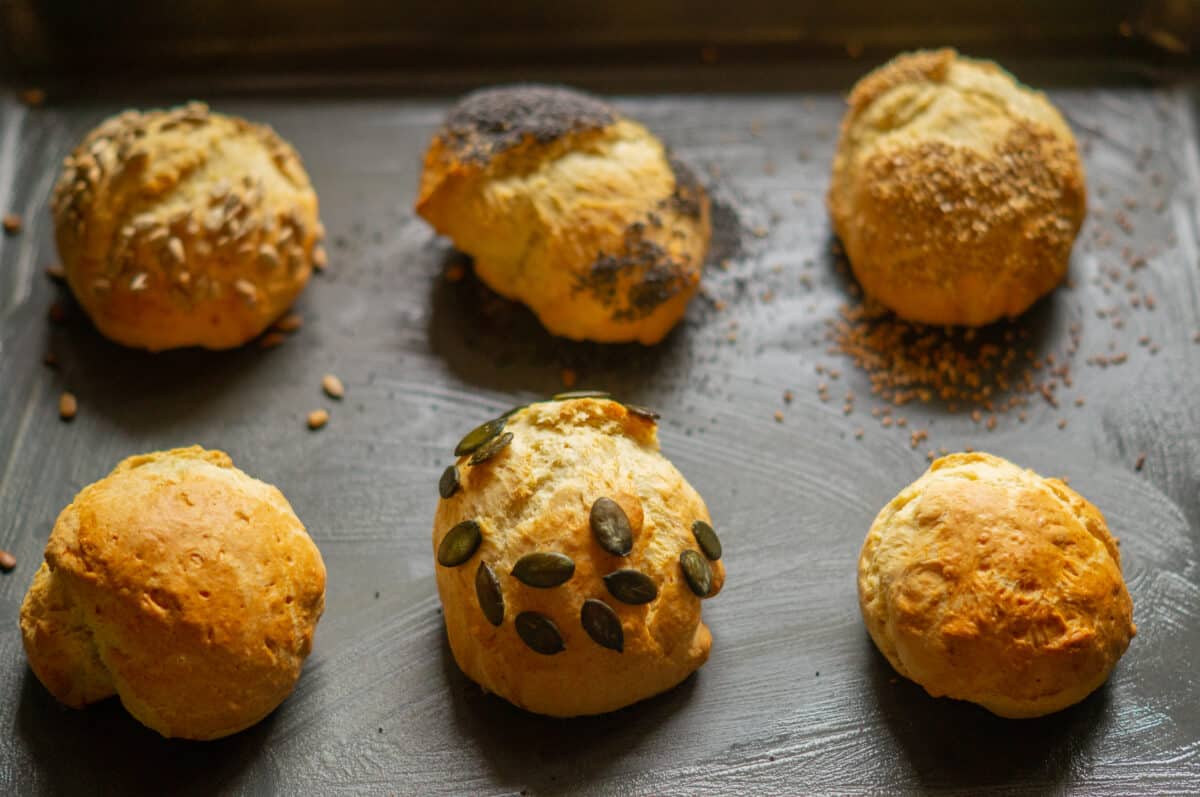
We usually make these rolls without seeds because they are quicker that way. But when we bake them for guests, sesame or sunflower seeds go on top. Poppy seeds can turn bitter during baking if you use too many. One teaspoon per roll is enough.
How to keep the rolls fresh for longer
Yoghurt rolls dry out faster than yeast rolls because they contain less gluten. They are best eaten on the day they are baked. If you want to store them, keep them in a paper bag at room temperature for up to 2 days. In a plastic bag they go soft.
Freezing works well. Once the rolls have cooled, pack them individually into freezer bags. To thaw, bake in the oven at 150 degrees for 10 minutes. They taste almost as good as freshly baked.
Have you tried our Thermomix® yoghurt crust bread?
How other recipes approach this
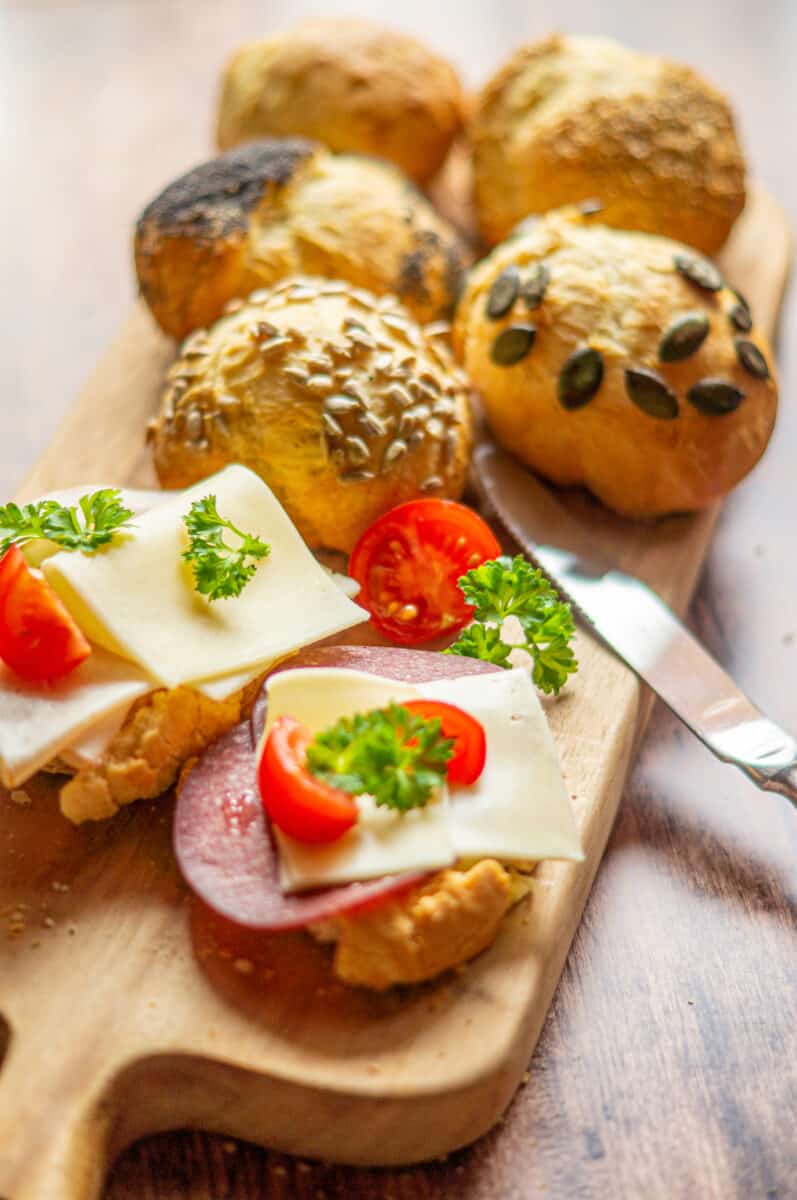
Goes well with: butter, cream cheese and jam.
Other recipes for yoghurt rolls without yeast often use type 550 flour and lower-fat yoghurt. We deliberately stick to full-fat natural yoghurt with 3.5% fat. It gives more moisture and a softer bite. If you prefer a heartier flavour, replace half the flour with spelt flour type 630. Baking temperatures in other recipes range from 180°C to 200°C. We stay at 200°C top and bottom heat for 18 minutes, which gives the rolls a crisp outside and an airy inside. If the dough sticks too much, an extra 20 g of flour helps. With seeds, cheese or herbs mixed into the dough, every batch turns out a little different.