Currently in season
Radishes in the Thermomix®
We have matched 7 English Thermomix® recipes with radishes. Here is the season window, buying advice and the best MixMyDay recipe links.
Seasonal calendar by month
When are radishes in season?
April to October from European outdoor growing, with greenhouse produce available all year round..
- Jan–
- Feb–
- Mar–
- AprOutdoor crop
- MayOutdoor crop
- JunOutdoor crop
- JulOutdoor crop
- AugOutdoor crop
- SepOutdoor crop
- OctOutdoor crop
- Nov–
- Dec–
Outdoor crop: fresh European harvest. Protected crop: greenhouse or covered cultivation. Stored: European harvest kept in storage.
Buying and storing radishes
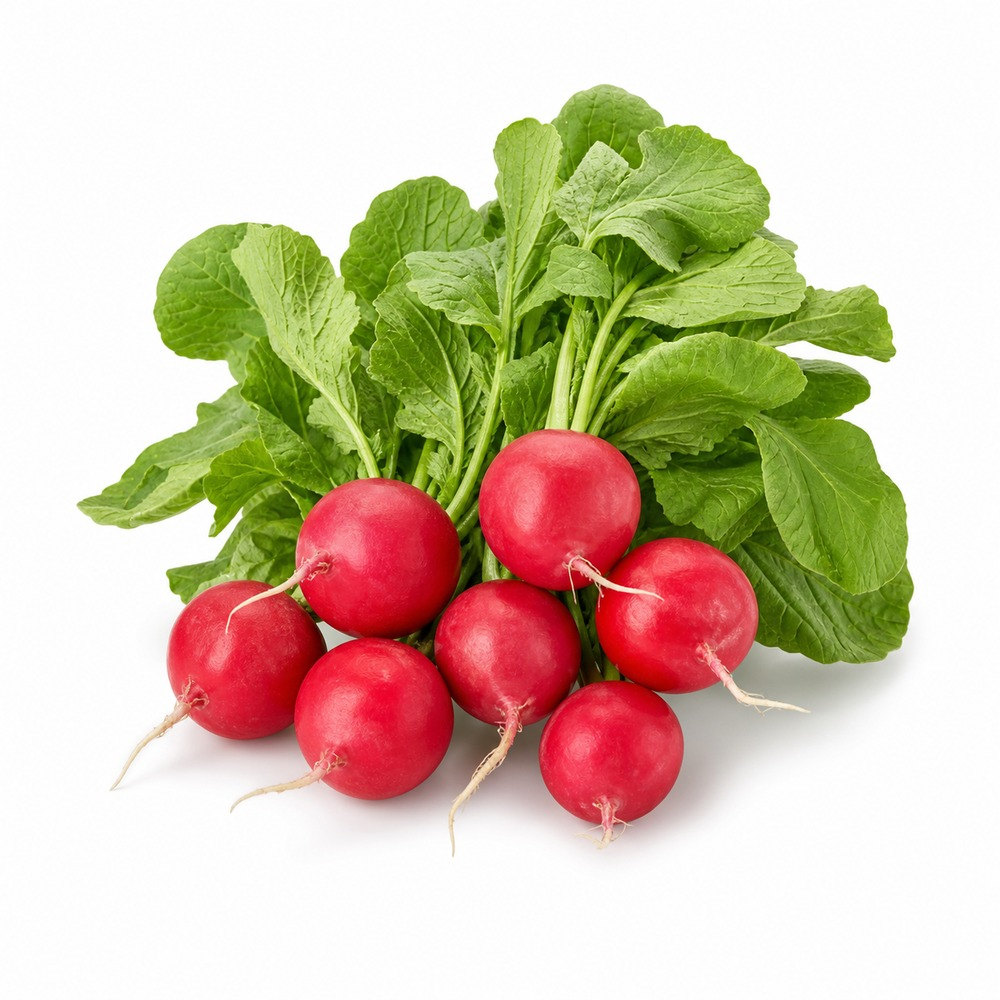
Radishes come in round, oval and elongated icicle shapes. Alongside the classic red, there are also white, purple and two-tone white-and-red varieties. Fresh radishes are firm and cannot be pressed in. The leaves should stand upright and be juicy green, not wilted or yellow. Regional outdoor radishes have more heat than greenhouse produce, as the mustard oils form more strongly under light stress. Limp radishes or wilted greenery show that the produce has been stored too long.
Cut off the leafy tops and root tips before storing, as the leaves pull moisture out of the roots. Keep the radishes wrapped in a damp cloth or in a tub in the vegetable drawer of the fridge, where they last for two to three days. Freezing is not worthwhile, as radishes turn soft and watery once thawed. The trimmed leaves of young radishes can be used like watercress in soups or smoothies.
Preparing radishes in the Thermomix®
For Radish Salad and Kohlrabi, Radish and Apple Salad we slice the radishes thinly with a knife or a mandoline, because the Thermomix® releases a little too much liquid when chopping raw radishes and turns the slices to mush. If you want to dice the radishes roughly for a potato salad, use a short burst on speed 4 and keep a close eye on the timing. Radishes need hardly any preparation: rinse them briefly, cut off the leaf and root, done.
The most common mistakes with radishes
- Leaving the greenery on when storing. The leaves draw water out of the roots. Radishes with their tops on turn limp within a few hours. Always cut off the leaves and roots before storing.
- Chopping too finely in the Thermomix®. Raw radishes give off a lot of water when chopped. On speed 5 they quickly turn to pulp instead of even pieces. For salad, better to slice them with a knife.
- Buying old, limp radishes. Soft radishes have lost their heat and their crisp bite. When buying, always press for firmness. Limp radishes cannot be revived.
All 7 Thermomix® recipes with radishes
Radishes as the main ingredient (4 recipes)
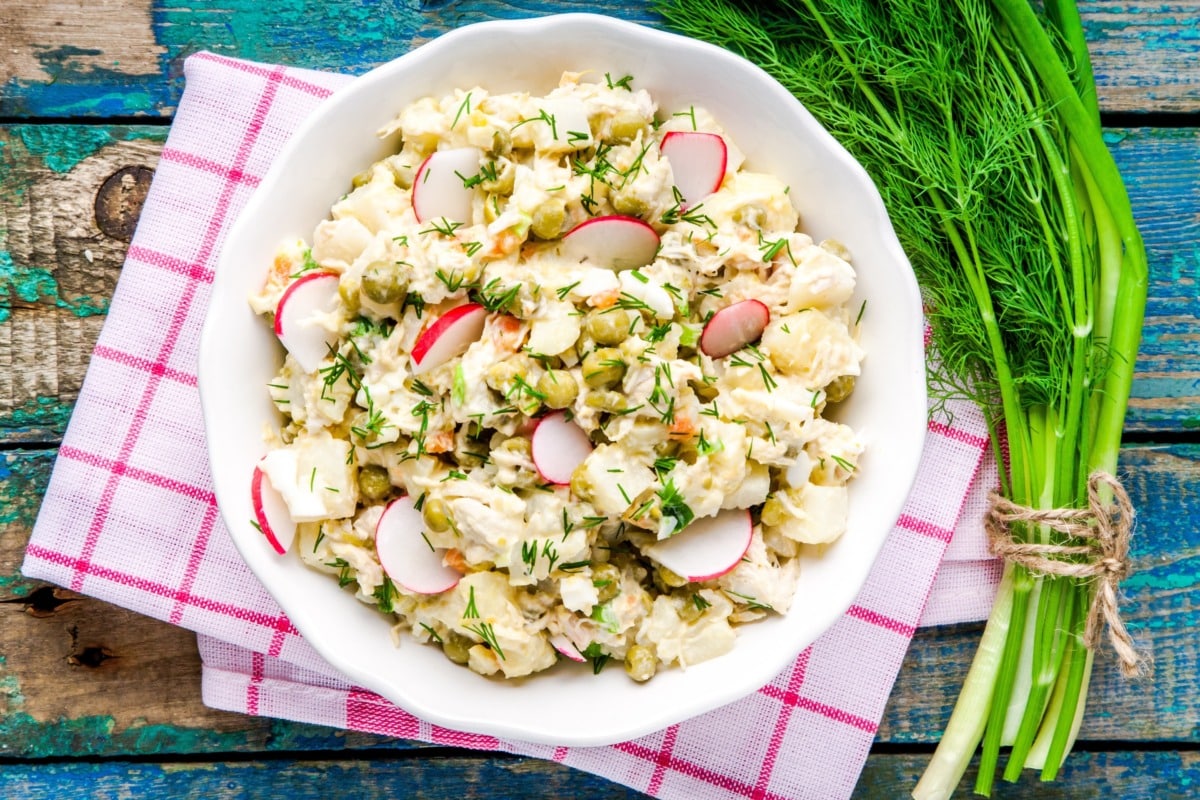
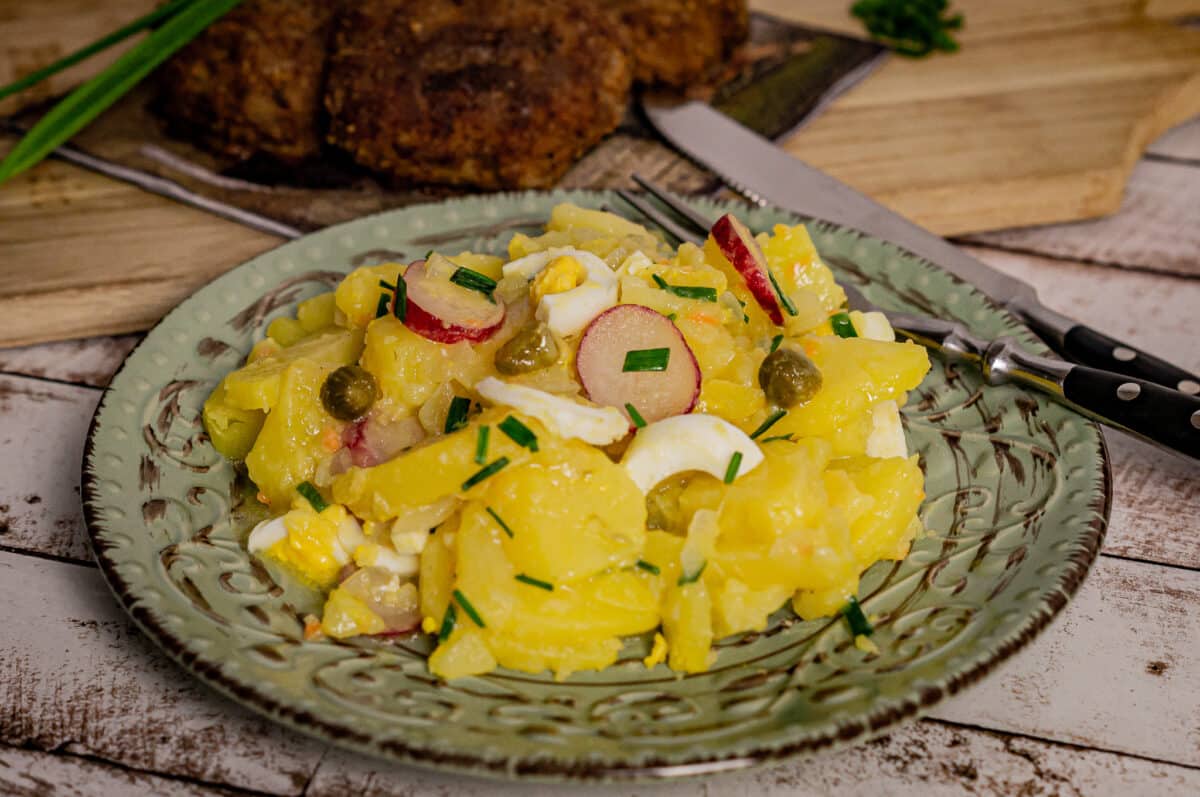
 Classic Potato Salad with Radishes and Egg, Thermomix®
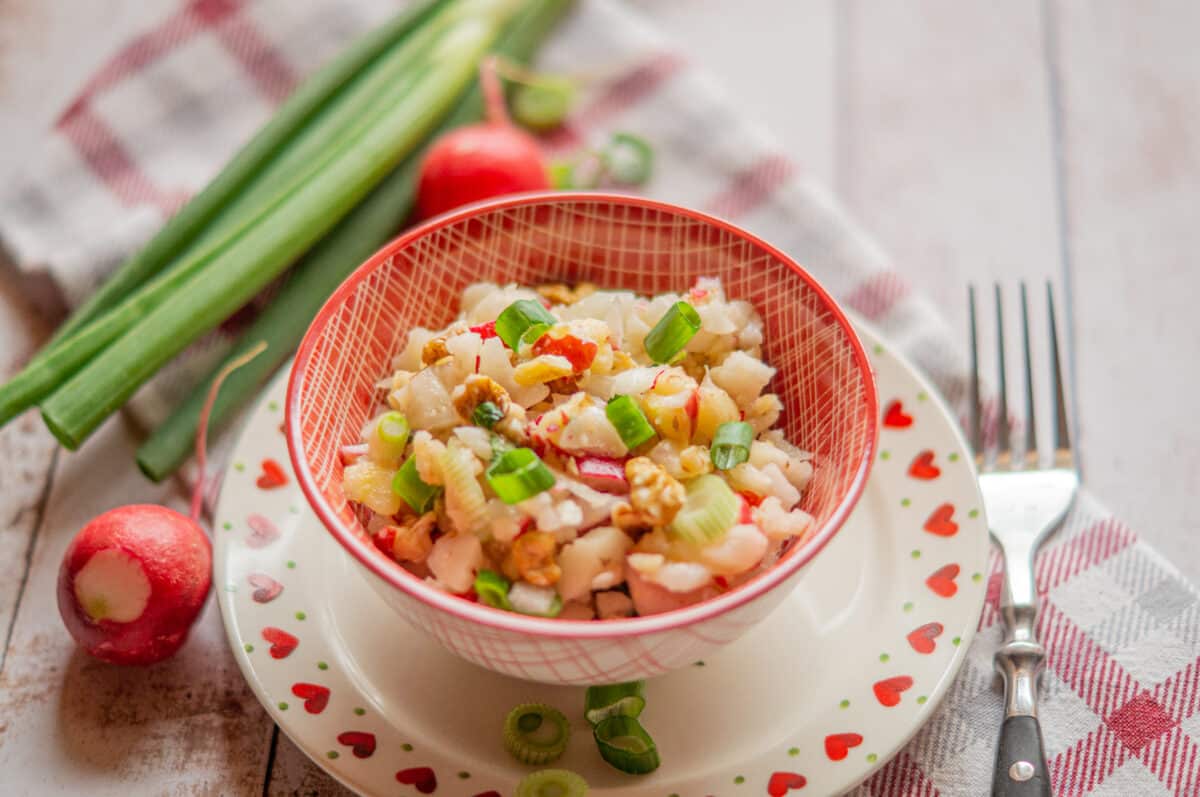
- Radish Salad with the Thermomix®
- Thermomix® Kohlrabi Radish Apple Salad
- Buttermilk Radish Protein Shake with the Thermomix®

Radishes in more recipes (3 recipes)

 Kohlrabi
 Tomatoes
 Carrots
 Potatoes
 Broccoli
 Cucumbers
Good to know
Where does the heat in radishes come from?
The heat comes from mustard oils, which are released by an enzyme as soon as the cell structure is damaged, that is when cutting or biting. Outdoor radishes are hotter than greenhouse produce because of more light stress.
Can I eat the leaves of radishes?
Yes, the young leaves of fresh radishes are edible and taste slightly hot and savoury. They can be used in soups, green smoothies or as a salad ingredient. Only use very fresh, juicy green leaves.
Why do my radishes turn limp in the fridge?
Usually the greenery was not cut off. The leaves actively draw water out of the roots. Cut off the tops, wrap the radishes in a damp cloth and keep them cool, and they will stay crisp for two to three days.
Can radishes be cooked?
Yes, radishes can be steamed or tossed in butter. In doing so they lose almost all of their heat and turn milder and slightly sweet. For our salad recipes, though, they are at their best raw.
How many Thermomix® recipes with radishes are there?
There are currently 7 recipes in our collection. You will find them above, sorted by main ingredient and supporting ingredient.