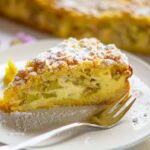
Rhubarb cheesecake with crumble topping is the recipe we use every year to mark the start of rhubarb season in May. We bake it several times each season, as soon as the first stalks arrive from the garden or the market.
Three layers, three functions: shortcrust pastry as the base, creamy quark filling in the middle, sugared rhubarb and crumble on top. The recipe works in TM31, TM5 and TM6 without any adjustments. What makes it work is a small amount of preparation discipline we have built up over the years, and that is the difference between a soggy cake and a well-structured one.
Rhubarb Cheesecake with Crumble Topping, Thermomix®
Ingredients 0 / 15 ✓
- 10 g butter
- 750 g rhubarb
- 150 g sugar
- 150 g sugar
- 370 g plain flour (type 405)
- 1/2 sachet baking powder
- 200 g butter chilled
- 1 egg
- 1 sachet vanilla sugar
- 500 g quark (40% fat)
- 140 g sugar
- 2 eggs
- 30 g butter softened
- 3 drops lemon flavouring
- 1 sachet vanilla blancmange powder
Instructions 0 / 11
-
1
Prepare the springform tin.
Grease the springform tin with butter.
-
2
Prepare the rhubarb.
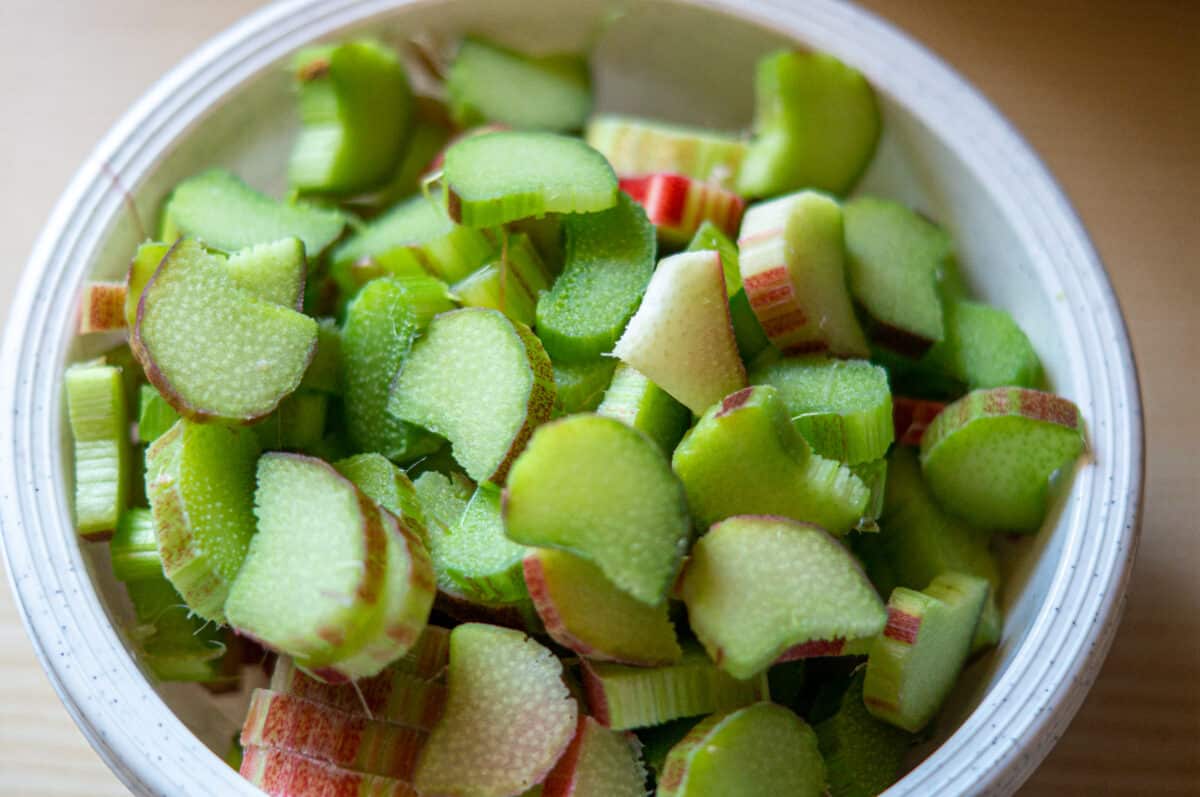
Wash the rhubarb, trim the ends, pull off any strings, cut into pieces roughly 0.5 cm in size and place in a bowl.
-
3
Sugar the rhubarb.
Add the sugar to the mixing bowl and pulverise for 10 sec / speed 10. Set aside 50 g icing sugar for later, then sprinkle the rest over the rhubarb, mix together and leave to macerate for 20 minutes.
-
4
Mix the crumble.
Add the sugar, flour, baking powder, butter, egg and vanilla sugar to the mixing bowl and mix for 10 sec / speed 5 until a crumble forms.
-
5
Form the base.
Set aside one third of the crumble and place it in the fridge. Press the remaining crumble into the springform tin with your hand, pressing it firmly and pulling up a small rim.
-
6
Preheat the oven.
Preheat the oven to 180°C top and bottom heat (fan 160°C).
-
7
Prepare the quark mixture.
Add all the filling ingredients to the mixing bowl and mix for 20 sec / speed 4.
-
8
Drain the rhubarb.
Tip the rhubarb into a sieve and leave to drain.
-
9
Fill the tin.
Spread the quark mixture evenly over the base and smooth the surface. Arrange the rhubarb pieces on top of the quark mixture, then scatter the remaining crumble over the top.
-
10
Bake.
Bake the cake for approximately 60 minutes on the middle shelf of the oven. If the cake starts to colour too much before the end of the baking time, cover it with a piece of baking paper. After baking, leave it to rest for a further 10 minutes in the slightly open oven.
-
11
Serve the cake.
Leave the cake to cool, dust with the remaining icing sugar and serve.
Tip: This cheesecake with crumble can also be made without rhubarb.
Nutrition per serving
Why we always let the rhubarb sit for an hour
The most important step happens before the oven is even switched on. We cut the 750 g of rhubarb into 0.5 cm pieces, place them in a bowl and sprinkle sugar over them. We use 100 g of the pulverised sugar (10 seconds at speed 10), and keep the other 50 g as icing sugar for the topping later. Then we leave the bowl to rest for 60 minutes, not just 20 as many recipes suggest.
Something mechanical happens during that hour: the sugar draws the tart juice from the rhubarb cells through osmosis. When we then drain the pieces in a sieve, a surprisingly large amount of pink liquid runs off. That liquid is exactly why cheesecake with rhubarb so often stays watery inside and leaves the crumble topping soggy. We discard the juice (or keep it in a jar, it makes a brilliant splash in sparkling wine). What remains in the sieve is rhubarb with reduced acidity and an intact texture.
One dough, two functions: base and crumble from the same mixture
While the rhubarb is macerating, we make the shortcrust pastry in the mixing bowl. 150 g sugar, 370 g plain flour (type 405), half a sachet of baking powder, 200 g chilled butter, one egg and one sachet of vanilla sugar together for 10 seconds at speed 5. This gives a rough crumble mixture, which we then divide: one third goes into the fridge for the topping later, and we press two thirds into the buttered 26 cm springform tin, pulling up a small rim.
This dual function is why we like this recipe. We do not need to mix a separate crumble dough that may not match the base. Base and crumble come from the same bowl, taste identical, and the mixing bowl is only used once. The crumble third firms up in the fridge, which makes it easier to scatter later and gives crispier crumbs after baking rather than a melted crust.
The quark filling: 20 seconds at speed 4 is enough
We give the mixing bowl a quick rinse, then add all the filling ingredients at once: 500 g quark (40% fat), 140 g sugar, 2 eggs, 30 g softened butter, 3 drops of lemon flavouring and one sachet of vanilla blancmange powder. 20 seconds at speed 4 is enough. Mixing longer is not a good idea: quark turns watery with too much agitation because the whey separates out. Speed 4 keeps the mixture creamy and blends the eggs in cleanly without breaking down the quark structure.
The vanilla blancmange powder is the stabiliser. It binds the residual moisture the quark releases during baking and ensures the mixture sets firm enough to slice cleanly once cooled, rather than sinking when cut. The 40% fat quark is essential here. Low-fat quark makes the cake flat in flavour and tends to crack on the surface because it lacks the fat to absorb tension.
Layering and baking: 60 minutes plus 10 minutes resting
We spread the quark mixture smoothly over the pressed-in shortcrust base. Then we distribute the drained rhubarb evenly on top, no piling it in the centre. Finally, the cold crumble from the fridge goes on top, loosely crumbled, not pressed down. This creates an airy topping that turns crisp during baking.
The oven runs at 180°C top and bottom heat (fan 160°C). 60 minutes is the right time for this cake, a little longer than for a classic cheesecake without fruit. The reason: despite the pre-treatment, rhubarb still releases residual moisture during baking, which passes through the quark mixture. If we were to take it out after 50 minutes, the centre would be spongy. If the crumble gets too dark, we cover the cake with a piece of baking paper. After the 60 minutes, we leave it for 10 minutes in the slightly open oven. This step is not optional: otherwise the cake sinks when removed, because the temperature shock causes the still-warm quark mixture to collapse.
If the crumble still turns out soggy
This happens when the rhubarb has not macerated long enough or has not released enough juice during draining. A rough guide: we weigh the pieces before and after the hour in the sieve. If less than 80 g of juice has drained off, we leave it for another 15 to 20 minutes. With very thick rhubarb in early summer (from mid-June onwards), 90 minutes of macerating time can also help, because the stalks are woodier then and take longer to release their water.
A second stumbling block is the crumble proportion. Anyone who uses more than one third as the topping covers the quark mixture too heavily. The moisture cannot escape, the crumble absorbs it and turns doughy. One third is the tested amount. Anyone who likes it extra crisp can scatter a few dry crumbs on top after 45 minutes of baking time.
How we vary the cake
With strawberries in the second half of the season: When rhubarb becomes scarce at the end of June, we mix 500 g rhubarb with 250 g strawberries (quartered). Strawberries do not need pre-macerating because they carry less acidity, so add them directly to the drained rhubarb.
With almonds in the crumble: We replace 50 g of the flour with ground almonds. This gives the crumble a pleasant bite and a marzipan note that works well with rhubarb.
Without rhubarb in winter: Out of season, we make the version with apple pieces (600 g peeled Boskoop dice). These do not need macerating because apples carry less water, and 50 minutes of baking time is then sufficient.
How we store the cake
Covered in the fridge, the cake keeps for three days. After the first day the quark mixture actually sets firmer and the flavour rounds out, so the second day is often the best. Before serving, we let the slices sit at room temperature for 30 minutes, otherwise the butter in the shortcrust tastes firm and the aroma does not come through.
Freezing works well in individual slices on a tray, then transfer to freezer bags. Keeps in the freezer for up to three months. Defrost overnight in the fridge, not at room temperature, otherwise the crumble draws condensation and turns soggy. We do not freeze whole springform cakes because they defrost unevenly and the base goes soft.
What goes well on the coffee table alongside it
Alongside the cheesecake, we like to pair a second item from the rhubarb season. Rhubarb vanilla liqueur as a small digestif with a cup of coffee rounds things off nicely. Anyone with leftover rhubarb can turn it into rhubarb compote or rhubarb jam the same weekend. For a crumble cake selection, our blueberry crumble cake and pear and almond cake with rum crumble are the natural neighbours. The basic crumble recipe is worth checking if you want to transfer the crumble method to other fruit cakes.
What other recipes do differently
Goes well with: Vanilla ice cream.
Other rhubarb cheesecake recipes for the Thermomix® often use low-fat quark with vanilla blancmange powder and layer the rhubarb raw onto the quark mixture. We deliberately use 40% fat quark because the filling becomes creamier that way and cracks less during baking. We briefly macerate the rhubarb before placing it on the filling, which takes the edge off the sharp acidity and prevents the typical puddle of water the following day. Instead of a classic shortcrust base, we use the crumble dough twice: half underneath, half on top. This saves one step in the mixing bowl and gives the cake the crisp crumble crown that a smooth base cannot provide.