Risotto in the Thermomix® needs reverse direction because only that keeps the grains whole. Normal stirring direction grinds Arborio or Carnaroli into mush within seconds. We make the basic recipe in 20 minutes without stirring once: toast the rice, then add 250 g white wine and 500 g vegetable stock, and cook for 15 minutes at 120°C on reverse direction speed 1. That gives you 4 generous servings.

We have been making risotto at least twice a month in the Thermomix® for years, and reverse direction is the reason it works at all. On this page you will find two recipes: the quick Parmesan basic recipe in 20 minutes and a lemon risotto with baby spinach, cherry tomatoes and Pecorino for special evenings. Both are set out in full with all quantities and timings in the recipe card below.
Risotto in the Thermomix® (Basic Recipe)

Ingredients 0 / 10 ✓
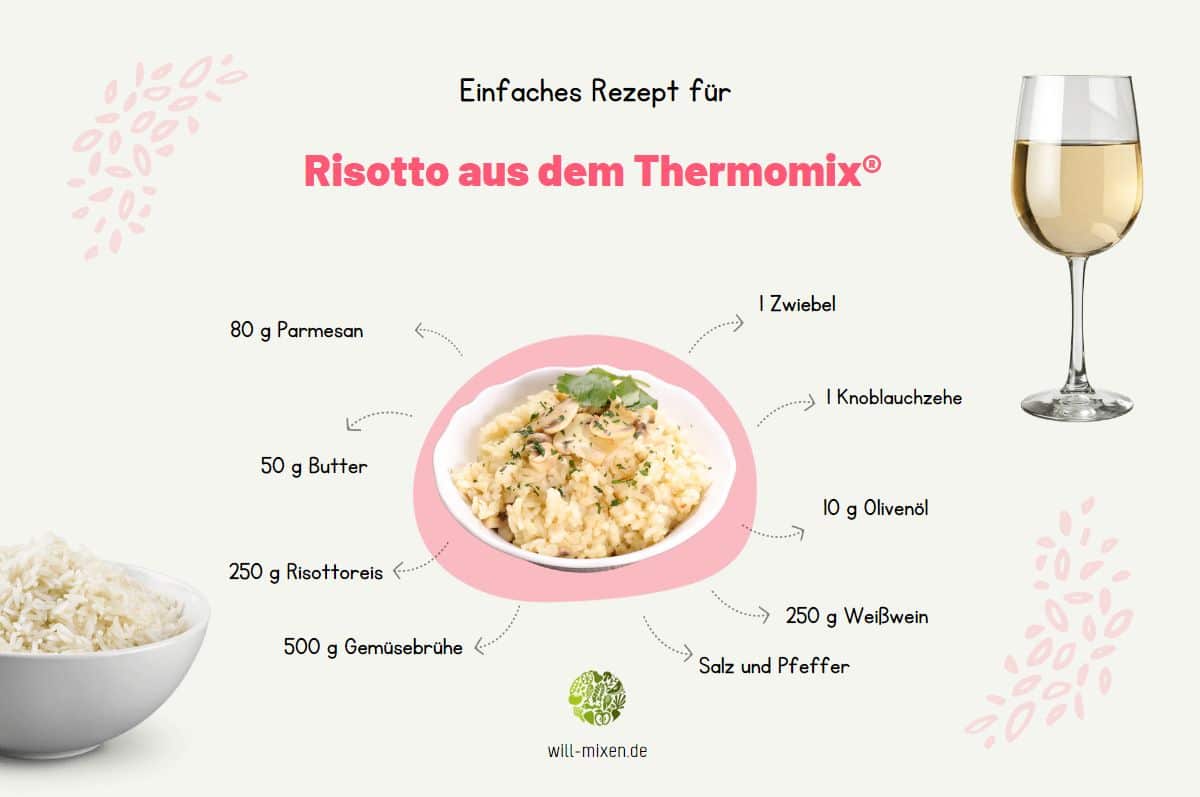
- 80 g Parmesan
- 1 onion
- 1 garlic clove
- 50 g butter
- 10 g olive oil
- 250 g risotto rice
- 250 g white wine
- 500 g vegetable stock
- 1 tsp salt
- 1/2 tsp pepper
Instructions 0 / 7
-
1
Grate the cheese.
Add Parmesan in pieces to the mixing bowl and grate for 8 sec / speed 10, then set aside.
-
2
Chop the onion.
Peel onion and garlic, add to the mixing bowl, chop for 5 sec / speed 5 and scrape down with the spatula.
-
3
Sweat the aromatics.
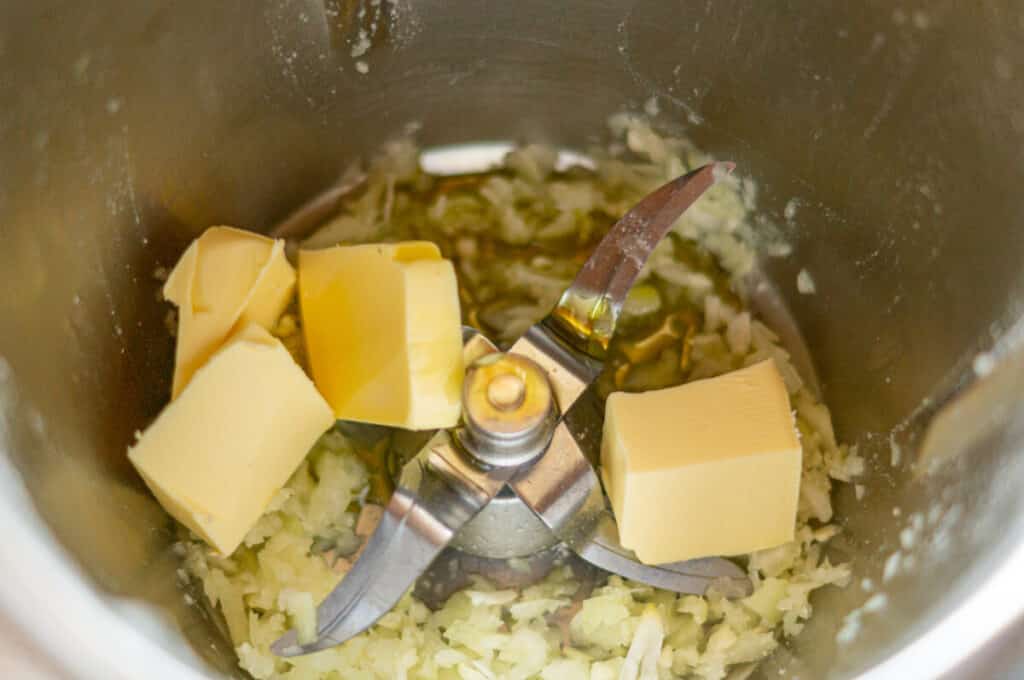
Add butter and oil to the mixing bowl and cook for 3 min / Varoma / speed 1.
-
4
Toast the rice.
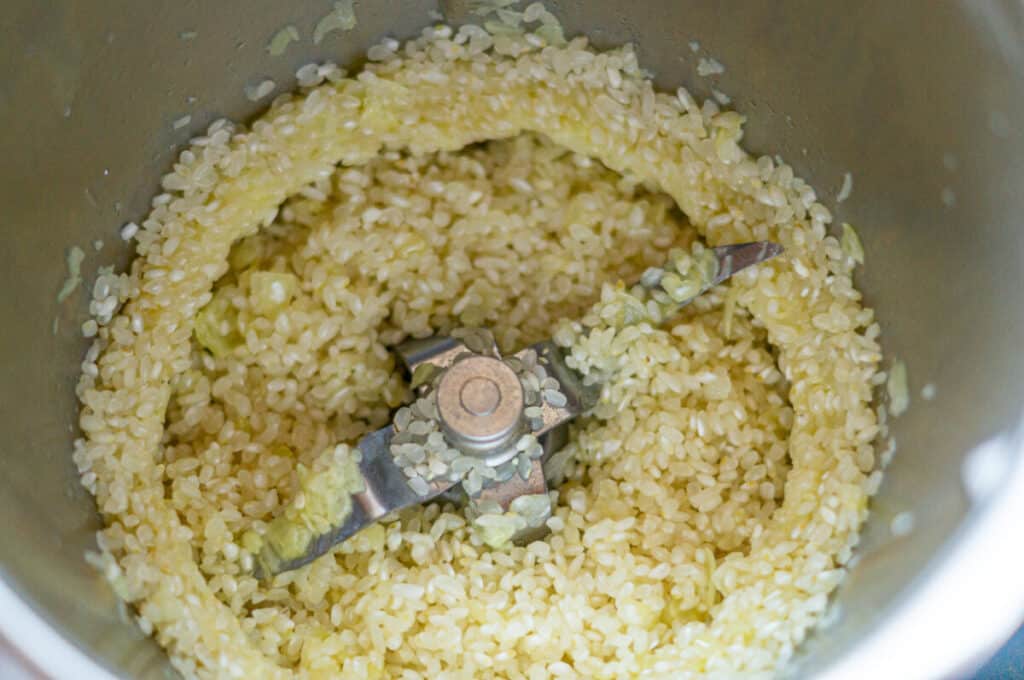
Add rice to the mixing bowl and cook for 3 min / Varoma / speed 1.
-
5
Add remaining ingredients.
Add white wine, vegetable stock, salt and pepper to the mixing bowl and cook for 15 min / 120°C / reverse direction / speed 1.
-
6
Stir in the cheese.
Add Parmesan to the mixing bowl and mix for 1 min / 100°C / reverse direction / speed 1.
-
7
Serve.
Serve the risotto as it is or finish with additional ingredients (e.g. mushrooms).
Tip: For a family-friendly version, replace the wine with stock. You can also use round-grain rice (pudding rice) instead of risotto rice. This increases the cooking time by about 5 minutes.
We have refined the pudding rice version with porcini mushrooms. Fry them in a pan and stir them into the risotto.
Video
Nutrition per serving
Why reverse direction saves the risotto
Classic risotto requires half an hour of hand stirring and adding stock ladle by ladle. In the Thermomix® it works completely differently, and this is exactly where the machine makes the difference: reverse direction moves the grains gently around the bowl without letting the sharp blade edges touch the rice. The starch still releases and binds the liquid into a creamy consistency, but the grain stays intact.
Three things make our basic recipe reliably creamy:
- Reverse direction, not normal direction. The entire cooking time runs on reverse direction speed 1. If you accidentally switch to normal stirring direction, Arborio or Carnaroli will turn to mush in under a minute.
- 250 g wine and 500 g stock added all at once. No ladling in bit by bit. The Thermomix® evaporates exactly the right amount of liquid at 120°C in 15 minutes, so the consistency is spot on at the end.
- Toast the rice first. 3 minutes in Varoma mode seals the starch inside the grain. The rice then releases it in a controlled way rather than falling apart immediately.
Arborio or Carnaroli: the rice variety makes the difference
Risotto only works with starchy short-grain rice. Arborio is the standard and available in every supermarket. Carnaroli is the slightly more premium variety, holds its shape even better on reverse direction and keeps more bite because the grain is firmer. Long-grain rice or basmati are not suitable: too little starch, no binding, and the result turns watery.
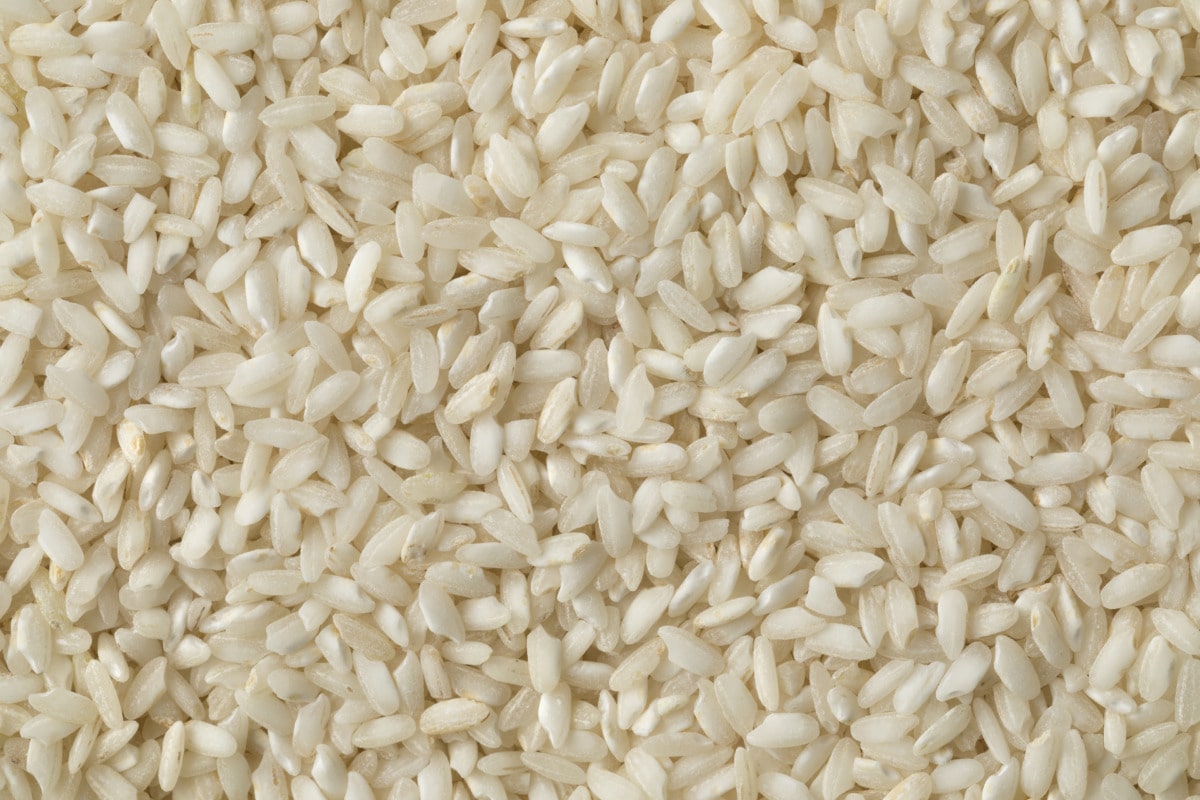
One point that almost every risotto guide stresses and that really is true: never wash the rice before cooking. Washing rinses away the outer starch layer, and that is exactly what gives you the creaminess. We add the rice straight from the packet, dry, directly into the mixing bowl. If you absolutely cannot get risotto rice, you can use pudding rice, but you will need to add about 5 minutes to the cooking time. The binding stays; the bite becomes softer.
Good risotto rice makes more difference than any seasoning paste. We usually go for the classic Arborio pack because it is available everywhere and binds reliably. If you want more bite for special occasions, Carnaroli is worth it.
Toast the rice, then add wine and stock
We never skip the toasting step. First, 50 g butter and 10 g olive oil go in with the chopped onion and garlic for 3 minutes in Varoma mode. Then the rice cooks for a further 3 minutes before any liquid is added. This step toasts the starch and gives the risotto the nutty base note that simply boiled rice never has.
Next, 250 g white wine and 500 g vegetable stock go into the mixing bowl together, not in portions as with classic risotto. 15 minutes at 120°C on reverse direction speed 1 is enough. Place the measuring cup on loosely or leave it off entirely so that steam can escape, otherwise the risotto turns too soupy. At the end, we stir in 80 g grated Parmesan for one minute at 100°C on reverse direction. If you prefer, replace some of the wine with stock to make it more suitable for children.
These mistakes will cost you the creaminess
These are exactly the points where risotto in the Thermomix® goes wrong. We have been through every one of these mistakes ourselves.
The risotto turns mushy instead of grainy
It is almost always down to the wrong direction of rotation. Anyone who switches to normal stirring direction out of habit will have rice mush after 30 seconds. Our solution: Check before you start that the reverse direction symbol is lit, and leave it on for the full 15 minutes. Cooking for too long also causes mushiness, so we stick exactly to the 15 minutes.
The grain stays hard in the middle
If the rice is still hard inside after 15 minutes, there was too little liquid in the bowl or the measuring cup was on too tight and too much steam escaped. Our solution: Add 50 to 100 g of hot stock and cook for a further 2 to 3 minutes at 100°C on reverse direction speed 1. With pudding rice, plan for 5 extra minutes from the start.
The result tastes bland
Risotto turns bland when the toasting step is skipped or the seasoning is off. Our solution: Always sweat the onion, garlic and rice first; that is the flavour base. Be careful with the salt if you are using Pecorino instead of Parmesan: Pecorino seasons considerably more strongly, so taste at the end rather than salting heavily upfront.
The TM31 does not go up to 120°C
The basic recipe uses 120°C for the main cooking step. Manually, that is only possible on the TM5, TM6 and TM7. The TM31 only reaches 100°C manually. Our solution: On the TM31, use Varoma temperature instead of 120°C for the toasting step, and cook the main step at 100°C. The cooking time stays the same at 15 minutes.
From mushroom to lemon risotto: our variations
The basic recipe is the foundation for almost every variation. We usually add extras during the rice toasting step or in the last few minutes:
- Mushroom risotto: Soak 30 g dried porcini mushrooms in hot water for 15 minutes, squeeze them out and sweat them together with the rice. Strain the soaking water and use it as part of the 500 g liquid for an extra mushroom flavour.
- Lemon risotto: Our second recipe on this page. With baby spinach, cherry tomatoes, Pecorino and lemon (zest and juice added in the last few minutes). Fresher and more involved than the basic recipe, but a complete evening meal in itself.
- Saffron risotto (Risotto Milanese): Add 1 sachet of saffron together with the wine and stock. It colours the risotto golden yellow and gives the classic Milanese note.
- Asparagus risotto: In spring, steam the asparagus pieces separately in the Varoma while the rice cooks below, then fold in at the end. This keeps the asparagus firm to the bite.
For the lemon risotto we deliberately use Pecorino instead of Parmesan because it is saltier and more pungent and pairs better with lemon. The two cheeses are not interchangeable one for one, as they season at different strengths. If you prefer a milder result, use Parmesan here too and adjust the seasoning at the end.
What we serve alongside
We often eat the Parmesan risotto on its own as a main course, in which case we allow the full 100 g of rice per person. As a side dish with meat or fish, 50 to 60 g per person is enough. Anyone who wants to grate their own Parmesan will find the method in our guide Grating Cheese in the Thermomix®. And if you need plain side-dish rice rather than risotto, Perfect Rice in the Thermomix® shows you the right method using the basket insert.
How long your risotto keeps
Risotto tastes best fresh, when the creaminess is at its peak. Leftovers keep well covered for 1 to 2 days in the fridge. When reheating, risotto firms up, so we add 2 to 3 tablespoons of stock or water and warm it through at 80°C on reverse direction speed 1 until it is creamy again.
Freezing works, but it is a matter of taste: after thawing, the grains become softer and lose some bite. If you do freeze it, portion the risotto flat into freezer bags and thaw overnight in the fridge. We like to turn frozen risotto into arancini: shape into balls, coat in breadcrumbs and deep-fry. The softer texture is not noticeable that way.
Frequently asked questions about Thermomix® risotto
Goes well with: Parmesan and Ciabatta.