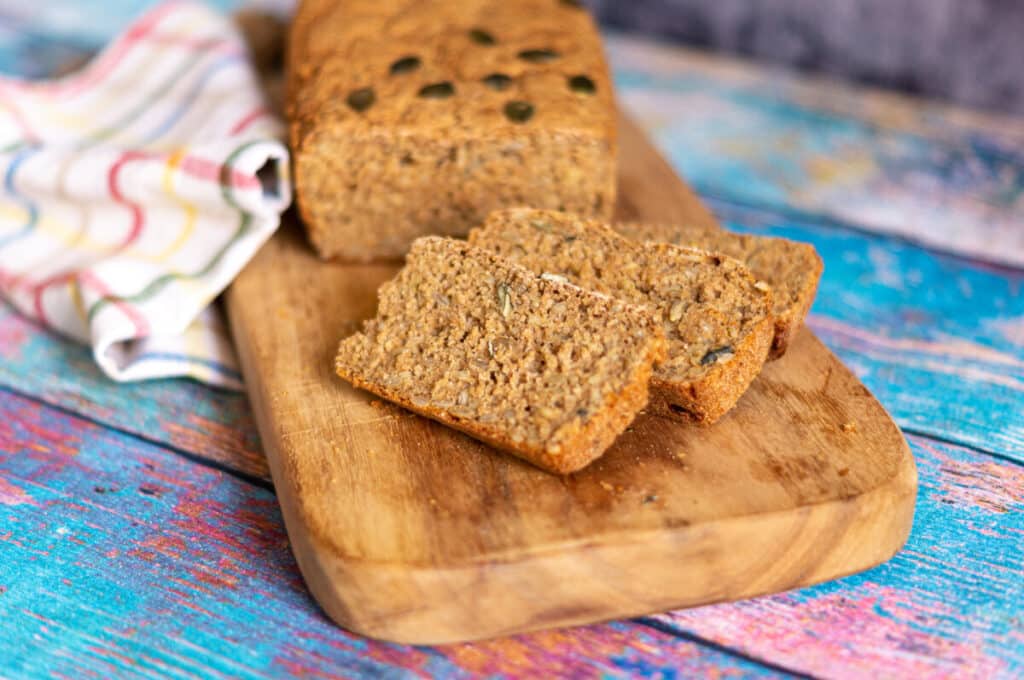
This wholegrain spelt loaf is built around an unusual ratio: 130 g of seeds to 450 g of flour, which works out at nearly 22 per cent sunflower and pumpkin seeds in the dough. That seed content is exactly why a slice keeps you full for a long time, and why the dough needs to be handled differently from a standard wholegrain loaf.
We have been baking this bread in our kitchen for years, mostly as a packed-lunch loaf for school and as a weekend breakfast bread. By now we know exactly where it can go wrong and where it holds up well. One slice at 122 calories, three grams of protein and a decent hit of seeds is plenty for us with cream cheese or avocado, and that is the honest explanation for the bread’s bold name: after two slices, we are full.
Seed-Packed Wholegrain Spelt Bread, Thermomix®
Ingredients 0 / 8 ✓
- 300 g spelt grains
- 1 cube fresh yeast
- 400 g water
- 1 1/2 tsp salt
- 150 rye flour type 1150
- 2 tbsp herb vinegar
- 100 g sunflower seeds
- 30 g pumpkin seeds
Instructions 0 / 5
-
1
Mill the spelt grains.
Place the spelt grains in the mixing bowl and mill for 15 sec / speed 10, then set aside.
-
2
Warm the yeast.
Place yeast, water and salt in the mixing bowl and warm for 3 min / 37°C / speed 1.
-
3
Knead the dough.
Add the remaining ingredients except for 10 g pumpkin seeds and mix for 4 min / kneading mode.
-
4
Bake the bread.
Spread the dough into the silicone loaf tin, drizzle with a little water and scatter the remaining pumpkin seeds on top. Place on the lowest shelf in a cold oven and bake at 200°C top and bottom heat for 1 hour.
-
5
Serve.
Turn the bread out of the loaf tin, leave to cool and enjoy. Store in an airtight wrap.
Tip: If you do not have a silicone loaf tin to hand, you can use any other loaf tin. You will need to grease it or line it with baking paper.
Nutrition per serving
Why the seeds need to soak up water first
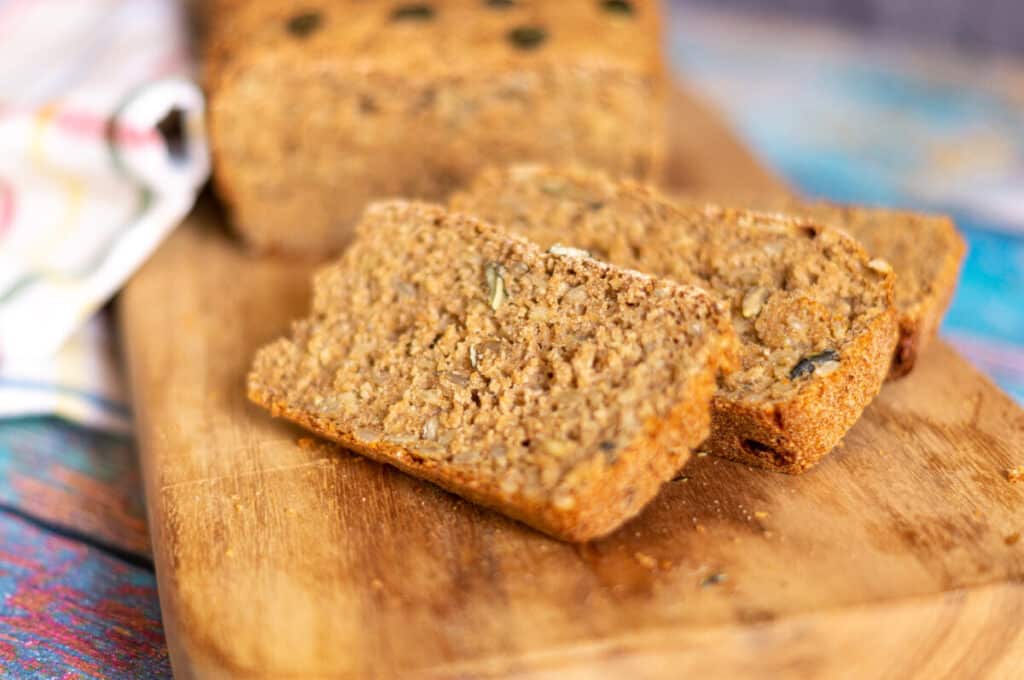
Sunflower seeds and pumpkin seeds are real moisture thieves when dry. Add them straight to the dough and after an hour you end up with a loaf that seems firm on the outside but stays slightly gummy inside. The seeds absorb water from the crumb during baking because they need it themselves.
Our tip from hundreds of baking sessions: pour boiling water over the 100 g sunflower seeds and the 30 g pumpkin seeds (keeping back the 10 g for the crust) before milling the spelt grains, and leave them to soak for 20 to 30 minutes. Then drain and shake off the excess water; the 400 g of water in the dough stays unchanged. The difference in the cut slice is clearly visible: finer-pored, more even, less rubbery. If you skip this step, at least warm the seeds together with the warm water in the mixing bowl during the yeast stage at 3 min / 37°C / speed 1 with the yeast and salt, so they absorb a little water during that phase.
Milling your own spelt instead of buying wholegrain flour
We mill the 300 g spelt grains directly in the mixing bowl at 15 sec / speed 10. The benefit is not just the flavour, but also freshness: wholegrain flour from a bag oxidises quickly after milling and turns rancid. Freshly milled spelt flour smells sweetly nutty and passes that quality through to the crumb.
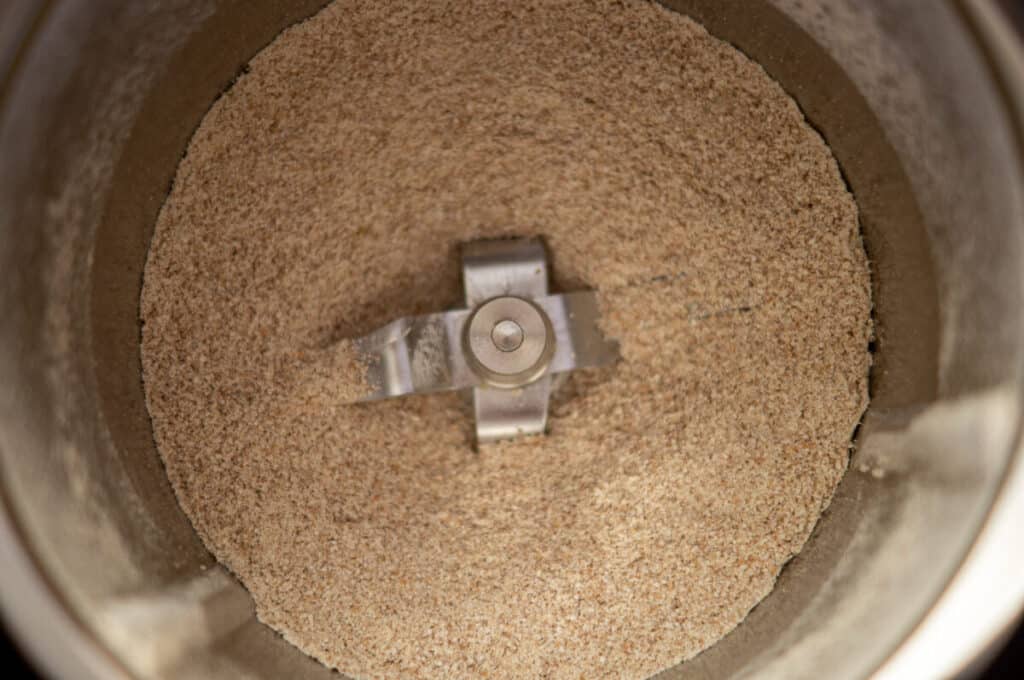
This is where the Thermomix® shows one of its greatest strengths: first the mixing bowl mills the grain into fine flour, then it warms the yeast water in the same bowl, then it kneads the dough for four minutes on kneading mode. Three steps, one machine, no mortar to wash up, no separate kneading bowl. Anyone baking by hand needs a mill, a bowl and a stand mixer for the same loaf.
Herb vinegar in the dough: do not leave it out
The 2 tbsp herb vinegar looks odd on a bread ingredient list, but it is not there for flavour. Wholegrain flour naturally has less gluten than white flour, so the dough holds its shape less well and tends to split as it rises. The acidity of the vinegar activates the existing gluten network, gives the crumb more stability and slows the yeast just enough so the bread can go straight into a cold oven without a separate proving stage. You cannot taste the vinegar in the finished bread.
If you do not have herb vinegar in the cupboard: apple cider vinegar or plain white wine vinegar work just as well. Balsamic does not work as it is too sweet and darkens the crumb.
Why this bread goes into a cold oven
This is the second unusual point about the recipe: no separate proving time. You start with the oven cold and let it heat up with the dough inside. During the first ten to fifteen minutes in the slowly warming oven, the yeast becomes active while the baking process begins at the same time. Set 200°C top and bottom heat from minute zero and let the oven come up to temperature with the bread inside.
The lowest shelf is important. On the middle shelf the top browns too quickly while the base is still underdone. Right at the bottom, the direct bottom heat reaches the tin and the crumb bakes through evenly from below. If you have a fan oven, reduce to 180°C for 60 minutes, otherwise the crust becomes too thick.
What happens when the dough is too firm or too soft
Dough crumbles after kneading
Sometimes the spelt grains have been stored very dry, or the rye flour type 1150 absorbs more water than usual. The dough can then look more like crumble than bread dough after kneading. Our fix: add water in 20 g increments, kneading on kneading mode for 30 seconds after each addition. The dough should cling to the spatula but not run in the tin.
Bread sinks in the middle after baking
A classic wholegrain bread problem. Either the yeast was too old (check the date on the fresh yeast cube as older cubes lose their lift), or the dough sat in the tin too long before going into the oven. Our fix: spread the dough into the tin immediately after kneading and put it straight into the cold oven. The ten minutes it takes to reach 200°C is the only proving phase this recipe needs.
Crumb stays gummy
This is the seed problem from the introduction. Our fix: soak the seeds first, or extend the baking time by 5 to 10 minutes and then test with a skewer. If dough still clings to the skewer, keep baking. A slightly darker crust is better than a damp crumb.
Seed topping: what goes on top stays on with water
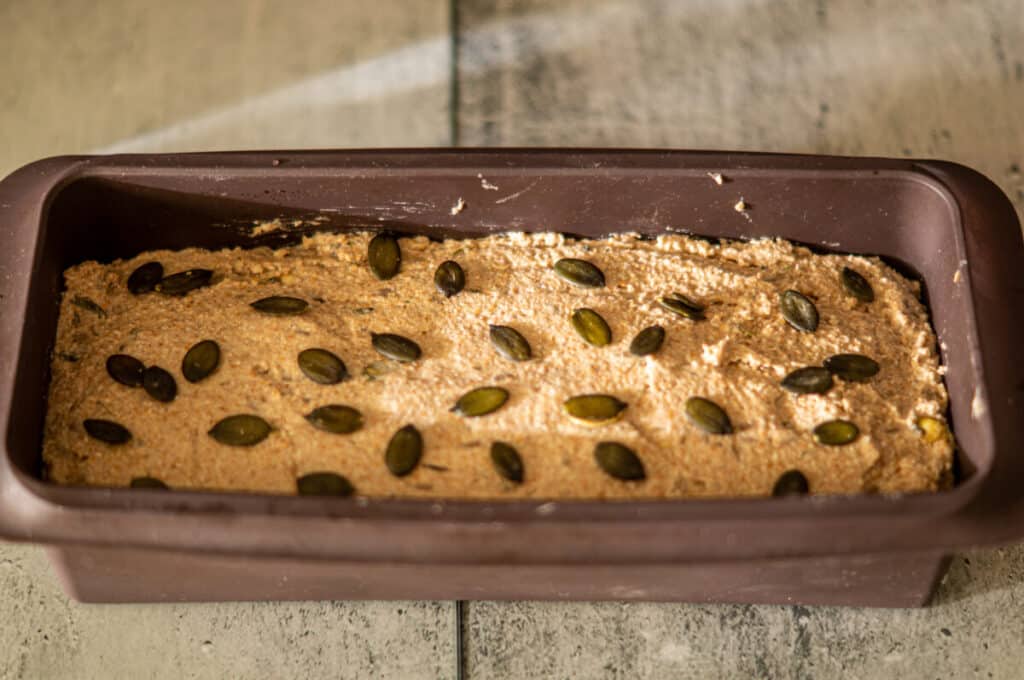
The 10 g pumpkin seeds we held back from the dough go onto the surface after the tin has been filled. Drizzle with a little water first, otherwise the seeds fall off the bread at the first cut. For more topping variety, mix sesame seeds, linseed or poppy seeds in with the reserved pumpkin seeds. 20 g of topping mix is the upper limit; more than that and the layer breaks away when slicing.
Variations we have baked ourselves
With walnuts instead of sunflower seeds: use 100 g roughly chopped walnuts in place of the sunflower seeds. This makes the bread more savoury and pairs well with cheese. Toast the walnuts briefly in a dry pan first so the flavour comes through more strongly.
With home-milled rye grains: instead of 150 g rye flour type 1150, mill 150 g whole rye grains together with the spelt grains. This gives a stronger, almost sourdough-like character without needing to maintain a starter.
Sweet version with dried fruit: finely dice 80 g cranberries or apricots and knead them into the dough, reducing the seeds to 50 g sunflower seeds and 30 g pumpkin seeds. Good at breakfast with cream cheese and honey.
Savoury version with cheese: knead 80 g grated mountain cheese and 1 tsp dried rosemary into the dough. The cheese melts during baking and leaves golden pockets in the crumb.
What we eat with it
Classic at breakfast with butter and a spoonful of homemade jam. For something more savoury, pair a slice with our grainy cream cheese or an avocado spread. In a packed lunch the bread holds well thinly spread with butter and salami or with a slice of mountain cheese, because the seed content keeps you going until midday.
Storing and freezing
Completely cooled, we keep the bread in a clay bread box at room temperature for about five days. In a plastic bag the seeds draw in moisture and the bread starts to smell mouldy after three days. In the fridge the crumb goes dry and floury quickly, which we do not recommend.
To freeze, we slice the whole loaf, pack three slices per freezer bag and take out what we need in the morning. At room temperature the slices are thawed in 30 minutes, or straight from the freezer in a toaster in two minutes. Frozen this way the bread keeps for three months without the seeds going rancid.
How other recipes approach this bread
Goes well with: butter and cream cheese.
Looking at comparable recipes, we notice that other versions typically use a plain flour blend of wheat, spelt and rye with no seeds at all, sliding the loaf into a cold oven at 250°C. Some recipes use 100 to 150 g of seeds from whatever is in the cupboard and bake for 60 minutes at 180°C using a nearly liquid, no-knead dough. Our version works 22 per cent seeds into a firm spelt wholegrain dough, soaks the seeds beforehand and uses a proper yeast phase in the Thermomix®. If you prefer a nuttier flavour, swap the 30 g pumpkin seeds for roughly chopped walnuts; the taste becomes noticeably earthier.
More bread and breakfast ideas for the Thermomix®:
- Spelt wholegrain bread with the Thermomix®
- Grainy cream cheese with the Thermomix®
- Strawberry jam with the Thermomix®