We have been making sweet and sour sauce in the Thermomix® for years because we can control exactly how sweet and how sour it turns out. Most shop-bought versions are packed with sugar and flavour enhancers. Our recipe takes 20 minutes and uses just 40 g of sugar for 250 ml of sauce.
The base is a trio of apple cider vinegar (acidity), pineapple juice (sweetness and fruitiness) and sugar (caramelisation). Tomato puree adds colour and umami, soy sauce provides a salty counterpoint, and sesame oil carries the Asian character. Without all six components the sauce tastes one-dimensional.
Sweet and Sour Sauce with the Thermomix®
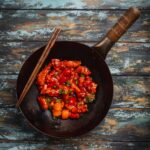
Ingredients 0 / 10 ✓
- 1 red pepper
- 50 g apple cider vinegar
- 180 g pineapple juice
- 40 g sugar
- 1 tsp salt
- 20 g tomato puree
- 30 g soy sauce
- 20 g sesame oil
- 10 g cornflour
- 30 g water
Instructions 0 / 4
-
1
Chop the pepper.
Wash and quarter the pepper, place it in the mixing bowl and chop for 3 sec / speed 8.
-
2
Simmer the sauce.
Add the vinegar, juice, sugar, salt, tomato puree, soy sauce and sesame oil, then simmer for 15 min / 100°C / speed 2 without the measuring cup.
-
3
Thicken the sauce.
Meanwhile, mix the cornflour and water until smooth. Add the cornflour mixture and cook for a further 5 min / 100°C / speed 2 without the measuring cup.
-
4
Serve.
Serve the sweet and sour sauce immediately or store in the fridge.
Tip: This sweet and sour sauce goes well with Asian noodles, meat and fish, and keeps in the fridge for a few days.
Video
Nutrition per serving
Blend the pepper raw rather than frying it
We place the raw pepper straight into the mixing bowl and chop it at speed 8. This skips the frying step and produces small, even pieces that soften as the sauce simmers. If you fry the pepper first, it goes mushy and the sauce loses those fine flavour pieces.
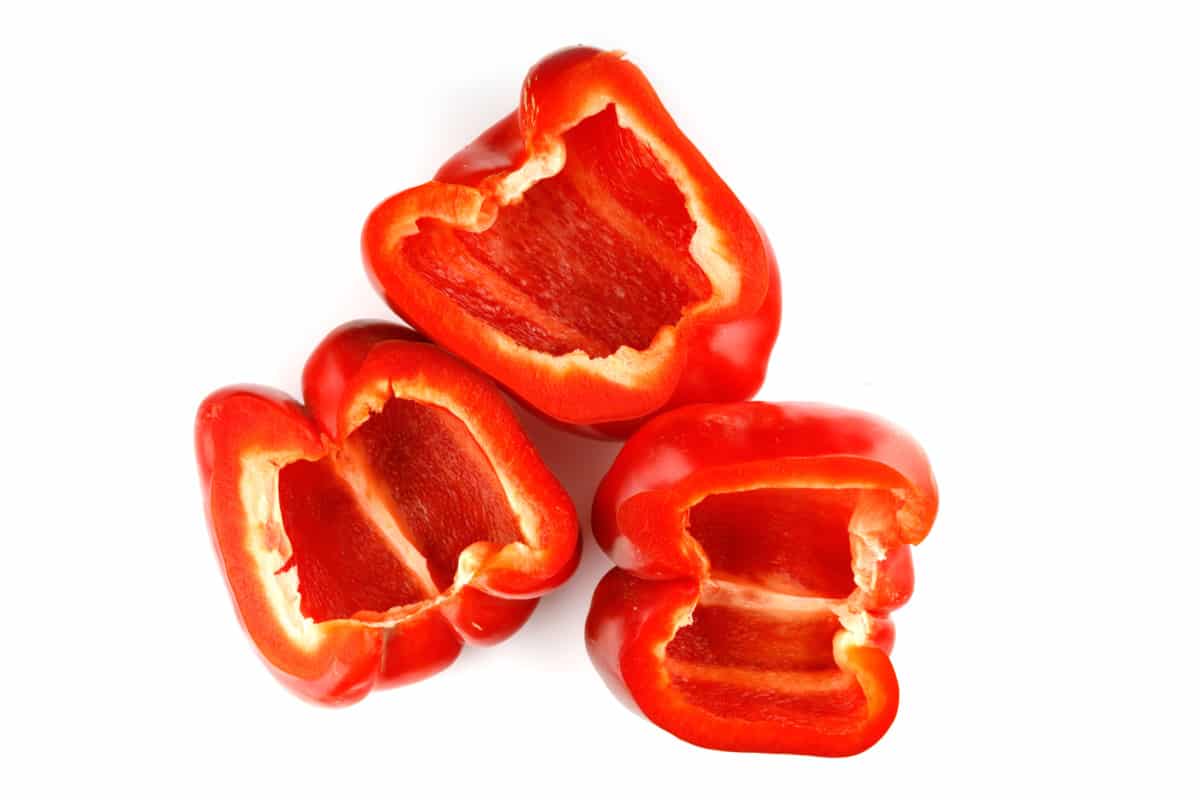
3 seconds is enough. Any longer and the pepper turns to puree; any shorter and the pieces are too large to cook through. Speed 8 is the balance between chopping and keeping some texture.
Simmer for 15 minutes without the measuring cup
The measuring cup stays out so that liquid can evaporate. Over 15 minutes the sauce reduces by about a third, concentrating the flavour and thickening nicely. With the measuring cup in place it stays thin and watery.
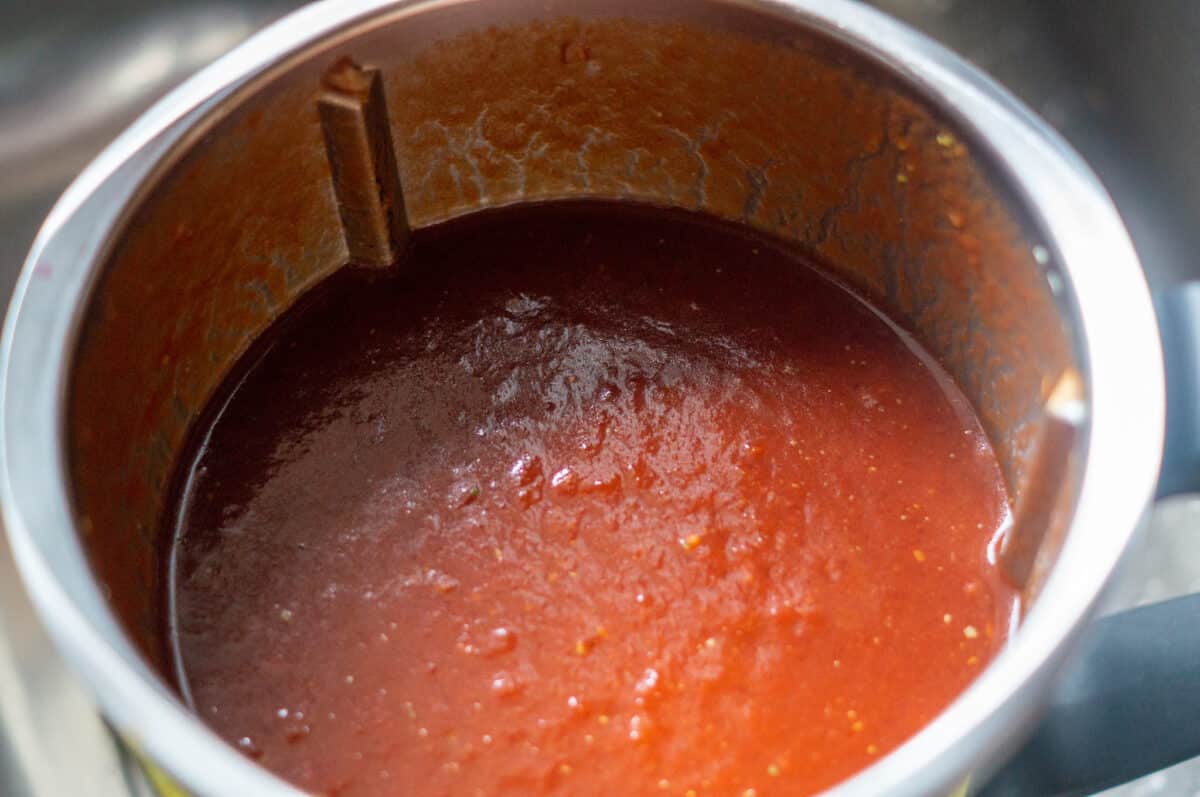
100°C at speed 2 gives a gentle simmer. The pepper softens, the sugar caramelises slightly, and the sharpness of the vinegar mellows. A higher temperature burns the sugar; a lower one leaves the pepper undercooked.
Mix the cornflour separately first
Cornflour clumps when added directly to hot liquid. We stir it with cold water until smooth before adding it. The 5 minutes at 100°C activates the starch and the sauce becomes silky and glossy.
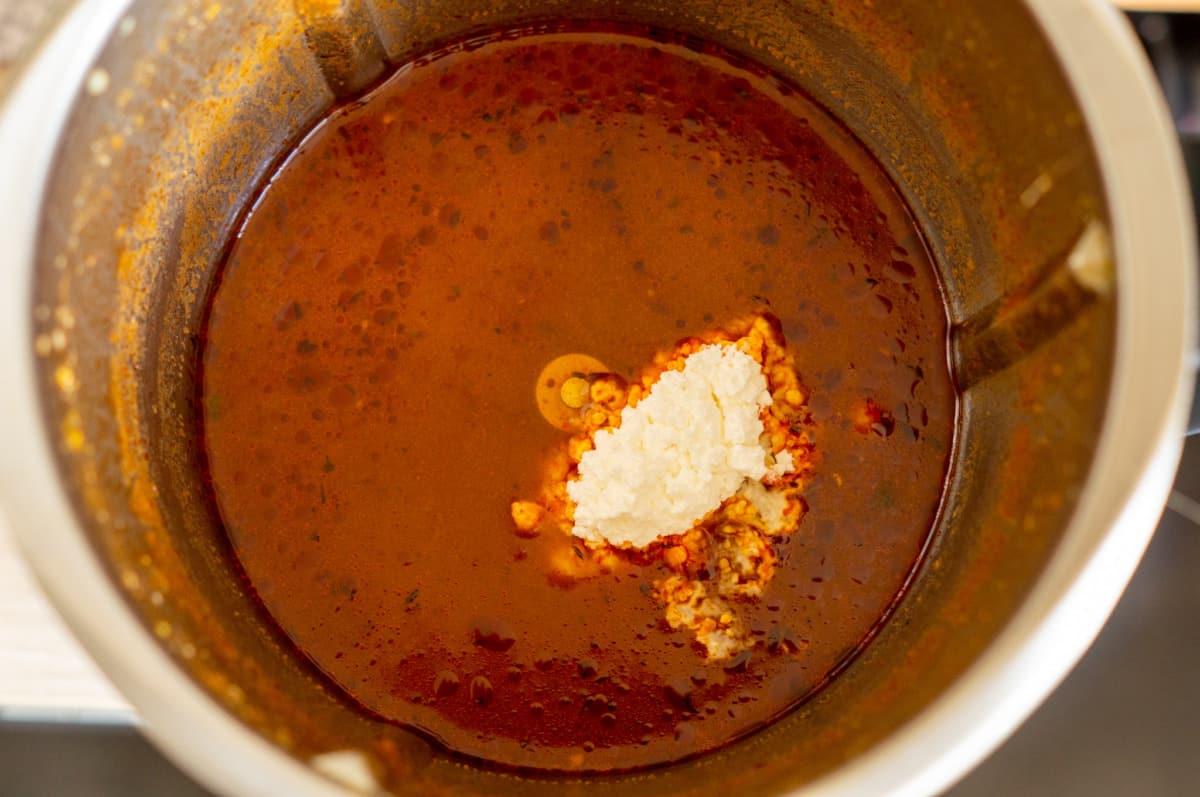
10 g of cornflour per 250 ml of liquid gives a medium consistency that coats a spoon without being too thick. More cornflour makes the sauce gluey; less and it stays too thin.
Soy sauce as the salty counterbalance
30 g of soy sauce plus 1 tsp of salt balance the 40 g of sugar and the 180 g of pineapple juice. Without salt the sauce tastes one-dimensionally sweet; without soy sauce it lacks its umami character. The soy sauce also gives the dark colour that is typical of sweet and sour sauce.
If you use less sugar, reduce the salt and soy sauce proportionally. The ratio needs to be right, otherwise the balance tips too far in one direction.
Cook the sesame oil in from the start
Many recipes suggest drizzling sesame oil in at the end. We add it together with the other ingredients. The oil cooks into the sauce, the aromas distribute evenly and the result tastes rounder. Sesame oil does not lose its flavour when heated; it simply spreads more evenly.
20 g is enough for a subtle sesame note. More would make the sauce greasy; less would not register in the final flavour.
The sauce keeps for 5 days in the fridge
The sauce keeps in the fridge for about 5 days. The acidity of the vinegar acts as a preservative. Freezing works too, but the cornflour changes the consistency slightly on thawing and the sauce becomes a little watery. Simply bring it back to the boil briefly and thicken again.
We use this sauce with Asian noodles, stir-fried vegetables, chicken or tofu. It also works well with spring rolls and baked fish. The exact quantities and timings are in the recipe card below.