Tiramisu with the Thermomix® only works when the egg mixture whips up stable and the Mascarpone stays cold. We whip for 6 minutes at speed 4, no hotter, no shorter. That creates enough volume for the structure without the raw eggs curdling.
We have made this recipe dozens of times, for birthdays, Christmas, and on a whim at the weekend. The cream turns out perfectly every time when you follow the order and add the Mascarpone only at the very end.
Tiramisu with the Thermomix®

Ingredients 0 / 8 ✓
- 140 g sugar
- 2 eggs
- 2 egg yolks
- 250 g espresso cooled
- 60 g Amaretto
- 300 g sponge fingers
- 500 g Mascarpone
- 2 tbsp cocoa powder (sweetened)
Instructions 0 / 6
-
1
Whip the cream until fluffy.
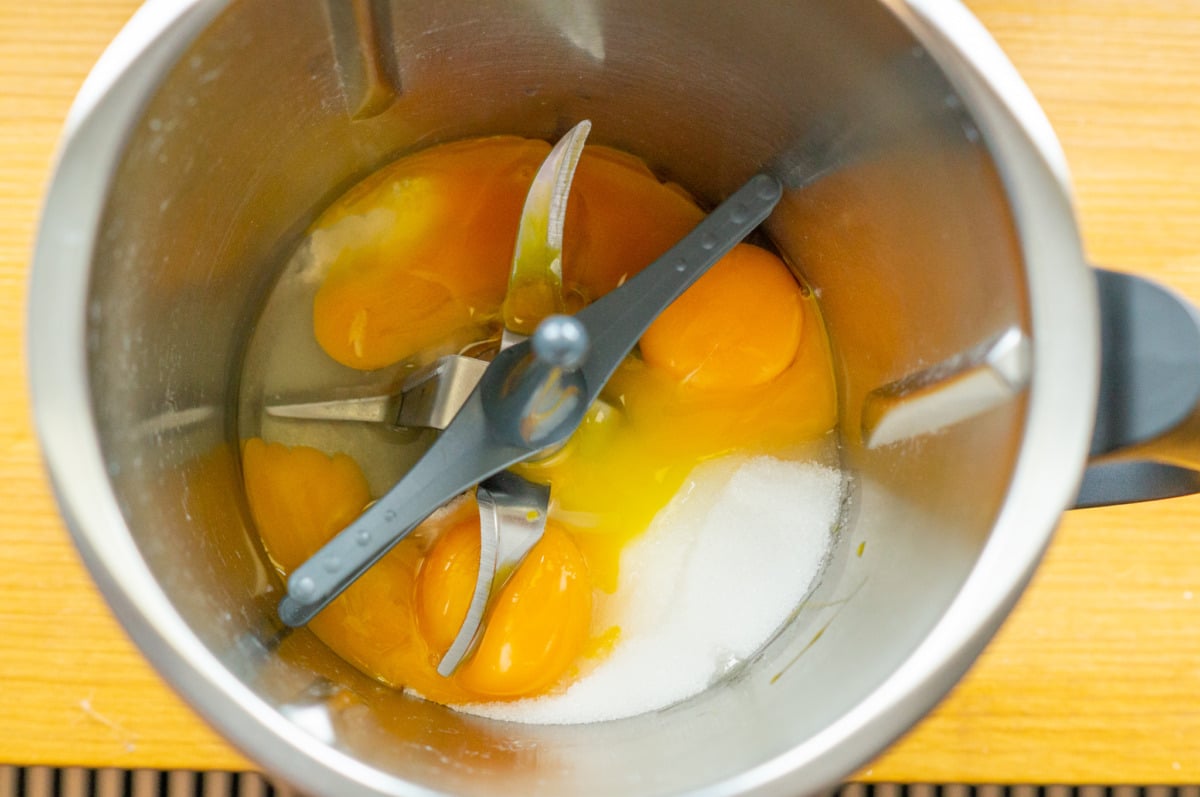
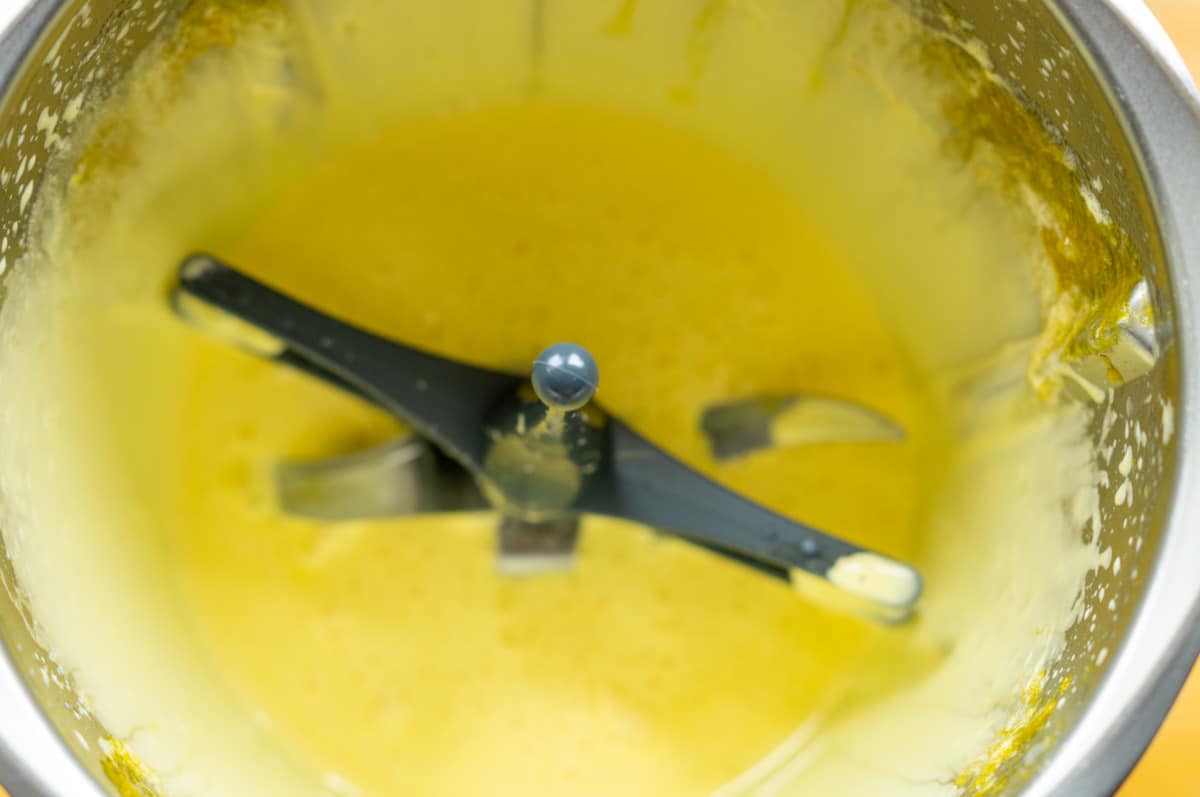
Insert the butterfly whisk, add the sugar, eggs, and egg yolks to the mixing bowl and whip for 6 minutes / speed 4 until light and creamy.
-
2
Dip the biscuits in coffee.
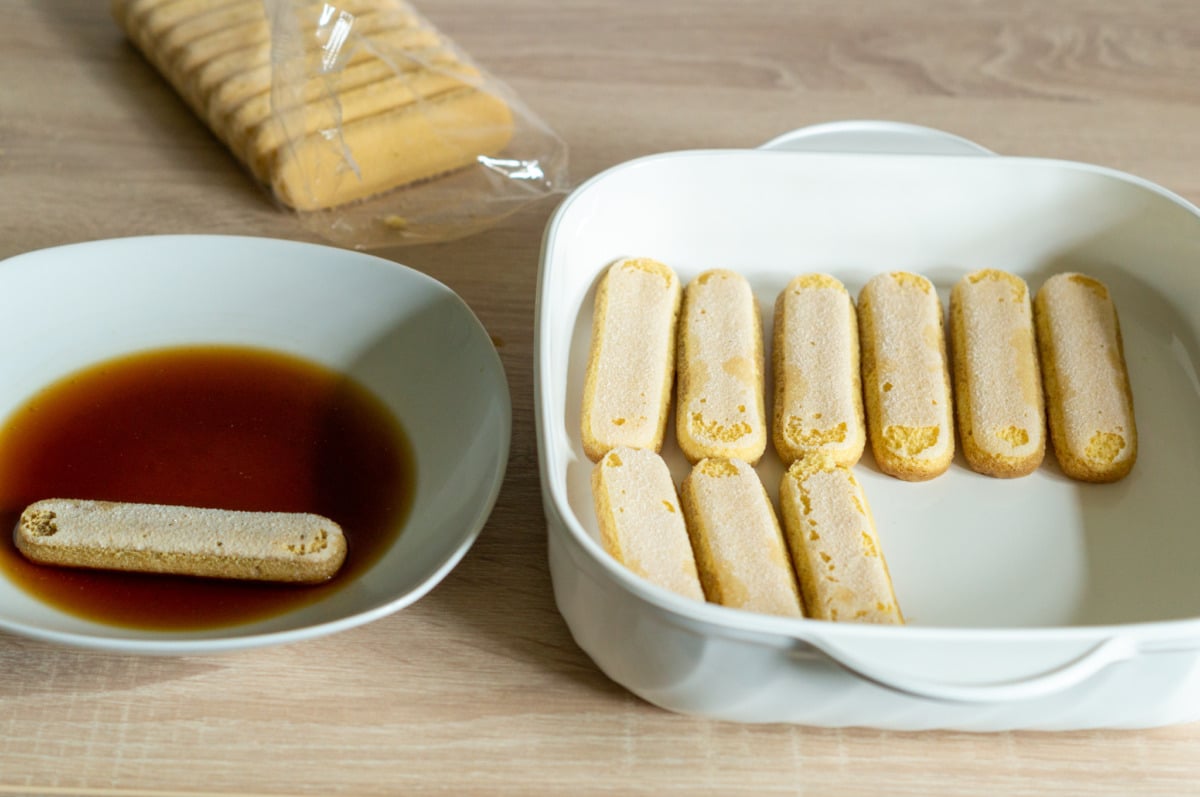
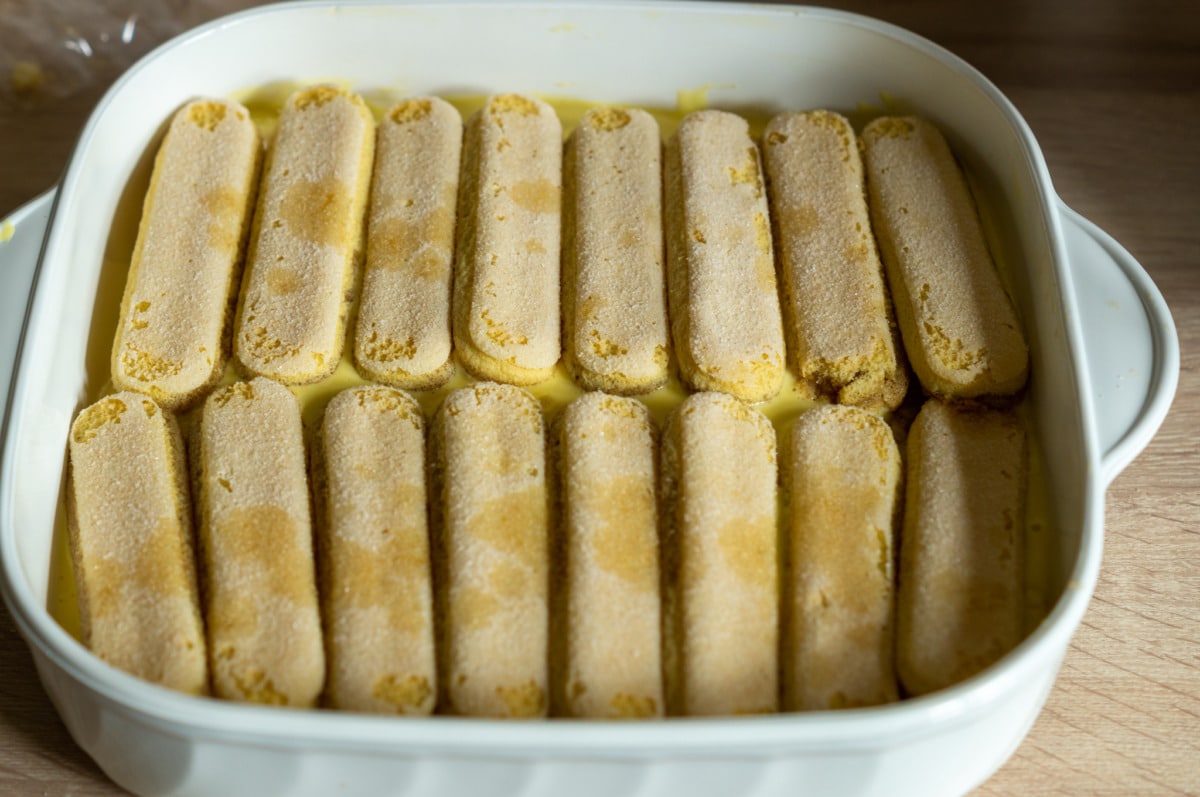
Meanwhile, mix the cold espresso with Amaretto in a shallow bowl. Briefly dip 150 g of sponge fingers into the coffee mixture and layer them in a baking dish.
-
3
Fold in the mascarpone.
Remove the butterfly whisk, place the lid without the measuring cup and set the Thermomix® to 1.30 minutes / speed 2. During this time, add the Mascarpone spoonful by spoonful through the lid opening.
-
4
Spread the cream over the biscuits.
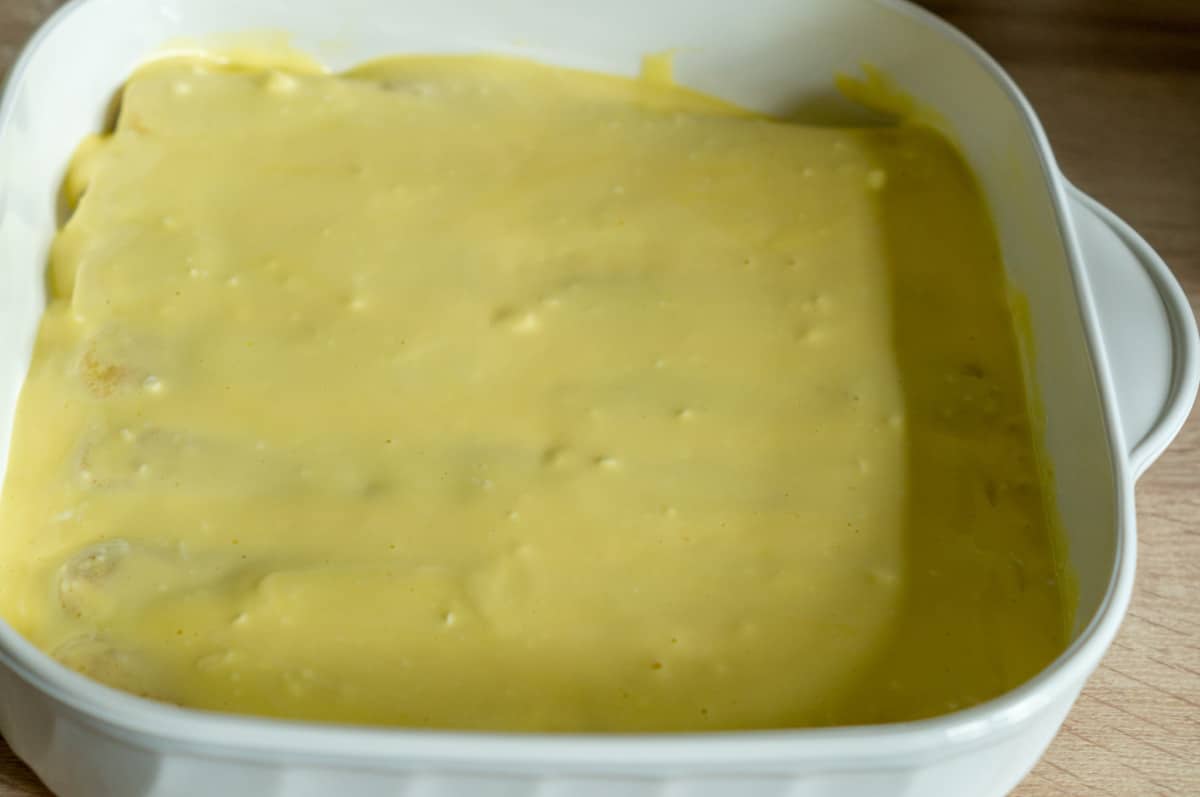
Spread half of the cream over the layer of sponge fingers.
-
5
Finish the Tiramisu and chill.
Dip the remaining sponge fingers in the coffee mixture again, cover with them, and spread the remaining cream on top. Refrigerate for at least 5 hours.
-
6
Dust the Tiramisu with cocoa and serve.
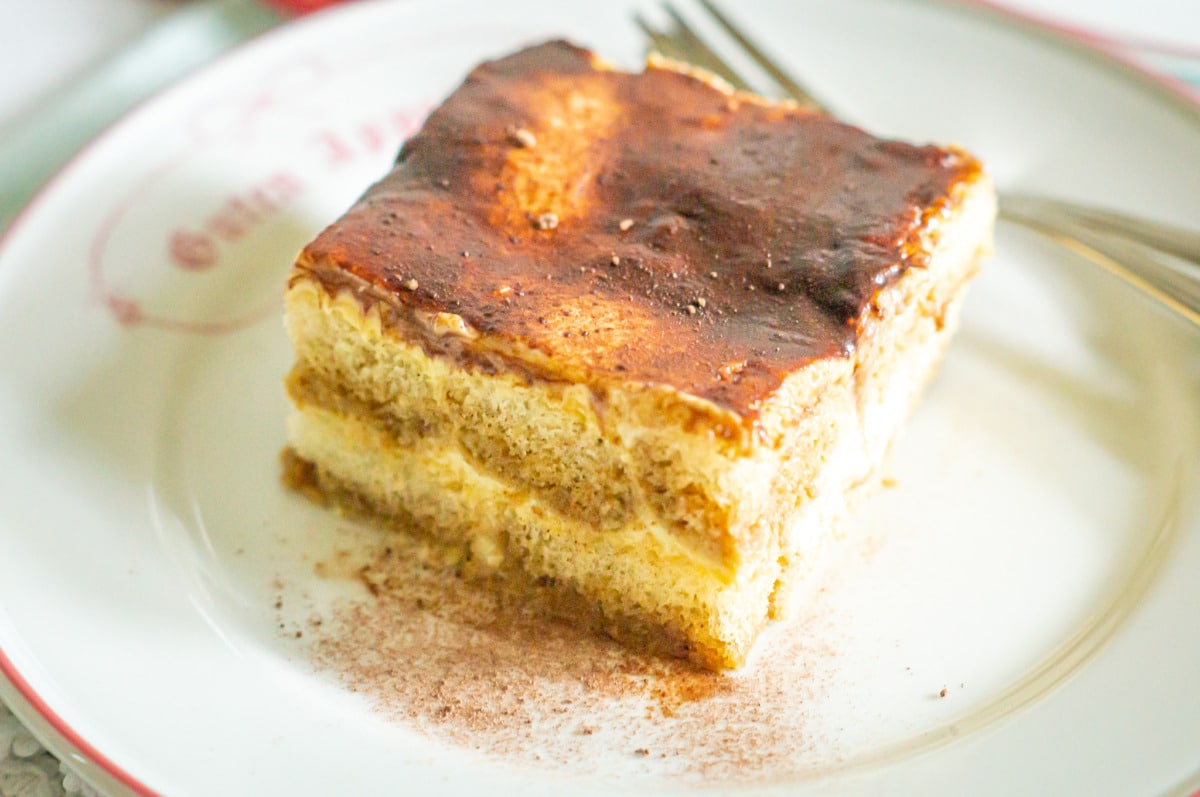
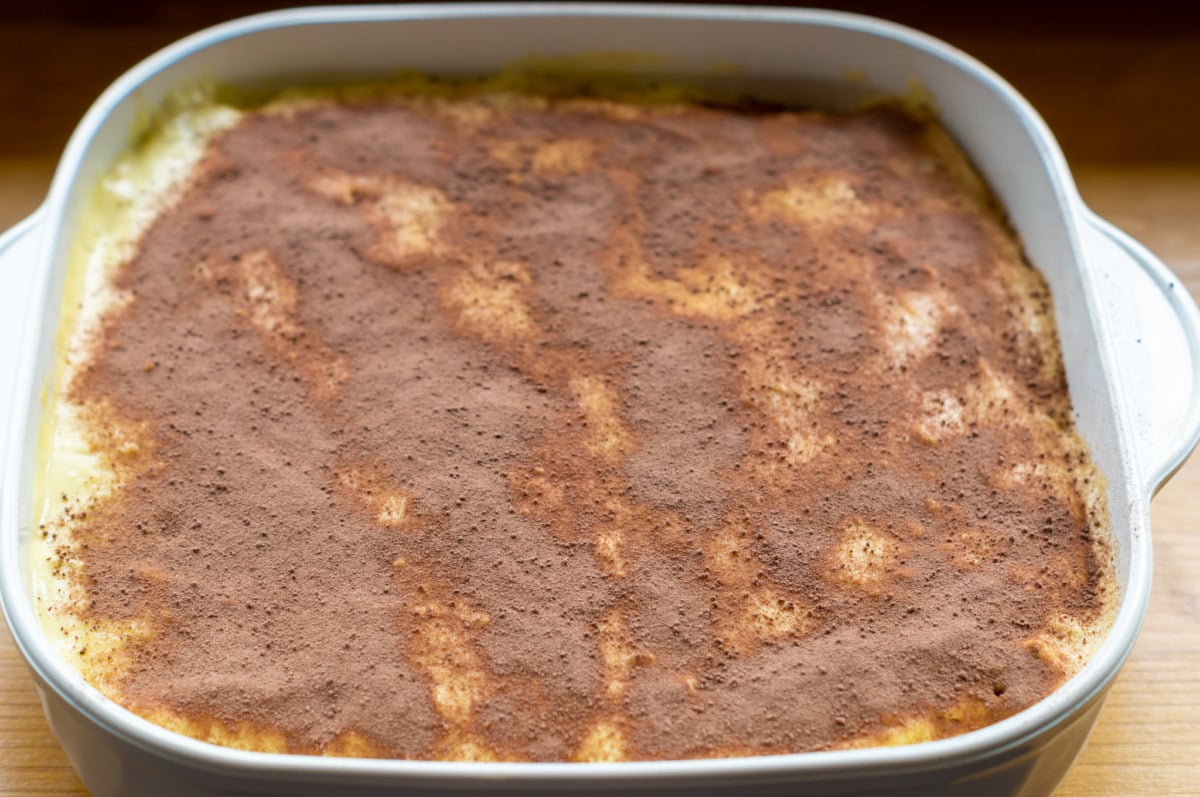
Before serving, dust the Tiramisu with cocoa powder.
Tip: As the cream is not heated, it is essential that you always use only very fresh eggs for this recipe.
Video
Nutrition per serving
Why 6 minutes at speed 4 for the egg mixture
Sugar, eggs, and egg yolks need to become creamy and airy before the Mascarpone is added. 6 minutes at speed 4 is the threshold at which enough air is incorporated without the mixture warming up or the foam collapsing.
Shorter than 5 minutes and the cream stays flat; longer than 7 minutes brings no further improvement. The butterfly whisk works slowly enough at speed 4 that the eggs do not warm up too quickly. We use 2 whole eggs plus 2 extra egg yolks because the yolks strengthen the binding and make the cream richer than whole eggs alone.
Add Mascarpone spoonful by spoonful through the lid opening
After whipping, remove the butterfly whisk and add the Mascarpone spoonful by spoonful through the lid opening with 1.5 minutes at speed 2 running. Not all at once, not with a spatula, not at a higher speed. Spoonful by spoonful because the cold Mascarpone would otherwise stay in lumps and not distribute evenly.
Speed 2 stirs gently enough that the whipped egg mixture does not collapse. At speed 3 or higher, the cream would become more liquid again because too much air escapes. The 1.5 minutes are just enough to stir in all the Mascarpone without the cream warming up.
Dip the sponge fingers only briefly
Mix the espresso with Amaretto in a shallow bowl, then dip each sponge finger for about 2 seconds. No longer. Longer than 3 seconds and the biscuits soak through, fall apart during layering, and make the Tiramisu soggy.
You want the biscuits to be soaked on the outside but still have structure on the inside. This only happens when you work quickly and dip them one at a time rather than several at once. The coffee mixture must be cold, otherwise the biscuits absorb liquid faster.
Layering, not mixing
First layer of biscuits in the dish, then spread half the cream over it. Second layer of biscuits, remaining cream on top. Not the other way around, not mixed up. The cream must be at the top and bottom so the Tiramisu does not fall apart when cut.
Spread the cream with a spatula, not a spoon. The spatula spreads the cream evenly and smoothly; the spoon leaves gaps. There should be no air between the two layers, otherwise the Tiramisu slides when served.
At least 5 hours in the fridge
5 hours is the minimum. Less than that and the cream is still too soft, the biscuits have not fully absorbed the coffee. Overnight is better because the flavours blend more strongly and the Tiramisu firms up.
Chill in the fridge at around 4 to 6 °C, not in the freezer. The freezer makes the cream crystalline and the flavour flat. Dust the Tiramisu with cocoa powder just before serving, not earlier. Cocoa draws moisture from the cream and becomes lumpy if added too soon.
Fresh eggs are essential
The cream is not heated. You are working with raw eggs. Fresh eggs are therefore not optional but essential. We buy eggs with the shortest possible best-before date and use them within 3 days of purchase.
If you are unsure whether the eggs are fresh enough, skip the Tiramisu and make a dessert with heated eggs instead. Old eggs in Tiramisu are not a flavour risk but a health risk.
Amaretto or Marsala
We use Amaretto because the almond flavour pairs well with the coffee and has a gentle sweetness. Marsala is the classic option, drier and more wine-like in flavour. Both work; Amaretto is the milder choice.
If you are making the Tiramisu for children, leave out the alcohol and replace it with more espresso or with 2 tablespoons of almond syrup. Without alcohol the coffee note becomes stronger; the cream stays identical.
Maximum 2 days
Tiramisu keeps in the fridge for a maximum of 2 days because the raw eggs have been used. After 2 days the cream becomes more watery and the biscuits go soggy. Freezing is not an option as the cream separates on thawing.
You can store the Tiramisu covered but not airtight. Cling film placed directly on the surface prevents the cocoa from drawing moisture. In a sealed container the cream becomes too wet.
Goes well with: Espresso and Amaretto.
Goes well with: Herrencreme Thermomix®.
More Italian desserts with the Thermomix®: try our Strawberry Tiramisu and our Quick Tiramisu.