Creamed cake batter in the Thermomix® takes 3 minutes with the creaming attachment. This tool mixes more gently than the blade and stops the batter from becoming tough during mixing.
We have been making creamed cake batter several times a week for years. By now we know exactly where things go wrong and where the Thermomix® makes a real difference.
Creamed Cake Batter with the Thermomix®

Ingredients 0 / 5 ✓
- 230 g sugar
- 4 eggs
- 250 g butter
- 250 g flour
- 1/2 sachet baking powder
Instructions 0 / 3
-
1
Preheat the oven.
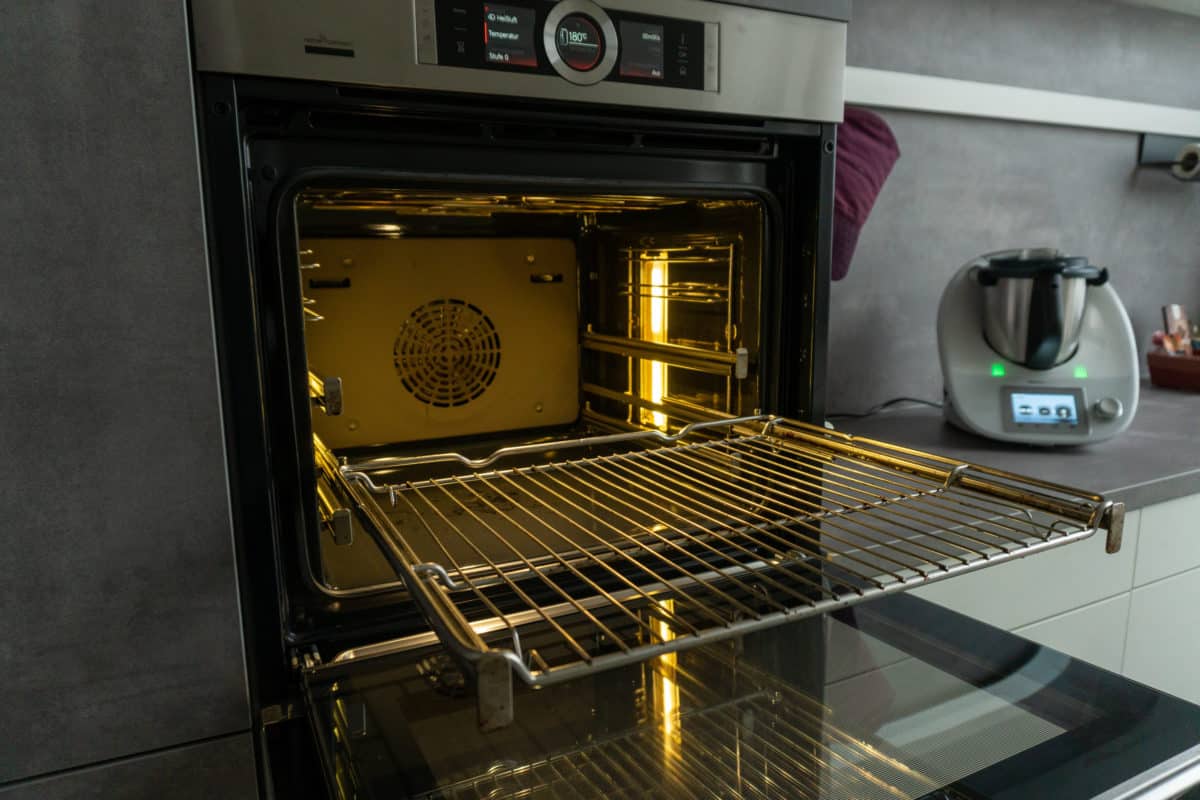
Preheat the oven to 180°C top and bottom heat (fan 160°C).
-
2
Mix the batter.
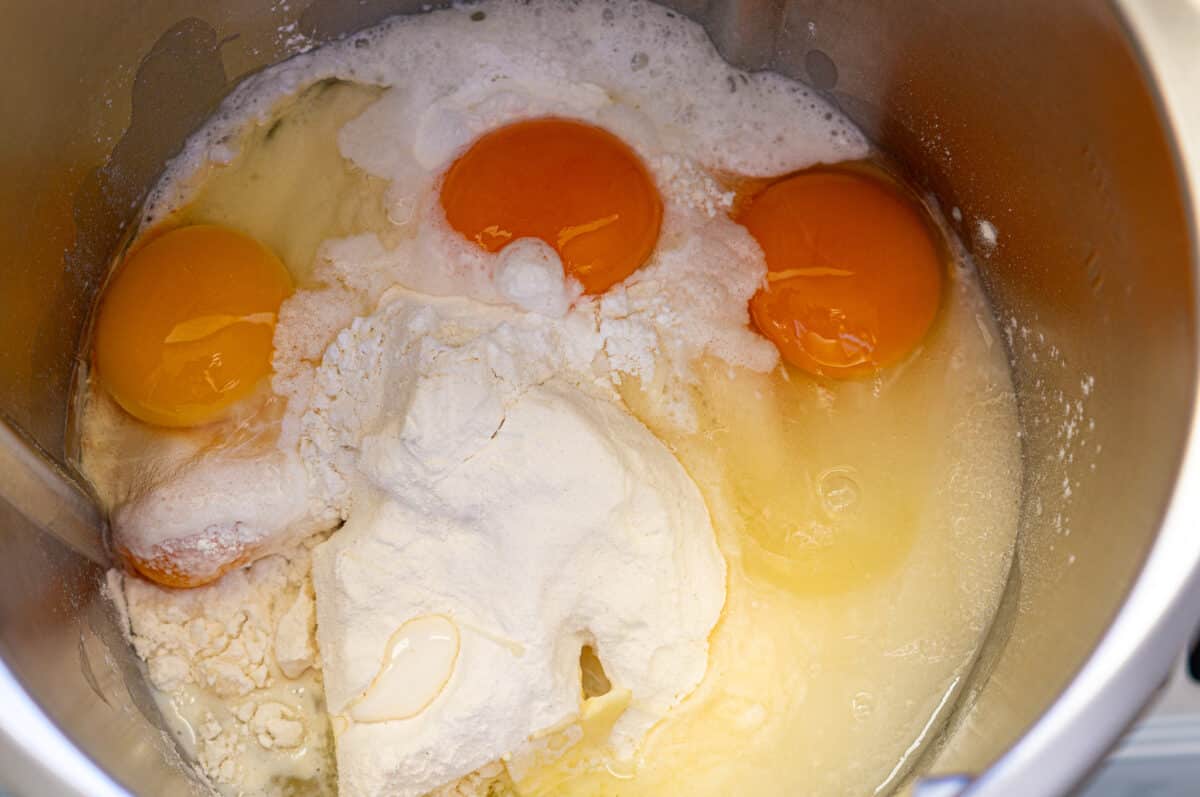
Insert the creaming attachment into the mixing bowl. Add sugar, eggs and butter cut into pieces to the mixing bowl and mix for 3 minutes / speed 4. Remove the creaming attachment.
-
3
Finish the batter.
Add flour and baking powder to the mixing bowl and mix for 20 seconds / speed 4. Continue with the batter as desired (see tips).
Tip: This basic batter can be adapted in many ways depending on your taste.
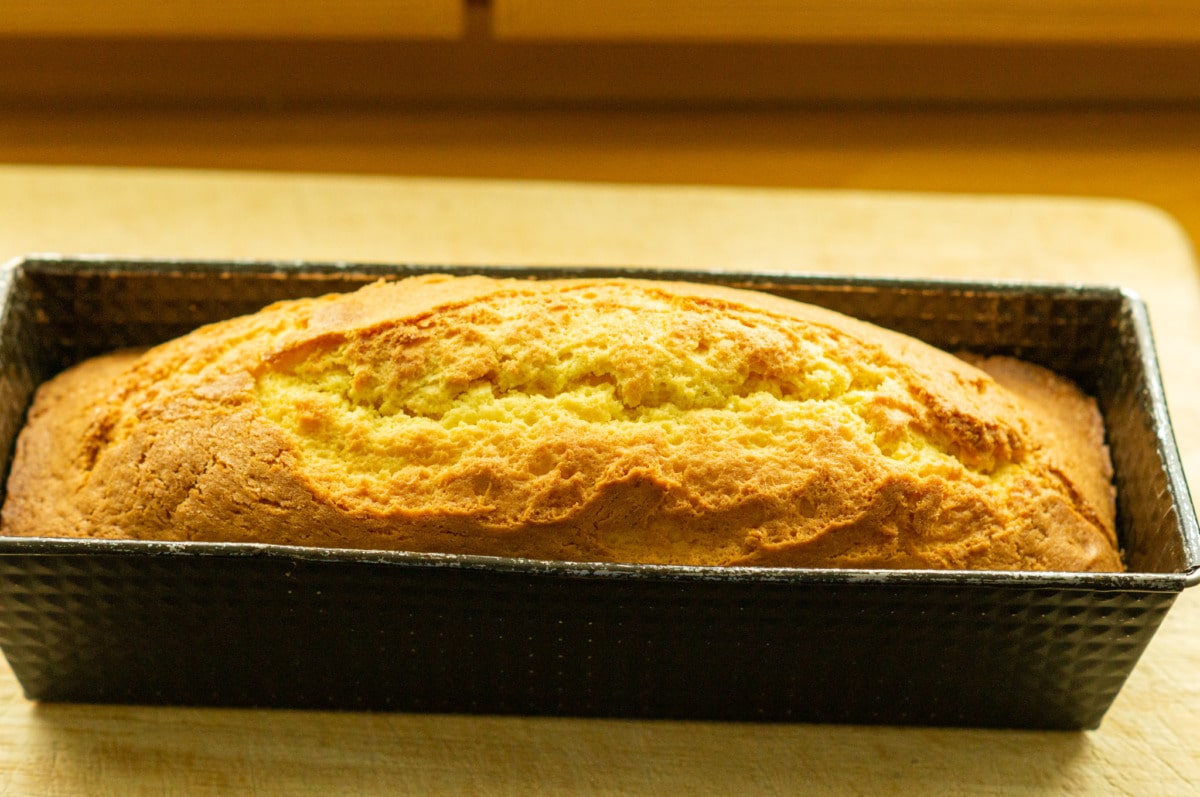
With our batter you can grease a loaf tin with butter and dust it with sugar. Pour the batter into the tin and bake on the middle shelf of the oven for 55 to 60 minutes.
Nutrition per serving
Creaming attachment or butterfly whisk?
The creaming attachment is the right tool for creamed cake batter. The butterfly whisk aerates whipping cream or egg whites, while the creaming attachment combines thick batters and creams without overworking them.
The two arms of the creaming attachment work more gently than the blade at speed 1 to 4. This prevents over-mixing and keeps the emulsion of butter, sugar, and eggs stable. If you use the butterfly whisk instead of the creaming attachment, the mixture becomes too airy and the cake collapses during baking.
TM31 owners do not have a creaming attachment. The alternative: use the butterfly whisk, set speed 3 instead of speed 4, and mix for 4 minutes instead of 3 minutes. This compensates for the lower speed.
Butter soft, not melted
Soft butter at 18 to 20°C is essential. Too cold (below 15°C) and fat lumps form that will not dissolve. Too warm (above 25°C) and the emulsion breaks, causing the batter to curdle.
Butter melts completely from 28°C upwards. For creamed cake batter you need the stage before that: soft enough to press, but still holding its shape. You achieve this by taking the butter out of the fridge 30 to 60 minutes before baking.
Do not melt it in the microwave. Liquid butter will not combine with sugar and eggs. The pieces you put into the mixing bowl should be soft enough to press a finger into, but they must not run.
3 minutes at speed 4 is enough
The first 3 minutes at speed 4 bring the sugar, eggs, and butter together into a creamy mass. The sugar dissolves, the eggs emulsify the fat, and the air that gets trapped in the process lightens the cake later.
Mixing for longer achieves nothing. After 3 minutes the emulsion is stable. More time only adds unnecessary air bubbles that escape during baking and flatten the cake. Less than 3 minutes leaves sugar crystals that crunch in the finished cake.
Speed 4 is the balance: gentle enough that the butter does not overheat, and strong enough to produce a creamy consistency. Speed 3 takes too long, and speed 5 or higher makes the mixture too warm.
Flour for 20 seconds only
After the emulsion comes the flour. Add 250 g of flour and half a sachet of baking powder to the mixing bowl, remove the creaming attachment, and mix for 20 seconds at speed 4.
Mixing for longer than 20 seconds activates the gluten in the flour. Plain flour type 405 contains 8 to 10% protein. From around 30 seconds of intensive mixing, gluten development begins, which makes the batter tough instead of light.
The 20 seconds are enough to combine the flour and baking powder with the fat, sugar, and egg mixture without breaking the structure. If you spot lumps, work them out with the spatula rather than mixing for longer.
If the batter is too stiff
Creamed cake batter should drop from a spoon, not pour and not stick. If the batter is too stiff (spoonable but not pourable), it needs more liquid. Add 1 to 2 tbsp of milk and stir briefly with the spatula.
If the batter is too runny (flows straight off the spoon), it needs more binding. Add 1 tbsp of flour per 100 g of batter. More than 2 tbsp in total will make the cake dry.
Consistency troubleshooting guide:
- Too stiff (spoonable, holds its shape): stir in 1 to 2 tbsp of milk
- Too runny (flows immediately, no structure): add 1 tbsp of flour per 100 g of batter
- Curdled (fat lumps visible): butter or eggs were too cold; bring both to the same temperature and start again
- Crumbly (falls apart): mixed for too long and gluten has developed; 1 to 2 tbsp of milk will partly rescue the structure
Plain flour or spelt flour?
Plain flour type 405 is the standard for creamed cake batter. It has 8 to 10% protein, a fine crumb, and the cake comes out light. Spelt flour type 630 has more protein (10 to 12%), tastes nuttier, but the cake will be denser.
If you use spelt flour, you need 10 to 15% more liquid. That is 1 to 2 tbsp of extra milk alongside the 250 g of flour. Without this adjustment the batter becomes too dry and the cake will crack.
Gluten-free flour (rice flour, buckwheat flour) needs a binder. Add 1 tsp of xanthan gum or 1/2 tsp of guar gum per 250 g of flour, otherwise the batter will not hold together.
Freezing and defrosting
Creamed cake batter keeps for 3 days in the fridge (4 to 7°C), covered with cling film or in an airtight container. At room temperature it should not stand for more than 2 hours because of the risk of salmonella from raw eggs.
Freezing works well for up to 3 months without any loss of quality. Divide the batter into portions in freezer bags (for example, about 400 g each for a small loaf tin) and freeze at minus 18°C.
Allow 2 to 3 hours to defrost at room temperature. Do not defrost in the microwave. Baking powder begins to activate slowly from about 20°C and quickly from 40°C. If the batter warms up too much, the leavening power is spent before the cake ever reaches the oven.
Tin size conversion
This recipe is sized for a 30 cm loaf tin or a 26 cm springform tin. If you have a different tin, scale the quantities accordingly:
- 30 cm loaf tin: 1x recipe (250 g flour, 250 g butter, 230 g sugar, 4 eggs)
- 26 cm springform tin: 1x recipe
- 28 cm springform tin: 1.5x recipe (375 g flour, 375 g butter, 345 g sugar, 6 eggs)
- Muffin tin (12 pieces): 1x recipe, baking time 20 to 25 minutes at 180°C
With larger tins (28 cm or more) the baking time increases by 10 to 15 minutes. A skewer test is essential: insert a wooden skewer into the centre and if it comes out clean, the cake is done.
Model differences: TM31, TM5, TM6, TM7
The TM31 does not have a creaming attachment. The alternative is the butterfly whisk at speed 3 for 4 minutes instead of speed 4 for 3 minutes. The lower speed compensates for the longer time.
The TM5, TM6, and TM7 all work identically with the creaming attachment. The speed settings and times remain the same. The TM6 (since 2019) and TM7 (since 2024) have additional automatic modes, but for creamed cake batter you do not need them.
Preventing curdling
If the batter curdles (fat lumps visible, crumbly texture), the cause is temperature. Cold butter (below 15°C) combined with warm eggs (above 25°C) will not form a stable emulsion. The fat separates from the water in the eggs.
Cause and effect overview:
- Cold butter and warm eggs: fat lumps form, mixture curdles. Solution: take butter and eggs out of the fridge 30 minutes before you start
- Mixed too fast (speed 5 or higher): mixture gets too warm, emulsion breaks. Solution: keep to speed 4 and do not rush
- Ingredients not at room temperature: butter stiff, eggs cold. Solution: take all ingredients out 60 minutes before you begin
If the batter has already curdled, you can try stirring in 1 to 2 tbsp of warm milk (not hot, about 30°C). This sometimes rescues the emulsion, but not always. Starting fresh is the safer option.
More basic recipes:
- Thermomix® pancake batter
- Thermomix® pizza dough
- Solero cake Thermomix®
Add eggs one at a time through the lid opening
Most Thermomix® creamed cake batter recipes add all the eggs to the mixing bowl at once. We do it differently: with the machine running at speed 4, add each egg individually through the lid opening, with about 15 seconds between each one.
The reason is emulsion stability. When all 4 eggs drop into the butter and sugar mixture at once, the fat cools sharply and the emulsion breaks more often. Added one at a time, each egg has a chance to combine with the fat before the next one goes in.
Goes well with: buttercream, jam, and icing sugar.
You might also like: strudel pastry with the Thermomix®.
We also deliberately differ from the standard recommendation on baking powder. Many basic recipes call for a whole sachet (15 g), but we use only half (8 g) per 250 g of flour. More baking powder gives a slight bitter taste and causes a crater in the middle, because the batter rises too quickly and then collapses.
Further reading: Guides on kneading and yeast dough can be found in the Thermomix® operating guide section. Or browse the complete guides overview.