With cauliflower gratin in the Thermomix®, one single point decides the result: we take the cauliflower out of the Varoma while it still has a clear bite. In the 220 °C oven it carries on cooking for another 20 minutes, and that is exactly what most recipes overlook.
We have been making this gratin for years to our family cookbook standard: 1000 g cauliflower, 200 g Emmental cheese, a sauce made from milk, crème fraîche and cornflour. It sounds simple, and it is. But the difference between a gratin with bite and a soggy baked mush comes down to those first 20 minutes, long before the crust forms on top. Anyone who steams the cauliflower in the Varoma until it is fully soft can forget the oven altogether.
Cauliflower Gratin with the Thermomix®

Ingredients 0 / 10 ✓
- 200 g Emmental cheese
- 600 g vegetable stock
- 1000 g cauliflower cut into florets
- 200 g milk
- 200 g crème fraîche
- 40 g cornflour
- 1 tsp salt
- 1 pinch nutmeg
- 1/2 tsp pepper
- 30 g butter
Instructions 0 / 5
-
1
Grate the cheese.
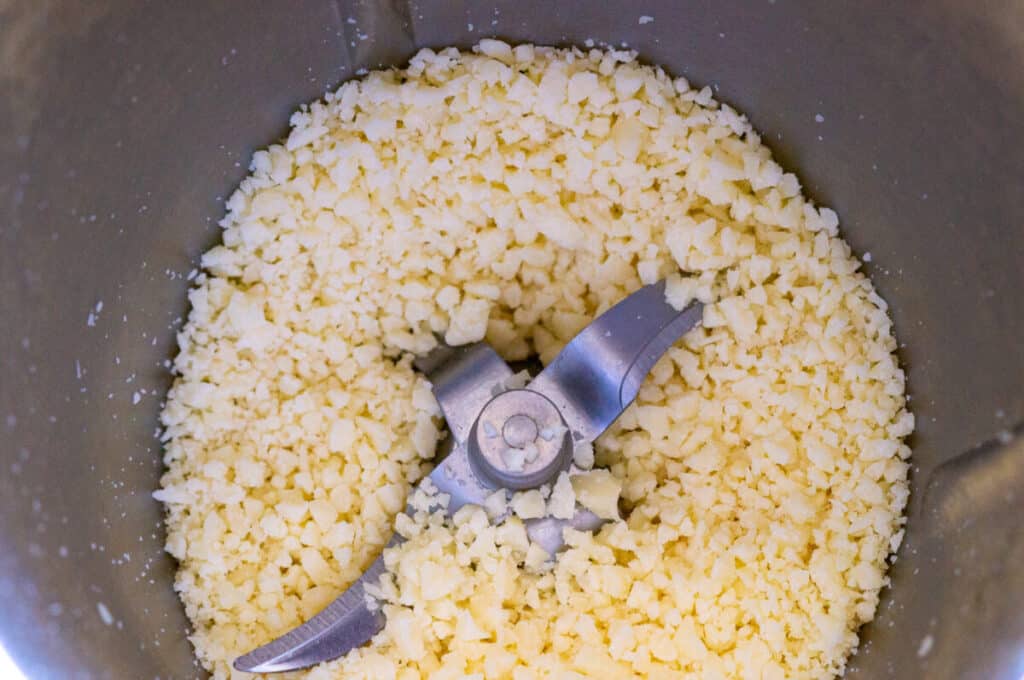
Place the Emmental cheese in the mixing bowl and grate for 6 seconds / speed 8, then set aside.
-
2
Steam.
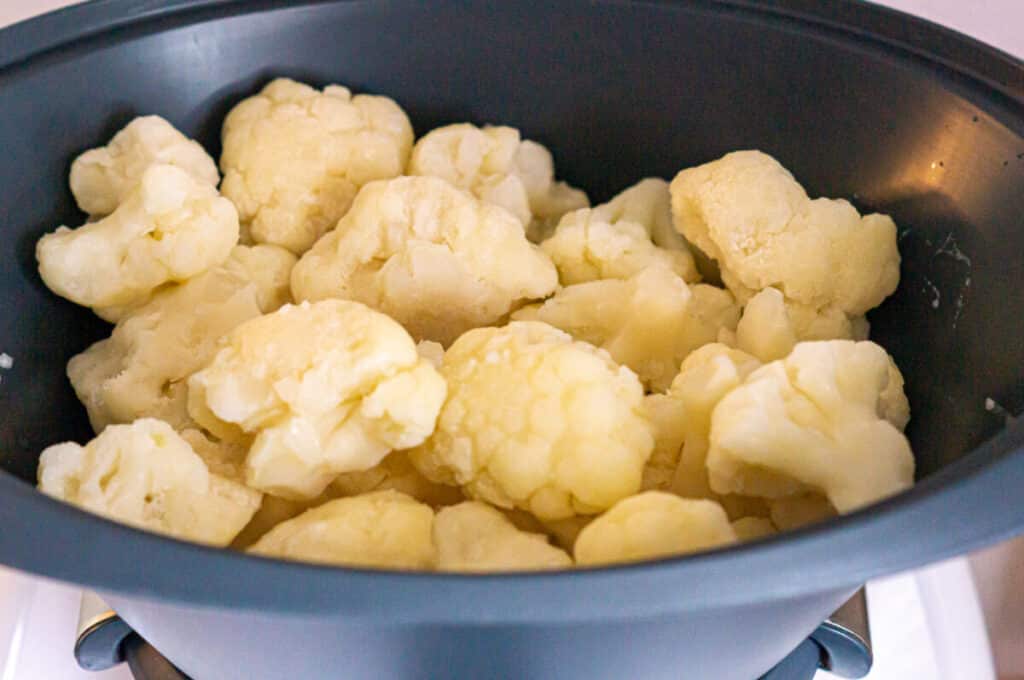
Pour the vegetable stock into the mixing bowl, spread the cauliflower florets in the Varoma dish, set it on top of the mixing bowl and steam for 20 minutes / Varoma / speed 1.
-
3
Fill the baking dish.
Spread the cauliflower evenly in a baking dish. Preheat the oven to 220 °C top and bottom heat.
-
4
Cook the sauce.
Empty the mixing bowl, leaving 200 g of cooking liquid, then add the milk, crème fraîche, cornflour, salt, nutmeg and pepper and cook for 7 minutes / 100°C / speed 1. Add 100 g of cheese and stir for 5 seconds / speed 3.
-
5
Bake.
Pour the sauce over the cauliflower, scatter the remaining cheese on top, dot the butter in small flakes over the gratin and bake on the middle shelf of the oven for 20 minutes until golden.
Tip: This gratin goes well with jacket potatoes, quickly pan-fried meat, fish or sausages.
Nutrition per serving
Why the cauliflower must go into the dish half-cooked
The 20 minutes of steaming at Varoma / speed 1 are deliberately kept short in the recipe. The cauliflower should be just tender enough to pierce with a fork, but not collapsing. When we test it with a fork, there should still be a slight resistance. If a thick piece is still too firm after 20 minutes, it is better to steam for two or three more minutes rather than cooking it through completely. In the oven the following happens: the sauce is hot, the baking dish is hot, the cheese melts from above, and the residual moisture means the cauliflower carries on cooking steadily in the heat. After 20 minutes at 220 °C top and bottom heat it is soft to the fork without being mushy.
Equally important: the cauliflower must be allowed to release steam briefly before the sauce goes on. We leave it in the baking dish for one to two minutes before pouring the sauce over it. Otherwise condensation collects at the bottom, which later works its way up through the gratin and thins the sauce. This way the sauce stays thick, the cheese on top turns golden brown and nothing is watery underneath.
What binds the sauce without it going lumpy
Instead of a classic roux with butter and flour, we use 40 g of cornflour here. The cornflour goes directly into the mixing bowl together with 200 g of milk, 200 g of crème fraîche, salt, a pinch of nutmeg and half a teaspoon of pepper. The key step comes before that: after steaming in the Varoma, the mixing bowl often holds 400 g or more of cooking liquid. We pour it out, leaving exactly 200 g. Any more and the sauce stays thin. Any less and it turns gluey in the oven.
The 7 minutes at 100°C / speed 1 are enough to bind the cornflour completely. If the sauce looks too thin afterwards, we add another 30 seconds at 100°C. The 100 g of grated Emmental cheese only goes in at the very end, for 5 seconds at speed 3. That way the cheese melts into the sauce without making it greasy. The other 100 g of cheese we keep back for the crust. In the mixing bowl, the Thermomix® chops the Emmental in 6 seconds at speed 8 to a fine grated texture, just as good as a hand grater but without the scraped knuckles.
The parallel prep that makes this recipe quick
While the cauliflower steams in the Varoma for 20 minutes, in a conventional kitchen you would need a second pot for the béchamel, flour to sweat off, milk to stir in and constant whisking. With the Thermomix® none of that is needed. The cauliflower steams above the mixing bowl, the mixing bowl collects the cooking liquid below, and as soon as the Varoma comes off the same bowl becomes the sauce pot. No second piece of equipment, no switching pots, no draining water. Anyone who cooks this gratin for the first time this way quickly notices: the hands-on time is closer to 15 minutes than the 30 stated in the recipe.
Where gratins go wrong: soggy base or missing crust
1. The cauliflower becomes too soft in the Varoma
Anyone who runs the full 20 minutes or pushes beyond it because the florets are cut unevenly will end up with a watery gratin. In the oven the florets then fall apart into mush. Our fix: We cut the cauliflower into equally sized florets, roughly 3 cm across. The smaller stalk pieces go into a separate corner of the Varoma dish and are taken out earlier. After 18 minutes we check with a fork.
2. The sauce becomes too thick in the oven
40 g of cornflour binds a lot. If the cooking liquid left in the mixing bowl is measured below 200 g, say only 150 g, the sauce turns into a stodgy paste in the oven. Our fix: Weigh to exactly 200 g of cooking liquid, do not estimate. If you want to be on the safe side, add an extra 30 g of milk. Better to go into the oven slightly thinner than too firm.
3. The crust burns on top while the inside is still liquid
At 220 °C top and bottom heat this only happens when the dish is placed in the wrong position. Our fix: The middle shelf is essential, not the top shelf. If the cheese is already getting too dark after 12 minutes, we cover it with foil and remove it for the last 5 minutes so the crust can finish browning.
4. The butter flakes on top are missing
The 30 g of butter in flakes over the cheese is not decoration, it is mechanics. As the butter melts it draws fat across the cheese layer and creates the even golden brown colour. Our fix: Use cold butter straight from the fridge, cut into small pieces, and distribute roughly ten dots across the whole dish. Soft butter melts instantly and leaves patches.
How to vary the gratin
Mix with broccoli: 500 g cauliflower plus 500 g broccoli makes a more colourful gratin. Broccoli needs one to two minutes less in the Varoma, so we add it after the first 5 minutes.
With diced ham: Scatter 100 g of cooked ham, finely diced, over the cauliflower before the sauce goes on. For a heartier version, use raw pancetta and fry it off in a pan first.
With a breadcrumb crust: Instead of cheese alone on top, mix 30 g of breadcrumbs with the 30 g of butter and scatter over the cheese. This gives a crunchier, almost audible crust. Be careful: at 220 °C breadcrumbs colour quickly, so only add them in the last 10 minutes.
With mountain cheese instead of Emmental: Allgäu mountain cheese or Gruyère melts with a more pronounced flavour and pulls into beautiful cheese strings. The quantity stays at 200 g.
What to serve alongside
We often serve this gratin as a main course with jacket potatoes on the side. If you want a proper side dish to go with meat, make the gratin in smaller individual dishes and serve alongside a quickly pan-fried steak. We do not need a sauce on the side, but if you do, our Sauce Hollandaise with the Thermomix® pairs beautifully with the cauliflower. We grate the cheese for the crust the same way as we do for Parmesan in the Thermomix®, the method is identical. For more gratin inspiration, browse our Thermomix® bake and gratin recipes or try our Lasagne with the Thermomix®.
2 days in the fridge, crisped up again in the oven
Covered in the fridge, the gratin keeps for two to three days. To reheat, place it in the oven at 180 °C for 12 to 15 minutes, covered with foil so the cheese does not brown too much a second time. In the microwave the sauce quickly turns watery and the cauliflower goes rubbery, so we recommend the oven.
Freezing cauliflower gratin works only with limitations. On thawing, the cauliflower releases water, the sauce splits and the texture becomes spongy. If you still want to freeze it, it is better to freeze only the finished sauce in portions and cook the cauliflower fresh. When reheating, warm the sauce gently in the mixing bowl at 80°C, speed 2.
How other recipes approach this dish
Goes well with: Schnitzel.
Cookidoo® and similar recipe platforms typically steam the cauliflower for 20 to 25 minutes in the Varoma at speed 1. We do the same, because the head cooks through evenly that way without becoming watery. For the cheese, many other recipes opt for Gouda and Parmesan in the crust. We deliberately stick to a single type of cheese for a cleaner flavour. Notably, some recipes use double cream and crème fraîche instead of a classic béchamel. That saves one step with flour, but the result can become greasy quickly. Our cornflour sauce in the mixing bowl at 90°C, speed 2, stays silky and holds together even the next day when the gratin is reheated in the oven.
More classic bake and side dish recipes with the Thermomix® can be found in our collections for bakes and side dishes.