Baguette rolls made with the Thermomix® are ready in just under 2 hours: 3 minutes on kneading mode, 1 hour to prove and 20 minutes to bake. The key is the steam and water combination. A heatproof dish with water on the oven floor at 250°C keeps the crust moist in the first few minutes so it can expand before setting. Without steam, the crust tears unpredictably and turns hard rather than crispy.
We bake these rolls as a side for fondue, a snack spread or when there is time for a relaxed breakfast at the weekend. The type 550 flour combined with 60 g of type 1150 rye flour gives the rolls their rustic character. Using only type 405 flour makes them too soft and too pale.
Rustic Baguette Rolls, Thermomix®

Ingredients 0 / 5 ✓
- 1/2 cube fresh yeast
- 400 g water
- 2 tsp salt
- 600 g flour, type 550
- 60 g rye flour, type 1150
Instructions 0 / 6
-
1
Dissolve the yeast.
Add yeast, water and salt to the mixing bowl and warm for 3 min / 37°C / speed 1.
-
2
Knead the dough.
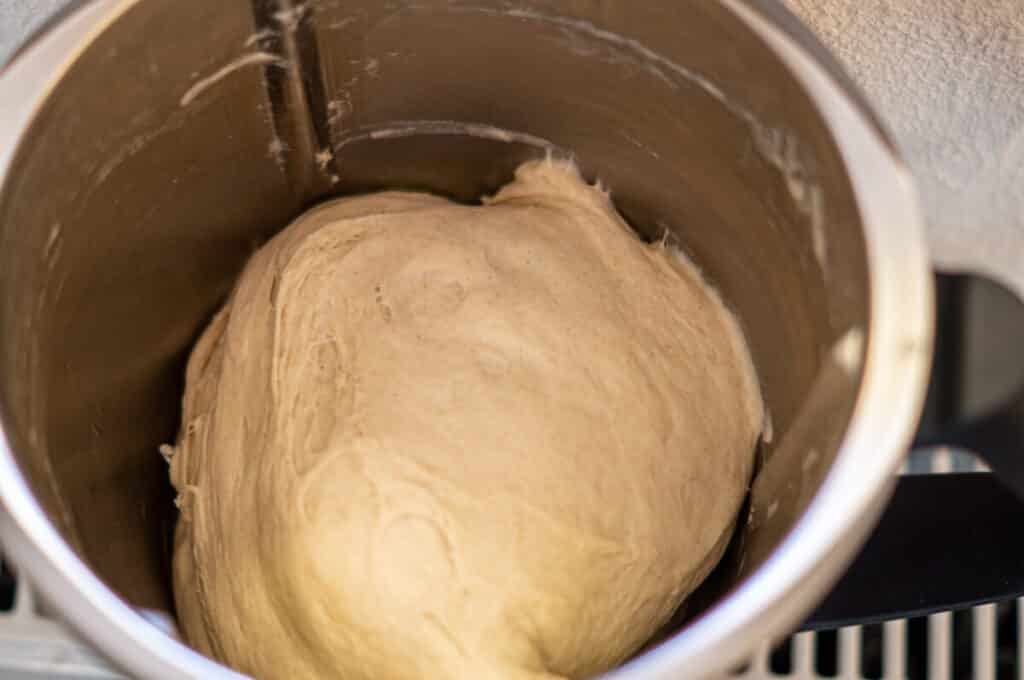
Add flour and knead for 3 min / kneading mode until you have a smooth dough.
-
3
Prove the dough.
Transfer the dough to a bowl, cover and leave to prove in a warm place for 1 hour.
-
4
Shape the rolls.
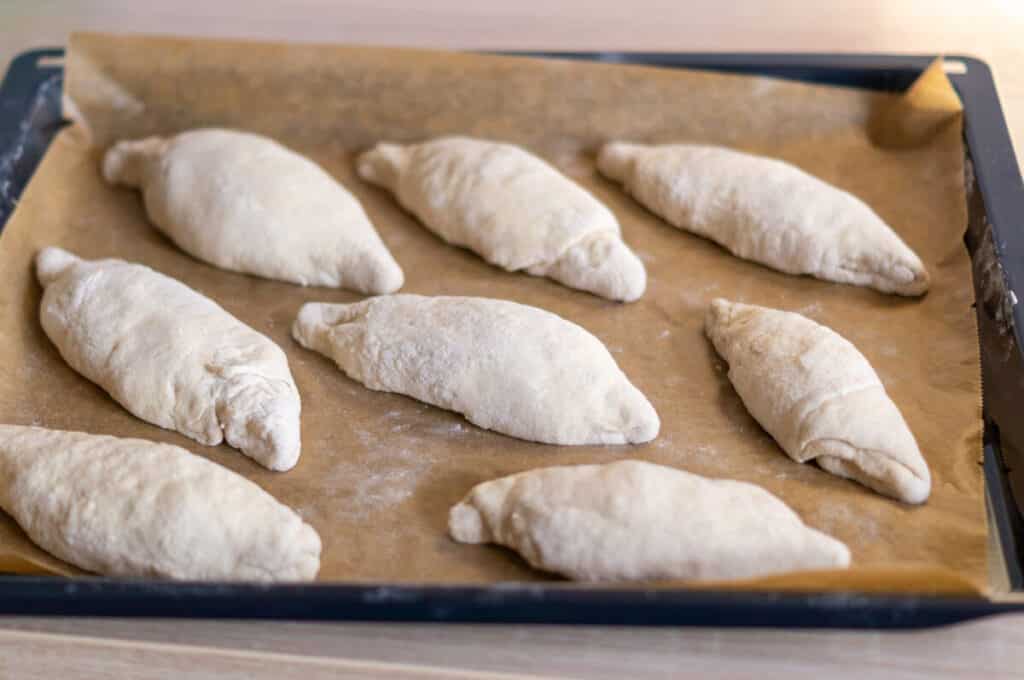
Divide the dough into ten equal pieces on a floured work surface. Shape each piece into a square, then roll up lengthways from one corner. Place the rolls seam-side down on a baking tray lined with baking paper and leave to prove for 15 minutes.
-
5
Preheat the oven.
Meanwhile, preheat the oven to 250°C top and bottom heat and place a heatproof dish filled with water on the bottom of the oven.
-
6
Bake.
Turn the rolls over so the seam is facing up and bake on the middle shelf for 20 minutes.
Tip: You can give your baguette rolls a different flavour by adding spices. Be creative!
Video
Nutrition per serving
Why 37°C for the yeast is essential
Yeast dissolves best at 37°C. Cooler water slows activation, while hotter water kills the yeast cultures. The Thermomix® holds the temperature constant at speed 1 for 3 minutes, which is exactly the time needed for the yeast to dissolve fully and the dough to rise evenly. Once you transfer the dough to a bowl straight after kneading, fermentation begins immediately.
Kneading mode beats speed 5
The kneading mode on the Thermomix® works more slowly and with less pressure than speed 5. This matters for bread dough because the gluten in the flour only forms an elastic network when moved at a slower pace. Three minutes on kneading mode is enough for the dough to become smooth and pull away from the bowl walls. Using speed 5 overheats the dough and damages the structure.
Seam down first, then turn before baking
When you shape the rolls, you roll them up lengthways from one corner. The seam, the point where the dough comes together, faces down on the tray during the first prove. This keeps the surface smooth. Just before baking, you turn the rolls over so the seam is facing up. During baking, the surface splits at exactly that point and gives the roll its characteristic rustic look. Without turning, the surface stays smooth like a shop-bought roll.
250°C with steam, not 220°C without
250°C top and bottom heat browns the rolls perfectly in 20 minutes. The dish of water on the oven floor is the decisive factor. The steam it produces keeps the surface of the rolls moist in the first few minutes so the crust can expand before it sets. At 220°C without steam, the crust hardens too soon and tears unpredictably. The result is a dense roll with little volume.
Overnight proving for more flavour
If you prepare the dough the evening before and leave it covered in the fridge overnight, it develops more aroma. The yeast works more slowly at fridge temperature, which allows more flavour compounds to form. The next morning, let the dough rest at room temperature for 30 minutes, then shape and bake. The rolls will taste more complex than with the quick 1-hour method.
Rye flour adds bite and colour
The 60 g of type 1150 rye flour in the dough gives the crust a darker colour and a more savoury taste. Rye flour contains more minerals and less gluten than wheat flour. This makes the dough slightly denser, but not heavy. If you use only type 550 wheat flour, the rolls will be paler and milder, which is not wrong, but it is not rustic.
Leftovers the next day
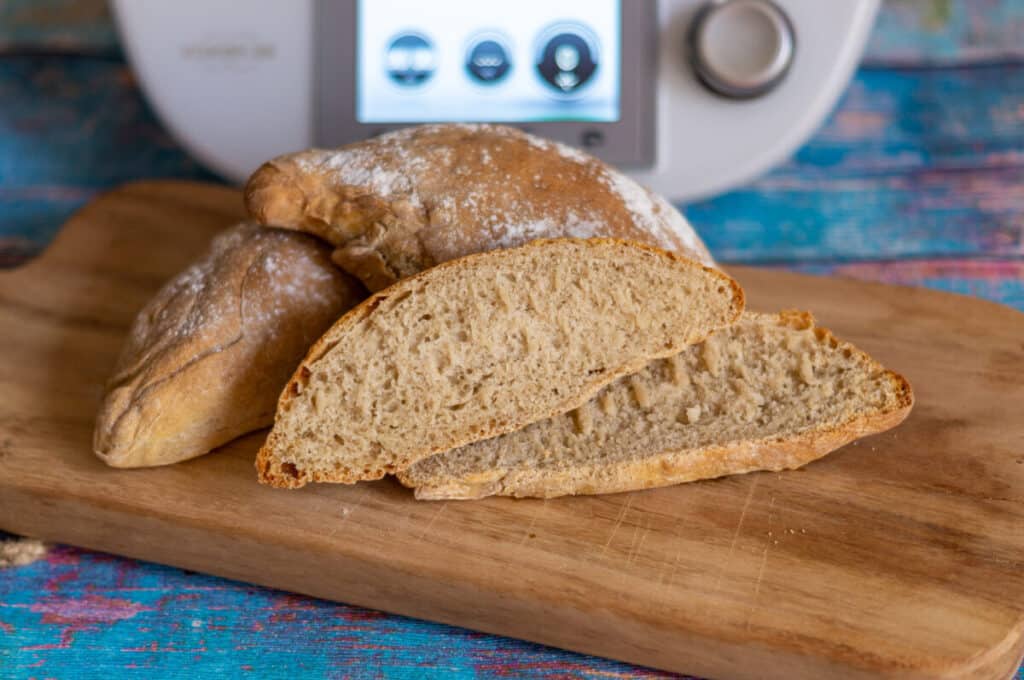
The rolls keep in a bread bin at room temperature for 2 days. After that they dry out. You can freeze them and reheat them as needed for 5 minutes at 180°C in the oven. They will taste just like freshly baked.
More baguette recipes:
- Thermomix® Baguette
- Spelt Baguette
- Crispy Garlic and Cheese Baguette
- Swiss Bürli, Thermomix®
More great recipes:
Goes well with: Butter and cheese.
- Thermomix® Pizza Dough