Making your own chocolate pudding powder in the Thermomix® takes just 10 minutes and fills 2 jars of 250 g each. Here is the short answer: pulverise 100 g dark chocolate with 100 g sugar for 10 seconds at speed 10, then add 170 g cornflour and 130 g cocoa powder and mix for 10 seconds at speed 6. The powder is ready, and all you need to do later is bring it to the boil with milk.
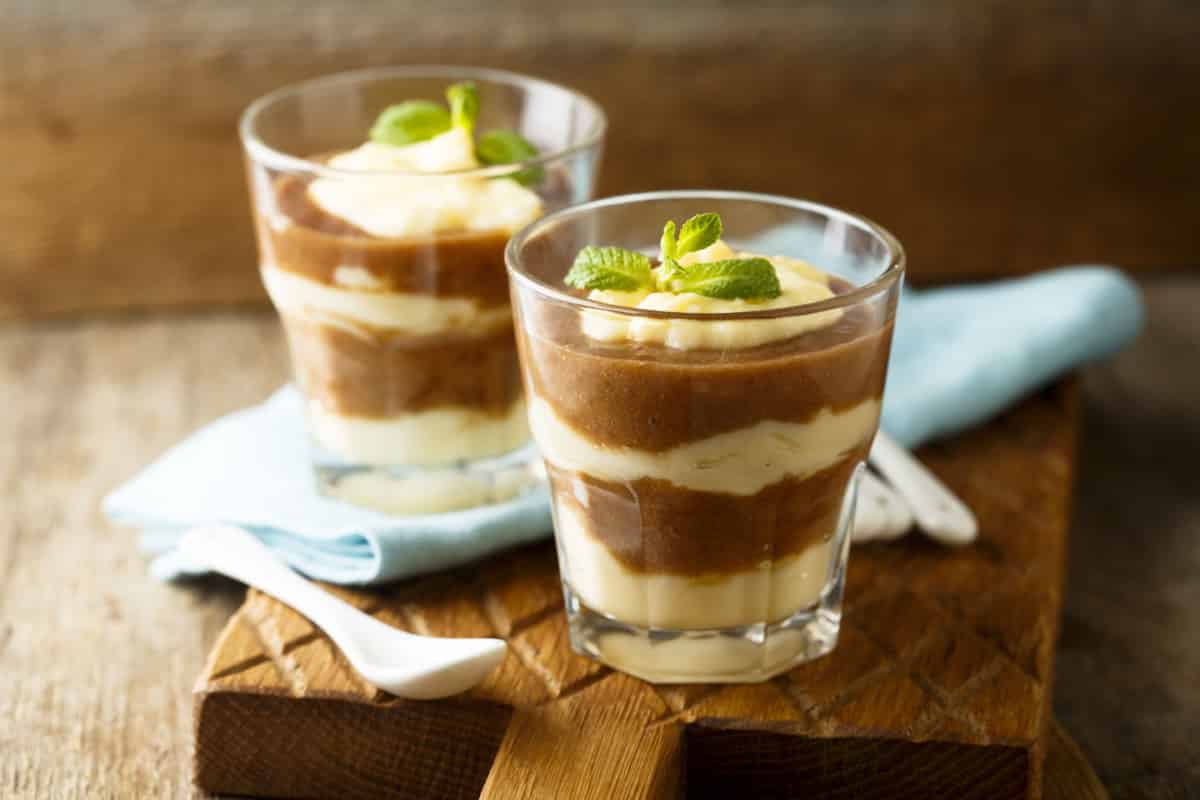
We have been making our own chocolate pudding powder for years. The reason is simple: using 100 g of dark chocolate instead of cocoa alone gives a noticeably more intense chocolate flavour. Shop-bought sachets are roughly 78 per cent starch and only about 22 per cent cocoa, plus a little salt and flavouring. Our mix turns that around and brings real cocoa butter into the equation.
Chocolate Pudding Powder with the Thermomix®

Ingredients 0 / 4 ✓
- 100 g dark chocolate broken into pieces
- 100 g sugar
- 170 g cornflour
- 130 g cocoa powder
Instructions 0 / 3
-
1
Pulverise the chocolate and sugar.
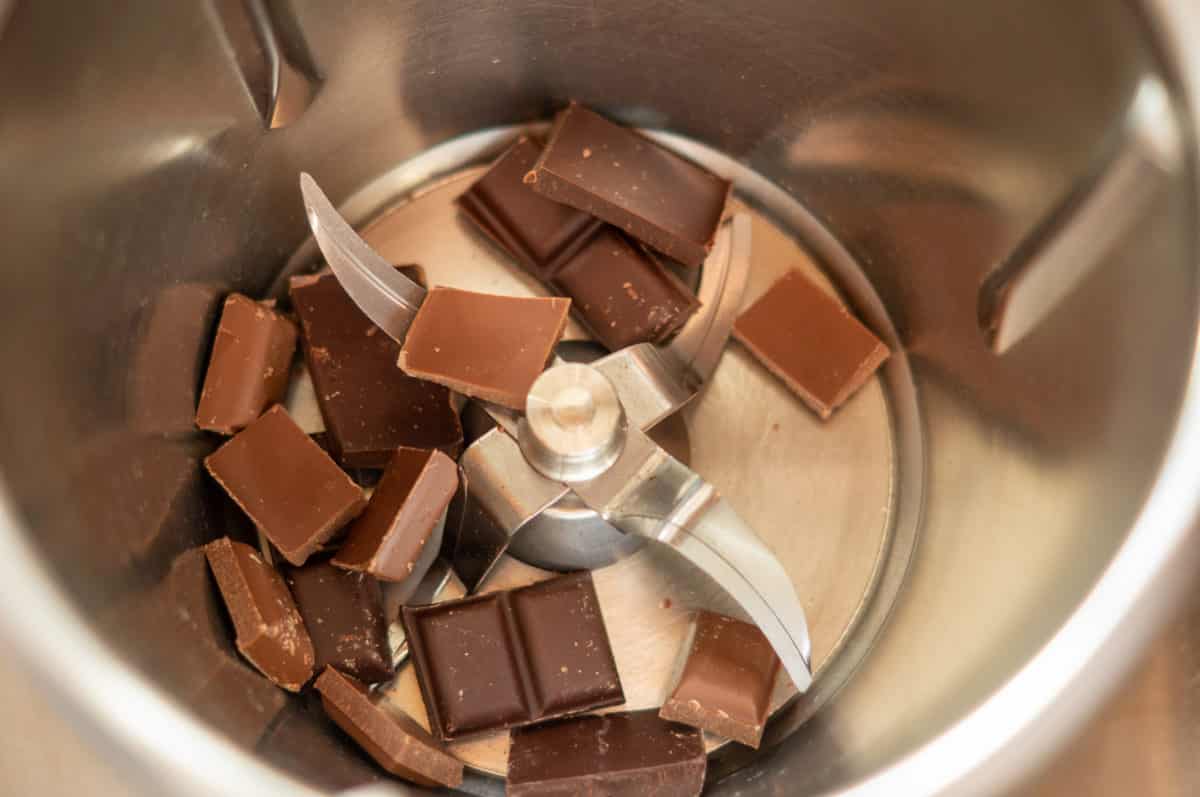
Break the chocolate into pieces, add to the mixing bowl with the sugar and pulverise for 10 seconds / speed 10.
-
2
Add the cornflour.
Add the cornflour and cocoa powder and mix for 10 seconds / speed 6.
-
3
Fill the pudding powder into jars.
Fill the pudding powder into sterilised jars and store in a cool, dry place.
To make 4 servings of pudding:
- Mix 100 g pudding powder with 500 g milk for 10 seconds / speed 10, then bring to the boil for 10 minutes / 98 °C / speed 1.
- Pour into bowls and leave to set.
Video
Nutrition per serving
Why the chocolate goes into the mixing bowl before the starch
The Thermomix® pulverises the chocolate in 10 seconds at speed 10 so finely that it dissolves effortlessly in the milk later. Breaking and grating by hand takes 20 minutes and never produces an even texture. That fine grind is precisely where the machine makes the difference.
We add the chocolate and sugar to the mixing bowl first and pulverise them together. The 100 g of sugar acts as a separating agent: the hard sugar crystals grind the chocolate down and prevent the softening cocoa butter from clumping together. Only then do we add the 170 g of cornflour and 130 g of cocoa powder.
If you blend all four ingredients at once, the chocolate stays in coarse chunks. The starch forms a protective layer around the chocolate pieces and prevents fine grinding. That is why the order is fixed: chocolate and sugar at speed 10 first, then the dry powders at speed 6.
Dark chocolate adds depth, cocoa gives colour
The combination of 100 g dark chocolate and 130 g cocoa powder is deliberate. The chocolate contributes cocoa butter and essential oils that produce a genuine chocolate flavour. The pure cocoa powder delivers the rich dark brown colour and boosts the overall cocoa content. That is exactly what sets our powder apart from the many versions in the Vorwerk community that work only with cocoa and starch.
Chocolate alone would be too mild and too pale. Cocoa without chocolate tastes flat and slightly bitter, as anyone who has eaten a plain packet pudding will know. Together they produce the full chocolate pudding flavour. A practical tip: it is worth choosing a strongly de-oiled cocoa powder. It dissolves more cleanly and makes the finished pudding smoother.
170 g of starch sets 500 ml of milk into a creamy pudding
The ratio matters: 100 g of the finished pudding powder to 500 ml of milk gives a classic, creamy pudding for 4 servings. The 170 g of starch in the full batch is calculated precisely so the pudding sets when brought to the boil without turning lumpy or too firm.
More starch makes the pudding firm enough to slice, like a jelly. Less starch leaves it runny. We use cornflour because it has a neutral flavour. Potato starch would leave a faintly earthy aftertaste. If you prefer a firmer pudding, for example as a cake filling, simply use 120 g of powder to the same 500 ml of milk.
These three mistakes ruin the pudding powder
Adding all the ingredients to the mixing bowl at once
If you put the chocolate, sugar, starch and cocoa in together and blend, you will not get a fine powder but coarse chocolate crumbs mixed into the flour. The starch coats the chocolate and shields it from the blades.
Our solution: Always work in two stages. First blend the chocolate and sugar for 10 seconds at speed 10, then add the starch and cocoa for 10 seconds at speed 6.
Moisture gets into the powder
Moisture is the enemy. Once the powder has absorbed humidity from the air, it clumps and no longer dissolves cleanly in the milk. A damp measuring spoon or a jar that is not completely dry is all it takes.
Our solution: Fill only into completely dry, sterilised jars and always use a dry spoon to scoop it out. Close the jar again immediately after each use.
The pudding goes lumpy when brought to the boil
Lumps form when starch hits hot milk directly and gelatinises instantly before it can disperse. On the hob that is the classic problem. In the Thermomix® it virtually never happens, because the powder is blended cold with the milk for 10 seconds at speed 10 before any heat is applied.
Our solution: In the Thermomix® blend the powder and cold milk for 10 seconds at speed 10 first, then bring to the boil. On the hob, stir the powder smooth with 6 tablespoons of cold milk beforehand, then pour into the boiling milk.
Three variations we make regularly
More intense and darker: Instead of 100 g of regular dark chocolate, use a bar with 70 to 85 per cent cocoa. The pudding becomes more bitter, almost like a chilled drinking chocolate. Increase the sugar to 120 g, otherwise it becomes too sharp.
Milder and child-friendly: Use half milk chocolate instead of all dark, so 50 g milk chocolate and 50 g dark chocolate. This gives a softer, sweeter flavour that goes down better with children.
With a vanilla note: Pulverise 1 sachet of vanilla sugar or the seeds of half a vanilla pod together with the sugar. The vanilla rounds off the chocolate aroma, just like a classic cream pudding.
What we love to serve with the chocolate pudding
Freshly made and still warm, the pudding is best on its own. We like to add a dollop of double cream or a few fresh raspberries, whose sharpness balances the intense chocolate flavour. Once cold and set, it becomes a filling for crêpes or sponge cake bases.
If you are stocking up, it is worth making the light version at the same time: our Vanilla Pudding Powder with the Thermomix® works on the same principle. We show the finished pudding step by step in our Vanilla Pudding Thermomix® recipe. A full collection of variations can be found in our Pudding with the Thermomix® post.
How to keep the powder fresh for up to 6 months
The finished pudding powder is dry and keeps for months as long as you fill it into sterilised preserving jars. We rinse the jars with boiling water and leave them to dry upside down. That is enough; sterilising in the oven is not necessary.
Stored in a cool, dry place, the powder keeps for at least 6 months, often considerably longer. We keep the cooked pudding covered in the fridge and eat it within 3 days. Freezing the cooked pudding is not worth it; it turns watery when thawed and loses its creamy texture.
How to cook the pudding from the powder
Blend 100 g of pudding powder with 500 ml of milk for 10 seconds at speed 10, then bring to the boil for 10 minutes at 98 °C at speed 1. The pudding sets as it heats and turns creamy. Pour into bowls, leave to cool, and it is done. That makes 4 servings.
The Thermomix® stirs continuously, so burning is impossible. On the hob you must stir constantly, otherwise the powder sinks to the bottom and burns. Important: the mixture must come to a proper boil, otherwise the starch will not set fully and the pudding will stay runny.
Frequently asked questions about chocolate pudding powder
Also goes well with: Chocolate Pudding, Rice Pudding and Brownies.
For more homemade basic recipes, see our Vanilla Pudding Powder with the Thermomix® and our overview Pudding with the Thermomix®.