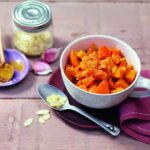
Pumpkin vegetable with the Thermomix® has become our standard Monday evening dish. We cook Hokkaido pumpkin with coconut milk, curry and dried apricots in 45 minutes from scratch to plate. The key is the 30 g of apricots to 900 g of pumpkin. That is the precise balance between complex Middle Eastern flavour and sweet mush.
The recipe works as a side dish alongside chicken breast or as a vegetarian main course with rice. We usually serve it on its own because the combination of creamy coconut milk, tangy apricots and the natural sweetness of the pumpkin holds up by itself.
Pumpkin Vegetable Side Dish with the Thermomix®
Ingredients 0 / 15 ✓
- 10 g ginger
- 2 garlic cloves
- 2 shallots
- 30 g dried apricots
- 20 g oil
- 900 g Hokkaido pumpkin cleaned
- 150 g vegetable stock
- 100 g coconut milk
- 1 tbsp tomato puree
- ¼ tsp cayenne pepper
- 1 tsp curry powder
- 1 tsp salt
- 1 tbsp sugar
- 1 pinch ground cinnamon
- 50 g flaked almonds
Instructions 0 / 4
-
1
Chop the ginger and garlic.
Peel the ginger, peel the garlic cloves, place both in the mixing bowl and chop for 3 sec / speed 8.
-
2
Chop the shallots.
Peel the shallots, add to the mixing bowl and chop for 3 sec / speed 5.
-
3
Sweat the apricots.
Cut the apricots into 0.5 cm dice. Add the diced apricots and oil to the mixing bowl and sweat for 3 min / Varoma / speed 1.
-
4
Cook all the ingredients.
Cut the pumpkin into approximately 2 cm cubes. Add the pumpkin cubes, stock, coconut milk, tomato puree, cayenne pepper, curry powder, salt, sugar, cinnamon and almonds to the mixing bowl, stir together for 20 sec / reverse direction / speed 2 and cook for 20 min / 100°C / gentle stir setting.
Tip: The skin of the Hokkaido pumpkin is perfectly edible once cooked, so there is no need to peel it before use.
Nutrition per serving
Why Hokkaido and not another variety
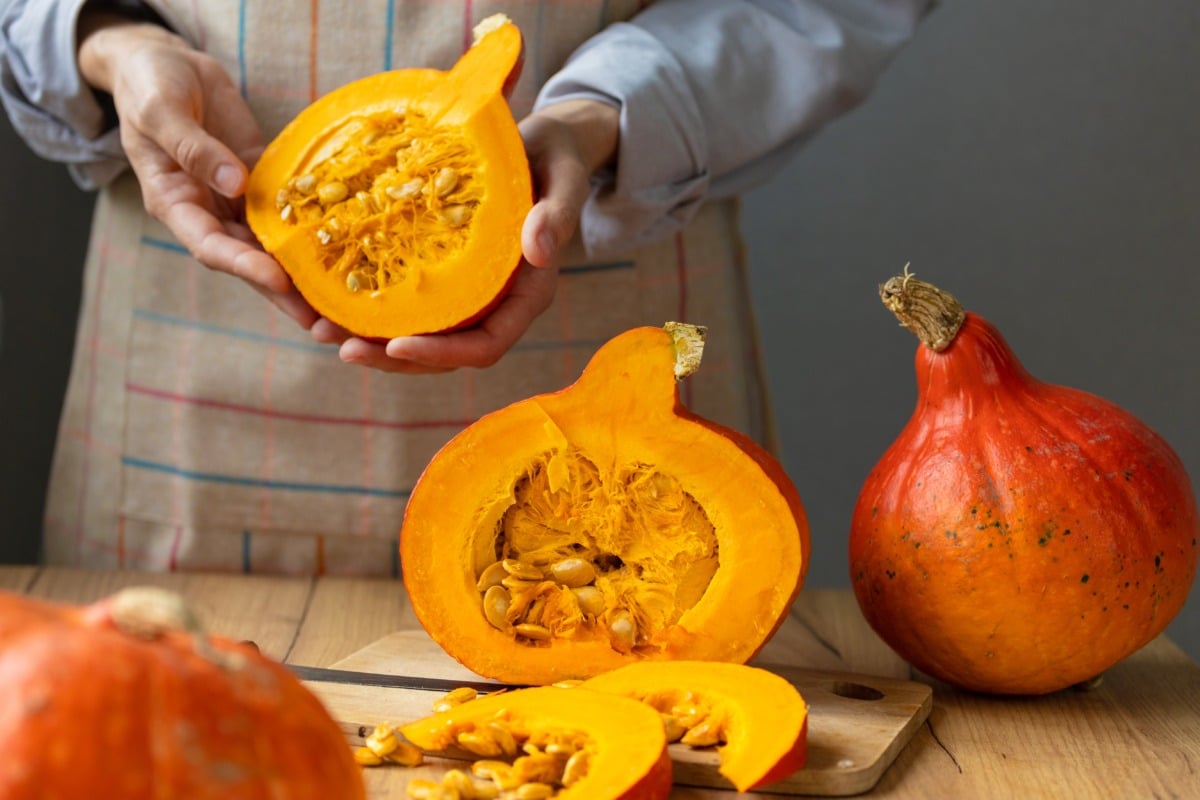
Hokkaido has two advantages over butternut or muscat pumpkin: the skin stays edible after cooking, and the flesh turns creamy without falling apart. With butternut you would need to peel it, and muscat becomes mushy after 20 minutes at 100°C.
We cut the pumpkin into 2 cm cubes. Any smaller and it collapses into a puree, any larger and the centre stays fibrous by the end of the cooking time. We simply wipe the skin with a damp cloth rather than peeling it.
The apricot and sweetness balance explained
30 g of dried apricots to 900 g of pumpkin is not an arbitrary quantity. At 20 g the Middle Eastern note is missing, at 50 g the vegetable turns into a dessert. The apricots are sweated with oil for 3 minutes at Varoma temperature, which releases their fruit sweetness and prevents them from sitting as hard pieces in the finished dish.
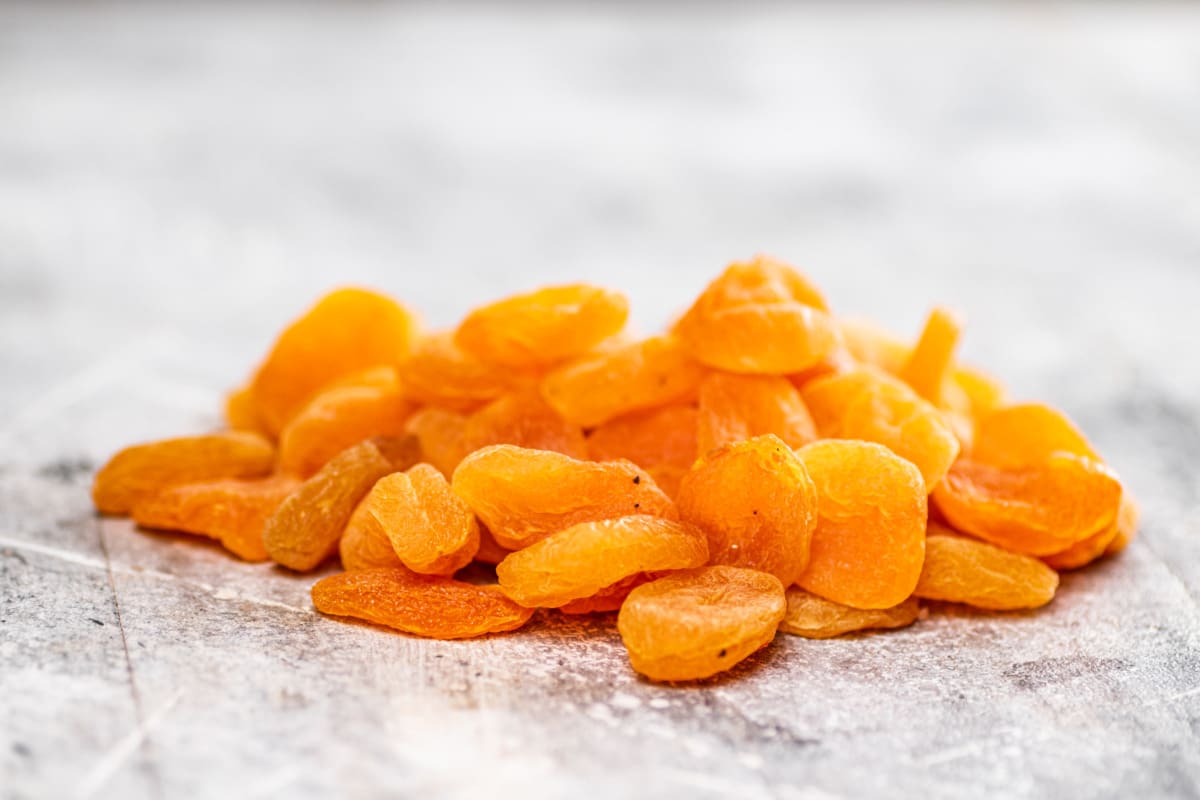
We cut the apricots into 0.5 cm dice. Larger pieces remain chewy during cooking, while smaller ones dissolve completely and you can no longer taste them as a distinct component.
Reverse direction with coconut milk is not optional
In the final step all the ingredients go into the mixing bowl: pumpkin cubes, stock, coconut milk, tomato puree, spices and almonds. 20 seconds of reverse direction at speed 2 stirs everything together without chopping the pumpkin. Without reverse direction the blades would cut into the cubes and the creamy vegetable dish would turn to mush.
The gentle stir setting at 100°C for 20 minutes cooks the pumpkin through without any need to stir in between. The almonds float on top and become lightly toasted, which adds texture and stops them from turning soft.
Curry, cayenne and cinnamon are not interchangeable
1 tsp of curry powder carries the dish, ¼ tsp of cayenne pepper provides the heat counterpoint, and 1 pinch of cinnamon ties together the sweetness of the apricots and the aroma of the pumpkin. Without cinnamon the Middle Eastern depth is missing, without cayenne the dish tastes flat and sweet, without curry it becomes a pumpkin compote.
Tomato puree (1 tbsp) provides umami and acidity. Without it the coconut milk becomes too dominant and the dish drifts towards dessert.
Serving as a main course or a side dish
We usually eat the pumpkin vegetable as a main course with basmati rice. As a side dish it goes well with chicken breast from the Varoma or with salmon fillet. The coconut milk makes the dish filling enough for 4 servings as a main.
For a low-carb version, leave out the rice and combine with fennel or courgette from the Varoma instead. The apricot sweetness stays balanced even without a starchy side.
Storage and reheating
The pumpkin vegetable keeps for 3 days in the fridge in a sealed container. When reheating, add 2 tbsp of water or stock because the coconut milk will have thickened. Reheat for 3 minutes at 80°C / speed 1 in the Thermomix® or for 2 minutes in the microwave at 600 watts.
You will find more Thermomix® side dish ideas in our side dishes collection.
Goes well with: Naan bread and couscous.
Freezing does not work well as Hokkaido cubes turn mushy after defrosting and lose their texture. It tastes noticeably better freshly cooked.
More pumpkin recipes: Pumpkin soup, pumpkin risotto, oven-roasted chicken with pumpkin and orange.