Apple tart with the Thermomix® works because the shortcrust pastry and the cream and egg custard stay separate. The pastry is chilled, the apples go on raw, and the custard is added just before baking. This sequence stops the pastry turning soggy.
We have been making French apple tart regularly for years. The key point: the shortcrust pastry must rest in the fridge for 30 minutes before you roll it out. Warm dough tears when you roll it and sticks to the work surface. Cold dough rolls out thinly and holds its shape in the springform tin.
Apple Tart with the Thermomix®
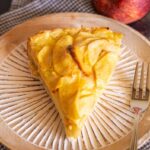
Ingredients 0 / 10 ✓
- 130 g butter
- 140 g sugar
- 1 pinch salt
- 210 g flour
- 2 tbsp Calvados Optional: water
- 800 g apples
- 200 g double cream
- 2 eggs
- 1 tsp vanilla extract
- 40 g quince jelly
Instructions 0 / 6
-
1
Mix the pastry.
Add butter, 80 g sugar, salt, flour and Calvados to the mixing bowl and mix for 20 sec / speed 4. Wrap the dough in cling film and chill for 30 minutes. Rinse the mixing bowl.
-
2
Slice the apples.
Meanwhile, quarter the apples, peel them, remove the core and stalk, then cut into thin slices.
-
3
Roll out the pastry.
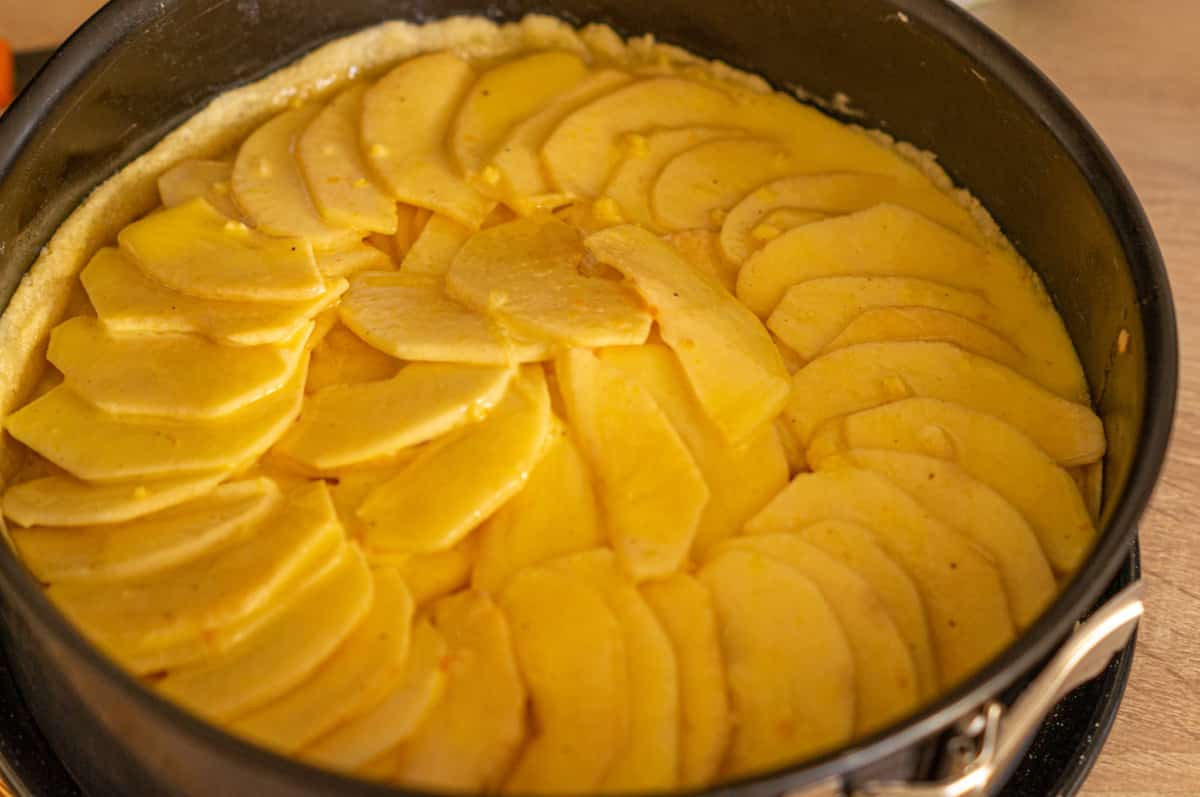
Preheat the oven to 180 °C top and bottom heat. Roll out the dough on a floured work surface, transfer to a springform tin and press up a 2 cm rim. Layer the apples in circles on top of the pastry.
-
4
Pour over the custard.
Add double cream, eggs and vanilla extract to the mixing bowl and mix for 6 sec / speed 3.5. Pour the cream mixture over the apples. Bake on the middle shelf for approximately 35 to 40 minutes.
-
5
Brush with quince jelly.
Add quince jelly to the mixing bowl and warm for 3 min / 40°C / speed 1, then brush over the tart while still hot.
-
6
Serve.
Leave the tart to cool completely before slicing.
Tip: This French tart tastes best alongside a fragrant cafe au lait.
Video
Nutrition per serving
Why we skip blind baking (unlike the French neighbour)
On some French recipe sites the tart base is pre-baked for 10 minutes at 180 °C to prevent a soggy centre. In our version we skip this step because two things work together. The shortcrust is rolled thin, just 3 mm, and the apples are placed on raw. The custard goes on only just before the oven. That way the liquid has no time to soak into the pastry, and 35 minutes baking at 180 °C is enough to finish base and custard at the same time.
Anyone who wants the extra reassurance of blind baking can add 10 minutes at 180 °C with baking paper and dried pulses, remove them, lay on the apples, pour over the custard and bake for another 30 minutes. That works too, but costs an extra 15 minutes and a set of baking weights.
Shortcrust in the Thermomix®: 20 seconds at speed 4
Butter, sugar, salt, flour and Calvados all go into the mixing bowl together. 20 seconds at speed 4 is enough. No longer, or the dough warms up and the gluten develops too strongly. The result is a tough dough instead of a crumbly one.
Calvados gives the pastry a subtle apple note and makes it more pliable. If you do not have Calvados at home, replace it with 2 tbsp cold water. But Calvados is worth using.
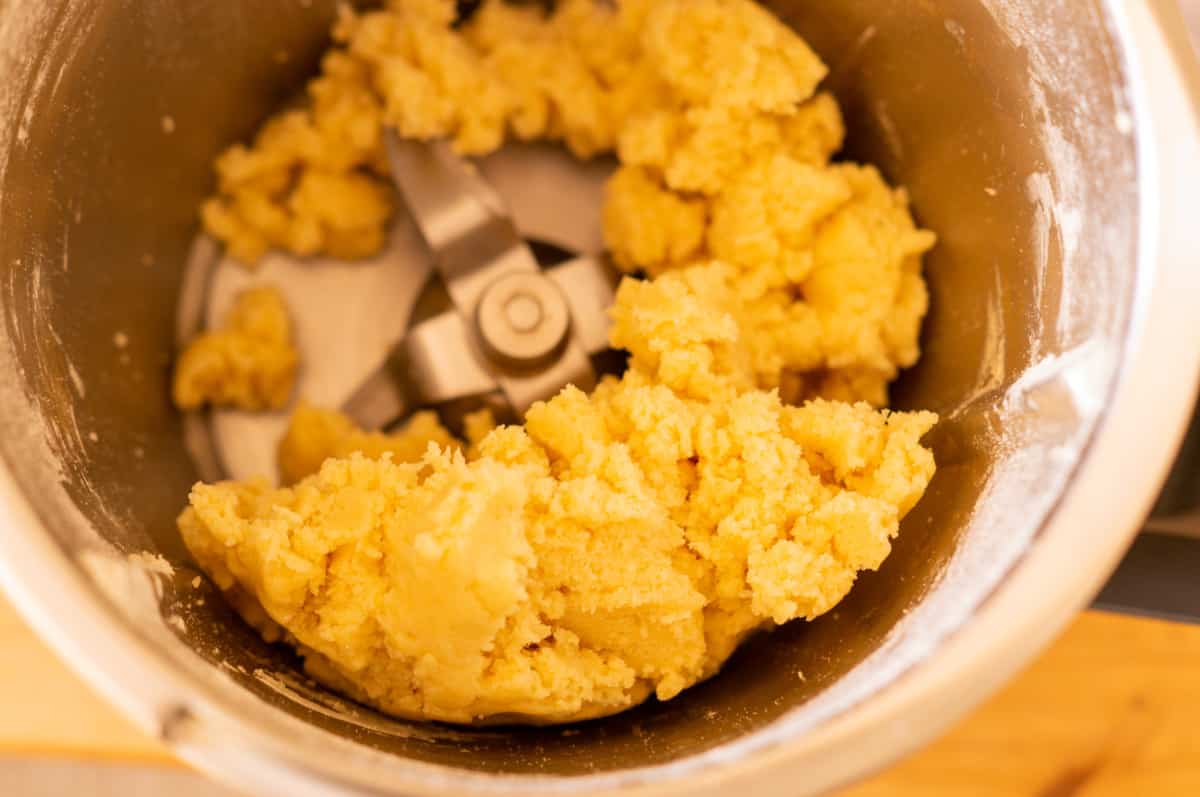
After mixing, wrap the dough in cling film and leave it in the fridge for 30 minutes. This resting time is not optional. Without it the dough tears when you roll it and shrinks in the oven.
Apples raw on the pastry: slice them thinly
The apples are peeled, quartered and cut into thin slices. The thinner the slices, the more evenly they cook. Thick apple pieces stay firm in the middle while the edges are already soft.
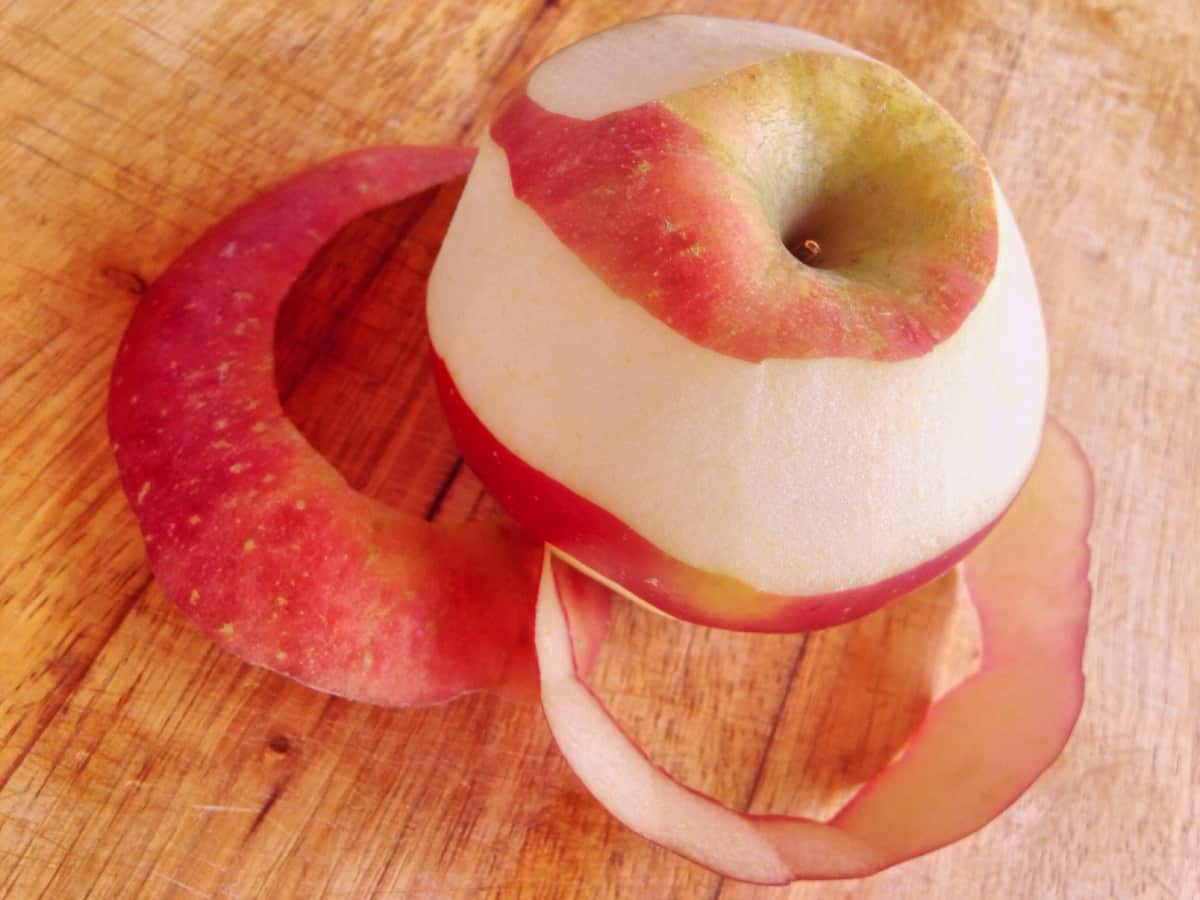
Which apple variety? Elstar, Braeburn or Jonagold hold their shape during baking and do not turn mushy. Golden Delicious breaks down too quickly and goes floury.
Which apples work and which do not
The rule of thumb from consumer advice centres holds for the tart too: acidity and firmness decide everything. Elstar is sweet and soft, Braeburn is pleasantly tart and holds its shape well, Boskoop brings the most acidity but can go floury quickly when baked. Our standard: two thirds Braeburn, one third Boskoop. The Braeburn keeps the slices intact, the Boskoop provides the acidity to balance the sweet custard. If you only have one variety to hand, use Elstar or Jonagold, though you do lose some of the contrast with the cream.
Tip against browning: We drizzle the cut apple slices with 1 tbsp lemon juice before layering them. Otherwise the edges turn grey while we are still arranging the bottom row. Granny Smith works too, by the way, but is noticeably more tart. We balance that with 1 tbsp extra sugar in the custard.
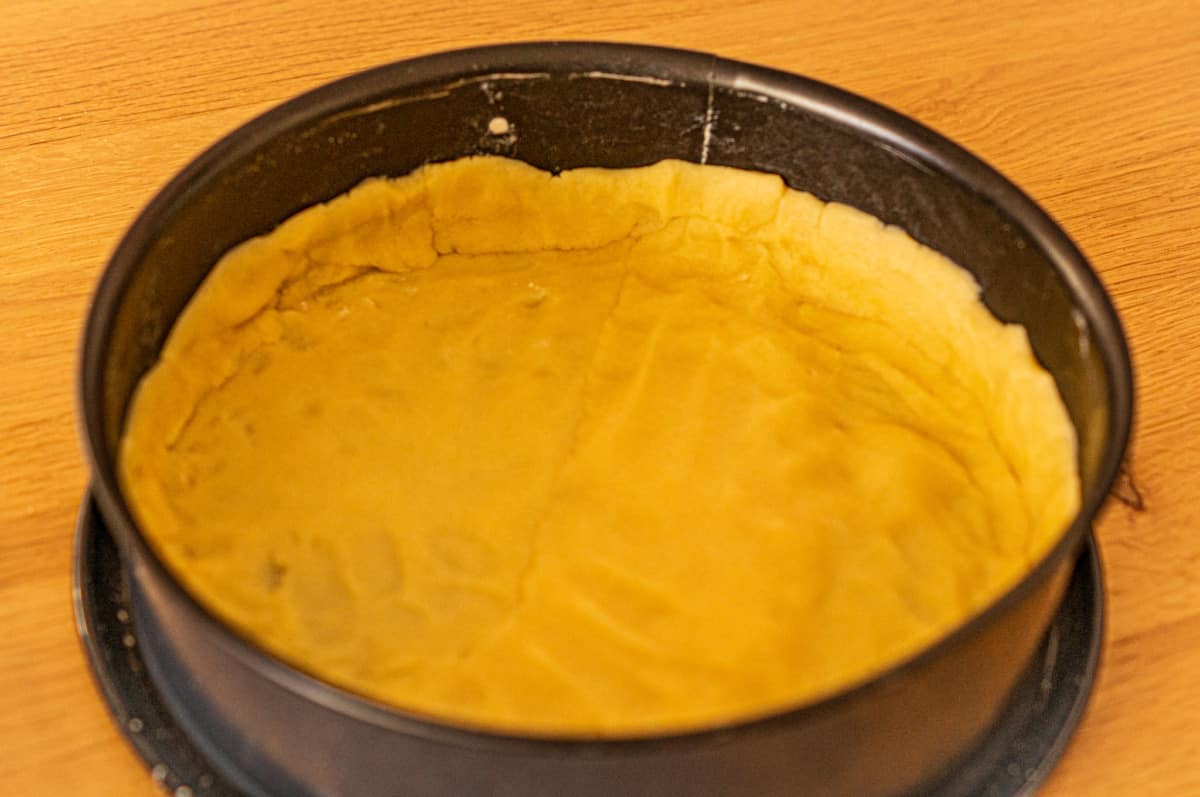
Roll the chilled dough out on a floured work surface to about 3 mm thick. Press it into the springform tin and pull up a 2 cm rim. This rim holds the custard in place.
Layer the apple slices in circles on the pastry, working from the outside in. It looks far better than randomly scattered apples.
Cream and egg custard: pour on just before baking
Double cream, eggs and vanilla extract are mixed in the Thermomix® for 6 seconds at speed 3.5. No longer. The custard should be combined, not frothy.
Pour the custard over the apples just before the tart goes into the oven. Not before. If the custard sits on the raw pastry for too long, the pastry absorbs it and turns soggy.
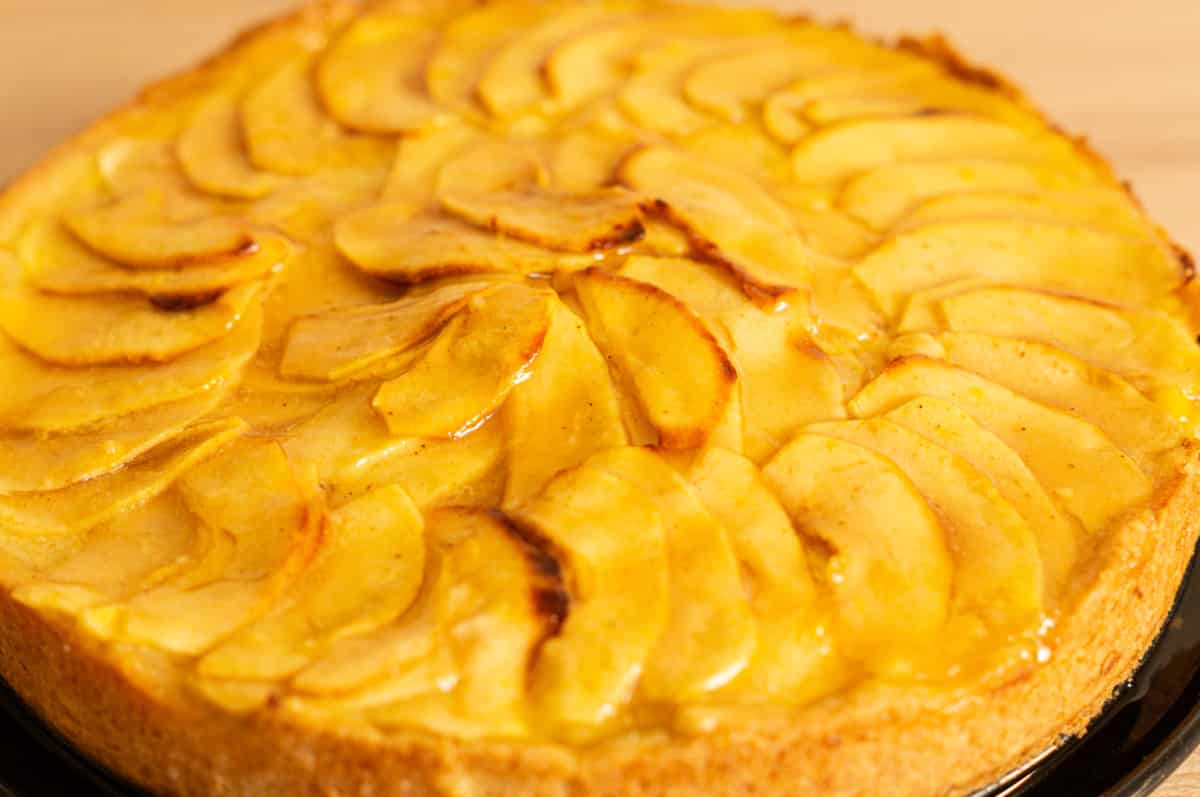
180 °C top and bottom heat, middle shelf, 35 to 40 minutes. The tart is done when the rim is golden brown and the custard no longer wobbles.
Quince jelly: apply while hot
Warm the quince jelly in the Thermomix® for 3 minutes at 40°C, speed 1. Brush it over the hot tart straight out of the oven. The jelly seals the surface and gives a gloss.
If you do not have quince jelly, apricot jam works just as well. Press it through a sieve first so no fruit pieces land on the tart.
Pate sucree versus pate brisee: why we add sugar to the pastry
The classic French tarte aux pommes is made with pate brisee, a plain flour, butter and water pastry without egg or sugar. Many French cooking sites use exactly this pastry. We deliberately use the sweeter version (pate sucree with butter, sugar, flour and a splash of Calvados) because our cream and egg custard is more subtly balanced than the classic apricot glaze original. The sweet shortcrust offsets the milder acidity of our apple and cream combination.
Anyone who wants the classic French approach can leave out the sugar, replace the Calvados with 3 tbsp iced water, sprinkle the apples with 2 tbsp sugar before baking and glaze with apricot jam only after baking, without cream or egg custard. Both routes work but produce two different cakes. Our version is juicier, the classic French version crispier and drier.
Cooling, storing and reheating
The tart must cool completely before slicing. At least 2 hours. A warm tart falls apart when cut because the custard is not yet set.
If you bake the apple tart the day before, it keeps covered in the fridge for up to 3 days. It actually tastes better on the second day once the flavours have had time to develop.
To reheat, we put the slices in the oven at 150 °C for 8 minutes rather than the microwave. The microwave makes the shortcrust tough and rubbery, the oven brings it back to life. Freezing works too: wrap the whole tart or individual slices in cling film and freeze for up to 2 months. Defrost overnight in the fridge, then warm through at 150 °C for 10 minutes.
Goes well with: Vanilla ice cream.
Our tip: Halloween Spider Cake Thermomix®.
More shortcrust recipes in our overview: Shortcrust Pastry with the Thermomix®. If you are looking for more apple cakes: Quick Apple Cake from the Tray, Sunken Apple Cake and Covered Apple Cake.