Dijon sauce with the Thermomix® is a variation of the classic hollandaise. We mix the finished hollandaise with Dijon mustard and a pinch of sugar, 10 seconds at speed 4, and that is it. The mustard adds sharpness and acidity, the sugar rounds it off.
The recipe works because we finish the hollandaise first and only then add the mustard. If we added the mustard directly while cooking the hollandaise, the acid would destabilise the emulsion. The sauce would split. This way it stays stable.
Dijon Sauce with the Thermomix® (Hollandaise Variation)

Ingredients 0 / 3 ✓
- 1 basic recipe hollandaise sauce
- 2 tbsp Dijon mustard
- 1 pinch sugar
Instructions 0 / 3
-
1
Prepare the hollandaise.
Prepare the hollandaise sauce according to the basic recipe.
-
2
Mix the ingredients.
Add the mustard and sugar to the mixing bowl and mix for 10 sec / speed 4.
-
3
Serve.
Serve warm or well chilled.
Tip: If the sauce is not finished in one go, you can also serve it cold with eggs or fish.
Video
Nutrition per serving
Why Dijon mustard and not another mustard
Dijon mustard has a finer grind than medium-hot mustard and a noticeably higher acidity. The acidity comes from white wine or vinegar. That is why Dijon mustard works better in sauces than ordinary table mustard. Table mustard is too sweet and too coarse. The sauce would taste muddy.
The heat in Dijon mustard comes from mustard oils. These develop only when the mustard seeds are ground. The finer the grind, the more intense the heat. Dijon mustard is very finely ground. That makes it sharp but not biting.
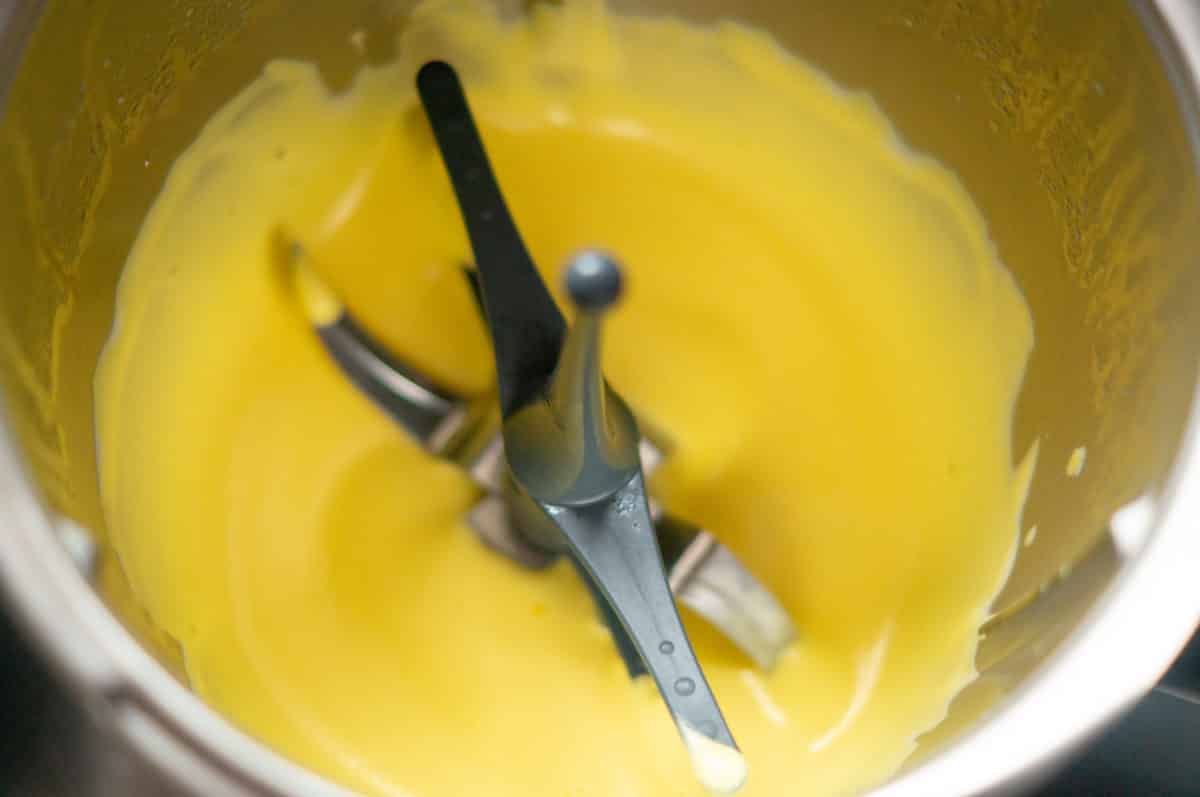
The pinch of sugar is not an accident
Mustard alone would make the hollandaise too sharp. The butter in the hollandaise is rich and mild. The mustard is sharp and sour. Without a counterbalance the sauce would taste only of vinegar. The pinch of sugar evens that out. It rounds off the acidity without making the sauce sweet.
A pinch is roughly 0.3 grams. That is enough. More sugar would make the sauce sugary. Then it would no longer taste like a mustard sauce but like a honey mustard dressing. That is not the goal.
10 seconds at speed 4, no longer
The finished hollandaise is an emulsion of egg yolk, butter and lemon juice. It is stable but delicate. If we blend the mustard in for too long or too vigorously, the emulsion can break. The butter would separate from the egg yolk. The sauce would turn grainy.
10 seconds at speed 4 are enough to distribute the mustard evenly. The speed is low enough that the emulsion is not over-beaten. Longer than 10 seconds is not necessary. The mustard is already liquid and blends in quickly.
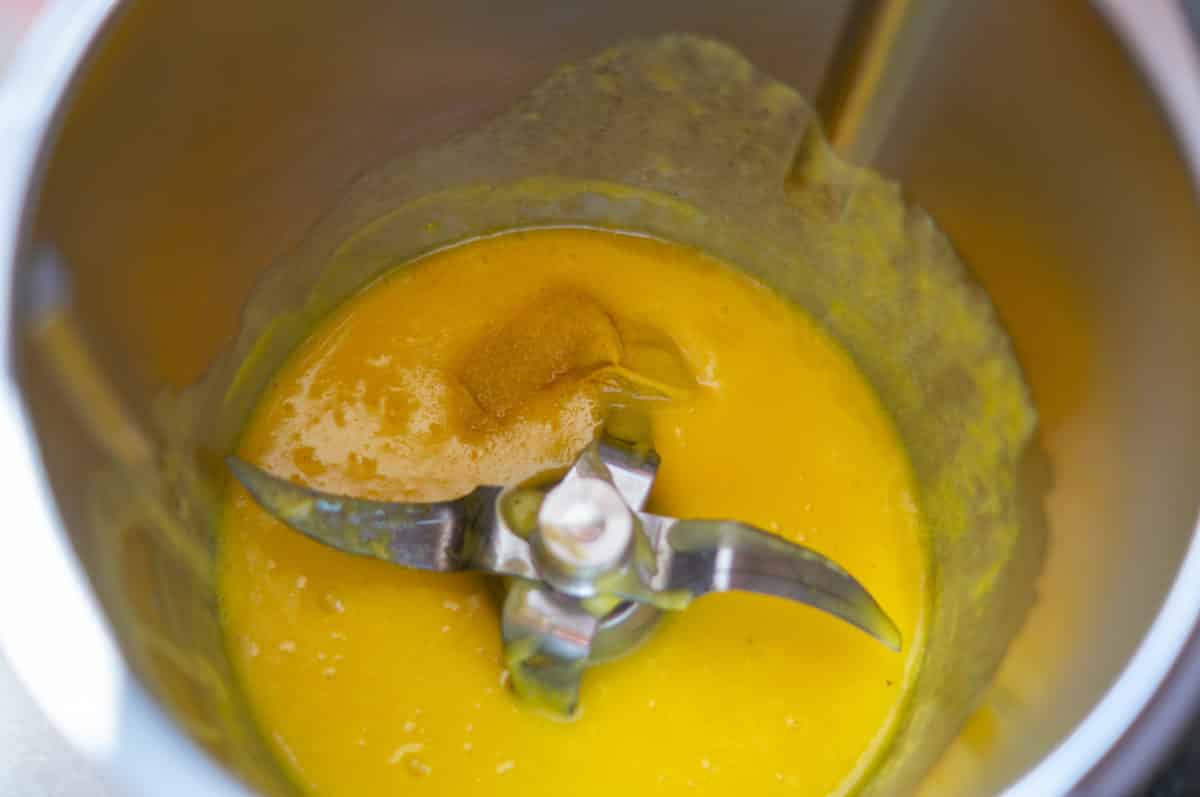
Serve warm or cold
The sauce works warm and cold. Warm it goes with steamed fish, asparagus or poached eggs. The butter in the sauce stays liquid. The consistency is creamy.
Cold, the sauce becomes firmer because the butter sets. It becomes spreadable. Then it works on bread, with hard-boiled eggs or as a dip for raw vegetables. The mustard tastes sharper cold than warm. This is because cold dampens the taste receptors. The heat remains, the fatty flavour recedes.
Leftovers the next day
The sauce keeps in the fridge for a maximum of 2 days. The hollandaise contains raw egg yolk. That makes it susceptible to bacteria. After 2 days the sauce should be discarded. Freezing does not work. The emulsion would break when defrosting. The sauce would turn grainy and watery.
If you want to reheat the sauce, do so carefully. Not in the microwave, but in a bain-marie at a maximum of 60 °C. Higher temperatures cause the egg yolk to curdle. The sauce will then turn lumpy.
Goes well with: Asparagus and salmon.
More sauces: Hollandaise Sauce with the Thermomix®, Mustard Sauce with the Thermomix®, Ranch Dressing with the Thermomix®.