Herb butter baguette with the Thermomix® works differently from most recipes. We bake the butter into the cuts, not just spread it on top. That makes every slice flavoursome, not just the crust.
Three baguettes from a single yeast dough, plus a herb butter that is ready in 10 seconds. The loaves need time to prove, but the active work takes less than 15 minutes.
Herb Butter Baguette with the Thermomix®

Ingredients 0 / 13 ✓
- 300 g water
- 1/4 cube fresh yeast
- 1 tsp sugar
- 380 g plain flour (type 405) + a little extra for dusting
- 80 g rye flour (type 1150)
- 1 tsp salt
- 1/2 bunch flat-leaf parsley
- 1/4 bunch basil
- 3 sprigs dill
- 1 garlic clove
- 250 g butter softened
- 1 tsp salt
- 1 tsp freshly ground pepper
Instructions 0 / 9
-
1
Dissolve the yeast.
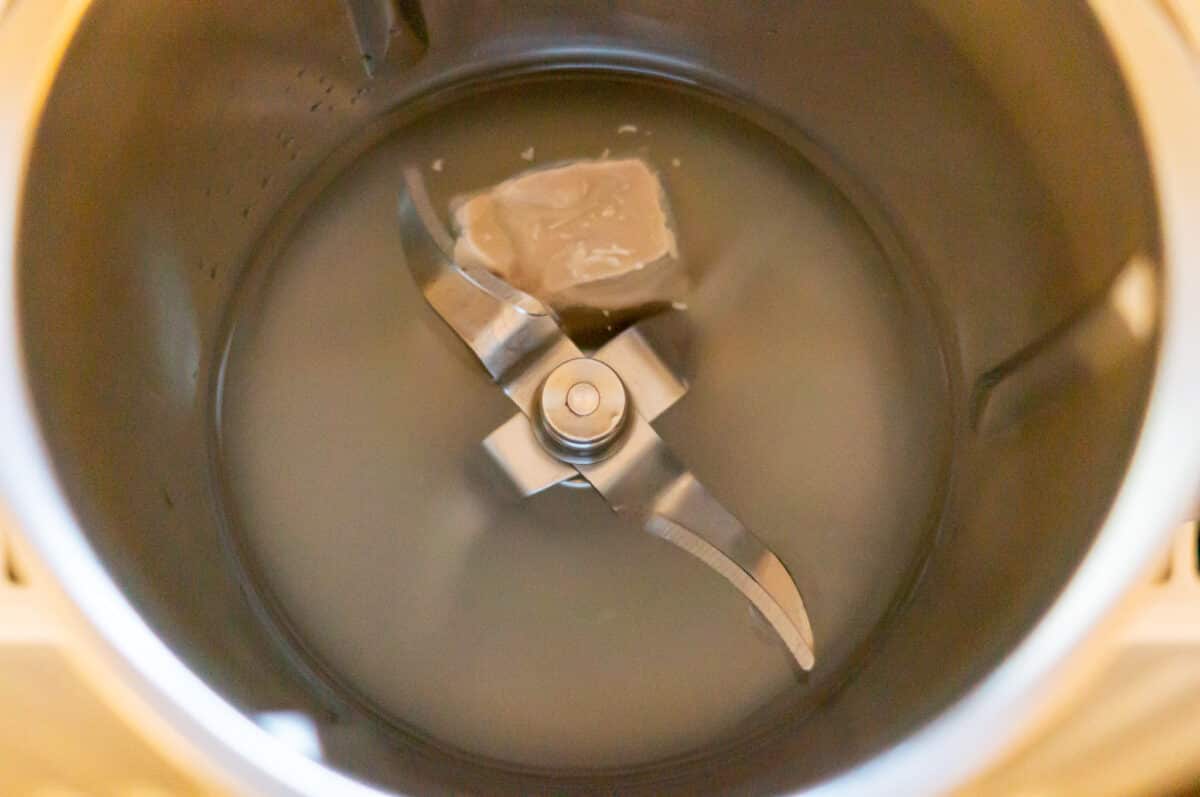
Add water, yeast and sugar to the mixing bowl and dissolve for 3 minutes / 37°C / speed 2.
-
2
Prove the yeast dough.
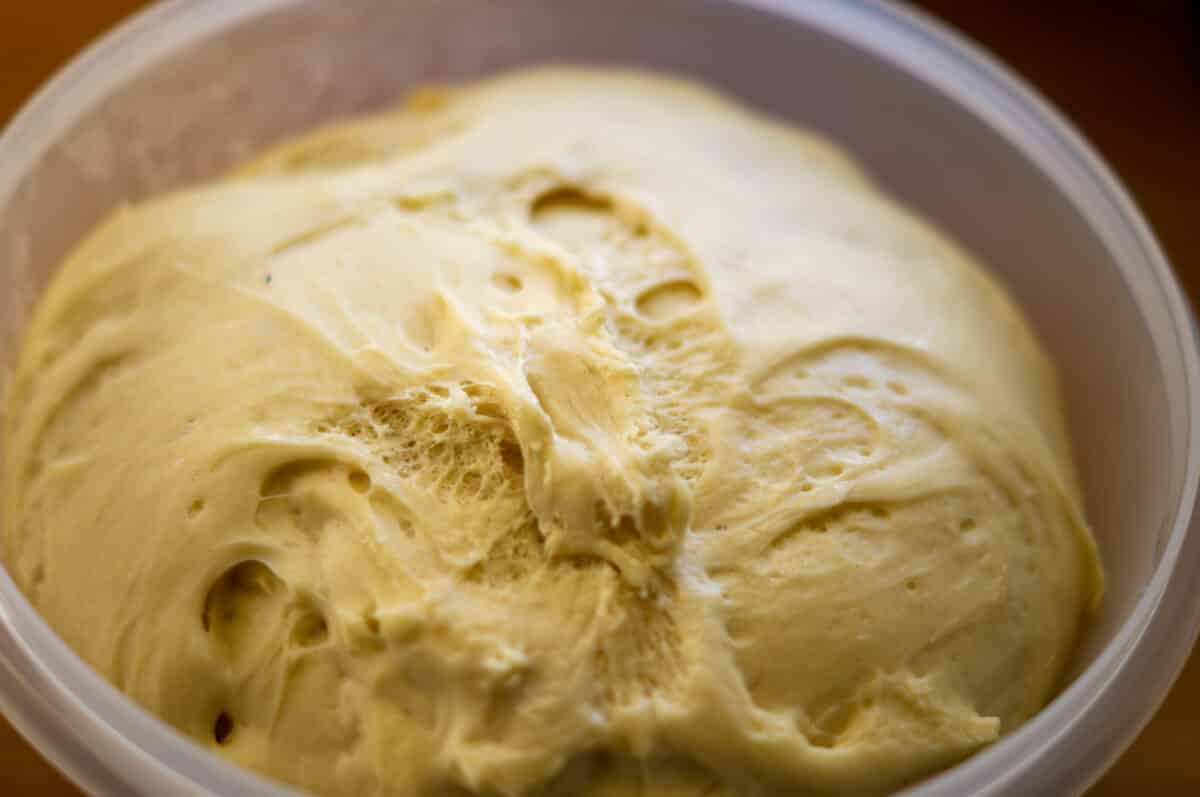
Add flours and salt and knead for 3 minutes / kneading mode. Transfer the dough to a bowl, cover with a damp cloth and leave to rise in a warm place for 2 hours.
-
3
Rinse the mixing bowl.
Rinse the mixing bowl.
-
4
Chop the herbs.
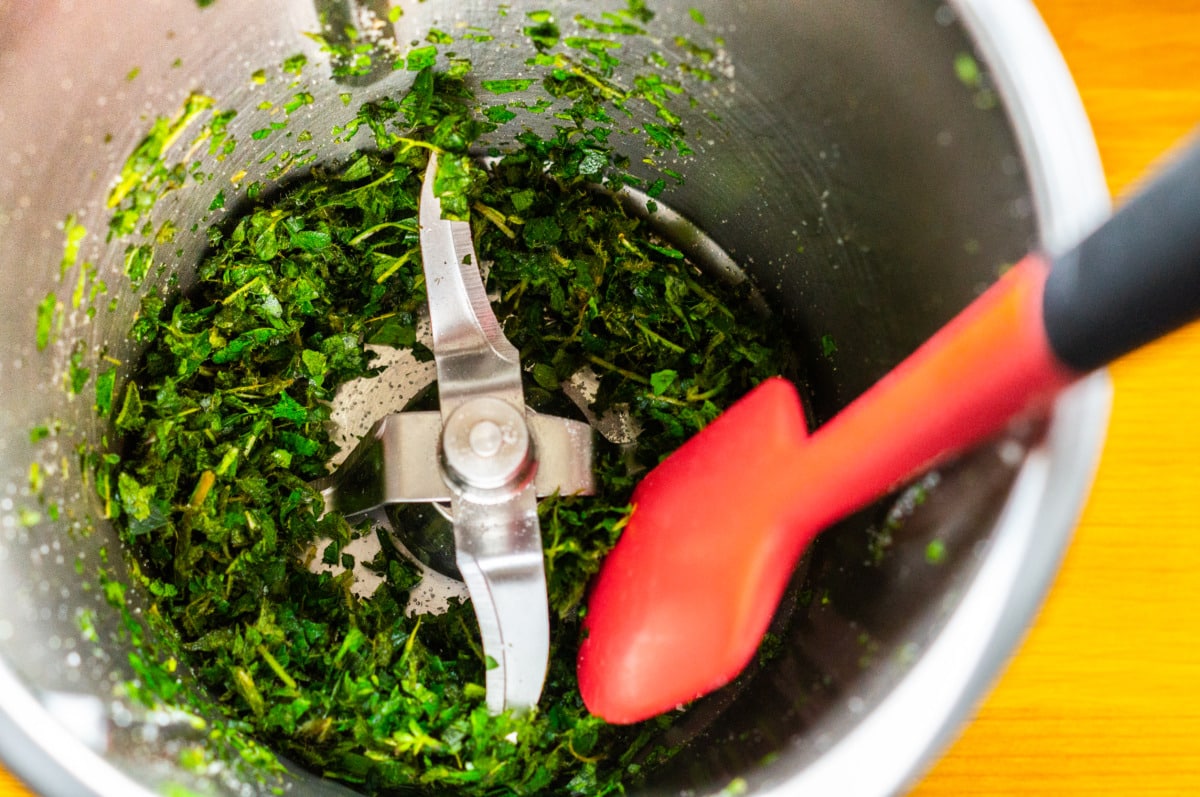
Wash the herbs, pick off the leaves, peel the garlic, add to the mixing bowl and chop for 6 seconds / speed 8.
-
5
Mix the herb butter.
Add butter, salt and pepper, mix for 10 seconds / speed 4, transfer to a small dish, cover and place in the fridge.
-
6
Shape the baguettes.
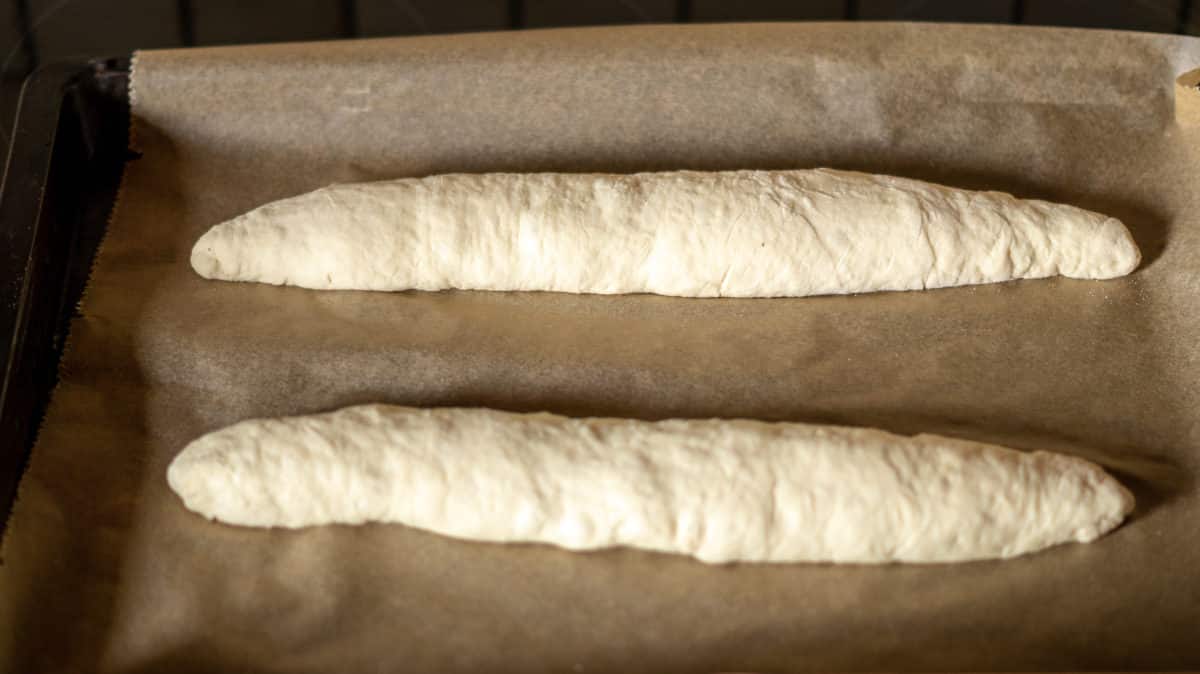
Divide the dough into 3 pieces on a lightly floured work surface, shape into 3 elongated loaves, place on a baking tray, cover and leave to prove for 1 hour.
-
7
Preheat the oven.
Preheat the oven to 250°C top and bottom heat.
-
8
Bake the baguettes.
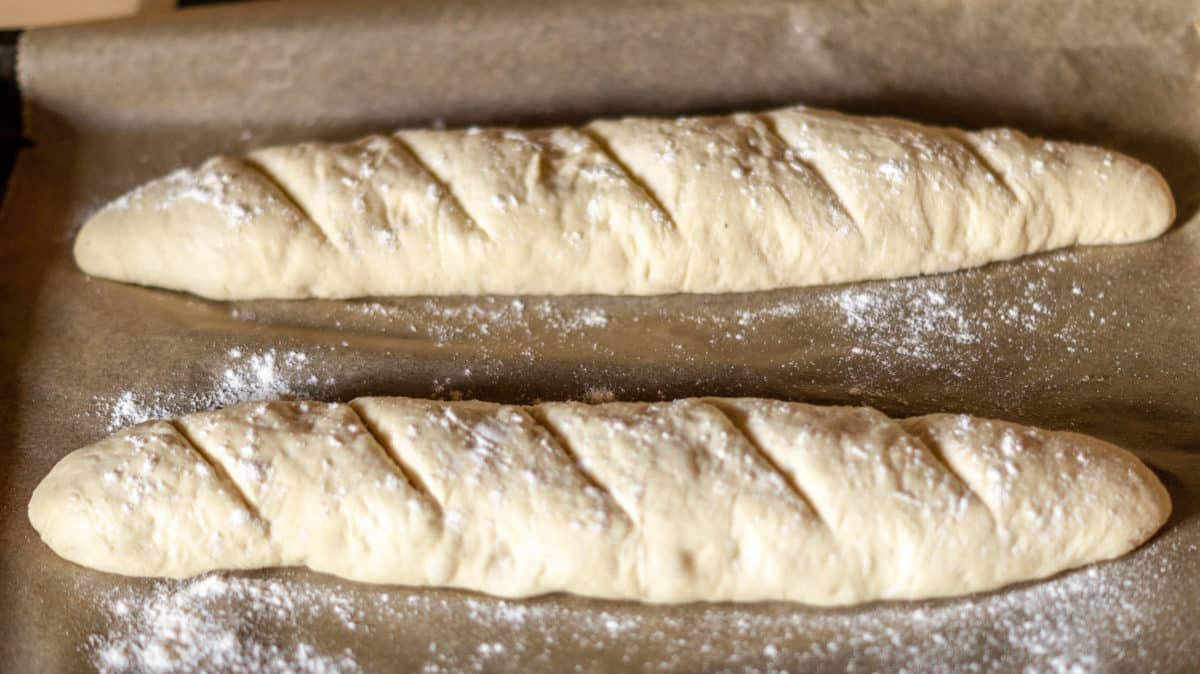
Fill an ovenproof dish with 200 g water and place it on the bottom of the oven. Score the baguettes diagonally and bake on the middle shelf for 15 minutes.
-
9
Finish the baguettes with herb butter.
Leave the baguettes to cool slightly, fill the herb butter into the cuts and bake for a further 5 minutes before serving.
Tip: You can also mix other herbs and various spices, such as fenugreek, into your herb butter.
Video
Nutrition per serving
Why the butter goes into the cuts
Most people spread herb butter on after baking. That gives a rich surface, but the crumb stays neutral. We fill the butter into the diagonal cuts before the final bake. At 250°C it melts immediately, runs into the gaps and soaks into the upper layers. The baguette becomes flavoursome from the inside, not just glossy on the outside.
The second benefit: the butter caramelises lightly at the edges of the cuts. That gives toasty notes that plain herb butter does not have. For this effect the temperature must stay high. 250°C top and bottom heat is essential.
Rye flour makes the difference in flavour
380 g plain flour (type 405) plus 80 g rye flour (type 1150). The ratio is not accidental. Pure plain flour gives a pale, neutral baguette like one from a factory bakery. The rye flour brings a lightly sour, nutty note that pairs well with herb butter.
Type 1150 has more bran content than type 405. That makes the dough a little firmer and gives more bite. At a ratio of 80:380 the baguette stays light and airy, but is not as soft and pillowy as pure white bread.
Two proving times are not a patience test
First prove: 2 hours after kneading. Second prove: 1 hour after shaping. That is 3 hours in total, plus 10 minutes of preparation and 20 minutes of baking. It sounds like a lot of effort, but it is mostly passive waiting.
The first prove builds the gluten structure. After 2 hours the dough becomes elastic and can be shaped into elongated loaves without tearing. Less than 2 hours and the baguettes stay compact. The crumb will be dense rather than airy.
The second prove after shaping gives the baguettes their volume. Bake too soon and you get flat loaves with a hard crust. After 1 hour the dough pieces have risen, the surface is taut and ready for scoring.
Herb butter in 16 seconds
6 seconds at speed 8 for the herbs, 10 seconds at speed 4 with the butter. Done. Parsley, basil, dill and a garlic clove are finely chopped, then the softened butter is added and mixed in briefly. Add salt and pepper directly with the butter, not before.
The butter must be at room temperature. Cold butter from the fridge will not mix evenly at speed 4 and lumps of butter will remain among the herbs. Taking it out of the fridge 30 minutes before preparation is enough.
Steam in the oven is essential for the crust
Place 200 g water in an ovenproof dish on the bottom of the oven before the baguettes go in. The steam prevents the crust from setting too early. Without steam a firm shell forms immediately, which stops the loaves from rising. The baguettes stay small and turn rock hard.
With steam the surface stays elastic during the first few minutes. The baguettes can expand, the crust becomes thin and crispy rather than thick and tough. After 15 minutes the water has evaporated and the loaves are ready for the second pass with herb butter.
Score diagonally and deeply
Diagonal cuts with a sharp knife, about 1 cm deep. Not straight down from above, but at a 45-degree angle to the long axis of the baguette. This creates the typical split lines where the crust opens up.
Cuts that are too shallow achieve nothing. The crust will then split in uncontrolled places. Cuts that are too deep weaken the structure and the baguette collapses during baking. 1 cm is the safe depth for a stable rise.
After the first bake, fill the herb butter into these cuts. Remove the baguette from the oven, leave to cool for 2 minutes, then press the butter into the gaps with a knife or spatula. Return to the oven at 250°C for 5 minutes.
Serve straight after cooling
After the 5-minute finishing bake, remove the baguettes from the oven and leave to cool for 10 minutes. Do not let them go cold. Serve warm. At room temperature the crust is at its crispiest, the butter is still soft and the herbs are fragrant.
Once cold the baguettes go firm, the butter sets and the herbs lose their aroma. Reheating in the oven is possible, but the crust will turn tough. Best to slice and serve straight after cooling.
With grilled food or as a snack
Herb butter baguette goes with grilled meat, salads or as a standalone snack. The butter makes the bread filling enough to work on its own. With a tomato and mozzarella salad or coleslaw at a barbecue, it is a staple for us.
It also works as a side to pumpkin soup or potato soup. The herbs are intense enough not to be lost alongside the soup.
Best eaten fresh
Herb butter baguettes keep for one day in a bread bag at room temperature. The crust will soften but remains edible. In the fridge they go too firm, the bread dries out and the butter becomes hard as stone.
Goes well with: tomato soup, cheese fondue and olive bread.
Freezing works only without the butter. Pack the baked baguettes into freezer bags once cooled. They keep for up to 3 months. To serve, leave to thaw, refresh the cuts, fill in the herb butter and bake for 5 minutes at 200°C.
More Thermomix® bread recipes: spelt baguette, flatbread, plaited loaf.