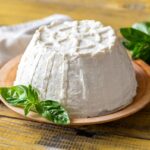
Ricotta in the Thermomix® needs only 4 ingredients and a simple acid reaction: heat the milk, add the citric acid, leave to curdle. We have been making this cheese regularly for years, because shop-bought Ricotta is often watery or bulked out with stabilisers.
Homemade Ricotta in the Thermomix®, Basic Recipe
Ingredients 0 / 5 ✓
- 1 tbsp citric acid
- 60 g water
- 1400 g whole milk (3.8% fat)
- 200 g double cream
- 1 tsp salt
Instructions 0 / 4
-
1
Dissolve the citric acid.
Dissolve the citric acid in the water.
-
2
Mix the cheese ingredients.
Add the milk, double cream and salt to the mixing bowl and heat for 10 min / 40°C / speed 3. Add the citric acid solution through the lid opening during the last few seconds, then leave to rest for 10 minutes.
-
3
Drain the cheese.
Place the steamer basket in a bowl. Transfer the mixture into a fine-mesh cloth and leave to drain in the steamer basket for approximately 30 minutes.
-
4
Finish the Ricotta.
Fill the Ricotta into a jar and store in the fridge.
Video
Nutrition per serving
40°C is the threshold
Ricotta curdles at a lower temperature than most other cheeses. 40°C is enough for the citric acid to separate the milk proteins. Going higher is not necessary and would make the cheese grainier. At 10 minutes on speed 3, the Thermomix® heats the mixture evenly without proteins sticking to the base. That is why we make this cheese in the mixing bowl rather than on the hob.
Citric acid, not lemon juice
Ricotta needs acid to precipitate the proteins. We use powdered citric acid because it tastes neutral and can be measured precisely. Lemon juice also works but makes the cheese taste more acidic, and the quantity varies depending on the fruit. 1 tbsp of citric acid dissolved in 60 g of water is the standard mixture. Always dissolve it in the water first, then add it through the lid opening into the warm milk. Curds form almost immediately after adding the acid.
10 minutes of rest is essential
After adding the acid, the mixture rests for 10 minutes in the mixing bowl. During this time the whey separates from the proteins. Skimming too soon means losing cheese mass and getting less yield. The curds need time to gather. Then transfer the mixture to the cloth and leave to drain in the steamer basket over a bowl. 30 minutes is the minimum, and draining longer produces a firmer Ricotta.
Fat content determines creaminess
Whole milk at 3.8% fat plus 200 g of double cream gives the right texture. Less fat makes the Ricotta drier and more crumbly. Extra fat is not worth it, as Ricotta is naturally a low-fat cheese. The cream keeps the cheese creamy and easy to spread. Using semi-skimmed milk produces a cheese like the kind from the supermarket: dry and lacking in flavour.
Do not throw away the whey
As the cheese drains, whey collects in the bowl. You can use it for baking bread or as a base for smoothies. Whey contains milk sugar, minerals and vitamins. Pouring it away is wasteful. If you do not need it straight away, it keeps in the fridge for 3 to 4 days.
Ricotta keeps for 5 days
Fresh Ricotta should go into a jar and into the fridge. It stays fresh for 5 days. No longer, because homemade cheese without preservatives spoils faster than bought. Seal the lid firmly so the cheese does not absorb any off-flavours. Freezing does not work well, as the Ricotta becomes crumbly after thawing and loses its creamy texture.
What we use Ricotta for
Ricotta works well with lasagne, filled pasta, on pizza or as a base for cheesecake. We also use it plain on toasted bread with honey and nuts. The cheese is mild and takes on other flavours well. Season with salt, pepper and herbs for savoury dishes. Refine with sugar, vanilla or lemon zest for desserts.
What other recipes do differently
Goes well with: Pasta.
Many recipes work at 85 to 100°C using lemon juice or white wine vinegar instead of citric acid at 40°C. That method works, but it makes the cheese grainier and more acidic in flavour. Others use pure whole milk without cream, which produces a drier, more crumbly Ricotta. Instead of 10 minutes of rest, times in other recipes range from 30 seconds to 2 hours. We stick with 40°C plus citric acid because the acid reaction at lower temperature is gentler and keeps the cheese creamier. We use the whey for baking bread, while many recipes discard it. Authentic Italian Ricotta is traditionally made from cheese whey, not fresh milk.