Mustard eggs from the Thermomix® are classic home cooking with a precise sequence: first steam the potatoes and eggs together, then build a roux as the base for the sauce. Anyone who skips the roux or cooks it for too short a time will not get a creamy, well-bound sauce.
We make mustard eggs regularly because the recipe feeds four people well with just eight eggs, potatoes and a mustard sauce. The Thermomix® handles the steaming in the Varoma and the roux in the mixing bowl at the same time.
Mustard Eggs with the Thermomix®

Ingredients 0 / 14 ✓
- 600 g water
- 1 1/2 tsp salt
- 800 g potatoes
- 8 eggs
- 1 onion
- 40 g butter
- 40 g flour
- 100 g white wine
- 300 g vegetable stock
- 200 g creme fraiche
- 40 g Dijon mustard
- 1 tsp salt
- 1/2 tsp freshly ground pepper
- 1/2 bunch chives
Instructions 0 / 9
-
1
Peel the potatoes.
Add water and salt to the mixing bowl, insert the steamer basket, peel the potatoes and weigh them in pieces into the steamer basket.
-
2
Cook the eggs.
Place the eggs in the Varoma, set in place and cook for 25 min / Varoma / speed 1.
-
3
Refresh the eggs.
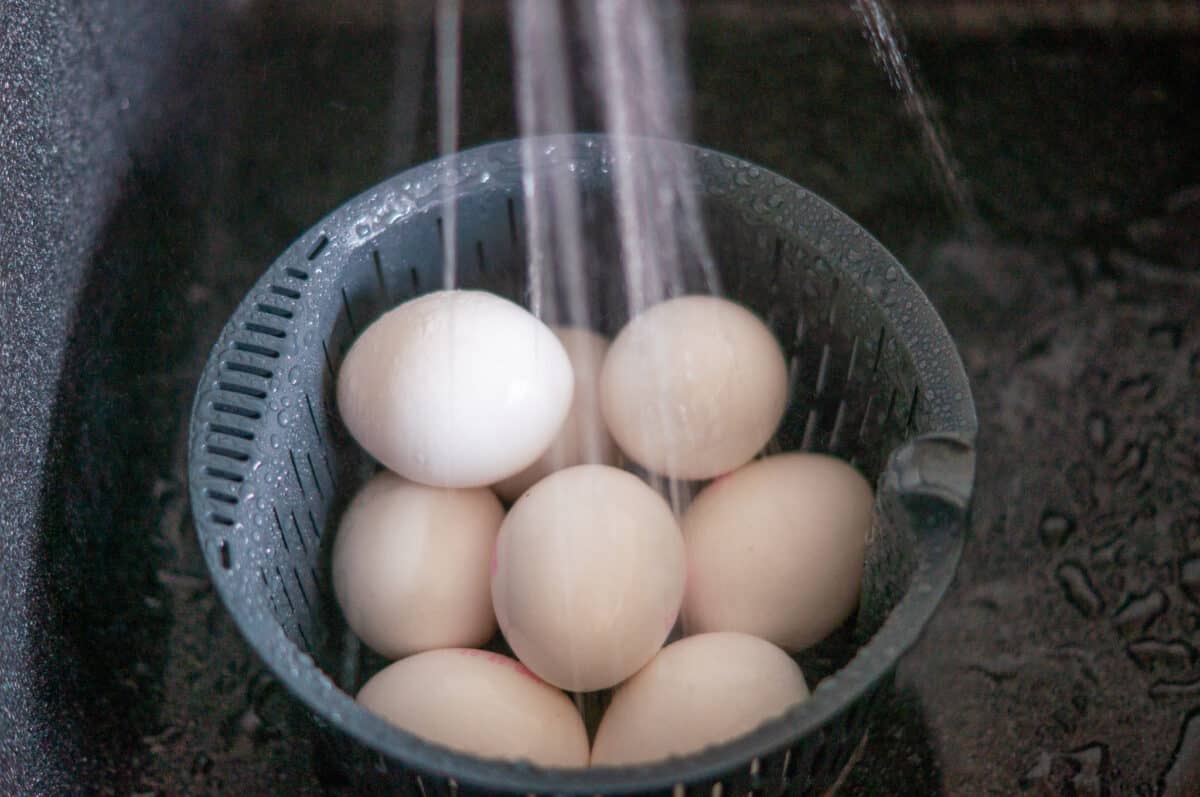
Remove the Varoma and refresh the eggs under cold water. Take out the steamer basket and keep the potatoes warm.
-
4
Chop the onion.
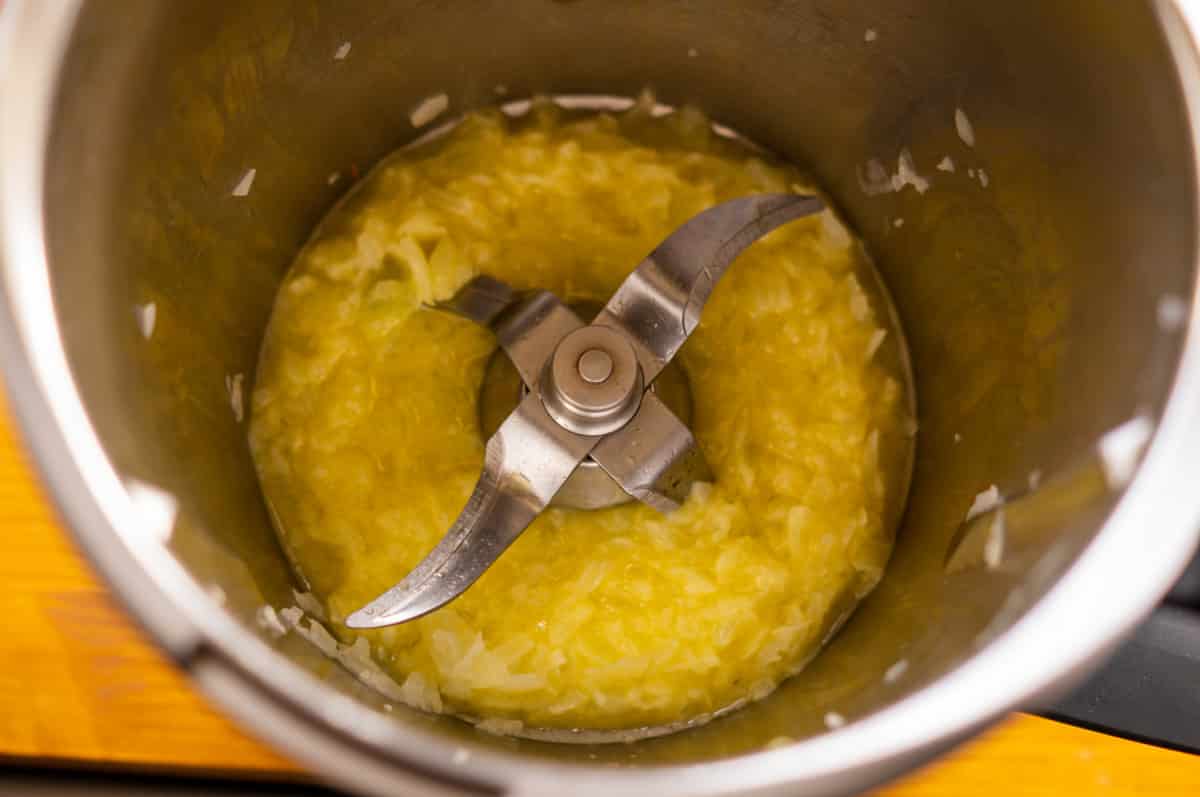
Peel the onion, halve it, place in the mixing bowl, chop for 5 sec / speed 5 and push down with the spatula.
-
5
Sweat the onion.
Add the butter and sweat for 3 min / Varoma / speed 1.
-
6
Add the flour.
Add the flour and cook for 2 min / Varoma / speed 1.
-
7
Cook the sauce.
Add the white wine, vegetable stock, creme fraiche, mustard, salt and pepper and cook for 8 min / 100°C / speed 2.
-
8
Cut the chives.
Meanwhile, peel the eggs and cut the chives into rings. Blend the sauce for 10 sec / speed 8.
-
9
Serve.
Arrange the potatoes with the eggs, pour the sauce over everything and serve scattered with chives.
Tip: If you prefer not to use white wine, you can replace it entirely with vegetable stock.
Video
Nutrition per serving
Why the roux needs 2 minutes at Varoma temperature
The 40 g of flour must be fully worked into the fat after adding the butter. 2 minutes at Varoma temperature at speed 1 toast the flour and bind the butter. Anyone who cooks for only 1 minute or lowers the temperature will end up with a lumpy sauce rather than a smooth, glossy finish.
After the flour, the white wine, vegetable stock, creme fraiche and Dijon mustard go in. The sauce cooks for 8 minutes at 100°C on speed 2. That is enough for the roux to bind the liquid and the sauce to become thick and velvety.
Cooking potatoes and eggs at the same time
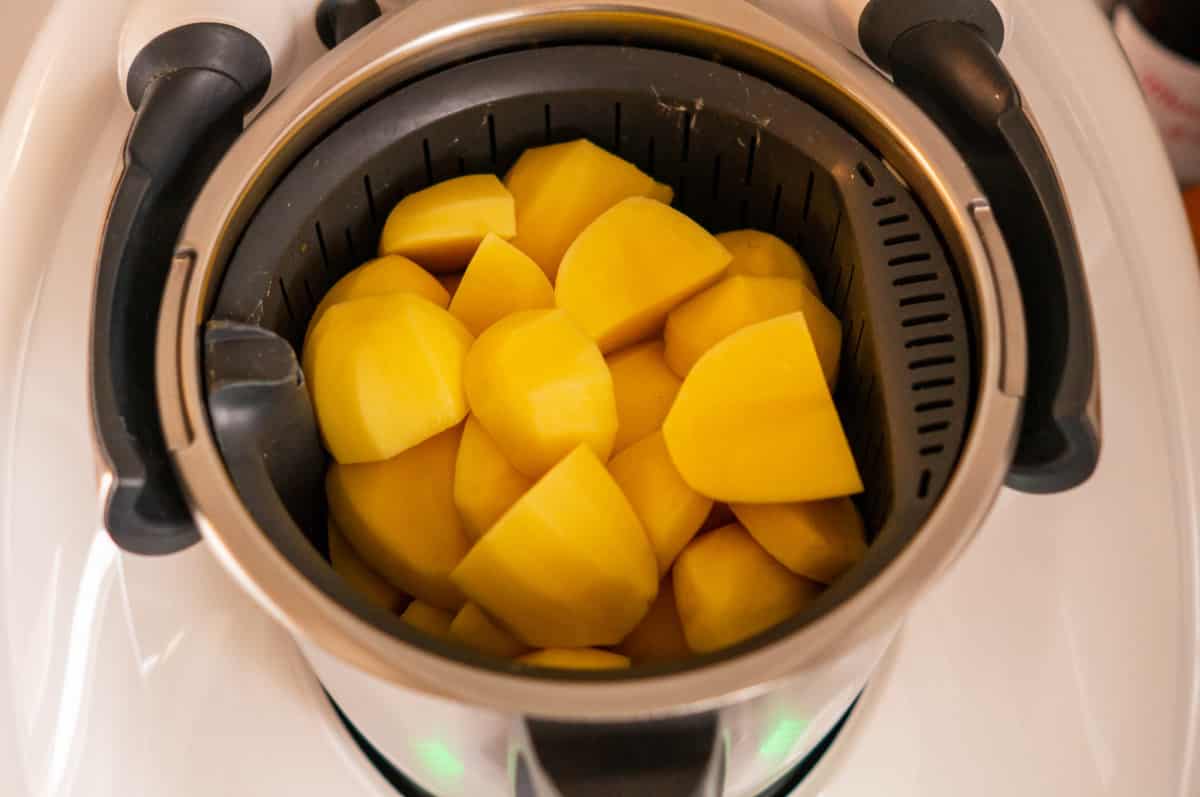
800 g of potatoes are peeled, cut into pieces and placed in the steamer basket. Underneath go 600 g of water with 1½ tsp of salt. The eight eggs sit in the Varoma above. 25 minutes at Varoma temperature on speed 1 cooks both components through.
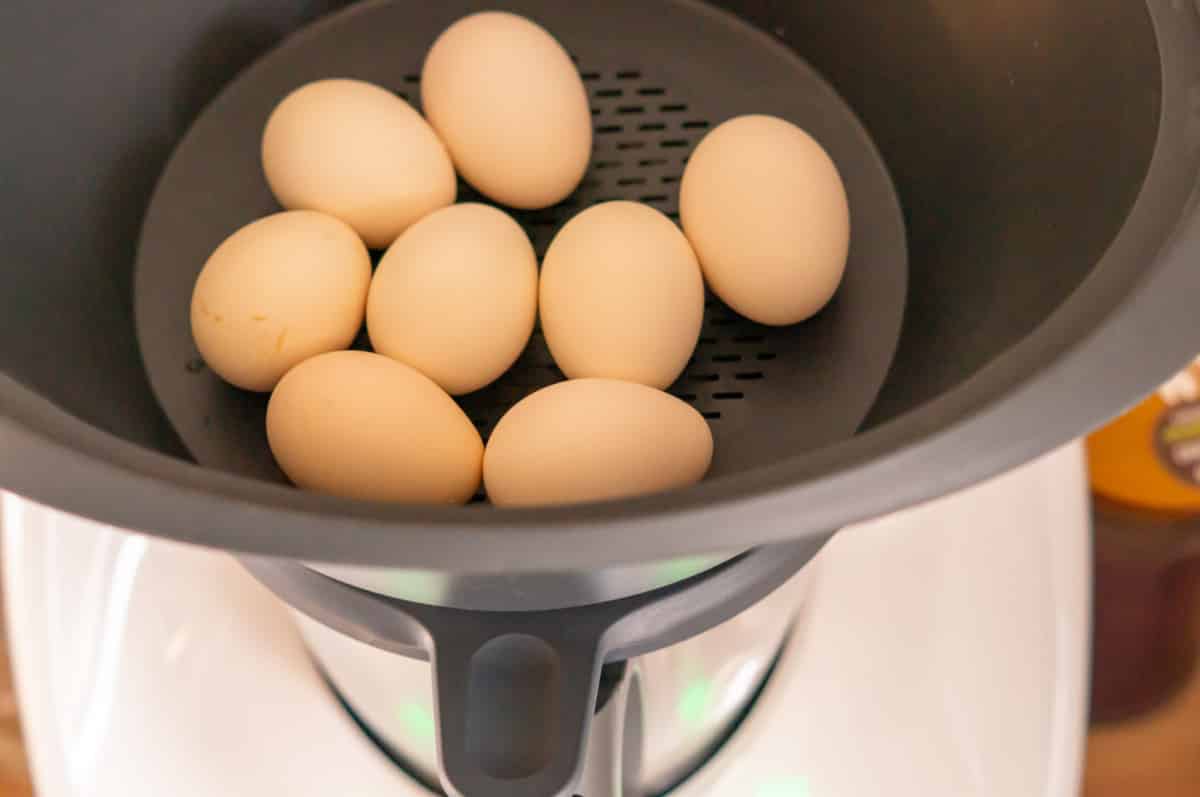
After 25 minutes the eggs are hard-boiled and the potatoes are tender. You remove the Varoma, refresh the eggs under cold water and set the steamer basket with the potatoes to one side. The potatoes stay warm while you prepare the sauce.
Chop the onion before adding the butter
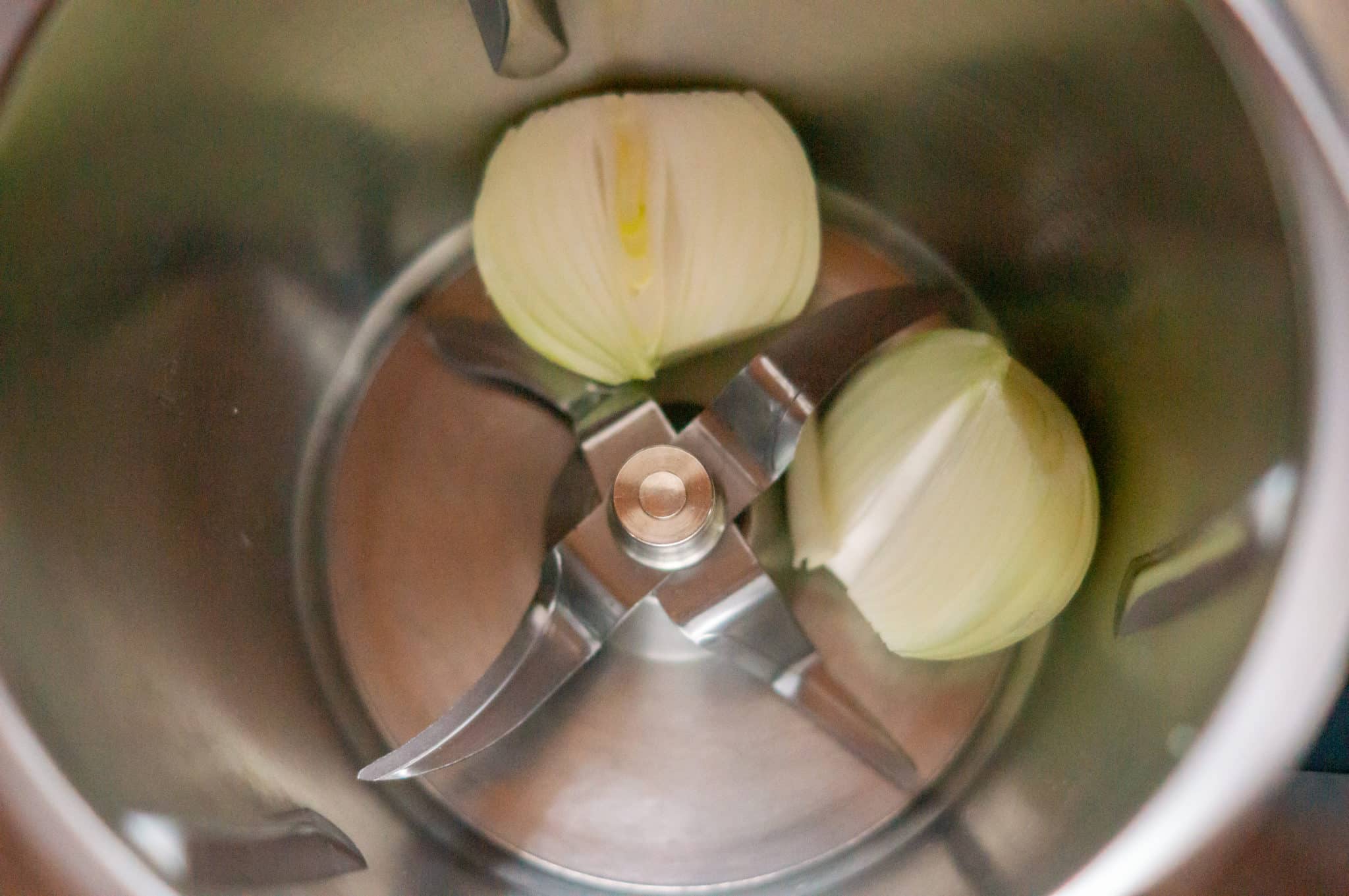
One onion is halved and chopped for 5 seconds on speed 5. Only then does the butter go in. If you add the butter before chopping, it coats the blades and the onion will not be evenly chopped.
The chopped onion sweats with 40 g of butter for 3 minutes at Varoma temperature on speed 1. Then 40 g of flour is added and toasted for a further 2 minutes at Varoma temperature on speed 1.
Dijon mustard gives the sauce its character
40 g of Dijon mustard is enough for a clear mustard flavour without making the sauce sharp. Dijon mustard has less heat than medium-hot mustard and binds well with the creme fraiche. Anyone using hot mustard should reduce the quantity to 20 to 30 g.
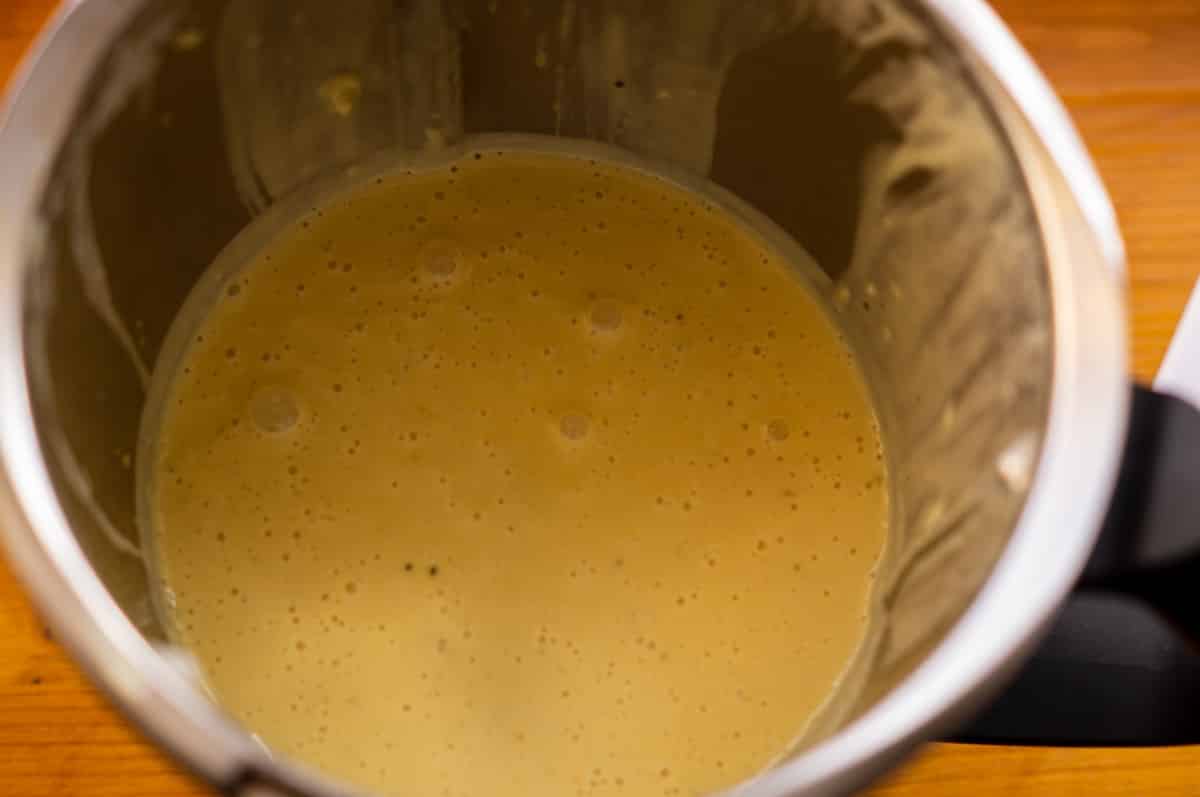
After cooking, blend the sauce for 10 seconds on speed 8. This makes it smooth and fully incorporates the roux into the liquid.
Replacing white wine with stock
100 g of white wine adds acidity to the sauce. If you prefer not to use white wine, replace it with the same amount of vegetable stock. The sauce will be less sharp but stays just as creamy.
If you like more acidity in the sauce, stir in 1 tsp of lemon juice or 1 tsp of white wine vinegar after blending.
Peeling the eggs and cutting the chives
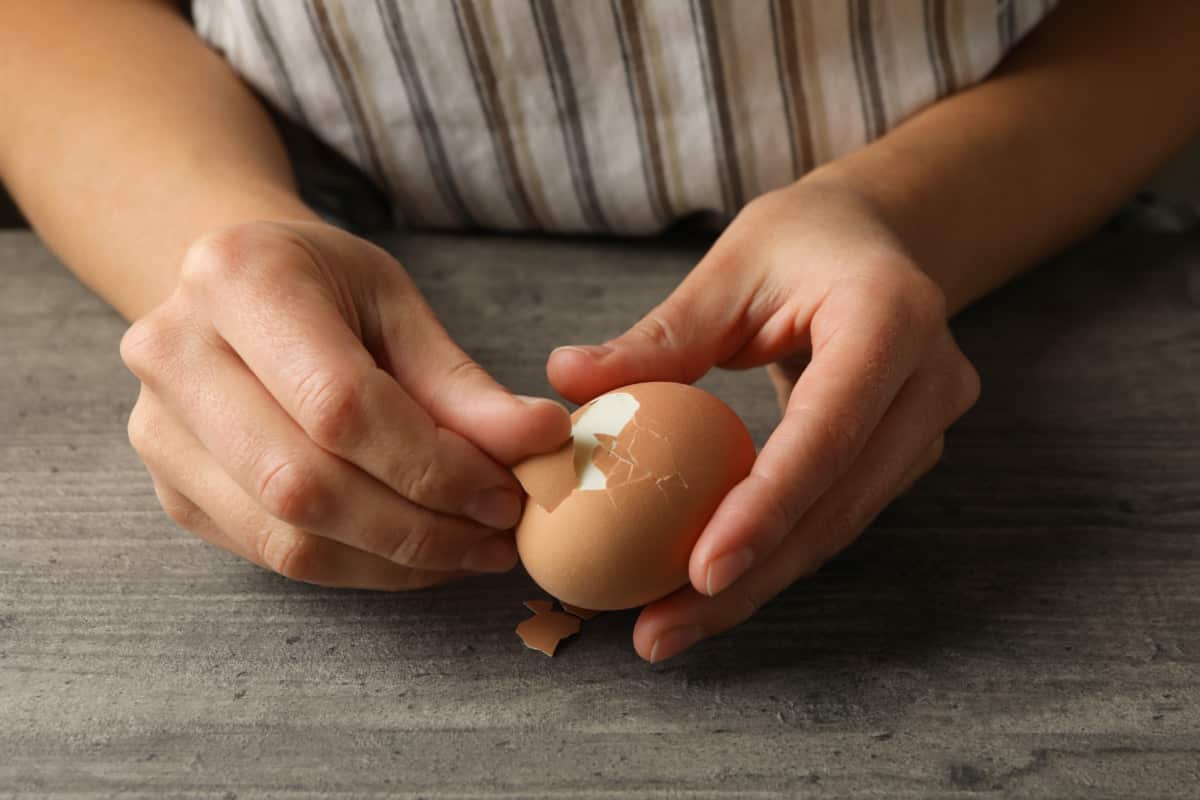
While the sauce is cooking, peel the eight eggs and cut half a bunch of chives into rings. The chives go over the mustard eggs at serving time, not into the sauce.
Serving with warm potatoes
The potatoes are still warm enough to serve straight from the steamer basket. Arrange them on plates with the peeled eggs, pour the mustard sauce generously over everything and scatter the chives on top.
Mustard eggs taste best when just warm rather than piping hot. If you prefer to serve them fully hot, place the plates briefly in the oven preheated to 80°C.
Leftovers in the fridge
Keep any leftover mustard eggs in a sealed container in the fridge for up to two days. The sauce thickens as it reheats because the roux continues to bind. Add 2 to 3 tbsp of water or milk when reheating to loosen the consistency.
Freezing does not work well. The creme fraiche splits on thawing and the eggs turn rubbery.
More Thermomix® recipes with eggs: Steamed Potatoes, Perfect Breakfast Eggs, Easter Eggs in the Varoma, Mashed Potatoes and Wild Garlic Pesto.
How other recipes approach this dish
Goes well with: Cucumber salad.
We compared three popular mustard egg recipes. One version leaves the mustard type unspecified and boils the eggs for nine to ten minutes in a separate saucepan, without the Varoma parallel-cooking method. Another uses a mix of Dijon and medium-hot mustard and replaces the creme fraiche with milk, which makes for a thinner sauce. A third serves the eggs with potatoes cooked in the Varoma but skips the white wine and the chive topping. Our recipe combines the strengths: potatoes and eight eggs cooked together in the Varoma at the same time, a roux with white wine and creme fraiche for acidity and body, and Dijon mustard for flavour without an overpowering kick. If you like more acidity, add a splash of lemon juice after blending.