Pretzel rolls made with the Thermomix® need no ready-made lye. We dissolve 60 g of bicarbonate of soda in 1 litre of boiling water. This concentration is no compromise: it delivers exactly the alkaline strength that wheat gluten needs to form the characteristic brown crust during baking. Less bicarbonate leaves the rolls too pale; more makes them taste soapy.
Pretzel rolls need a firm yeast dough. The Thermomix® kneads 500 g of plain wheat flour (type 405) with only 240 g of water on kneading mode, producing a dough that holds its shape well and does not go soggy in the lye bath. The butter keeps the rolls moist inside without affecting the crust.
Pretzel Rolls with the Thermomix®

Ingredients 0 / 8 ✓
- 240 g water lukewarm
- 1 cube fresh yeast
- 1 1/2 tsp salt
- 1/2 tsp sugar
- 60 g butter
- 500 g plain wheat flour (type 405)
- 1000 g water
- 60 g bicarbonate of soda
Instructions 0 / 6
-
1
Dissolve the yeast.
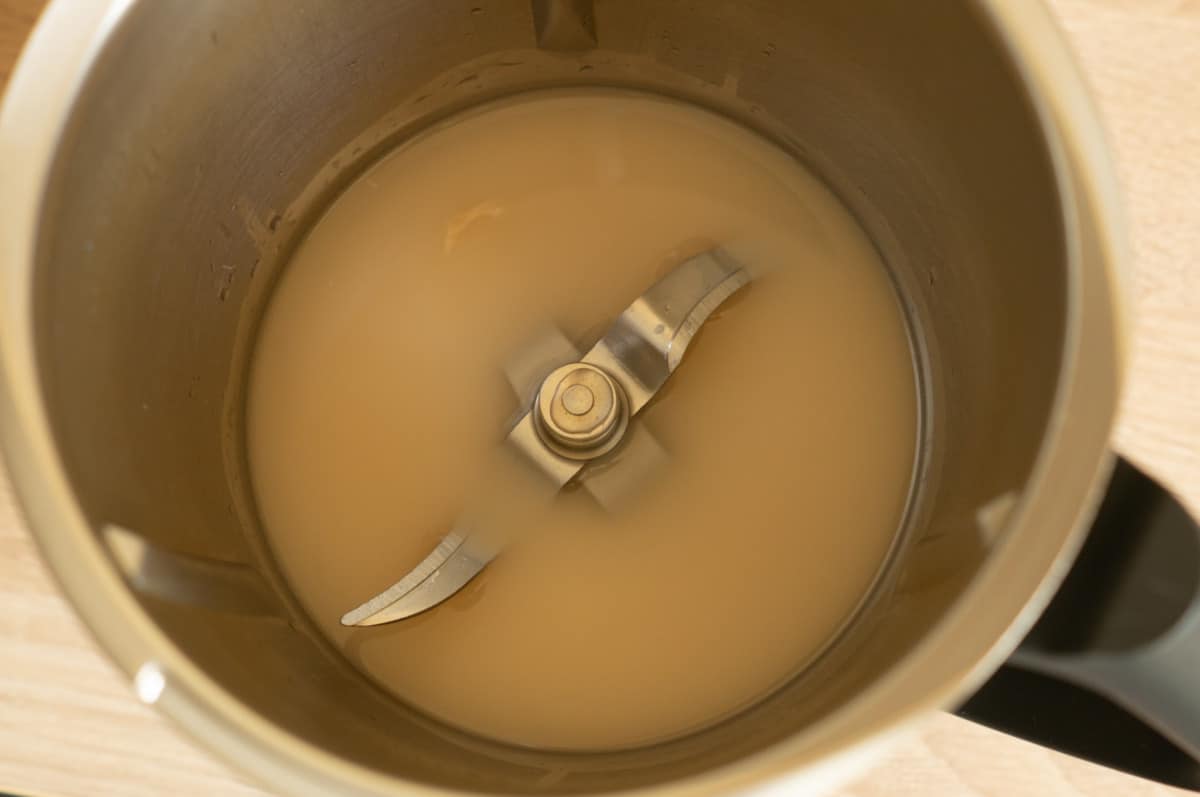
Add water, yeast, salt and sugar to the mixing bowl and heat for 3 minutes / 37°C / speed 1.
-
2
Knead the dough.
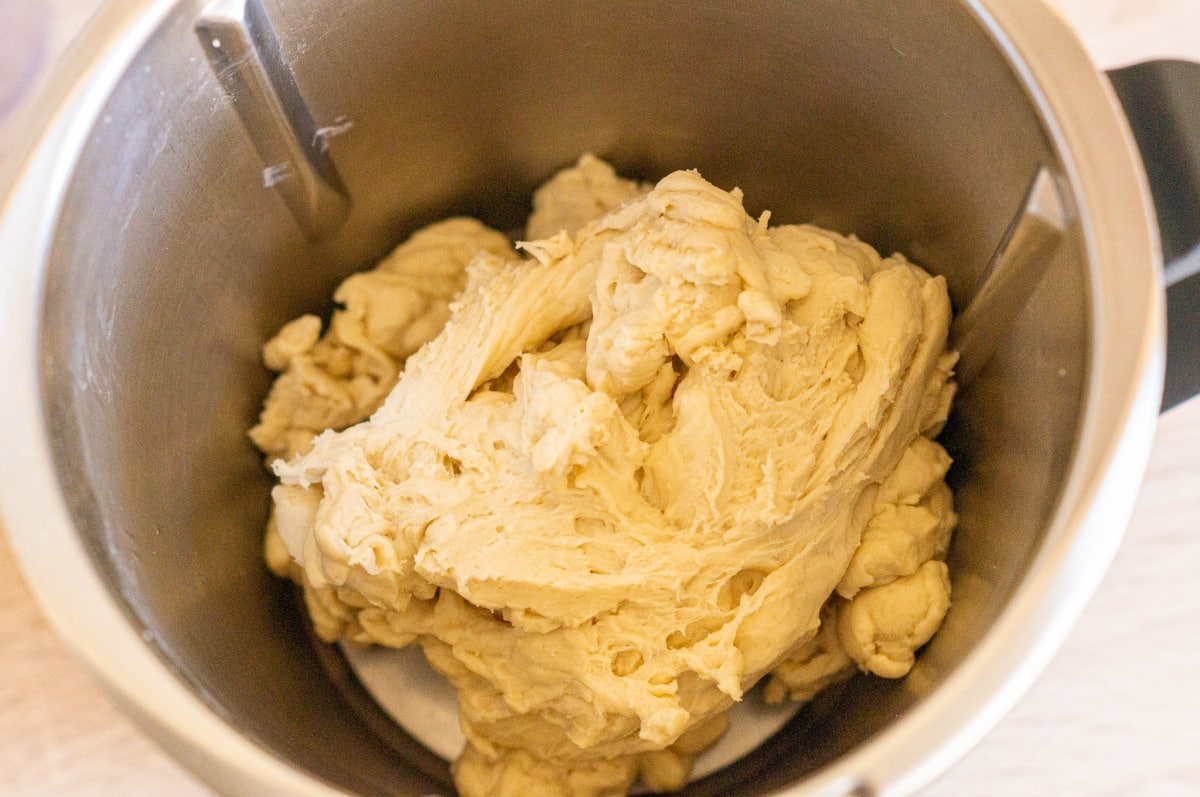
Add butter and flour and knead for 2 minutes / kneading mode.
-
3
Shape the rolls.
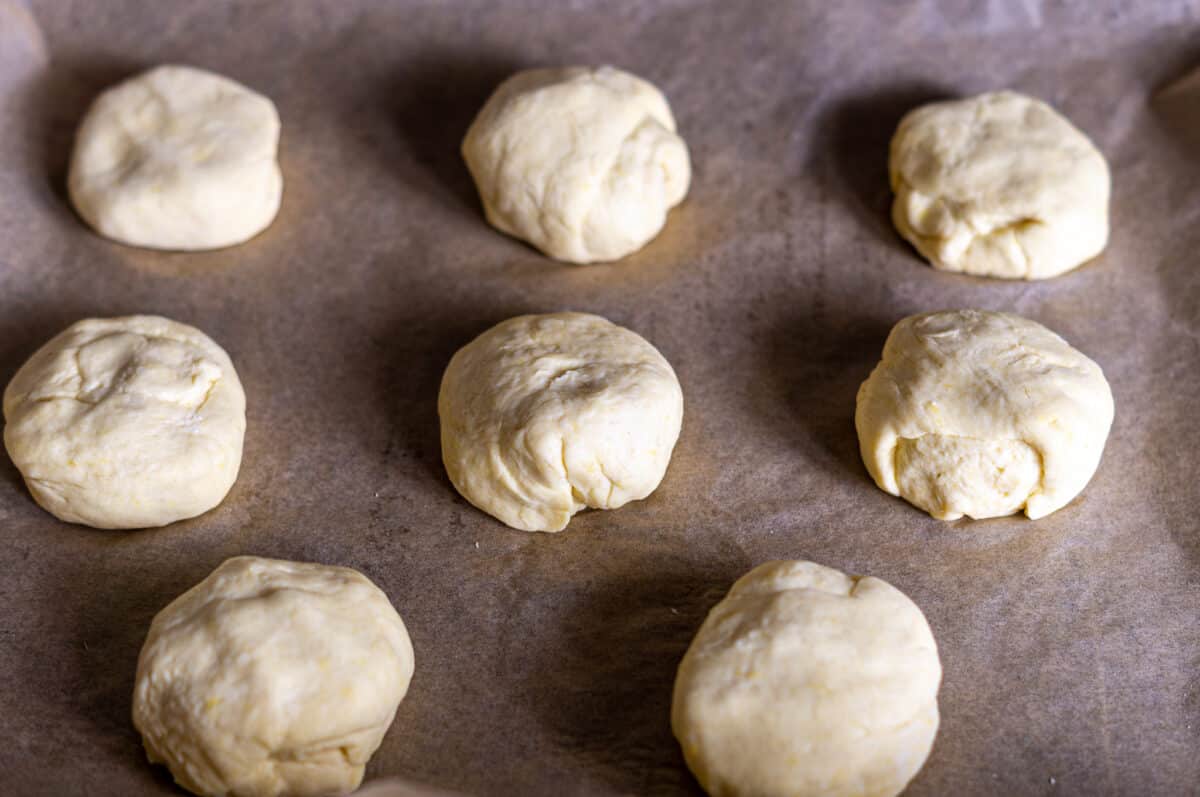
Shape the dough into 8 rolls.
-
4
Dissolve the bicarbonate of soda.
Bring water to the boil and dissolve the bicarbonate of soda in it. Line a baking tray with baking paper.
-
5
Dip the rolls in the lye bath.
Bathe the rolls for 30 seconds in the lye bath, remove them with a slotted spoon and place on the baking tray.
-
6
Bake the rolls.
Score the rolls with a cross and bake on the middle shelf at 200°C top and bottom heat for approximately 30 minutes.
Tip: You can sprinkle your pretzel rolls with salt or cheese before baking.
Video
Nutrition per serving
Why bicarbonate of soda and not caustic soda
Classic pretzel rolls are traditionally dipped in sodium hydroxide (NaOH, caustic soda). This is a strongly caustic base that requires safety goggles and gloves. Bicarbonate of soda (sodium hydrogen carbonate) is far less alkaline and safe to handle. The pH sits at around 8.5 rather than 13, which is enough to accelerate the Maillard reaction on the surface of the dough. The brown colour comes from the breakdown of proteins and sugars at 200°C.
We have used bicarbonate of soda for all our lye bakes for years. The flavour is identical to bakery rolls and the colour only marginally lighter. Anyone wanting deep brown pretzels would need NaOH, but for rolls at home that is simply not necessary.
30 seconds in the bath, no longer
The timing of the bath is critical. The shaped rolls go into the hot bicarbonate lye for exactly 30 seconds. During that time the lye penetrates roughly 1 mm into the surface and denatures the outer proteins. This is the foundation for the crust that forms later.
Less than 30 seconds and the lye does not reach deep enough, leaving the rolls patchily browned. Longer, and the dough absorbs too much liquid, giving the inside a soapy aftertaste. We lift the rolls out of the bath with a slotted spoon and place them straight onto the baking tray. There is no need to drain them: the residual lye evaporates in the oven.
Yeast dough without a proving time
This recipe skips the proving time. The yeast is activated at 37°C, the dough is kneaded straight away and shaped immediately. This works because pretzel rolls do not need the fluffy crumb of an ordinary bread roll: the lye creates a dense, chewy texture. Anyone wanting more volume can leave the shaped rolls to rest, covered, for 20 minutes before dipping them in the lye.
Kneading mode runs for 2 minutes, which is enough to develop the gluten. Longer kneading makes the dough tough; shorter leaves it tearing when shaped. After kneading we divide the dough into 8 portions of roughly 100 g each and roll each one into a smooth ball. The surface must be smooth: any cracks fill with lye during the bath and create bitter spots later.
Score after the bath, not before
The classic cross is scored only after the bath. Cutting beforehand would let the lye run into the grooves and make the crust too dark at those points. We place the bathed rolls on the baking tray and use a sharp knife or a lame to cut a shallow cross into the surface, about 5 mm deep. The cuts open up during baking and give the rolls their characteristic shape.
Baking at 200°C without steam
Pretzel rolls do not need steam in the oven. The lye provides enough moisture on the surface. We bake at 200°C top and bottom heat on the middle shelf for 30 minutes. After 20 minutes the rolls are light brown; the final 10 minutes deliver the typical deep brown colour and the crispy crust.
Fan-assisted also works: 180°C and 25 minutes. The crust comes out slightly thinner but more evenly browned.
Topping before baking
Anyone who wants to top their pretzel rolls should do so straight after scoring the cross. Coarse salt is the classic choice: we use fleur de sel or sea salt flakes. Grated cheese (Gouda, Emmental) or caraway seeds also work well. The topping sticks by itself thanks to the residual lye, so no egg wash is needed.
Freezing or keeping at room temperature
Fresh pretzel rolls keep in a bread bag at room temperature for 2 days, after which they start to dry out. Freezing works well, either before the bath (defrost first, then dip in the lye) or once fully baked. To refresh frozen baked rolls, heat them in the oven at 180°C for 10 minutes and they will taste freshly made again.
Goes well with: Butter.
The bicarbonate lye cannot be reused once it has cooled. The bicarbonate of soda partially converts to sodium carbonate during boiling, which is less alkaline. Make a fresh lye solution for the next batch of rolls.
More Thermomix® bread roll recipes: spelt rolls, Sunday rolls, potato rolls.