Quark and oil dough with the Thermomix® is our emergency dough for when guests are arriving in an hour and there is no time to prove a yeast dough. With 400 g flour, 180 g quark and 70 g oil, a bake-ready dough is in the mixing bowl in 7 minutes, with no proving time at all.
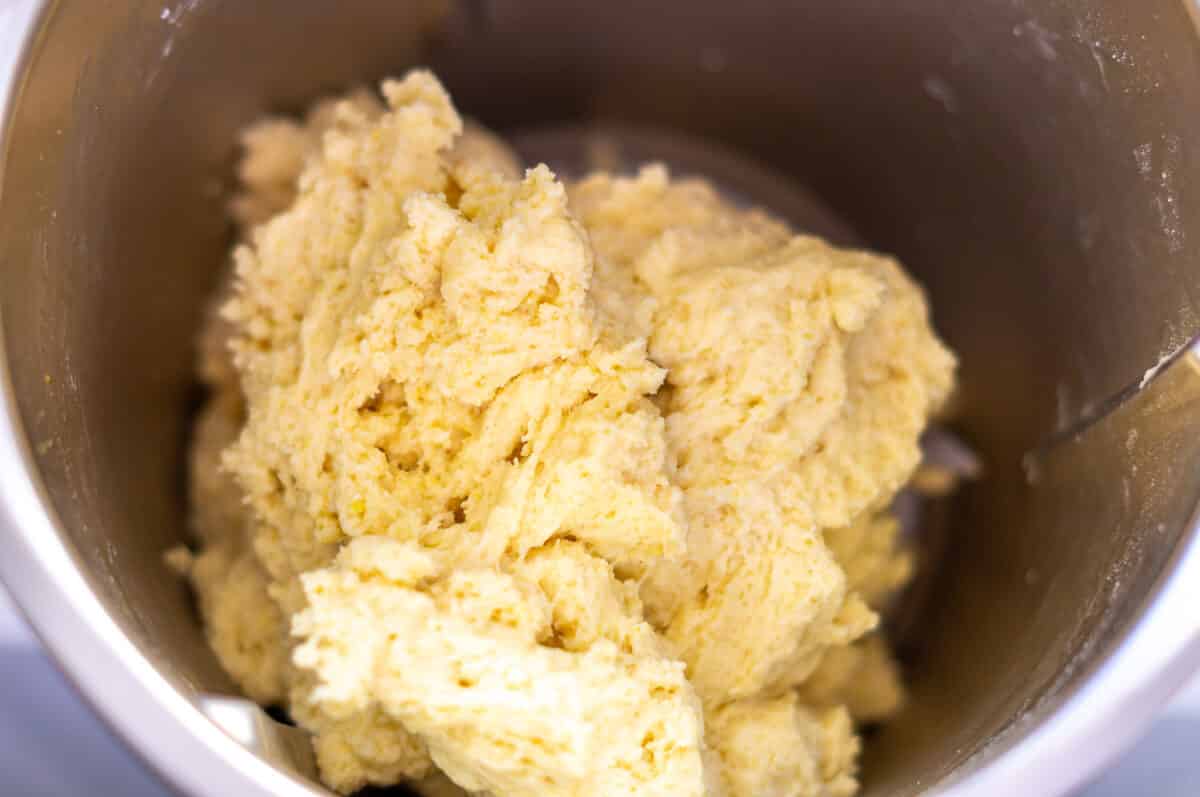
This dough is the fastest alternative to yeast dough, shortcrust pastry or sponge. It works for sweet baked goods as well as savoury quiche, and even beginner bakers get it right because the Thermomix® stops automatically when the timer runs out, preventing over-kneading. That is exactly the point that sets it apart from doughs that can easily be ruined by hand.
Quark and Oil Dough with the Thermomix® (Basic Recipe)

Ingredients 0 / 7 ✓
- 2 eggs
- 400 g flour
- 1 sachet baking powder
- 170 g sugar
- 2 tsp vanilla sugar
- 180 g quark (40% fat)
- 70 g oil
Instructions 0 / 3
-
1
Separate the egg.
Separate one egg and place the egg white into the mixing bowl.
-
2
Knead the dough.
Add the second egg and all remaining ingredients to the mixing bowl and knead for 1 min / kneading mode.
-
3
Shape the dough.
Use the dough to make small baked goods or cake.
Our portion of dough is enough for two 26 cm springform tins or one full baking tray.
You can freeze the dough perfectly.
Video
Nutrition per serving
Why the dough rises without any proving time
Classic yeast dough needs 30 to 60 minutes of proving time and a warm kitchen. Quark and oil dough skips all of that. The 1 sachet of baking powder reacts with the lactic acid in the 180 g of quark and releases CO2 immediately. The dough rises during baking, not beforehand in the bowl. That is why it must go into the oven straight after kneading, otherwise the leavening power is lost.
The Vorwerk basic recipes on Cookidoo often use only 300 g of flour. We use 400 g in the same ratio, which makes the dough firmer so it does not tear when rolled out for trays, rolls and swirls. That is the one point where extra flour really makes a difference: stability when shaping.
Why kneading mode beats kneading by hand
With this dough, the most important thing is not to knead it too long. If quark and oil dough is over-worked, it becomes sticky and almost impossible to roll out. That happens quickly by hand because you lose track of the seconds. In the Thermomix®, the 1 min / kneading mode runs on the built-in timer and stops by itself. The dough simply cannot be over-worked.
Goes well with: Apple cake, muffins and cinnamon rolls.
We first separate one egg and add only the egg white to the mixing bowl, then add the second whole egg and all remaining ingredients. The extra egg white makes the dough a little lighter and paler. If you like vanilla sugar, you can make it yourself quickly following our guide, which saves you reaching for a shop-bought sachet.
The three mistakes that ruin the dough
The dough is sticky and will not roll out
Usually the quark is too wet or too much egg white has been added. Over-kneading also makes it sticky. Our fix: add flour spoonful by spoonful on kneading mode until the dough pulls away from the sides. Flour the work surface and your hands beforehand, then it is easy to shape.
The baked goods do not rise in the oven
This happens when the dough has been sitting in the bowl too long. Baking powder loses its leavening power after about 30 minutes because the CO2 reaction with the quark has already finished. Our fix: always knead the dough fresh and bake it straight away. Unlike yeast dough, it gains nothing from resting.
The dough tastes of baking powder
A bitter aftertaste appears when too much baking powder is used or it is not distributed evenly. Our fix: stick to exactly 1 sachet for 400 g of flour and briefly combine the baking powder with the flour in the mixing bowl first, so no pockets form.
Four ways to vary the basic dough
Savoury, for pizza and onion tart: Leave out the sugar and vanilla sugar, and add 1 tsp of salt instead. The dough then becomes a quick yeast-free alternative for pizza dough or quiche.
Sweet pastries like a bakery: Roll the dough out to 1 cm thick, cut into squares, fill with jam or custard and bake at 180°C fan for about 15 minutes. After baking, brush with melted butter and toss in sugar.
Quark doughnuts: Shape into small balls and deep-fry in hot oil until golden, then roll in icing sugar. Here the advantage over yeast dough really shows: no waiting time, the oil can be heating up while the dough is kneading.
Wholemeal variation: Replace half the flour with wholemeal flour and add 20 g extra quark. The dough has a more robust flavour and is slightly more compact, which works well with savoury snacks.
What we bake with the dough
The basic dough is the foundation for many classics. For sweet bakes it works as a base for quick apple cake or as quark and oil Easter bunnies. For savoury bakes it suits our onion tart and pizza. As a topping, custard, crumble or cherry compote all work well.
If you are looking for another quick dough, try our Thermomix® pancake batter. That one also needs no proving time.
How to store the dough and baked goods
We do not store raw quark and oil dough. It should be kneaded fresh and go into the oven straight away. To make it ahead, we freeze it well wrapped in a freezer bag for up to 6 months and leave it to thaw overnight in the fridge before baking. In the freezer the baking powder reaction is paused, and it continues when the dough thaws.
Finished baked goods keep for 3 to 4 days in an airtight tin. Frozen baked pieces stay fresh for 3 months, best wrapped individually in cling film. One portion of dough is enough for two 26 cm springform tins or a full baking tray.
The right equipment for the dough
For rolling and baking we need very little, but what we do need should be solid. A smooth rolling pin and a sturdy silicone baking mat prevent the dough from sticking. These three helpers we use regularly: