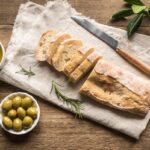
We bake ciabatta without a multi-hour prove. The dough is ready in 5 minutes, rests for an hour and a half at room temperature, and then goes straight into the oven without any shaping acrobatics. The result is an airy loaf with a typical ciabatta structure, though without the irregular crumb of a classic long-fermentation ciabatta. For quick barbecue bread, bruschetta or dipping, it does the job perfectly well.
The difference between classic and quick ciabatta comes down to the dough process. Traditionally the dough is made very wet and left to ferment in the fridge for 12 to 24 hours. This produces large air pockets and an elastic crumb. Our quick ciabatta uses a higher quantity of yeast and a room-temperature prove. That makes the dough more approachable, but the crumb will be finer and more even. For everyday bread it is a good balance.
Quick Ciabatta with the Thermomix®
Ingredients 0 / 6 ✓
- 1/2 cube fresh yeast
- 1/2 tsp sugar
- 200 g water
- 400 g plain flour (Type 405) + a little extra for dusting
- 1 tbsp salt
- 20 g olive oil
Instructions 0 / 6
-
1
Dissolve the yeast.
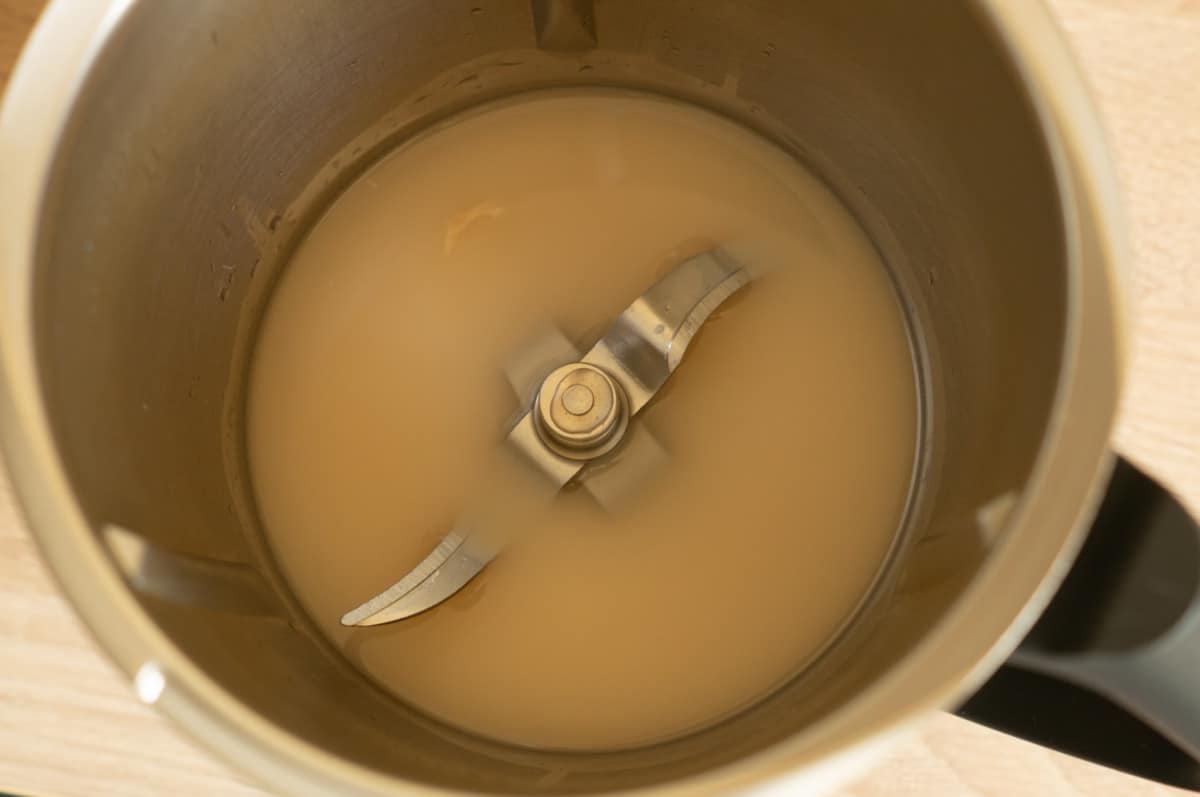
Crumble the yeast into the mixing bowl. Add the sugar and water and heat for 3 minutes / 37°C / speed 1.
-
2
Knead the yeast dough.
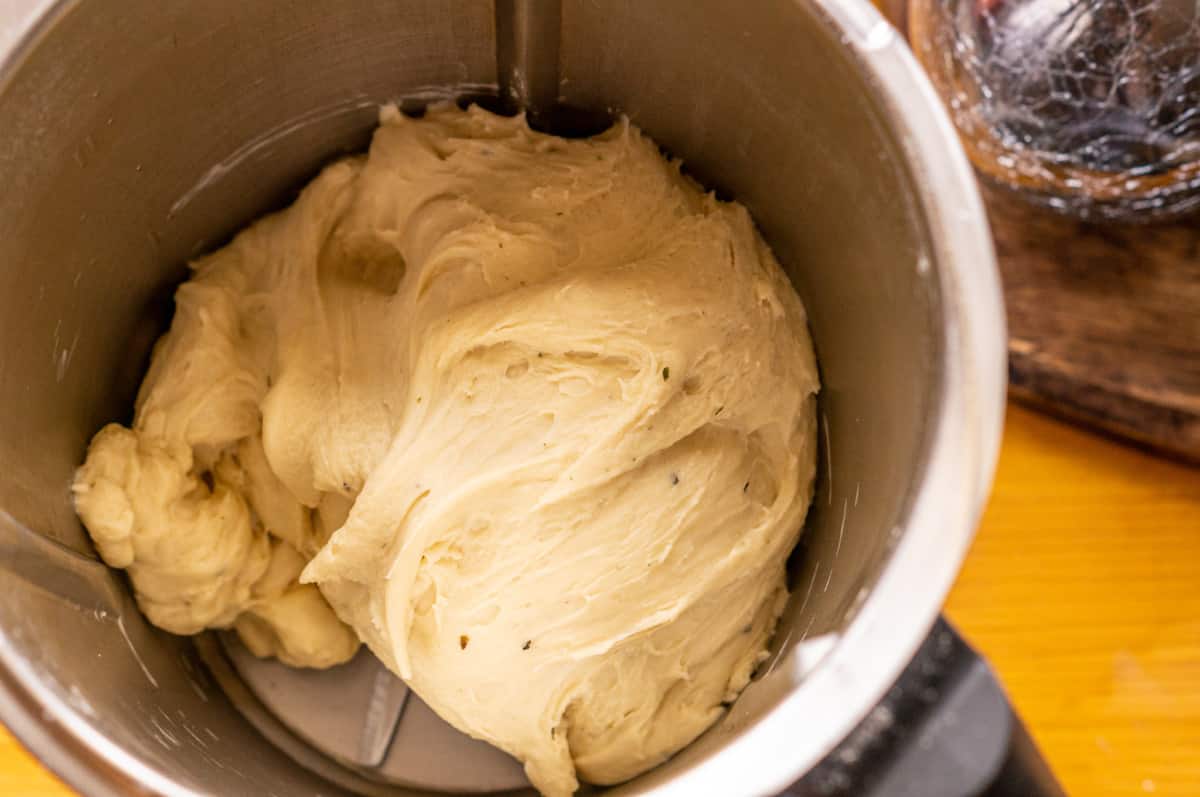
Add the remaining ingredients and knead for 3 minutes / kneading mode. Transfer to a bowl, cover with a damp kitchen towel and leave to rise in a warm place for 1 hour.
-
3
Prepare the baking tray.
Line a baking tray with baking paper.
-
4
Second prove.
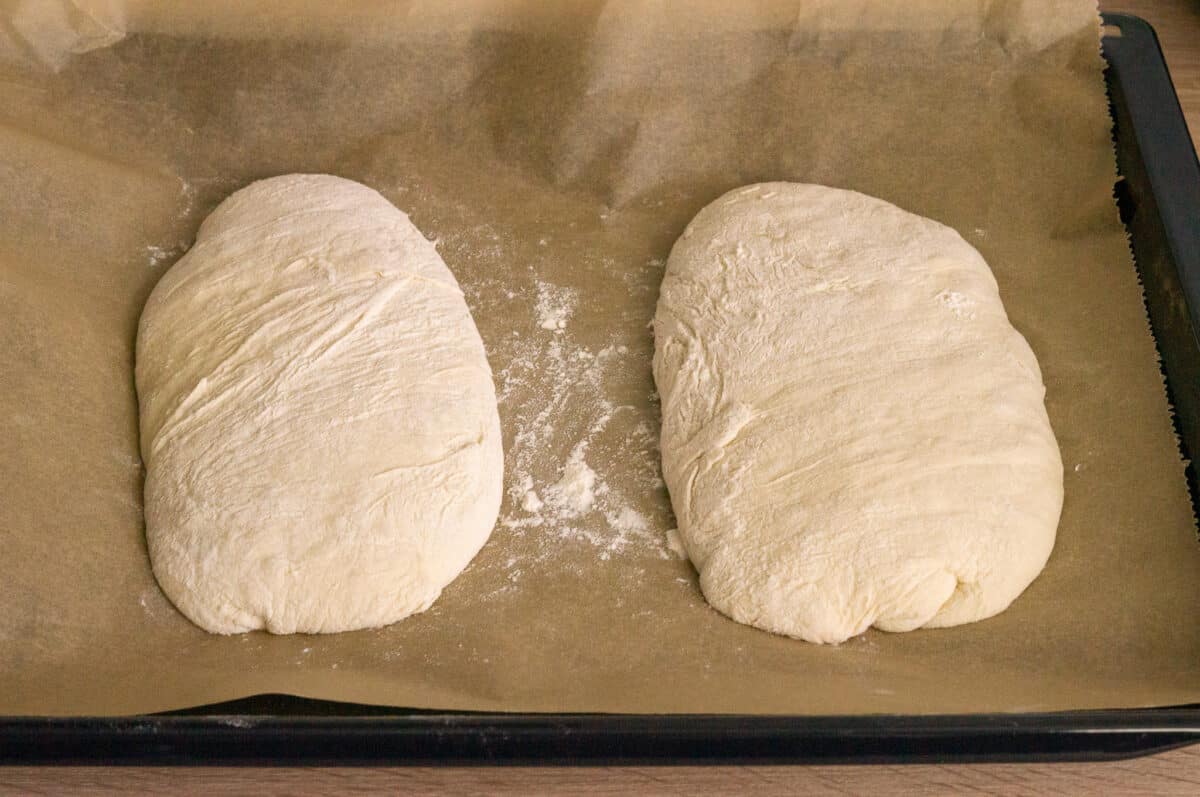
Knead the dough briefly by hand and divide in half. Shape into two ciabatta loaves and place on the baking tray. Leave to prove, covered, in a warm place for 30 minutes.
-
5
Preheat the oven.
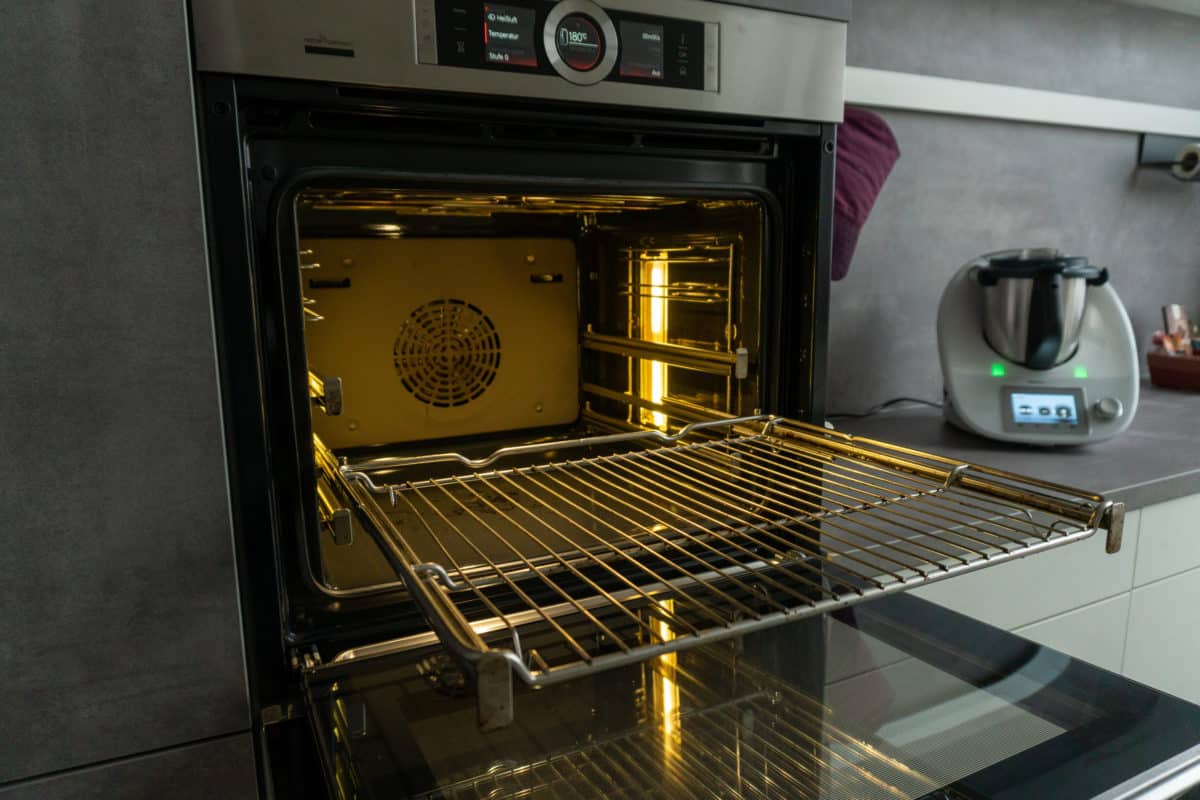
Meanwhile, preheat the oven to 220°C top and bottom heat.
-
6
Bake the ciabatta.
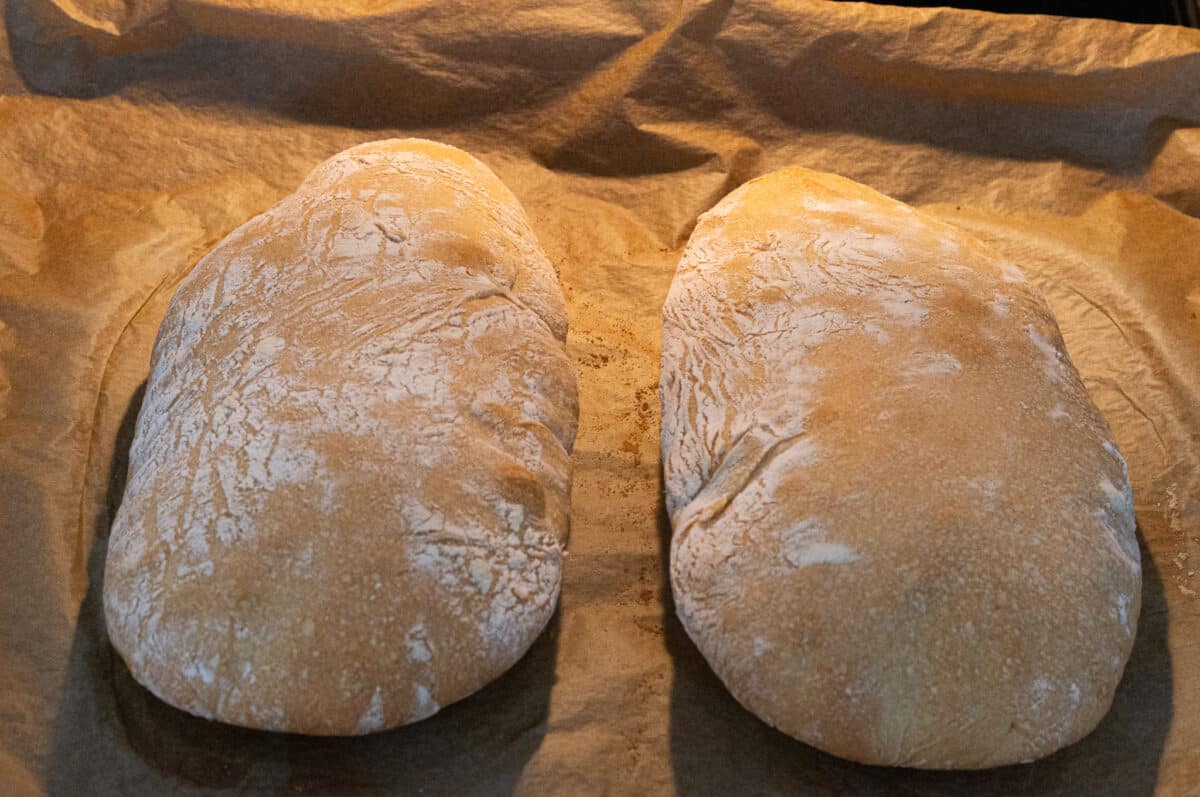
Dust the ciabatta with a little flour and bake on the middle shelf for about 30 minutes.
Tip: You can freeze the ciabatta when almost fully baked and reheat it in the oven when needed.
Video
Nutrition per serving
Why 3 minutes on kneading mode and no longer
The Thermomix® kneads at reduced speed on kneading mode. 3 minutes is enough because plain flour Type 405 develops little gluten protein. Kneading for longer adds no extra elasticity and only heats the dough unnecessarily. Warm dough rises faster but loses structure. The temperature during kneading should stay below 26°C. If the mixing bowl is still warm from a previous use, rinse it briefly with cold water.
The prove as a compromise between speed and structure
The first hour of proving develops the gluten network. The dough doubles in volume and becomes elastic. The second half hour after shaping stabilises the surface. Without this stage the crust will split uncontrollably during baking. If you are in more of a hurry, you can shorten the first prove to 45 minutes, but expect a denser loaf as a result. The second prove is non-negotiable.
Shaping without perfection
Ciabatta means “slipper” and refers to the flat, elongated shape. After the first prove, divide the dough in half and gently stretch each half into a rough rectangle with floured hands. Do not roll, do not fold, just ease it into shape. The dough is sticky. That is normal. A little flour on your hands and on the work surface prevents sticking. The shape does not have to be perfect. Rustic edges are part of it.
220°C top and bottom heat without steam
Professional bakers use steam for crust formation and oven spring. At home it works without it too. The 220°C ensures the loaves rise quickly in the first 10 minutes. The crust forms from around minute 15. If the bread is dark enough after 25 minutes, reduce to 180°C and bake for a further 5 minutes. This prevents dark spots while the centre is still raw. The ciabatta is ready when it sounds hollow when you tap the underside.
Dust with flour only after the second prove
The flour on the surface is not just for appearance. It also prevents the crust from browning too quickly. If you apply it before the second prove, the dough absorbs the moisture and the flour disappears. Dust the loaves through a fine sieve right before baking. The thin layer of flour stays visible and gives the bread its characteristic white surface.
Freezing and reheating
The ciabatta is baked through after 25 minutes, but not yet crispy. At this point you can take it out of the oven, leave it to cool and freeze it. When needed, reheat for 10 minutes at 200°C top and bottom heat. That keeps the crust crispy and the crumb fresh. Fully baked ciabatta becomes harder when reheated.
When quick ciabatta fits
Goes well with: Tomato soup.
This recipe is for situations where you need fresh bread but have no time for an overnight dough. Great for the barbecue, as a side to soup, with dips or spreads. For Italian bruschetta with tomatoes or as a base for panini. If you want the classic irregular ciabatta crumb, you need a long-fermentation recipe with a higher water content and an extended fridge prove.
More quick breads with the Thermomix®: spelt baguette, pizza, flatbread.