Wholemeal bread with the Thermomix® takes 70 minutes (10 min prep plus 60 min baking) and makes 18 slices (roughly 150 kcal per slice). 400 g wholemeal rye flour plus 4 different seeds (sunflower, pumpkin, sesame, linseed) plus 4 tbsp balsamic vinegar. The vinegar is the secret trick: it replaces sourdough (normally essential for rye bread), saves 8 hours of waiting, and the loaf still turns out light.
We bake this bread mostly on weekdays when the weekend has been busy and no sourdough starter was prepared. Compared to a bakery wholemeal loaf (3 to 4 euros for 750 g), the ingredients cost about 1.50 euros for 18 slices. Plus: no preservatives, no artificial flavourings, freshly milled seeds.
Quick Wholemeal Bread with the Thermomix®
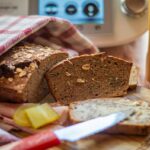
Ingredients 0 / 10 ✓
- 1 cube fresh yeast
- 2 tsp salt
- 400 g water
- 400 g wholemeal rye flour
- 50 g sunflower seeds
- 50 g pumpkin seeds + a little extra for sprinkling
- 20 g rolled oats + a little extra for sprinkling
- 20 g sesame seeds
- 10 g linseed
- 4 tbsp balsamic vinegar
Instructions 0 / 4
-
1
Warm the yeast.
Add the yeast, salt and 50 g water to the mixing bowl and warm for 3 min / 37°C / speed 1.
-
2
Knead the dough.
Add the remaining 350 g water and all remaining ingredients and knead for 4 min / kneading mode.
-
3
Bake the bread.
Spoon the dough into a silicone loaf tin, sprinkle with rolled oats and pumpkin seeds, and bake on the middle shelf of the oven at 200°C (top and bottom heat) for 60 minutes. Check with a skewer.
-
4
Leave the bread to cool.
Turn the bread out of the tin and leave to cool before slicing.
Tip: You can also use a standard loaf tin for baking, but make sure to grease it well.
Using wholemeal spelt flour gives the bread a lighter texture. You can mill your own wholemeal flour in the Thermomix® and find the recipe for that on our site.
Video
Nutrition per serving
Why balsamic vinegar instead of sourdough
Wholemeal rye flour has very little gluten and needs acid to bind properly. The classic approach uses sourdough: live lactic acid bacteria that ferment the dough over 8 to 12 hours. Time-consuming.
Balsamic vinegar has a low pH (around 3.0) and provides the necessary acidity instantly. Plus: a lightly sweet, savoury aroma that pairs well with rye. 4 tbsp (roughly 50 g) per 400 g flour is the right amount. Any more and the bread becomes noticeably sharp and vinegary.
Alternatives: 50 g apple cider vinegar or 50 g buttermilk (5 to 10 tbsp). Never plain white malt vinegar as it is far too harsh.
Wholemeal rye flour: why not wheat
Wholemeal rye flour produces a robust, full-flavoured loaf. It is high in fibre (around 13 g per 100 g), keeps you full for longer, and is good for digestion. Plus: a low glycaemic index (slow energy release).
Wholemeal wheat flour also works but gives a milder, slightly sweeter result. A mixed version (200 g rye plus 200 g wheat) strikes the best balance: flavourful but not too intense.
If you have whole rye grains: mill 400 g of rye grains for 45 sec at speed 10, then use immediately. Maximum nutrition and a nutty flavour (see our wholemeal flour recipe).
Seed mix: 4 varieties for flavour and nutrition
A total of 140 g of seeds to 400 g flour is roughly 26 per cent of the flour weight. Each seed brings its own flavour and nutritional benefits:
Sunflower seeds (50 g): mild and nutty, high in vitamin E. The main bulk.
Pumpkin seeds (50 g): intensely nutty, high in zinc and magnesium. The green flecks look great too.
Sesame seeds (20 g): toasty aroma, high in calcium. Also lovely on the crust.
Linseed (10 g): provides omega-3 fatty acids. Important: crack them in the mixing bowl first, otherwise they pass through the digestive system whole with no nutritional benefit.
Tip: swap any seeds at a 1:1 ratio. Oat bran, chia seeds, chopped walnuts, and hemp seeds all work just as well.
Yeast and salt: why warm them separately
Never mix yeast and salt directly together, as the salt draws moisture out of the yeast cells and kills them. Instead: add the yeast, salt and 50 g water to the mixing bowl and warm for 3 min at 37°C on speed 1. At 37°C the yeast is activated, but the salt is dissolved and can no longer act directly on the yeast cells.
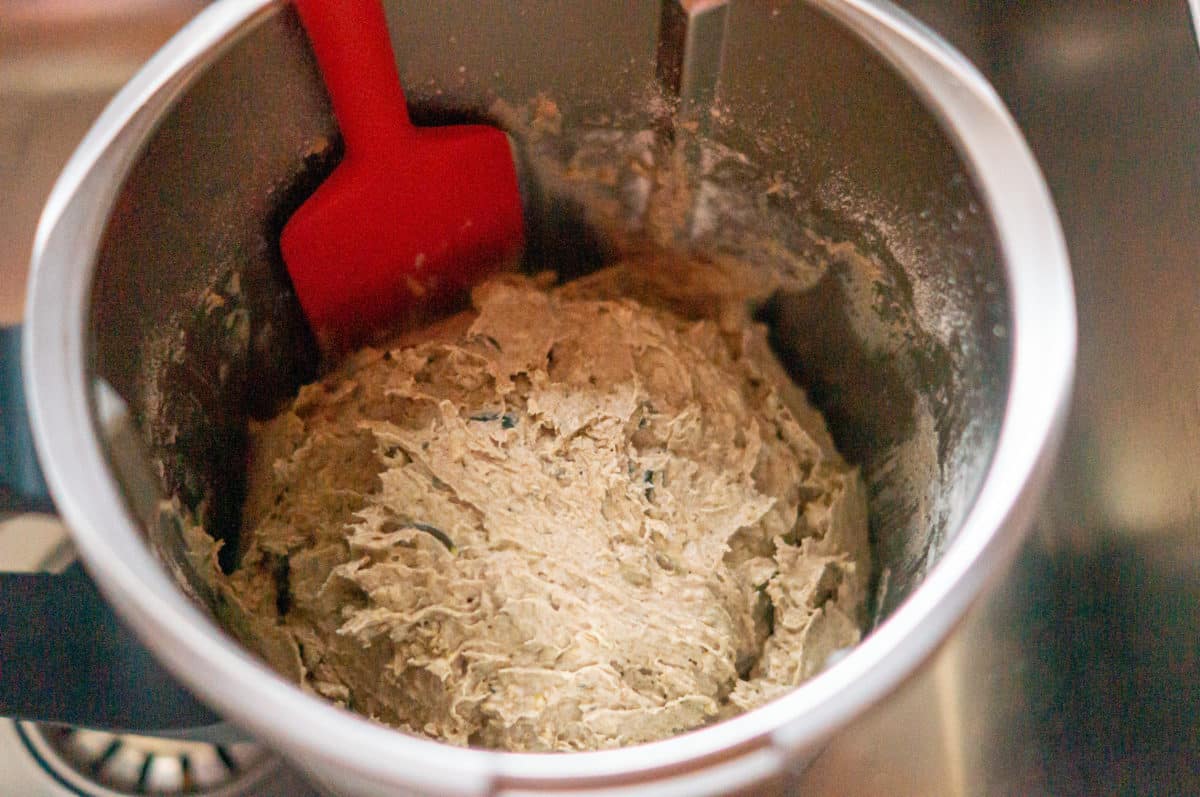
Then add the water, flour, seeds and vinegar. Knead for 4 min on kneading mode (the spiral symbol) until well combined. The dough will be sticky and wet, which is normal for rye bread. Do not add extra flour.
60 minutes at 200°C: why so long
Rye bread needs a long baking time so the starch gelatinises properly and the loaf is cooked through. 60 minutes at 200°C top and bottom heat. With a fan oven use 180°C, though the result is slightly less good (drier crust).
Check with a skewer after 55 min: insert a wooden skewer into the centre. If it comes out clean, it is done. If it is sticky, bake for another 5 min. For a crustier loaf, leave the oven door slightly ajar for the last 10 min so moisture can escape.
A silicone loaf tin is ideal as the bread releases easily. Alternatives: a buttered loaf tin dusted with breadcrumbs, or baked freeform on a baking stone.
Variations: spelt, seed mix, nuts, spices
Spelt variation: use 400 g wholemeal spelt flour instead of rye. Milder and easier to digest.
Multigrain variation: 200 g rye plus 100 g spelt plus 100 g wholemeal oat flour. A well-rounded flavour profile.
Walnut bread: replace half the sunflower seeds with 100 g roughly chopped walnuts. Gives a satisfying crunch.
Caraway bread: add 1 tsp caraway seeds plus 1 tsp anise seeds. A classic Swabian variation.
Olive bread: knead 100 g pitted black olives (roughly chopped) into the dough. A Mediterranean variation.
Sweet variation: add 50 g dried fruit (raisins, cranberries) plus 2 tbsp honey. Makes a lovely breakfast loaf.
What to serve with wholemeal bread
Classic with a snack plate of cheese, cold cuts, mustard and pickled cucumber. With butter and jam for breakfast. Toasted as a base for Bruschetta. With avocado and a fried egg for a weekend brunch. As a side with soup (lentil soup, pea soup, goulash soup). Toasted slices as croutons in salad.
Wholemeal bread: fresh for 5 to 7 days, frozen for 3 months
Keeps for 5 to 7 days in a bread bag or bread bin. Rye bread stays fresh longer than white bread thanks to its acidity and density. It keeps less well in a plastic bag as moisture cannot escape, which encourages mould.
To freeze: slice the loaf, place in freezer bags and it will keep for 3 months. Reheat straight from the freezer in the toaster or on the middle shelf of the oven for 2 min. Handy for preparing ahead at the weekend.
Goes well with: butter, cheese and avocado.