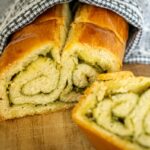
Rolled herb butter bread with the Thermomix® only works if the herb butter does NOT go into the dough. We roll it in separately so that it stays between the layers during baking and does not soak into the dough.
We bake this rolled bread regularly for barbecues. The filled spiral looks spectacular, and the preparation is simpler than it appears. The Thermomix® kneads the yeast dough in 6 minutes, and the rest is done by hand.
Rolled Herb Butter Bread with the Thermomix®
Ingredients 0 / 9 ✓
- 1 cube fresh yeast fresh
- 170 g water
- 1 pinch sugar
- 2 tsp salt
- 150 g spelt flour, type 630
- 250 g plain flour, type 405
- 40 g olive oil
- 150 g herb butter Optionally home-made, see blog post
- 1 egg yolk
Instructions 0 / 8
-
1
Dissolve the yeast.
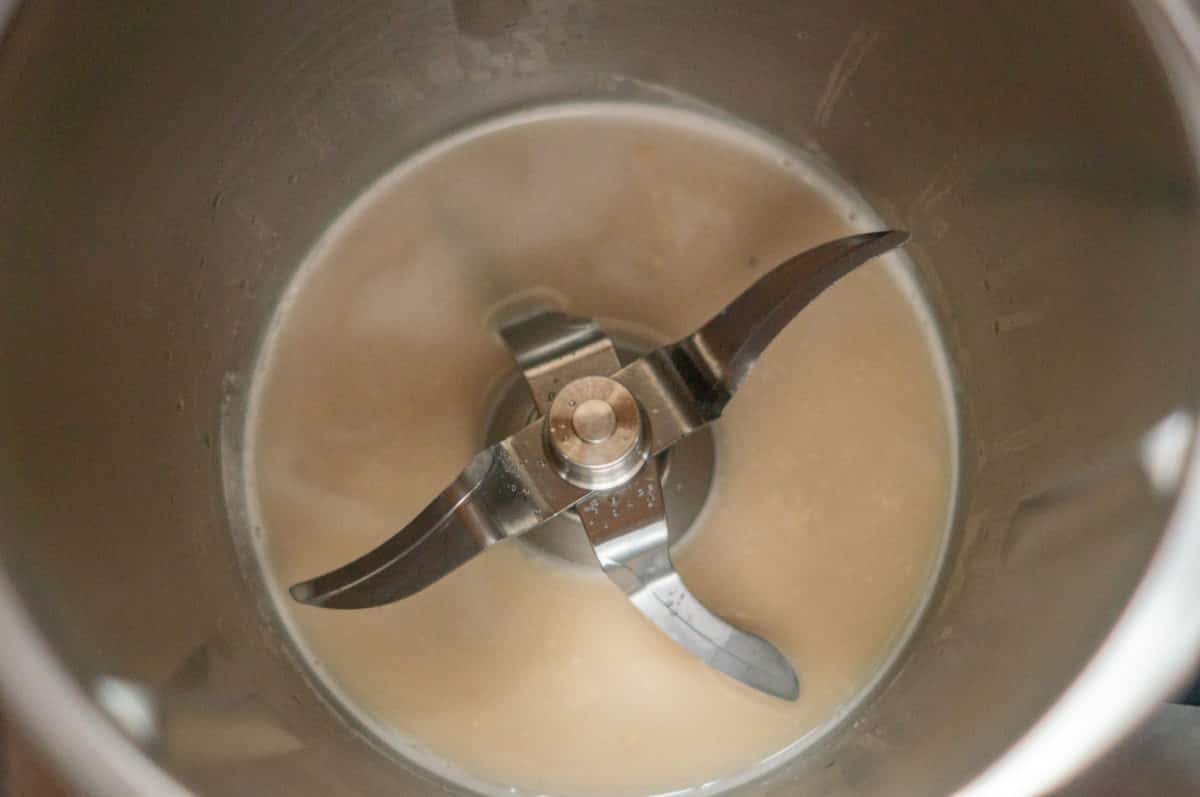
Add the yeast, water, sugar and salt to the mixing bowl and dissolve for 3 min / 37°C / speed 1.
-
2
Knead the dough.
Add the flour and olive oil and knead for 3 min / kneading mode until the dough is smooth. Line a loaf tin with baking paper.
-
3
Roll out the dough.
Roll out the dough on a lightly floured surface into a rectangle (40 x 30 cm).
-
4
Spread the herb butter.
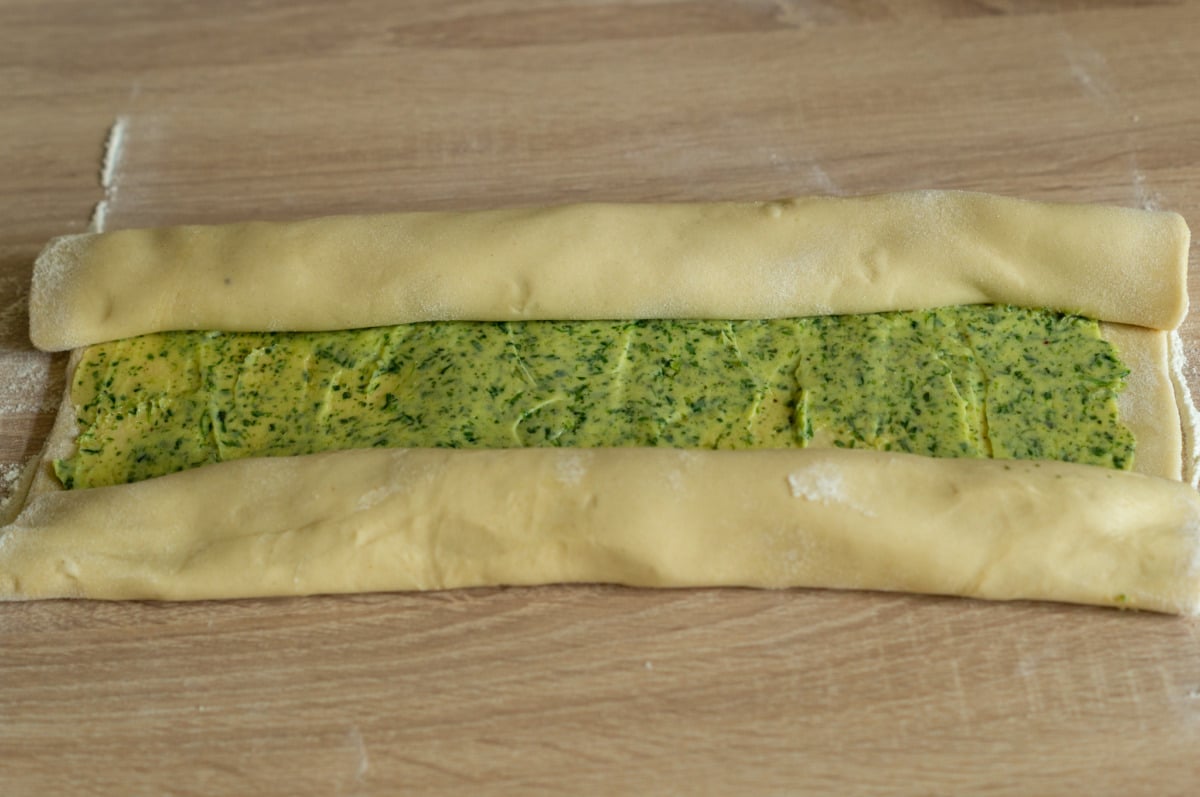
Spread the herb butter over the dough, leaving about 1 cm free around all the edges. Fold the edges over and press down firmly.
-
5
Roll up the dough.
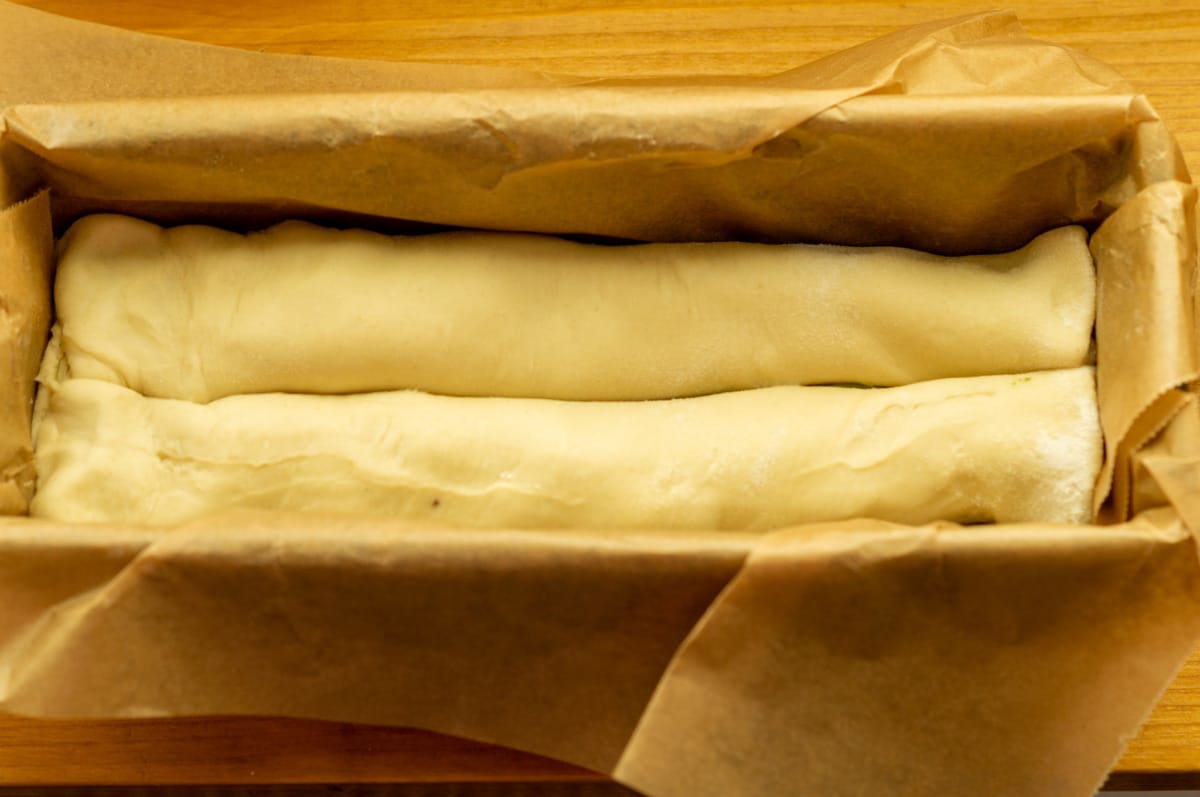
Roll the dough from both shorter sides towards the centre, place in the tin and leave to rest for 15 minutes.
-
6
Preheat the oven.
Meanwhile, preheat the oven to 180°C top and bottom heat (160°C fan).
-
7
Brush the bread and score the surface.
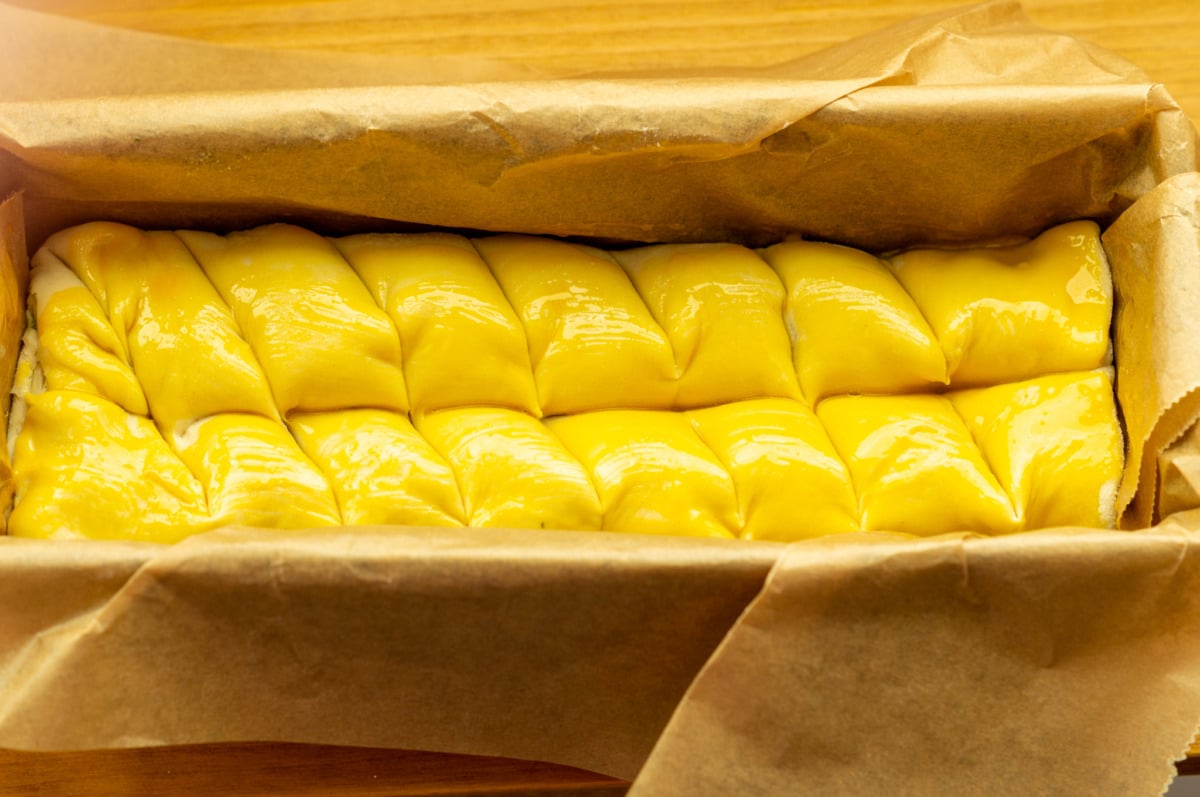
Whisk the egg yolk and brush it over the bread. Use a sharp knife to cut a diagonal pattern into the surface.
-
8
Bake the bread.
Bake the bread on the middle shelf for approximately 45 minutes. Best served while still warm.
Tip: You can vary the bread by rolling in thin bacon slices and/or cheese before shaping.
Video
Nutrition per serving
Why the butter stays on the outside
The 150 g of herb butter is spread onto the rolled-out dough, not kneaded into it. During baking, the butter melts and runs through the rolled layers. If the butter were already in the dough, we would end up with a greasy yeast dough with no layering.
The principle is similar to puff pastry: butter between the layers, not inside them. The difference here is that we work with yeast dough and the layers are created by rolling, not by folding.
Spelt and wheat flour for structure and elasticity
We combine 150 g of spelt flour type 630 with 250 g of plain wheat flour type 405. The spelt flour gives the bread a nutty flavour, while the wheat flour provides the elasticity needed when rolling out. Pure spelt flour would tear when rolled to 40 x 30 cm, and pure wheat flour would taste too neutral.
Kneading mode runs for 3 minutes. That is enough for a smooth, non-sticky dough that rolls out easily. Kneading longer does not help and only warms the dough up.
37°C yeast solution, then cold flour
We dissolve 1 cube of fresh yeast with 170 g water, 1 pinch of sugar and 2 tsp salt at 37°C. This is the ideal temperature for yeast: warm enough to activate, but not so hot that it dies.
The flour is added afterwards and cools the mixture down again. After 3 minutes of kneading mode the dough is at room temperature. This matters: a dough that is too warm will rise too quickly and become too loose after baking.
Leave 1 cm border free, otherwise the butter runs out
When spreading the herb butter, leave about 1 cm free along all four edges. These edges are then folded over and pressed down firmly, sealing the butter inside the dough.
Without this free border, the butter runs out at the sides when rolling and drips into the tin in the oven. The bread ends up dry and the tin is greasy. The folded edge acts like a seam.
Roll from both sides towards the centre
The dough is not rolled up from one side like a wrap, but from both shorter sides towards the centre. This creates the typical double spiral that shows the pattern when the bread is scored.
The two rolls meet in the middle. The bread then goes into the lined loaf tin with the seam facing down. This stops it coming apart during the 15-minute resting time.
Egg yolk glaze and scores for appearance
The whisked egg yolk is brushed over the surface with a pastry brush. This gives a shiny, golden-brown crust during baking. Without egg yolk the bread stays pale and matt.
The diagonal scores made with a sharp knife make the spiral structure visible. Cut roughly 0.5 cm deep at a 45-degree angle. The cuts open up slightly during baking and reveal the herb butter layers.
180°C top and bottom heat, 45 minutes
The bread bakes on the middle shelf at 180°C (top and bottom heat) or 160°C fan. After 45 minutes the crust is golden brown and the inside is cooked through.
The loaf tin keeps the shape compact. Without the tin the bread would spread out as it rises and go flat. After baking, the bread lifts easily out of the tin using the baking paper.
Serve warm while the butter is still liquid
Rolled herb butter bread tastes best while still warm, straight from the oven. The herb butter is still liquid then and runs through the layers. Once it cools, the butter sets and the bread becomes drier.
To warm it up again, place it briefly in the oven at 150°C or toast individual slices in a pan. In the microwave the dough turns rubbery.
Bacon or cheese as a filling
Instead of just herb butter, you can lay thin bacon rashers or grated cheese on the dough before rolling it up. The bacon turns crispy during baking, and the cheese melts between the layers.
Important: the bacon should be thinly sliced, otherwise it will not cook through. Cheese works best as grated Gouda or Emmental. Cream cheese becomes too runny.
Keeps in the fridge for up to 3 days, freezing works too
The baked rolled bread keeps in the fridge in a freezer bag for up to 3 days. Warm it up briefly in the oven before serving.
Goes well with: Herb butter and cheese fondue.
Freezing is an option too: slice the cooled bread, pack the slices into freezer bags and freeze. Individual slices can then be toasted straight in the toaster or baked at 180°C in the oven. That way you always have fresh rolled bread to hand.