We make sugar syrup with the Thermomix® (simple syrup) from 400 g sugar and 400 g water, which is the classic 1:1 ratio. Add all ingredients to the mixing bowl and cook for 20 min / Varoma (TM5: 120°C) / speed 1 without the measuring cup. The result is around 30 servings of 1 tbsp each, crystal-clear and flavour-neutral. This is the universal base for sweetening fruit ice cream, sorbets, cocktails, fruit salads and sauces whenever granulated sugar would need to dissolve first.
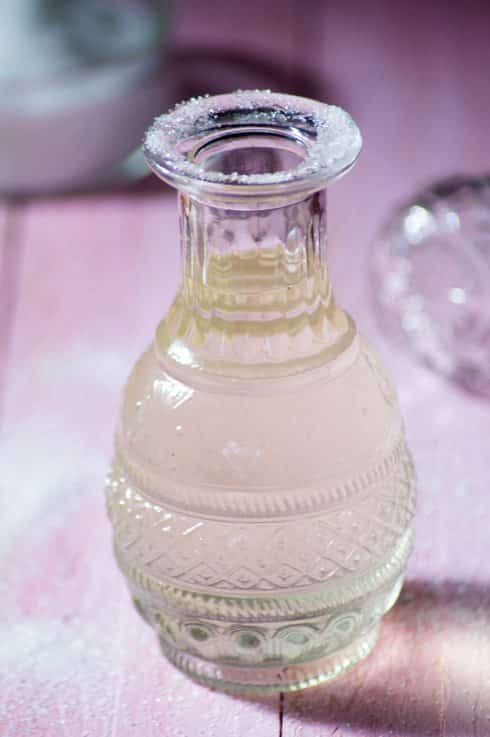
We have been making this syrup in batches for years, especially in summer for the ice cream maker and for drinks on the terrace. The advantage of liquid sugar: it is ready to use straight away and dissolves in ice-cold drinks in seconds. We use it in the same quantity as regular sugar. If you prefer to start with a flavoured syrup straight away, we also have Lemon Ginger Syrup, Rhubarb Syrup and Iced Tea Syrup on the site.
Sugar Syrup with the Thermomix® (Simple Syrup)
Ingredients 0 / 2 ✓
- 400 g sugar
- 400 g water
Instructions 0 / 2
-
1
Cook the ingredients.
Add all ingredients to the mixing bowl and cook for 20 min / Varoma (TM5: 120°C) / speed 1 without the measuring cup inserted.
-
2
Use immediately or bottle.
Use straight away or leave to cool and fill into a sterilised bottle.
Tip: Instead of refined white sugar, you can also use unrefined raw cane sugar for this recipe. Its slightly caramel-like flavour makes the syrup more aromatic.
Video
Nutrition per serving
Why the Thermomix® excels at simple syrup
Simple syrup on the hob is awkward because you have to decide: stir or not stir. Stir too much and the syrup crystallises. Do not stir at all and the sugar burns on the bottom of the pan. The Thermomix® takes exactly this dilemma off your hands.
- Speed 1 stirs gently without triggering crystallisation. The syrup is a supersaturated solution. Once a single sugar crystal forms, more grow from it. Speed 1 keeps the 400 g of sugar in constant gentle motion without breaking up the fine crystals that would start the crystallisation process.
- Cooking without the measuring cup lets steam escape in a controlled way. We deliberately cook for the full 20 minutes without the measuring cup inserted. This allows water to evaporate, making the syrup slightly thicker and better for keeping. With the measuring cup in, the syrup would remain thin and watery.
- The temperature stays below the caramel threshold. 100°C (on the TM5: Varoma or 120°C) is enough to dissolve the sugar completely. As soon as the syrup turns golden yellow, caramelisation begins and the neutral flavour is gone. The Thermomix® holds the temperature steady rather than letting it swing as an open flame would.
1:1, 2:1 or 1:2? The right ratio for your needs
Our recipe uses 1:1 (400 g sugar to 400 g water). This is the standard base for Mojito, Caipirinha, Daiquiri and Sour, because the syrup dissolves in ice-cold drinks in a flash and nothing gritty settles at the bottom of the glass. For iced tea, lemonade and for soaking sponge cake layers, 1:1 works well too. If you want a thicker syrup that keeps for longer, go up to 2:1 (for example 600 g sugar to 300 g water, or 800 g to 400 g). This rich simple syrup gives cocktails more body because less water dilutes the drink. For very fine sorbets, some bars even use 1:2 with more water, but this turns out very thin. If you want flavoured variations, add a vanilla pod, a handful of fresh mint, 2 crushed cardamom pods, or 10 dried lavender flowers directly to the mixing bowl and leave the syrup to steep for 20 minutes after cooking, then strain through a fine sieve.
Common pitfalls with simple syrup
The syrup crystallises after a few days in the fridge
This is the most common problem and happens because a first sugar crystal forms, and everything else then attaches to it. This seed crystal often sits at the bottle neck or in the thread, where dried syrup is left behind after pouring.
Our solution: add 1 teaspoon of citric acid at the end of cooking. The acid breaks part of the table sugar down into invert sugar, which does not crystallise as readily. We also wipe the bottle neck clean after each use. If the syrup has already crystallised, place the open bottle in hot water for around 20 minutes until the crystals have dissolved again.
The syrup turns golden brown and tastes of caramel
The temperature was too high or the cooking time too long. Simple syrup should be crystal-clear and flavour-neutral, otherwise it masks the aroma in the cocktail or sorbet.
Our solution: stay at 100°C (TM5: Varoma) and do not exceed the 20 minutes. If you want a thicker syrup, do not increase the heat but instead raise the sugar proportion to 2:1. If the syrup does turn brown, it is not inedible, but it has become caramelised sugar rather than neutral simple syrup.
Dark streaks appear in the bottle after two weeks
This is a sign of spoilage and occurs almost exclusively when the syrup is stored at room temperature rather than in the fridge, or when the bottle was not clean.
Our solution: fill hot into a freshly sterilised bottle and store in the fridge. The high sugar content acts as a preservative, but only in a germ-free container. A bottle that still has remnants from the last batch is the most common reason for syrup that spoils early.
Which sugar to use: white, brown or flavoured
For the classic, crystal-clear simple syrup, we use white granulated sugar. If you prefer more flavour, replace it with unrefined raw cane sugar, which gives the syrup a slightly caramel-like taste and a golden colour. Raw dark muscovado sugar becomes even deeper and more intense. Honey can be used in part, but it noticeably changes the flavour and sweetens differently because it contains only around 60 percent sugar. For flavoured syrups, add 1 vanilla pod, a handful of fresh mint, 2 crushed cardamom pods, or 10 dried lavender flowers directly to the mixing bowl and leave them to infuse for 20 minutes after cooking.
What we use simple syrup for beyond cocktails
The biggest advantage is the liquid form. In ice cream, simple syrup produces a smoother, less icy texture than granulated sugar because the sugar is already fully dissolved. That is exactly why we keep it close to hand when making ice cream recipes with the Thermomix®. It is also the classic base for sorbets. For sweetening compote, for homemade lemonade with sparkling water and lemon, or for soaking sponge cake layers, it replaces granulated sugar on a one-to-one basis. If you prefer a fruity rather than neutral sweetness, take a look at our Blackcurrant Syrup or our Cough Syrup with the Thermomix®.
How long simple syrup keeps
Filled hot into a sterilised, well-sealed bottle and stored somewhere cool, the syrup keeps for several months, up to six months according to widely cited sources when kept away from light, because the high sugar content preserves it. At room temperature, it lasts only around two weeks before dark streaks appear. Once opened, we use the syrup within around four weeks from the fridge. Flavoured versions with lavender, rose or mint keep for a shorter time, so plan for around two months. If you want to be on the safe side, bottle the syrup in small portions so only one bottle is in use at a time and the rest stay sealed.