Pear jam only sets when the sugar-to-fruit ratio and the acidity are right. With pears, 2:1 jam sugar is not a default choice but a deliberate compensation for their low pectin content (0.5-0.8% versus 1.5% in apples, according to the aid infodienst Nutrition 2015). If you use 1:1 jam sugar, you end up with sweet syrup rather than jam. We explain why the set test matters more at the 10-minute mark with pears than it does with strawberries, and whether the skin should stay on.
The recipe works on all four Thermomix® models (TM7, TM6, TM5, TM31) without any adjustments. TM6 and TM7 optionally support Cookidoo recipe guidance, but the manual settings are identical.
Pear Jam in the Thermomix®

Ingredients 0 / 4 ✓
- 500 g pears
- 1 tsp vanilla extract Optional: 1 sachet of vanilla sugar (about 8 g)
- 10 g lemon juice
- 250 g 2:1 jam sugar
Instructions 0 / 3
-
1
Chop the pears.
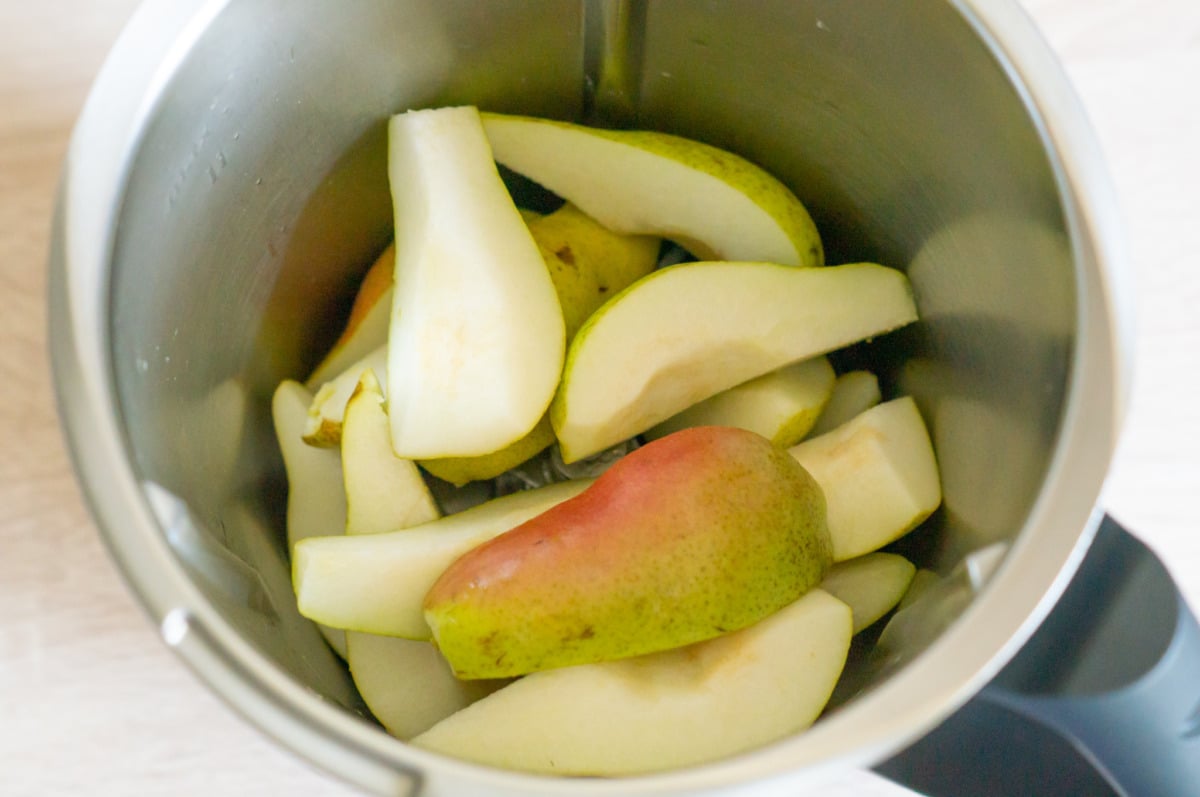
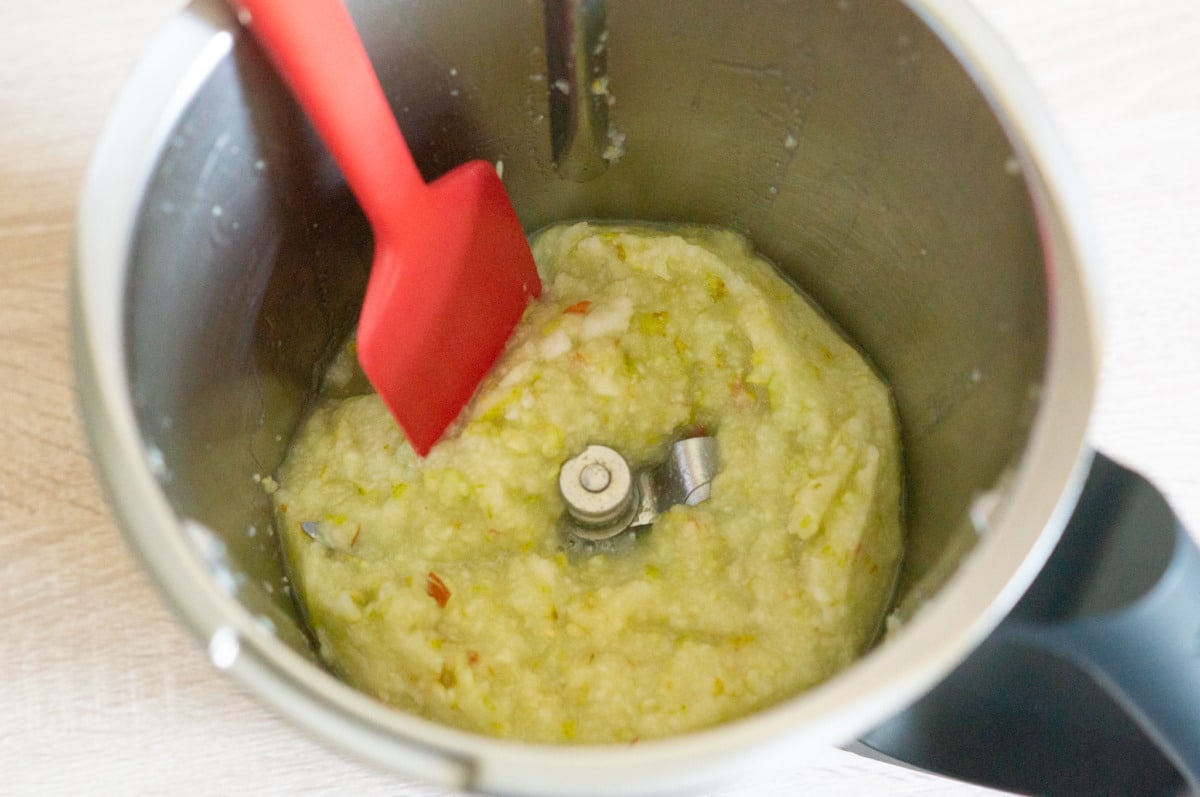
Wash the pears, quarter them, remove the core and pips, and place in the mixing bowl. Chop for 10 sec / speed 5, then push down with the spatula.
-
2
Cook the jam.
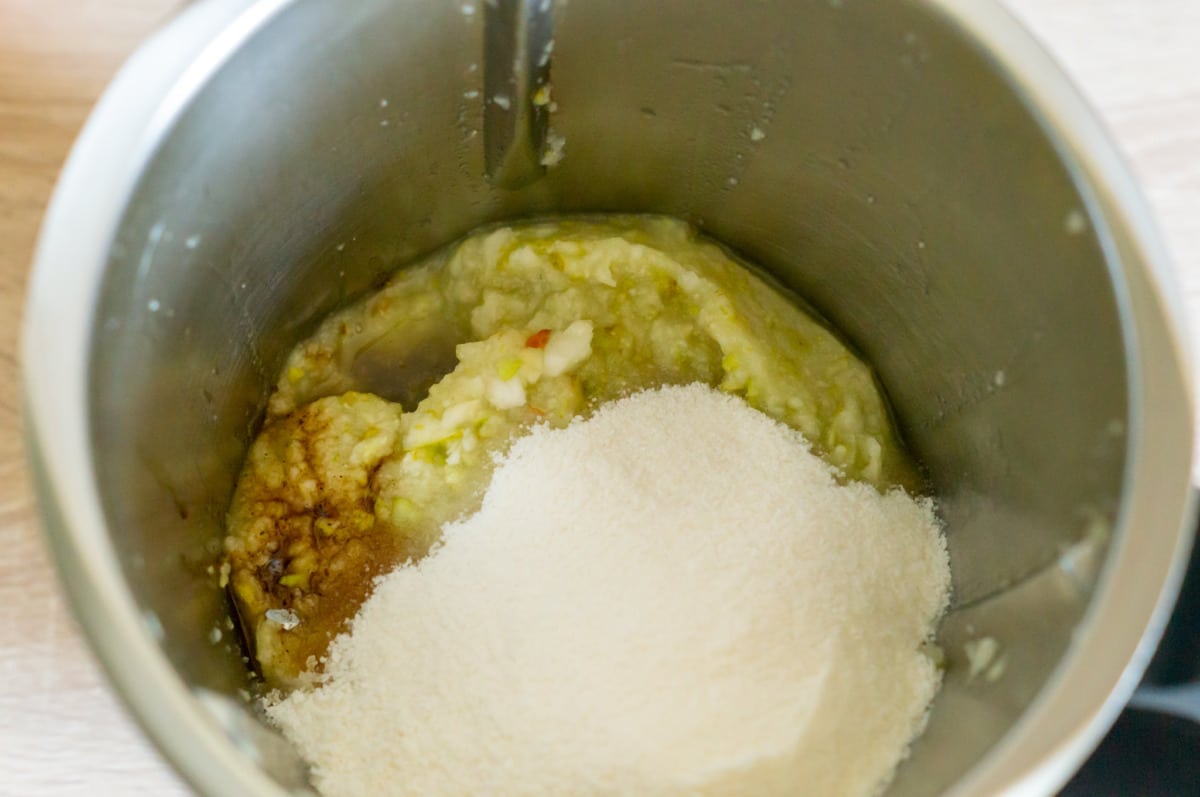
Add the remaining ingredients, mix for 5 sec / speed 4, then cook for 10 min / 100°C / speed 2.
-
3
Fill the jars.
Do a set test, then fill into sterilised jars. Turn the jars upside down for 5 minutes, then leave to cool completely.
Tip: You can vary the flavour by adding a splash of Amaretto, Cointreau, or a little cinnamon.
Video
Nutrition per serving
Why 2:1 jam sugar with pears is not a coincidence
Pears contain 0.1-0.3% citric acid, while strawberries contain 0.8-1.2% (Dr. Oetker Jam Sugar Guide 2023). Acid activates pectin during setting. Using 1:1 jam sugar would make the jam too sweet and would mask the delicate pear flavour. Using 3:1 results in a poor set because pears bring very little of their own pectin (0.5-0.8%, mostly concentrated in the skin and core).
Our recipe uses 250 g of 2:1 jam sugar for 500 g of pears, plus 10 g of lemon juice. The lemon juice compensates for the low natural fruit acidity and supports the setting process. The ratio works because the jam sugar already contains pectin and citric acid.
The set test: check pears at 10 minutes
Pears contain less natural pectin than apples or quinces. That makes the set test after 10 minutes of cooking essential, not optional. Pectin-rich fruits may only need 5 minutes, but pears and cherries need longer (Landfrauenverband 2020).
How the cold-plate test works: put a small plate in the freezer at least 5 minutes before you need it. After 10 minutes of cooking, drop 1 tsp of jam onto the cold plate, wait 30 seconds, then draw a line through it with your finger. If the jam holds the line and does not flow back together, it is ready. If it flows back, cook for a further 2-3 minutes at 100°C / speed 2 and test again.
To peel or not to peel: the pectin and texture question
The skin holds most of the pectin. Removing it reduces the setting ability. However, the skin can make the jam slightly grainy, especially with firmer varieties such as Conference. With very soft varieties like Williams, the skin breaks down almost completely during cooking and is barely noticeable in the finished jam.
Our recommendation: leave the skin on Williams pears, as it dissolves during cooking. With Conference or Doyenne du Comice, decide based on your texture preference. Those who prefer a smooth jam should peel. Those who like a more rustic texture can leave the skin on. Always remove the core and pips. Pear pips contain amygdalin, which gives a bitter aftertaste (Max Rubner Institute 2018).
Which pear variety to use: ripeness beats variety
Fully ripe pears of any variety make better jam than unripe premium ones. The ripeness test: gentle pressure at the stalk end gives slightly, and the pear smells fragrant. Unripe pears have less aroma and more starch, which changes the texture during cooking.
Four varieties compared (Federal Office for Agriculture and Food 2021): Williams (85% water content, very juicy, intense aroma, soft skin), our top pick. Conference (82% water content, firm flesh, milder flavour, skin stays noticeable after cooking). Doyenne du Comice (84% water content, balanced sweetness, medium firmness). Alexander Lucas (large fruits, very juicy, turns soft quickly).
For the recipe card below, we used 500 g of mixed varieties (Williams and Conference). This works because the Thermomix® evens out any differences during chopping.
Too liquid after cooking: extra cooking time in the Thermomix®
Does the set test show the jam is still too runny? Do not throw it away. Return the jam to the mixing bowl, cook for a further 3-5 minutes at 100°C / speed 2, then test again. This cooks off more water and concentrates the pectin.
Do not add more jam sugar afterwards. Jam sugar needs the initial cooking phase to activate the pectin. Simply stirring it in will not help. If the jam stubbornly refuses to set, stir in 1 tbsp of apple pectin and cook for a further 2 minutes.
Cooking times by quantity for larger batches: 500 g pears = 10 minutes. 1 kg pears = 12-14 minutes. 1.5 kg pears = 15-18 minutes. The mixing bowl holds a maximum of 2.2 litres of liquid, so 1.5 kg of fruit is the upper limit for jam (anything more and it will boil over).
Spices and alcohol: quantities for 500 g pears
Spice variations: Cinnamon and vanilla (1 tsp ground cinnamon and half a vanilla pod scraped out, cook with the pears). Amaretto (2 tbsp Amaretto stirred in AFTER cooking, not during, otherwise the aroma cooks off). Cardamom (1 tsp ground cardamom, gives a festive note). Ginger (1 tsp freshly grated ginger, adds a warming kick).
Always cook spices WITH the pears so the flavours have time to develop. Always add alcohol AFTER cooking, otherwise it evaporates. For liqueurs such as Amaretto or Cointreau, 2 tbsp per 500 g of pears is enough. More will make the jam runnier, as alcohol interferes with setting.
Apple and pear combination: 300 g pears and 200 g apples (Boskoop) with the same jam sugar. Apples bring more pectin and acidity, so the jam sets firmer and faster. The cooking time stays at 10 minutes.
Storage: unopened 12 months, opened 3 weeks
Unopened jars keep for up to 12 months when stored in a cool place (below 15°C, such as a cellar or a dark pantry). Opened jars should be kept in the fridge and used within 3 weeks (Bundeszentrum fur Ernahrung 2022). Because pears are low in acid, pear jam is more susceptible to mould than strawberry or raspberry jam.
Freezing works well. Smaller jars (150 ml) are better than large ones because the jam needs to be used up more quickly after thawing. Pear jam keeps in the freezer for up to 6 months. Thaw overnight in the fridge rather than at room temperature, as condensation encourages mould.
Sterilising jars in the Varoma: put 500 g of water in the mixing bowl, place the jars (without lids) on the Varoma trays, and cook for 10 minutes at Varoma temperature / speed 1. Boil the lids separately in a pan of water. This saves using the oven and avoids heating the kitchen further in summer.
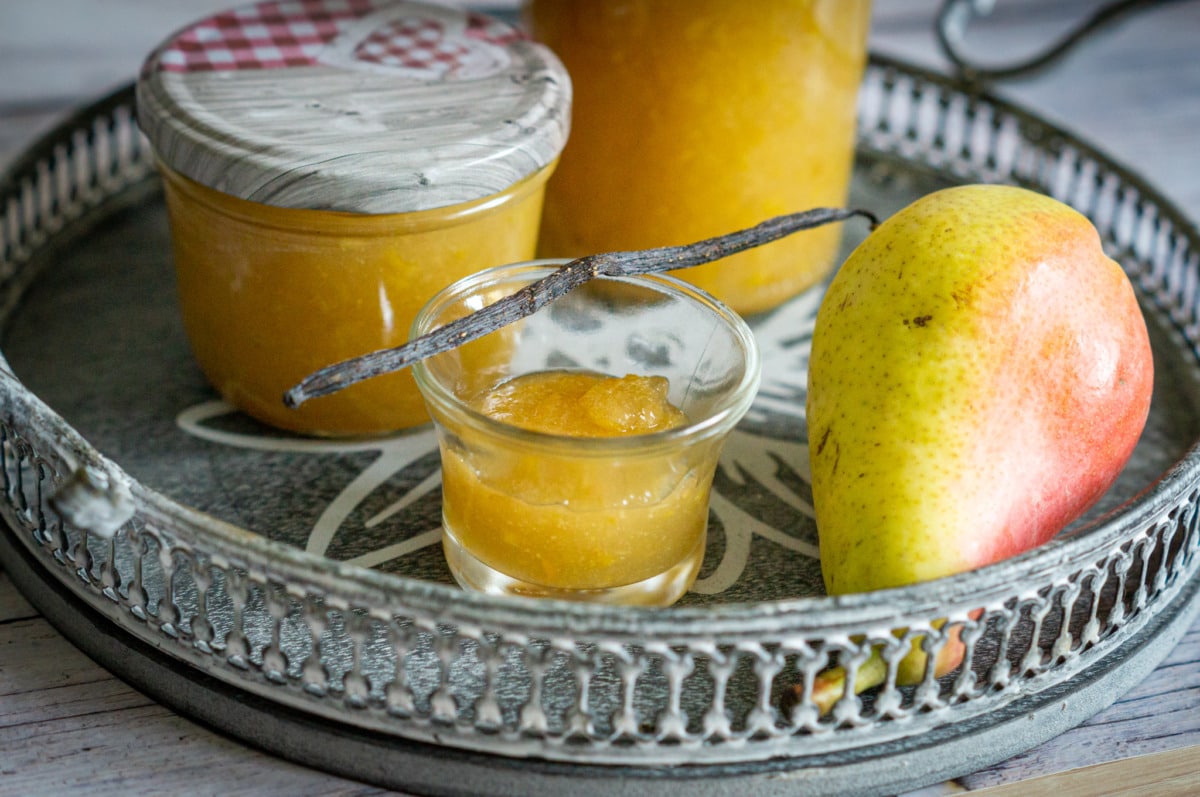
The recipe card shows our base recipe with 500 g pears, 250 g of 2:1 jam sugar, vanilla extract and lemon juice. Chop for 10 seconds at speed 5, cook for 10 minutes at 100°C at speed 2. After the set test, fill into sterilised jars and leave them upside down for 5 minutes.
Enjoy the jam on our quick breakfast rolls or try our Thermomix® apple jam as a variation.
What we do differently from other Thermomix® recipe sites
Most Thermomix® pear jam recipes online peel the pears as a rule and cook at speed 3 / 100°C. Other sites use 8 minutes at speed 3 or 12 minutes at speed 2. We deliberately cook at the gentler speed 2 because speed 3 turns the chopped pears into a puree and loses the texture. Our second difference: we decide whether to peel based on the variety. Williams skin dissolves during cooking and brings free pectin with it. Conference skin stays noticeably rustic. Rather than referring to a generic pear, we recommend a specific variety with a ripeness test at the stalk end. We also leave out the standard cinnamon because it overpowers the delicate pear flavour. Vanilla works much better.
Goes well with: toast, bread rolls and quark.