Without soaking, poppy seeds taste bitter and feel gritty in the mouth. That is exactly why we pour the hot milk over the 400 g of poppy seeds the evening before and leave the mixture to stand until the next morning.
This cake has been our go-to birthday and Sunday afternoon recipe for years. We have baked it around twenty times, experimented with different quantities, and know exactly where home bakers tend to go wrong. The most important lesson is right there at the top: poppy seeds need time. Anyone who adds them dry to the mixture or only soaks them briefly will end up with a bitter, crumbly filling. Anyone who soaks them long enough in hot milk will get a dense, velvety poppy seed mass that tastes of a real bakery in every slice.
The second point that sets this poppy seed cake apart from the average coffee-table cake: we grind the soaked poppy seeds in the mixing bowl at 8 seconds on speed 10. This opens up the tiny seeds, releases the poppy oil, and gives the filling its characteristic deep, dark flavour. Pre-ground poppy seeds from a packet lose much of that oil during long storage, so we prefer to use whole poppy seeds and grind them fresh in the Thermomix®. If you have a packet in the cupboard you can still use it, but add two tablespoons of softened butter to the filling so the mixture does not turn out too dry.
The third key element is the soured cream. This poppy seed cake has three layers, and two of them include soured cream. Once in the poppy filling, where it adds a gentle tang and freshness, and once in the topping, where it holds the egg white and yolk mixture together. Soured cream here is not a substitute for quark but a deliberate choice. Quark would make the cake drier because it binds less fat. Soured cream provides the necessary richness without making the cake heavy.
We almost always bake this cake the day before. Poppy seeds develop their flavour after baking, much like a stollen or gingerbread. It already tastes good straight out of the oven, but the next day it is noticeably rounder and more moist. If you are expecting guests on Sunday afternoon, bake on Saturday morning and leave the cake to rest overnight at room temperature under a cake dome.
On the order of steps: we start with the shortcrust base because it only needs 40 seconds in kneading mode. We then roll out the dough on a floured work surface and press it into a greased 26 cm springform tin, pulling the edge up about two centimetres all the way around. That height matters, otherwise the poppy filling overflows during baking. In the early days we made shorter edges and had to scrape the first two attempts out of the hot oven tray. Two centimetres is the reliable minimum.
For the poppy filling, the 750 g milk, 130 g butter, the custard powder, 250 g sugar, the soaked poppy seeds and the 200 g soured cream all go into the mixing bowl and are combined for 40 seconds at speed 5. We deliberately use cream-flavoured custard powder here. It has a softer taste than classic vanilla custard powder and does not overpower the poppy seed flavour. The mixture will look quite liquid at this point, which is correct. The custard sets during baking and the filling develops its creamy, firm consistency.
The filled tin goes into the oven at 175°C top and bottom heat (fan 160°C) on the middle shelf for 45 minutes. While the cake is in the oven, we rinse the mixing bowl, dry it completely and insert the butterfly whisk. The egg whites need to whip up in a fat-free, dry mixing bowl, otherwise the whites will not hold. Three minutes at speed 3.5 with the butterfly whisk is enough for firm peaks. We always check with the bowl test: carefully tip the mixing bowl slightly. If the egg whites do not slide, they are ready.
The egg yolks, sugar and soured cream are then stirred for 10 seconds at speed 3. We fold the egg whites in by hand using the spatula, never in the Thermomix®. In the mixing bowl, the air would escape immediately and the topping would come out flat. With the spatula and gentle movements, the mixture stays light and airy. This topping layer goes onto the half-baked cake and bakes for a further 25 minutes. The egg white and soured cream portion sets to a light golden brown during baking, forming a delicate, slightly crisp contrast over the soft poppy filling.
The springform tin should be left to cool for at least three hours before slicing, ideally overnight. If cut warm, the filling runs because the custard has not fully set. We cut the cold cake with a thin, sharp knife, which we dip briefly in hot water and wipe dry between each cut. This gives clean edges without poppy seed smear on the knife.
One honest word on the poppy seeds themselves: it is worth buying fresh poppy seeds from a Turkish supermarket or a farmers market. The poppy seeds on standard supermarket shelves often sit in storage for months, the poppy oil turns rancid and the bitter notes intensify. Fresh poppy seeds smell lightly nutty and sweet when ground. If the poppy seeds already smell bitter and sharp when you open the packet, they do not belong in a poppy seed cake but in the bin.
Anyone without a 26 cm springform tin can scale the recipe down proportionally. For a 22 cm tin, we use about 70 per cent of all the ingredients and bake the cake five minutes less. For a 28 cm tin, the baking time stays the same but the cake will be shallower. For tins larger than 28 cm, the proportions shift too much, and we would rather bake two smaller cakes.
A question we are often asked: does the recipe also work with ready-ground baking poppy seeds from a packet? Yes, though without any soaking time. Baking poppy seeds are already moistened and sweetened. In that case, reduce the sugar in the filling by about 50 g and mix the milk directly with the poppy seeds. The character will be slightly sweeter and less intense, but the result is still a very decent poppy seed cake. Anyone who has once baked with freshly ground, soaked poppy seeds will rarely want to go back to the packet.
A good advocaat goes beautifully with this cake, especially at Christmas and Easter. We make our advocaat in the Thermomix® and serve it in small glasses alongside. Anyone looking for other classics for the coffee table will find cheesecake in the Thermomix®, an easy braided loaf and a nut plait among our recipes. For a fruitier alternative to this poppy seed cake, our quick apple cake is a great option, and anyone who fancies a no-bake summer cake will love our Solero-style cake.
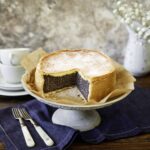
Poppy Seed Cake with the Thermomix®
Ingredients 0 / 13 ✓
- 200 g butter
- 100 g sugar
- 300 g flour
- 1 egg yolk
- 750 g milk
- 130 g butter
- 2 sachets cream-flavoured custard powder
- 250 g sugar
- 400 g poppy seeds
- 200 g soured cream
- 2 eggs
- 80 g sugar
- 200 g soured cream
Instructions 0 / 10
-
1
Preheat the oven.
Preheat the oven to 175°C top and bottom heat (fan 160°C) and grease the springform tin.
-
2
Add the butter.
Add 200 g butter in pieces to the mixing bowl.
-
3
Mix the dough.
Add 100 g sugar, flour and egg yolk to the mixing bowl and knead for 40 seconds / kneading mode.
-
4
Roll out.
Roll out the dough on a floured work surface and press it into the springform tin, bringing the edge up about 2 cm all the way around.
-
5
Filling.
Add the milk, 130 g butter in pieces, custard powder, 250 g sugar, poppy seeds and soured cream to the mixing bowl and mix for 40 seconds / speed 5.
-
6
Bake.
Pour the filling into the springform tin and bake on the middle shelf of the oven for 45 minutes.
-
7
Rinse the mixing bowl.
Meanwhile, rinse the mixing bowl, dry it thoroughly and insert the butterfly whisk.
-
8
Eggs.
Separate the eggs, add the egg whites to the mixing bowl and whip for 3 minutes / speed 3.5 until stiff, then set aside.
-
9
Meringue topping.
Add the egg yolks, sugar and soured cream to the mixing bowl and mix for 10 seconds / speed 3. Fold in the egg whites carefully by hand using the spatula.
-
10
Finish baking.
Spread the mixture over the cake and bake for a further 25 minutes.
Tip: This cake can easily be baked the day before, as it tastes even better once it has fully cooled and the flavours have had time to develop.
Nutrition per serving
Why our recipe differs from other poppy seed cakes
Goes well with: vanilla sauce, icing sugar and vanilla ice cream.
In Vorwerk-adjacent sources, poppy seed preparation usually involves ready-made poppy seed paste from a packet or a brief grind of 10 seconds at speed 8 without a long soaking time. The poppy mass gets its binding there from cooked custard. We go one step further, soaking the whole poppy seeds overnight in hot milk, then grinding for 8 seconds at speed 10 and working the soured cream directly into the filling. This makes the poppy seeds not only softer but also opens up their oil in the mixing bowl, so the result tastes of a real bakery rather than a packet filling. It costs us an evening of prep time but saves the expense of ready-made baking poppy seeds and delivers a noticeably more intense poppy flavour.