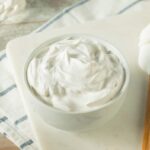
Vegan meringue made from chickpea water works. We have been making it for years for chocolate mousse, meringues and macarons. The only thing that separates watery foam from stiff peaks: speed 3.5 in the Thermomix® for 3 minutes. Higher speeds generate friction heat, which destabilises the protein structure. At 3.5 the aquafaba stays cool enough to bind.
Aquafaba is the viscous liquid from tins of chickpeas. The proteins and starch in it behave very much like egg white when whipped. The butterfly whisk incorporates air, the proteins wrap around the air bubbles, and baking powder stabilises the structure by raising the pH. The result is a stiff foam that looks and behaves just like egg-white meringue.
Vegan Aquafaba Meringue with the Thermomix®
Ingredients 0 / 3 ✓
- 150 g Aquafaba drained liquid from a tin of chickpeas
- 1 splash lemon juice
- 1/2 tsp baking powder
Instructions 0 / 2
-
1
Whip the aquafaba.
Fit the butterfly whisk, strain the chickpea liquid, add the lemon juice and baking powder to the mixing bowl, and whip for 3 minutes / speed 3.5 until you have a stiff vegan meringue.
-
2
Use the aquafaba.
Use the whipped aquafaba just as you would egg whites in your recipes.
Nutrition per serving
Choosing the right aquafaba
Not every tin of chickpeas works. The tin must be unseasoned, meaning no salt and no spices on the ingredients list. Salted aquafaba will not form stiff peaks. The liquid should be thick, almost like raw egg white. If it looks watery as you drain it, the tin does not have enough protein. This happens more often with budget brands.
We strain the aquafaba through a fine sieve to remove any skin fragments or starch lumps. 150 g is the amount you get from a 400 g tin. That is roughly equivalent to 3 egg whites and is enough for a medium-sized dessert or 20 small meringues.
Why baking powder and lemon juice
Baking powder raises the pH slightly and makes the protein structure more elastic. Without it, the foam becomes stiff but collapses after 10 minutes. Half a teaspoon is enough. More gives a soapy aftertaste.
The splash of lemon juice lowers the pH very slightly and prevents the proteins from cross-linking too tightly. That sounds contradictory, but it is the reason for the balance between firmness and volume. Too much acid makes the foam coarse and grainy.
How stiff is stiff enough
After 3 minutes at speed 3.5 the foam holds stiff peaks. That means: when you lift the butterfly whisk out, the foam stands upright and does not flop over. This is the right consistency for mousse, macaron batter or as a topping.
For baked meringues you need one minute longer, so 4 minutes in total. The foam becomes firmer and glossier. Take care not to go too long: from 5 minutes onwards the foam becomes dry and crumbly and loses volume.
Vegan meringue keeps in the fridge for a maximum of 2 hours. After that the liquid and foam start to separate. You cannot freeze it as it turns watery on thawing. Use it straight after whipping.
How it compares to egg-white meringue
Aquafaba foam is slightly less stable than meringue made from egg whites. At room temperature it starts to deflate after 30 minutes, whereas egg white holds for longer. The flavour is neutral, while egg white has a faint eggy note. For sweet desserts, that is actually an advantage.
When baked, aquafaba behaves identically: it sets, forms a crust and supports fillings. The one area where egg white is superior is souffles, where the higher protein concentration is needed for maximum volume.
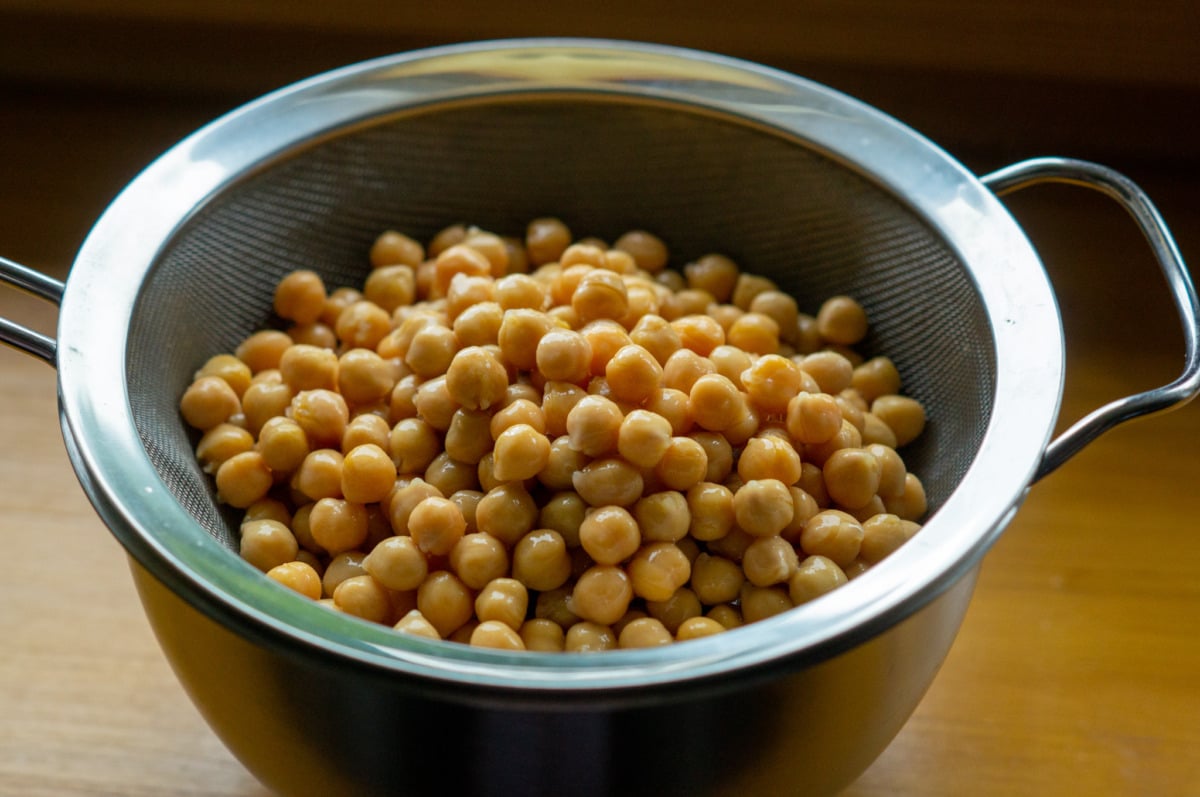
What to do with the chickpeas
The drained chickpeas from the tin can go straight into hummus, a curry or a salad. Or roast them with salt and paprika in the oven at 200°C for 25 minutes for a crispy snack. That way you avoid food waste and get two ingredients from one tin.
For classic meringue made with eggs, take a look at our egg-white guide for the Thermomix®. If you enjoy vegan desserts, try our Mousse au Chocolat recipe too, as it works equally well with aquafaba.